• Wyszukiwanie zaawansowane
  • Kategorie
  • Kategorie BISAC
  • Książki na zamówienie
  • Promocje
  • Granty
  • Książka na prezent
  • Opinie
  • Pomoc
  • Załóż konto
  • Zaloguj się

Groundwater Geophysics in Hard Rock » książka


zaloguj się | załóż konto
Logo Krainaksiazek.pl

koszyk

konto

szukaj
topmenu
Księgarnia internetowa
Szukaj
Książki na zamówienie
Promocje
Granty
Książka na prezent
Moje konto
Pomoc
 
 
Wyszukiwanie zaawansowane
Pusty koszyk
Bezpłatna dostawa dla zamówień powyżej 20 złBezpłatna dostawa dla zamówień powyżej 20 zł

Kategorie główne

• Nauka
 [2944077]
• Literatura piękna
 [1814251]

  więcej...
• Turystyka
 [70679]
• Informatyka
 [151074]
• Komiksy
 [35590]
• Encyklopedie
 [23169]
• Dziecięca
 [611005]
• Hobby
 [136031]
• AudioBooki
 [1718]
• Literatura faktu
 [225599]
• Muzyka CD
 [379]
• Słowniki
 [2916]
• Inne
 [443741]
• Kalendarze
 [1187]
• Podręczniki
 [166463]
• Poradniki
 [469211]
• Religia
 [506887]
• Czasopisma
 [481]
• Sport
 [61343]
• Sztuka
 [242115]
• CD, DVD, Video
 [3348]
• Technologie
 [219293]
• Zdrowie
 [98602]
• Książkowe Klimaty
 [124]
• Zabawki
 [2385]
• Puzzle, gry
 [3504]
• Literatura w języku ukraińskim
 [260]
• Art. papiernicze i szkolne
 [7151]
Kategorie szczegółowe BISAC

Groundwater Geophysics in Hard Rock

ISBN-13: 9780415664639 / Angielski / Twarda / 2015 / 366 str.
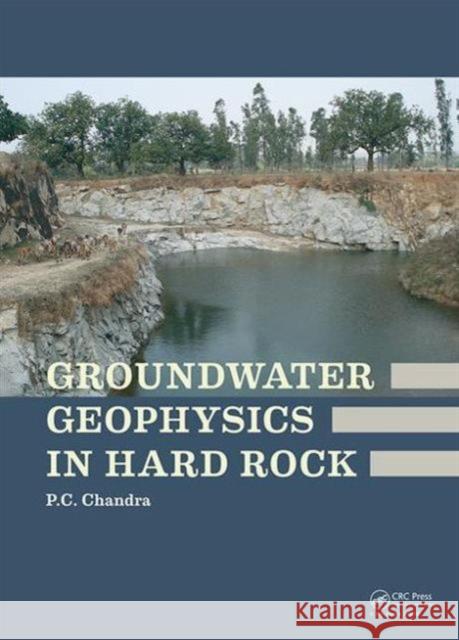
Prabhat Chandra Chandra
Groundwater Geophysics in Hard Rock Prabhat Chandra Chandra 9780415664639 CRC Press - książkaWidoczna okładka, to zdjęcie poglądowe, a rzeczywista szata graficzna może różnić się od prezentowanej.

Groundwater Geophysics in Hard Rock

ISBN-13: 9780415664639 / Angielski / Twarda / 2015 / 366 str.

Prabhat Chandra Chandra
cena 612,21
(netto: 583,06 VAT:  5%)

Najniższa cena z 30 dni: 528,93
Termin realizacji zamówienia:
ok. 22 dni roboczych.

Darmowa dostawa!
inne wydania

In hard rock terrain, shallow water wells generally have a poor to moderate yield. Sinking wells deeply to tap yielding fracture zones often backfires, because the borehole may miss the saturated fracture zones at depths. A wrong approach to groundwater exploration in hard rock has therefore often led to unnecessary recurring expenditures and waste of time, something that could have been avoided by a systematic and proper geophysical approach. The combination of various geophysical techniques with environmental conditions is essential to constrain the interpretation and reduce uncertainties in this respect. This book presents the approach to groundwater exploration in hard rocks, various geophysical techniques and combinations to be used, interpretation of data with case studies and drilling results and the preparation of different utility maps.


Kategorie:
Nauka, Biologia i przyroda
Kategorie BISAC:
Science > Environmental Science (see also Chemistry - Environmental)
Science > Geofizyka
Technology & Engineering > Civil - Soil & Rock
Wydawca:
CRC Press
Język:
Angielski
ISBN-13:
9780415664639
Rok wydania:
2015
Ilość stron:
366
Waga:
0.79 kg
Wymiary:
24.89 x 17.53 x 2.54
Oprawa:
Twarda
Wolumenów:
01
Dodatkowe informacje:
Bibliografia

1 Groundwater issues in hard rock & geophysics 1.1 Introduction 1.2 Trends in groundwater utilization 1.3 Necessity of managed aquifer recharge 1.4 Groundwater quality issues 1.5 Problems in groundwater development 1.6 Need for systematic investigation 1.7 Scope and essentiality of geophysical input 1.8 Geophysical deliverables 1.9 Prerequisite technical field-guidance 1.10 Interdisciplinary convergence 1.11 Cost-effectiveness vs technological development 2 Introduction to the hydrogeology of hard rock 2.1 Introduction 2.2 Weathered zone and fractures 2.3 Groundwater occurrences 2.3.1 Weathered zone aquifers in granitic terrain 2.3.2 Fractured zone aquifers in granitic terrain 2.3.2.1 Deeper fractured aquifers 2.3.3 Aquifers in metasediments 2.3.4 Aquifers in quartz reefs and dykes 2.3.5 Volcanic rock aquifers 2.4 Groundwater development 2.5 Groundwater quality 3 Introduction to geophysical investigations in hard rock 3.1 Introduction 3.2 Geophysical methods and physical property measurements 3.3 Applications of geophysical methods 3.3.1 Airborne geophysics 3.3.2 Surface geophysics 3.3.3 Borehole geophysics 3.4 Integration of methods 4 Planning of geophysical surveys 4.1 Introduction 4.2 Modeling geophysical response 4.3 Types of survey and coverage 4.4 Selection of method and equipment 4.5 Planning for field survey 4.5.1 General considerations for equipment 4.5.2 Access to the area 4.5.3 Area details and compilation of data 4.5.4 Survey parameter design 4.5.5 Surveying work for profile layout 4.6 Geophysical team size and responsibilities 4.7 Survey cost and time 4.8 Safety and precautions in field operations 4.9 Quality control 4.10 Deliverables 5 The magnetic method 5.1 Introduction 5.2 Basics 5.3 Instrument 5.4 Field procedures 5.4.1 Total magnetic field intensity measurement 5.4.1.1 Correction of data 5.4.2 Magnetic susceptibility measurement during field survey 5.5 Processing of data 5.5.1 Regional-residual anomaly separation 5.5.2 Reduction to pole 5.6 Interpretation 5.6.1 Estimation of depth to magnetic source 5.7 Identification of fractured zone 5.8 Aeromagnetics 5.8.1 Case studies 6 The electrical resistivity method 6.1 Introduction 6.2 Ranges of electrical resistivity in hard rock 6.3 Basics 6.4 Vertical electrical sounding 6.4.1 Electrode arrays 6.4.2 Depth of investigation 6.5 Resistivity profiling 6.5.1 Gradient array resistivity profiling 6.6 Resistivity imaging 6.7 Electrode arrays for investigating fracture/structure-induced anisotropy 6.8 Site selection in hard rock areas 6.9 Instrument and field accessories 6.10 Field layout, operation and data acquisition 6.10.1 Checks in field operations 6.11 Processing of data 6.12 Interpretation 6.12.1 Manual interpretation of vertical electrical sounding curve for layered-earth 6.12.1.1 Curve matching technique 6.12.1.2 Inverse slope method 6.12.2 Interpretation of sounding curve for bedrock depth 6.12.3 Interpretation of sounding curve for fracture detection 6.12.4 Detecting fractures from sounding curve by empirical methods 6.12.4.1 Curve-break method 6.12.4.2 Factor method 6.12.5 Computer based interpretations of sounding curves 6.12.6 Equivalence in layer parameters 6.12.7 Poor resolution or suppression of a geoelectrical layer 6.12.8 Depth-wise transition in resistivity 6.12.9 Effect of top soil conductivity 7 The self potential method 7.1 Introduction 7.2 Basics 7.3 Instrument 7.4 Field procedures 7.5 Processing of data 7.6 Interpretation 7.7 Case studies on effect of well pumping on SP 7.7.1 Changes in SP after 24 hrs pumping 7.7.2 Changes in SP after 1 hr pumping 7.7.3 Groundwater flow through cavernous limestone 8 The mise-a-la-masse method 8.1 Introduction 8.2 Basics 8.3 Instrument 8.4 Field procedures 8.5 Processing of data 8.6 Interpretation 8.7 Case studies 9 The frequency domain electromagnetic method 9.1 Introduction 9.2 Basics 9.3 Instrument 9.4 Field procedures 9.5 Processing of data 9.6 Interpretation 9.7 Delineation of saturated fractured zones 9.7.1 Case study from metasediments 9.7.2 Case studies from granitic terrain 10 The very low frequency electromagnetic method 10.1 Introduction 10.2 Basics 10.3 Instrument 10.4 Field procedures 10.5 Processing of data 10.6 Interpretation 10.7 Case studies 10.7.1 Granitic terrain 10.7.2 Metasediments 10.7.3 Basic dyke and quartz reef 11 The time domain electromagnetic method 11.1 Introduction 11.2 Basics 11.3 Instrument 11.4 Field procedures 11.5 Processing of data 11.6 Interpretation 11.6.1 Equivalence in electromagnetic sounding 11.6.2 Detectability and depth of investigation 11.7 Delineation of fractured zones in hard rock 11.8 Airborne electromagnetic surveys 11.8.1 Airborne TEM survey for groundwater in hard rock 12 The borehole geophysical logging methods 12.1 Introduction 12.2 Spontaneous potential 12.3 Single point resistance 12.4 Resistivity 12.5 Electromagnetic induction 12.6 Fluid conductivity 12.7 Temperature 12.8 Natural gamma radioactivity 12.9 Gamma-gamma (density) 12.10 Neutron 12.11 Caliper 12.12 Flowmeter 12.13 Acoustic 12.14 Borehole televiewer 12.15 Borehole radar 12.16 Nuclear magnetic resonance 13 Integrated geophysical survey 13.1 Introduction 13.2 Mapping of lineaments from satellite imagery 13.3 Airborne geophysical surveys 13.4 Geological and borehole information 13.5 Selected surface geophysical methods and techniques for integration 13.5.1 Seismic surveys 13.5.2 Passive seismic 13.5.3 Ground penetrating radar 13.5.4 Nuclear magnetic resonance measurement 13.5.5 Radon gas measurement 13.6 Integration of electrical and electromagnetic methods 13.7 Procedure for integrated field surveys 13.8 Case studies 13.9 Research studies and field experiments 14 Geophysical methods in management of aquifer recharge & groundwater contamination study 14.1 Introduction 14.2 Managed aquifer recharge 14.2.1 Geophysical investigations 14.2.1.1 Some managed aquifer recharge structures 14.2.1.2 Unsaturated zone characterization and monitoring recharge conditions 14.3 Groundwater contamination study 14.3.1 Geophysical investigations 14.3.1.1 Monitoring groundwater contamination

Dr. Prabhat C. Chandra, a professional groundwater geophysicist, was born in Varanasi, India in 1950. He received B.Sc. and M.Sc degrees in Geology and Geophysics from Banaras Hindu University (BHU) in 1970 and 1972 and was awarded the N.L. Sharma Gold Medal in Geology and first rank in Geophysics. Soon after, Dr. Chandra started his career as a groundwater geophysicist at the CSIR-National Geophysical Research Institute, Hyderabad (NGRI) India and in 1978 joined the Central Ground Water Board (CGWB), Govt. of India. His doctoral thesis was on groundwater geophysics. He superannuated in December 2010 at the age of 60 as Director, CGWB. During his 38 year professional career he has had ample opportunity to work on a variety of groundwater issues in almost all the hydrogeological terrains of India including hard rock, coastal tracts, limestone, basalts, alluvium, desert, islands and hilly tracts. In view of the scarcity of groundwater in hard rock he took up the challenging geophysical investigations of delineating fracture zones in hard rocks which cover two thirds of the country. There are several papers and reports to his credit. He was trained in groundwater management through an Indo-British Fellowship from the UK. He attended World Water Week, Sweden and visited the Hydro Geophysics Group (HGG), Aarhus University, Denmark for presentations on groundwater geophysics. At Allahabad University, Central University, Patna and the Indian School of Mines, Dhanbad, he taught hydrogeology and groundwater geophysics. After superannuation he worked as a consultant to The World Bank, New Delhi and as an expert to CSIR-NGRI along with experts from the U.S. Geological Survey (USGS) and HGG, Aarhus University, Denmark for aquifer mapping in pilot projects through heliborne geophysical surveys and as advisor to WAPCOS Ltd. Govt. of India for aquifer mapping of the National Capital Region through surface and borehole geophysical surveys. The book ‘Groundwater Geophysics in Hard Rock’ is based on his vast experience in delineating the fracture zones in hard rocks, subsurface characterization and locating high yielding well sites.


Udostępnij

Facebook - konto krainaksiazek.pl


Opinie o Krainaksiazek.pl na Opineo.pl

Partner Mybenefit

Krainaksiazek.pl w programie rzetelna firma Krainaksiaze.pl - płatności przez paypal

Czytaj nas na:

Facebook - krainaksiazek.pl
  • książki na zamówienie
  • granty
  • książka na prezent
  • kontakt
  • pomoc
  • opinie
  • regulamin
  • polityka prywatności

Zobacz:

  • Księgarnia czeska

  • Wydawnictwo Książkowe Klimaty

1997-2026 DolnySlask.com Agencja Internetowa

© 1997-2022 krainaksiazek.pl
     
KONTAKT | REGULAMIN | POLITYKA PRYWATNOŚCI | USTAWIENIA PRYWATNOŚCI
Zobacz: Księgarnia Czeska | Wydawnictwo Książkowe Klimaty | Mapa strony | Lista autorów
KrainaKsiazek.PL - Księgarnia Internetowa

Polityka prywatnosci - link
Krainaksiazek.pl - płatnośc Przelewy24
Przechowalnia Przechowalnia






