• Wyszukiwanie zaawansowane
  • Kategorie
  • Kategorie BISAC
  • Książki na zamówienie
  • Promocje
  • Granty
  • Książka na prezent
  • Opinie
  • Pomoc
  • Załóż konto
  • Zaloguj się

Ground Engineering: Principles and Practices for Underground Coal Mining » książka


zaloguj się | załóż konto
Logo Krainaksiazek.pl

koszyk

konto

szukaj
topmenu
Księgarnia internetowa
Szukaj
Książki na zamówienie
Promocje
Granty
Książka na prezent
Moje konto
Pomoc
 
 
Wyszukiwanie zaawansowane
Pusty koszyk
Bezpłatna dostawa dla zamówień powyżej 20 złBezpłatna dostawa dla zamówień powyżej 20 zł

Kategorie główne

• Nauka
 [2952079]
• Literatura piękna
 [1850969]

  więcej...
• Turystyka
 [71058]
• Informatyka
 [151066]
• Komiksy
 [35579]
• Encyklopedie
 [23181]
• Dziecięca
 [620496]
• Hobby
 [139036]
• AudioBooki
 [1646]
• Literatura faktu
 [228729]
• Muzyka CD
 [379]
• Słowniki
 [2932]
• Inne
 [445708]
• Kalendarze
 [1409]
• Podręczniki
 [164793]
• Poradniki
 [480107]
• Religia
 [510956]
• Czasopisma
 [511]
• Sport
 [61267]
• Sztuka
 [243299]
• CD, DVD, Video
 [3411]
• Technologie
 [219640]
• Zdrowie
 [100984]
• Książkowe Klimaty
 [124]
• Zabawki
 [2281]
• Puzzle, gry
 [3363]
• Literatura w języku ukraińskim
 [258]
• Art. papiernicze i szkolne
 [8020]
Kategorie szczegółowe BISAC

Ground Engineering: Principles and Practices for Underground Coal Mining

ISBN-13: 9783319797199 / Angielski / Miękka / 2018 / 684 str.
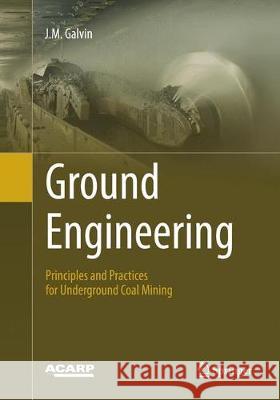
J.M. Galvin
Ground Engineering: Principles and Practices for Underground Coal Mining Galvin, J. M. 9783319797199 Springer - książkaWidoczna okładka, to zdjęcie poglądowe, a rzeczywista szata graficzna może różnić się od prezentowanej.

Ground Engineering: Principles and Practices for Underground Coal Mining

ISBN-13: 9783319797199 / Angielski / Miękka / 2018 / 684 str.

J.M. Galvin
cena 363,12
(netto: 345,83 VAT:  5%)

Najniższa cena z 30 dni: 346,96
Termin realizacji zamówienia:
ok. 22 dni roboczych.

Darmowa dostawa!

This book teaches readers ground engineering principles and related mining and risk management practices associated with underground coal mining. It establishes the basic elements of risk management and the fundamental principles of ground behaviour and then applies these to the essential building blocks of any underground coal mining system, comprising excavations, pillars, and interactions between workings.Readers will also learn about types of ground support and reinforcement systems and their operating mechanisms. These elements provide the platform whereby the principles can be applied to mining practice and risk management, directed primarily to bord and pillar mining, pillar extraction, longwall mining, sub-surface and surface subsidence, and operational hazards.The text concludes by presenting the framework of risk-based ground control management systems for achieving safe workplaces and efficient mining operations. In addition, a comprehensive reference list provides additional sources of information on the subject. Throughout, a large variety of examples show good and bad mining situations in order to demonstrate the application, or absence, of the established principles in practice.Written by an expert in underground coal mining and risk management, this book will help students and practitioners gain a deep understanding of the basic principles behind designing and conducting mining operations that are safe, efficient, and economically viable.Provides a comprehensive coverage of ground engineering principles within a risk management frameworkFeatures a large variety of examples that show good and poor mining situations in order to demonstrate the application of the established principles in practiceIdeal for students and practitionersAbout the authorEmeritus Professor Jim Galvin has a relatively unique combination of industrial, research and academic experience in the mining industry that spans specialist research and applied knowledge in ground engineering, mine management and risk management. His career encompasses directing ground engineering research groups in South Africa and Australia; practical mining experience, including active participation in the mines rescue service and responsibility for the design, operation, and management of large underground coal mines and for the consequences of loss of ground control as a mine manager; appointments as Professor and Head of the School of Mining Engineering at the University of New South Wales; and safety advisor to a number of Boards of Directors of organisations associated with mining.AwardsWinner of the ACARP Excellence Research Award 2016 .The Australian Coal Industry's Research Program selects recipients to receive ACARP Research and Industry Excellence Awards every two years. The recipients are selected on the recommendation of technical committees. They are honored for achievement of a considerable advance in an area of importance to the Australian coal mining industry. An important criterion is the likelihood of the results from the project being applied in mines.Winner of the Merv Harris Award from the Mine Managers Association of Australia.The Merv Harris Award is named for Merv Harris who donated money to be invested for a continuing award in 1988. With the award, the Mine Managers Association of Australia honors members of the Association who demonstrate technical achievement in the Australian Coal Mining Industry. The first award was granted in 1990, since then, only two people have received this honor.The book has received the following awards.... AGS (Australian Geomechanics Society) congratulates Dr Galvin for these awards


Kategorie:
Technologie
Kategorie BISAC:
Technology & Engineering > Mining
Technology & Engineering > Civil - Soil & Rock
Science > Earth Sciences - Meteorology & Climatology
Wydawca:
Springer
Język:
Angielski
ISBN-13:
9783319797199
Rok wydania:
2018
Wydanie:
Softcover Repri
Ilość stron:
684
Oprawa:
Miękka
Wolumenów:
01
Dodatkowe informacje:
Glosariusz/słownik

"Each of the 12 chapters begins with an abstract and a list of keywords, and ends with a reference list. ... The book is splendidly illustrated with presentations of quantitative data, mine plans and photographs of some of the untoward things that can happen in underground mines. ... Ground engineering should attract international sales and help mine operators to achieve optimum mining efficiency without compromising safety." (Professor Ian Rae, ATSE Focus, Issue 199, December, 2016)

"To the knowledge of the reviewer there is no comparable text that covers ground engineering principles and underground coal mining practice in such a comprehensive way. This book fills a serious gap in the mining and rock mechanics literature. ... This book is not only of value to ground engineering specialists on coal mines, but will be of equal value to coal mine planning personnel, coal mine managers, and mining authorities." (Horst Wagner, The Journal of the Southern African Institute of Mining and Metallurgy, November, 2016)

"The book provides a very logical and complete approach to all of the major ground engineering challenges facing modern underground coal mines ... . I have no doubt that this book has filled a major void in the field, not just in Australia, but also internationally. ... it will rapidly become a 'must-have' reference book, not just for students and researchers, but as a life-long reference point for career professionals working in the underground coal sectors around the world." (Bruce Hebblewhite, Bulletin Magazine, August, 2016)

"The book provides an outstanding, detailed and much needed, account of ground engineering principles and their application in underground coal mining practice in Australia and internationally. ... I recommend this book unreservedly to all those having responsibility for identifying and managing ground control-related risk issues in underground coal mines, including mine managers, planners, operators, geotechnical engineers (including consultants), mining regulators, academics and especially mining engineering students." (Edwin T. Brown, Australian Geomechanics, Vol. 51 (1), March, 2016)


 1. SCOPE OF GROUND ENGINEERING

1.1. What is Ground Engineering

1.2. Peculiarities of Ground Engineering

1.3. State of the Art

1.4. Risk Management

1.5. The Impact of Risk Management and Technology


2. FUNDAMENTAL PRINCIPLES FOR GROUND ENGINEERING

2.1. Introduction

2.2. Characteristics of Underground Coal Mining

2.2.1. Geological Setting

2.2.2. Mine Access

2.2.3. Mine Roadways

2.2.4. Mining Methods

2.3. Rock Mass Fabric

2.4. Physical Parameters

2.5. Material Properties

2.5.1. Load-Displacement

2.5.2. Stress-Strain

2.5.3. Stiffness

2.5.4. Strength

2.5.5. Stored Energy and Seismicity

2.5.6. Poisson’s Effect

2.5.7. Cohesion and Friction on a Fracture Surface

2.5.8. Post-peak Strength Behaviour

2.6. Rock Mechanics

2.6.1. Specifying Stresses within Rock

2.6.2. Strength of Rock

2.6.3. Equivalent Modulus of Strata

2.6.4. Failure Criteria

2.6.5. Effective Stress

2.6.6. Primitive, Induced, Resultant and Field Stress

2.6.7. Field Stress in Coal

2.6.8. Field Shear Strength

2.6.9. Reduction in Confinement

2.6.10. Rock Mass Classification Systems 

2.6.11. Failure Mode

2.6.12. Ground Response Curve

2.7. Analysis Techniques

2.7.1. Empirical Methods

2.7.2. Analytical Meth

ods

2.7.

3. Numerical Methods

2.7.4. Safety Factor

2.7.5. Statistical and Probabilistic Analysis

2.8. Statics

2.8.1. Introduction

2.8.2. Basic Definitions and Principles

2.8.3. Transversely Loaded Beams

2.8.4. Axially Loaded Columns

2.8.5. Eccentrically Loaded Columns

2.8.6. Beam-Columns Subjected to Simultaneous Axial and Transverse Loading

2.8.7. Thin Plate Subjected to Axial and Transverse Load

2.8.8. Linear Arch Theory

2.8.9. Classical Beam Theory Applications in Ground Engineering


3. EXCAVATION MECHANICS

3.1. Introduction

3.2. Excavation Response

3.3. Caving Mechanics

3.3.1. Basic Principles

3.3.2. Strong Massive Strata

3.3.3. Span Design

3.4. Elevated Horizontal Stress

3.5. Shallow Mining

3.5.1. Principles

3.5.2. Practice


4. PILLAR SYSTEMS

4.1. Introduction

4.2. Functional, Risk Based Approach To Pillar Design

4.3. Pillar Working Stress

4.3.1. Pillar System Stiffness

4.3.2. Regular Bord and Pillar Layouts

4.3.3. Irregular Bord and Pillar Layouts

4.4. Pillar System Strength

4.4.1. Defining Pillar Strength and Failure

4.4.2. Geological Factors

4.4.3. Geometri

c Facto

rs

4.4.4.

Scale F

actors

4.4.5.

Determi

ning

Pillar

Streng

th

4

.5. Quantifying Desig

n Risk

4.5.1.

Probabi

listic

Stability

Prediction

4.5.2. Probabilistic Design

4.5.3. Summary Points

4.6. Pillar Failure Modes

4.6.1. Types

4.6.2. Conventional Failure Mode

4.6.3. Dynamic Confined Core Failure

4.7. The Complexity of Pillar Behaviour

4.8. Pillar Design Considerations

4.8.1. Empirical Data Regime

4.8.2. Stiff Superincumbent Strata

4.8.3. Behaviour

4.8.4. Seam Specific Strength

4.8.5. Ground Response Curve

4.8.6. Correlations Between Safety Factor and Performance Probability

4.8.7. UNSW Pillar Design Methodology  

4.8.8. Diamond Shaped Pillars

4.8.9. Irregular Pillar Shapes

4.8.10. Highwall Mining


5. INTERACTION BETWEEN WORKINGS

5.1. Introduction

5.2. Workings in the Same Seam

5.2.1. Framework

5.2.2. Pillar Systems

5.2.3. Roadways

5.2.4. Panels

5.2.5. Interaction Between Roadways and Excavations

5.3. Multiseam Workings

5.3.1. Framework

5.3.2. Pillar Systems

5.3.3. Extraction Panels


6. SUPPORT AND REINFORCEMENT SYSTEMS

6.1. Introduction

6.2.

Primary Chara

cteristics

6.3. Stand

ing Support

6.3.1. Pr

ops

6.3

.2. Timber Cho

cks

6.3.3. Cement

itious Chocks

6.3.4. Steel Arches and Sets

6.3.

5. Pillars  

6.4. Tend

on Support and

Reinforcement

6.4.1.

Scope

6.4.2. Functio

ns of Tendons

6.

4.3. Anchorage of Tendons <6.4.4. Practical Considerations

6.5. Surface Restraint Systems

6.5.1. Scope

6.5.2. Cross Supports

6.5.3. Screens

6.5.4. Membranes and Liners

6.6. Spiling

6.7. Strata Binders

6.8. Void Fillers


7. GROUND SUPPORT DESIGN

7.1. Introduction

7.2. Roof Control

7.2.1. Failure Modes

7.2.2. Generic Design Approaches

7.3. Theoretical Roof Support Design Aspects

7.3.1. Classical Beam Theory

7.3.2. Contribution of Long Central Tendons

7.3.3. UCS – E Correlations

7.3.4. Rock Mass Classification Systems

7.3.5. Reinforcement Density Indices

7.3.6. Numerical Modelling

7.4. Summary Conclusions

7.5. Operational Roof Support Design Aspects

7.5.1. Roadway Span

7.5.2. Timing of Installation

7.5.3. Role and Timing of Centre Tendons

7.5.4. Effectiveness of Pretension

7.5.5. Stress Relief

7.5.6. Coal Roof
7.5.7. Floor

7.5.8. Monitoring at Height

7.5.

9. Mining Through Cro

ss Measures

7.6. Rib Control

7.6.1.

Introduction

7.6.2. Risk Profile

7.6.3. Rib Comp

osition

7.6.4.

Rib Behaviour

7.6.5. Design Consid

erations

7.6.6. Suppor

t Hardware Considerations

7.6.7. Op

erational Considerati

ons

7.6.8. Sum

mary Conclusions


8. PILL

AR EXTRACTION

8.1. Introduction

8

.2. Attributes of Pillar Extraction

8.3. Basic Pillar Extraction Techniques

8.3.1. Design and Support Terminology

8.3.2. Total Extraction Methods

8.3.3. Partial Extraction Methods

8.4. Ground Control Considerations

8.4.1. Introduction

8.4.2. Regional Stability

8.4.3. Panel Stability

8.4.4. Workplace Stability

8.5. Operating Discipline


9. LONGWALL MINING

9.1. Introduction

9.2. Panel Layout

9.2.1. Basic Longwall Mining Methods

9.2.2. Gateroad Direction and Layout

9.2.3. Chain Pillar Life Cycle

9.2.4. Chain Pillar Design

9.2.5. Chain Pillar/Gateroad Behaviour

9.3. Longwall Powered Supports

9.3.1. Development

9.3.2. Basic Functions

9.3.3. Static and Kinematic Characteristics

9.4. Operational Variables
9.4.1. Cutting Technique and Support Configuration

9.4.2. Powered Support System Maintenanc

e

9.4.3. Face Operati

ng Practices

9.5. Longwall Face Str

ata Control

9.

5.1. Introduction

9.5

.2. Coal Face

9

.5.3. Floor

9.5.4. Im

medi

ate and Upper Roof Strata

9.6. Installation Roadways

9.7. Pre-driven R

oadways Within A Longwall Block

9.7.1. Generic Types and Mining Practices

9.7.2. Pre-Driven Longwall R

ecovery Roadways

9.8.

Longwall Face Recove

ry

9.9. Other Longwal

l Variants
9.9.1.

Longwall Top Coal Caving

9.9.

2. Miniwall


10. OVERBURDEN SUBSIDENCE

10.1. Introduction

10.2. Generic Behaviours

10.3. Sub-Surface Subsidence

10.3.1. Fundamentals

10.3.2. Subsurface Effects

10.3.3. Impacts

10.4. Surface Subsidence

10.4.1. Introduction

10.4.2. Sinkhole and Plug Subsidence

10.4.3. Classical Subsidence Behaviour

10.4.4. Site-Centric Subsidence

10.4.5. Prediction of Classical Surface Subsidence

10.4.6. Prediction of Site-centric Subsidence

10.4.7. Surface Subsidence Impacts

10.4.8. Mitigation and Remediation


11. OPERATIONAL HAZARDS

11.1. Introduction

11.2. Windblast  

11.2.1. Introduction

11.2.2. Behaviour Features

11.2.3. Risk Management of Windblasts
11.3. Feather Edging

11.4. Top Coaling an

d Bottom Coaling

11.5. Dippi

ng Workings

11.6. Inrush

11.6.1. Def

inition

11.6.2. Criti

cal Factors and Considerations

11.7. Flooded Workings

11.8. Bumps and Pressure Bur

sts

11.8.1

. Definitio

ns

11.8.2. Pressure Burst Failure Mechanisms

11.8.3. Sei

smic Events Associated with Rock Failure

11.8.4. Seismic Events Associated with Discontinuities

11.8.5. Risk Management of Pressure

Bursts

11.9. Gas Outbursts

11.9.1. Definition

11.9.2. Behaviour Features

11.9.3. Risk Management

of Outbursts

11.10. Mining Through Faults a

nd Dykes

11.11. Frictional Ignition Involving Rock

11.12. Backfilling of Bord and Pillar Workings

11.13. Roof Falls

11.13.1. Effect on Pillar Strength

11.13.2. Roof Fall Recovery

11.14. Experimental Panels

11.15. Alternative Rock Bolt Applications

11.16. Convergence Zones and Paleochannels

12. MANAGING RISK IN GROUND ENGINEERING

12.1. Introduction

12.2. Ground Control Management Plan

12.2.1. Basis for a Ground Control Management Plan

12.2.2. Structure of a Ground Control Management Plan

12.2.3. Competencies

12.3. Risk Analysis Foundations

12.4. Types of Risk Assessment

12.5. Risk Assessment Process

12.5.1. Context

12.5.2. Team Comp

osition <12.5.3. Controls

12.5.4. O

ther Process Co

nsiderations

12.6. Implementation

12.6.1. Hazard Plans

1

2.6.2. Trigger Action Response Plan

s

12.6.3. Review

<12.6.4. Change Management

12.6.5. O

ther Implementation Considerations

12.6.6. Determining Acceptable Levels of Risk

12.6.7. Reviewing

A Risk Assessment

12.7. Moni

toring

12.7.1. Purpose

12.7.2. Monitoring Strategy

12.7.3. Sens

ory Monitoring

12.7.4. Monitoring w

ith Instrumentation

12.7.5. Displac

ement Monitoring Instrumenta

tion

12.7.6. Stress Monitori

ng Instrumentation

12.7.7. O

ther Instrumentation

12.7.8. Field Monitoring Prac

tices

12.8. Concluding Remarks


GLOSSARY OF TERMS

GLOSSARY OF SYMBOLS

SYMBOLS IN METRIC SYSTEM

Appendices

Emeritus Professor Jim Galvin has a relatively unique combination of industrial, research and academic experience in the mining industry that spans specialist research and applied knowledge in ground engineering, mine management and risk management.  His career encompasses directing ground engineering research groups in South Africa and Australia; practical mining experience, including active participation in the mines rescue service and responsibility for the design, operation, and management of large underground coal mines and for the consequences of loss of ground control as a mine manager; appointments as Professor and Head of the School of Mining Engineering at the University of New South Wales; and safety advisor to a number of Boards of Directors of organisations associated with mining.

This book teaches readers ground engineering principles and related mining and risk management practices associated with underground coal mining. It establishes the basic elements of risk management and the fundamental principles of ground behaviour and then applies these to the essential building blocks of any underground coal mining system, comprising excavations, pillars, and interactions between workings.

Readers will also learn about types of ground support and reinforcement systems and their operating mechanisms. These elements provide the platform whereby the principles can be applied to mining practice and risk management, directed primarily to bord and pillar mining, pillar extraction, longwall mining, sub-surface and surface subsidence, and operational hazards.

The text concludes by presenting the framework of risk-based ground control management systems for achieving safe workplaces and efficient mining operations. In addition, a comprehensive reference list provides additional sources of information on the subject. Throughout, a large variety of examples show good and bad mining situations in order to demonstrate the application, or absence, of the established principles in practice.

Written by an expert in underground coal mining and risk management, this book will help students and practitioners gain a deep understanding of the basic principles behind designing and conducting mining operations that are safe, efficient, and economically viable.

  • Provides a comprehensive coverage of ground engineering principles within a risk management framework
  • Features a large variety of examples that show good and poor mining situations in order to demonstrate the application of the established principles in practice
  • Ideal for students and practitioners


About the author

Emeritus Professor Jim Galvin has a relatively unique combination of industrial, research and academic experience in the mining industry that spans specialist research and applied knowledge in ground engineering, mine management and risk management.  His career encompasses directing ground engineering research groups in South Africa and Australia; practical mining experience, including active participation in the mines rescue service and responsibility for the design, operation, and management of large underground coal mines and for the consequences of loss of ground control as a mine manager; appointments as Professor and Head of the School of Mining Engineering at the University of New South Wales; and safety advisor to a number of Boards of Directors of organisations associated with mining.


Udostępnij

Facebook - konto krainaksiazek.pl


Opinie o Krainaksiazek.pl na Opineo.pl

Partner Mybenefit

Krainaksiazek.pl w programie rzetelna firma Krainaksiaze.pl - płatności przez paypal

Czytaj nas na:

Facebook - krainaksiazek.pl
  • książki na zamówienie
  • granty
  • książka na prezent
  • kontakt
  • pomoc
  • opinie
  • regulamin
  • polityka prywatności

Zobacz:

  • Księgarnia czeska

  • Wydawnictwo Książkowe Klimaty

1997-2025 DolnySlask.com Agencja Internetowa

© 1997-2022 krainaksiazek.pl
     
KONTAKT | REGULAMIN | POLITYKA PRYWATNOŚCI | USTAWIENIA PRYWATNOŚCI
Zobacz: Księgarnia Czeska | Wydawnictwo Książkowe Klimaty | Mapa strony | Lista autorów
KrainaKsiazek.PL - Księgarnia Internetowa

Polityka prywatnosci - link
Krainaksiazek.pl - płatnośc Przelewy24
Przechowalnia Przechowalnia






