• Wyszukiwanie zaawansowane
  • Kategorie
  • Kategorie BISAC
  • Książki na zamówienie
  • Promocje
  • Granty
  • Książka na prezent
  • Opinie
  • Pomoc
  • Załóż konto
  • Zaloguj się

Green Corrosion Inhibitors: Theory and Practice » książka


zaloguj się | załóż konto
Logo Krainaksiazek.pl

koszyk

konto

szukaj
topmenu
Księgarnia internetowa
Szukaj
Książki na zamówienie
Promocje
Granty
Książka na prezent
Moje konto
Pomoc
 
 
Wyszukiwanie zaawansowane
Pusty koszyk
Bezpłatna dostawa dla zamówień powyżej 20 złBezpłatna dostawa dla zamówień powyżej 20 zł

Kategorie główne

• Nauka
 [2950560]
• Literatura piękna
 [1849509]

  więcej...
• Turystyka
 [71097]
• Informatyka
 [151150]
• Komiksy
 [35848]
• Encyklopedie
 [23178]
• Dziecięca
 [617388]
• Hobby
 [139064]
• AudioBooki
 [1657]
• Literatura faktu
 [228597]
• Muzyka CD
 [383]
• Słowniki
 [2855]
• Inne
 [445295]
• Kalendarze
 [1464]
• Podręczniki
 [167547]
• Poradniki
 [480102]
• Religia
 [510749]
• Czasopisma
 [516]
• Sport
 [61293]
• Sztuka
 [243352]
• CD, DVD, Video
 [3414]
• Technologie
 [219456]
• Zdrowie
 [101002]
• Książkowe Klimaty
 [124]
• Zabawki
 [2311]
• Puzzle, gry
 [3459]
• Literatura w języku ukraińskim
 [254]
• Art. papiernicze i szkolne
 [8079]
Kategorie szczegółowe BISAC

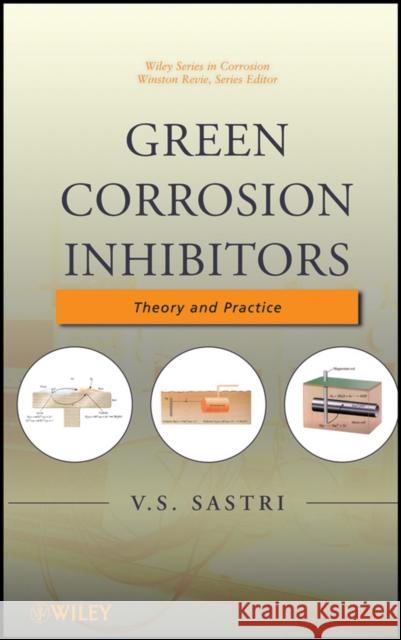
Green Corrosion Inhibitors: Theory and Practice

ISBN-13: 9780470452103 / Angielski / Twarda / 2011 / 328 str.
V. S. Sastri; Vedula S. Sastri
Green Corrosion Inhibitors: Theory and Practice Sastri, V. S. 9780470452103 John Wiley & Sons - książkaWidoczna okładka, to zdjęcie poglądowe, a rzeczywista szata graficzna może różnić się od prezentowanej.

Green Corrosion Inhibitors: Theory and Practice

ISBN-13: 9780470452103 / Angielski / Twarda / 2011 / 328 str.

V. S. Sastri; Vedula S. Sastri
cena 516,21
(netto: 491,63 VAT:  5%)

Najniższa cena z 30 dni: 513,03
Termin realizacji zamówienia:
ok. 30 dni roboczych
Dostawa w 2026 r.

Darmowa dostawa!

A book to cover developments in corrosion inhibitors is long overdue. This has been addressed by Dr Sastri in a book which presents fundamental aspects of corrosion inhibition, historical developments and the industrial applications of inhibitors. The book deals with the electrochemical principles and chemical aspects of corrosion inhibition, such as stability of metal complexes, the Hammett equation, hard and soft acid and base principle, quantum chemical aspects and Hansch' s model and also with the various surface analysis techniques, e.g. XPS, Auger, SIMS and Raman spectroscopy, that are used in industry for corrosion inhibition. The applications of corrosion inhibition are wide ranging. Examples given in this book include: oil and gas wells, petrochemical plants, steel reinforced cement, water cooling systems, and many more. The final chapters discuss economic and environmental considerations which are now of prime importance. The book is written for researchers in academia and industry, practicing corrosion engineers and students of materials science, engineering and applied chemistry.


Kategorie:
Nauka, Fizyka
Kategorie BISAC:
Science > Nanoscience
Science > Chemia - Fizyczna
Wydawca:
John Wiley & Sons
Seria wydawnicza:
Wiley Series in Corrosion Wiley Series in Corrosion
Język:
Angielski
ISBN-13:
9780470452103
Rok wydania:
2011
Numer serii:
000336315
Ilość stron:
328
Waga:
0.65 kg
Wymiary:
23.62 x 15.49 x 2.29
Oprawa:
Twarda
Wolumenów:
01
Dodatkowe informacje:
Bibliografia
Wydanie ilustrowane

They contribute to a clear, lucid reading and understanding, making, this is a valuable text, for both professionals and students of engineering, science, chemistry and metallurgy.  The book is enriched by an amazing number of references: 909; some of historical value, other illustrating fundamental aspects and current industrial practice.   (Materials and Corrosion, 1 November 2012)

"It could be used as a tutorial and reference by professionals, or as a corrective supplemental text in a conventional graduate or undergraduate course on corrosion." (Book News, 1 October 2011)


Preface.

1 Introduction and Forms of Corrosion.

1.1 Definition.

1.2 Developments in Corrosion Science.

1.3 Development of Some Corrosion–Related Phenomena.

1.4 Economics of Corrosion.

1.5 Safety and Environmental Considerations.

1.6 Forms of Corrosion.

1.6.1 General Corrosion.

1.6.2 Galvanic Corrosion.

1.6.3 Crevice Corrosion.

1.6.4 Pitting Corrosion.

1.6.5 Dealloying or Selective Leaching.

1.6.6 Intergranular Corrosion.

1.6.7 Cavitation Damage.

1.6.8 Fretting Corrosion.

1.6.9 Corrosion Fatigue.

1.6.10 Stress–Corrosion Cracking.

1.7 Corrosion Inhibition.

References.

2 Electrochemical Principles and Corrosion Monitoring.

2.1 Thermodynamic Basis.

2.2 Nature of Corrosion Reactions.

2.3 Standard Electrode Potentials.

2.4 Pourbaix Diagrams.

2.5 Dynamic Electrochemical Processes.

2.6 Monitoring Corrosion and Effectiveness of Corrosion Inhibitors.

2.6.1 Objectives of Corrosion Monitoring.

2.6.2 Corrosion Monitoring Probe Location.

2.6.3 Probe Type and its Selection.

2.6.4 Direct Intrusive Corrosion Monitoring Techniques.

2.6.4.1 Physical Techniques.

2.6.4.2 Electrical Resistance.

2.6.4.3 Inductive Resistance Probes (22).

2.6.4.4 Electrochemical Techniques.

2.6.4.5 Linear Polarization Resistance.

2.6.4.6 Zero–Resistance Ammetry.

2.6.4.7 Potentiodynamic Galvanodynamic Polarization.

2.6.4.8 Electrochemical Noise.

2.6.4.9 Electrochemical Impedance Spectroscopy.

2.6.4.10 Harmonic Distortion Analysis.

2.6.5 Direct Nonintrusive Techniques.

2.6.5.1 Ultrasonics.

2.6.5.2 Magnetic Flux Leakage.

2.6.5.3 Eddy Current Technique.

2.6.5.4 Remote Field Eddy Current Technique.

2.6.5.5 Radiography.

2.6.5.6 Thin–Layer Activation and Gamma Radiography.

2.6.5.7 Electrical Field Mapping.

2.6.6 Indirect On–Line Measurement Techniques.

2.6.6.1 Hydrogen Monitoring.

2.6.6.2 Corrosion Potential.

2.6.6.3 On–Line Water Chemistry Parameters.

2.6.6.3.1 pH.

2.6.6.3.2 Conductivity.

2.6.6.3.3 Dissolved Oxygen.

2.6.6.3.4 Oxidation Reduction Potential.

2.6.7 Fluid Detection.

2.6.7.1 Flow Regime.

2.6.7.2 Flow Velocity.

2.6.7.3 Process Parameters.

2.6.7.4 Pressure.

2.6.7.5 Temperature.

2.6.7.6 Dew Point.

2.6.7.7 Fouling.

2.6.8 Indirect Off–Line Measurement Techniques.

2.6.8.1 Off–Line Water Chemistry Parameters.

2.6.8.1.1 Alkalinity.

2.6.8.1.2 Metal Ion Analysis.

2.6.8.1.3 Concentration of Dissolved Solids.

2.6.8.1.4 Gas Analysis.

2.6.8.1.5 Residual Oxidant.

2.6.8.1.6 Microbiological Analysis.

2.6.8.1.7 Residual Inhibitor.

2.6.8.1.8 Filming Corrosion Inhibitor Residual.

2.6.8.1.9 Reactant Corrosion Inhibitor Residual.

2.6.8.1.10 Chemical Analysis of Process Samples.

2.6.8.1.11 Sulfur Content.

2.6.8.1.12 Total Acid Number.

2.6.8.1.13 Nitrogen Content.

2.6.8.1.14 Salt Content of Crude Oil.

References.

3 Adsorption in Corrosion Inhibition.

3.1 Adsorption of Inhibitor at the Metal Surface.

3.2 Corrosion Inhibitors.

3.3 Adsorption Isotherms.

3.4 Anodic Dissolution and Adsorption.

3.4.1 Formation of Passive Films.

3.5 Role of Oxyanions (Passivation) in Corrosion Inhibition.

3.6 Inhibition of Localized Corrosion.

3.7 Adsorption of Halide Ions.

3.8 Influence of Environmental Factors.

3.9 Adsorption Interactions.

3.10 Passivation of Metals.

3.11 Inhibition of Localized Corrosion.

References.

4 Corrosion Inhibition: Theory and Practice.

4.1 Factors Pertaining to Metal Samples.

4.1.1 Sample Preparation.

4.1.2 Environmental Factors.

4.1.3 Concentration of Inhibitor.

4.1.4 Process Conditions.

4.2 Inhibitors in Use.

4.3 Cooling Systems.

4.4 Processing with Acid Solutions.

4.5 Corrosion Problems in the Oil Industry.

4.6 Corrosion Inhibition of Reinforcing Steel in Concrete.

4.7 Corrosion Inhibition in Coal Water Slurry Pipelines.

4.8 Corrosion Inhibition in the Mining Industry.

4.9 Atmospheric Corrosion Inhibition.

References.

5 Corrosion Inhibition Mechanisms.

5.1 Interface Corrosion Inhibition.

5.2 Structure of the Inhibitor.

5.2.1 Stability Constants of Zinc Triazole Complexes (15).

5.3 Structure Activity Relationships.

5.4 Quantum Chemical Considerations.

5.4.1 Application of Hard and Soft Acid and Base Principle in Corrosion Inhibition.

5.5 Inhibitor Field Theory of Corrosion Inhibition.

5.6 Application to Typical Metal Inhibitor Systems.

5.7 Photochemical Corrosion Inhibition.

5.8 Influence of Inhibitors on Corrosion Reactions in Acid Media.

5.9 Corrosion Inhibition in Neutral Solutions.

5.10 Corrosion Inhibition of Iron: Interphase and Intraphase Inhibition.

5.11 Passive Oxide Films.

5.12 Interaction of Anions with Oxide Films.

References.

6 Industrial Applications of Corrosion Inhibition.

6.1 Corrosion Inhibition of Reinforcing Steel in Concrete.

6.2 Corrosion Inhibition in Coal–Water Slurries.

6.3 Corrosion Inhibition in Cooling Water Systems.

6.4 Molybdate Inhibitor in Corrosion Inhibition.

6.5 Corrosion Inhibition in Acid Solutions.

6.5.1 Acid Pickling.

6.6 Oxygen Scavengers.

6.7 Inhibition of Corrosion by Organic Coatings.

6.8 Mechanism of Protection by Tannins.

6.9 Corrosion Inhibition of Titanium and Zirconium in Acid Media.

6.10 Corrosion Resistance of Several Metals and Alloys.

References.

7 Environmentally Friendly Corrosion Inhibitors.

7.1 Standardized Environmental Testing.

7.2 Summary of PARCOM Guidelines.

7.2.1 Toxicity: As Measured on Full Formulation.

7.2.2 Biodegradation.

7.2.3 Partition Coefficient.

7.2.4 Toxicity Testing.

7.3 Macrocyclic Compounds in Corrosion Inhibition.

7.4 Environmentally Green Inhibitors.

7.5 Role of Rare Earth Compounds in Replacing Chromate Inhibitors.

7.6 Oleochemicals as Corrosion Inhibitors.

7.7 Hybrid Coatings and Corrosion Inhibitors.

7.8 Barbiturates as Green Corrosion Inhibitors.

7.9 Corrosion Prevention of Copper Using Ultrathin Organic Monolayers.

7.10 Corrosion of Titanium Biomaterials.

7.11 Corrosion Control in the Electronics Industry.

References.

Index.

V. S. Vedula Sastri, PhD, has over thirty–five years of experience in corrosion and chemical processes. Since 1994, he has been a consultant for Sai Ram Consultants. Dr. Sastri has written five books, approximately 150 papers in scientific journals, and has edited proceedings for five international conferences of the Metallurgical Society of CIM.

A comprehensive resource on the modern aspects of corrosion inhibitors and their applications

The onset of corrosion looms at the core of all chemical processes. If unchecked, corrosion′s wrath poses a severe threat not only to worker safety, but to the environment as well. In this book an important and unique overview of corrosion inhibition science new technologies for waging battle against various forms of corrosion are thoroughly explored and examined. Focusing on corrosion inhibition in terms of metal complex formation, Green Corrosion Inhibitors covers basic principles, historical developments, and modern applications of green corrosion inhibitors with a full range of topics that allow students and practicing engineers to promote a safer and more cost–effective work environment. Discussion includes:

  • The application of hard and soft acid base principles

  • Ligand field theory

  • Photochemistry, quantum theory, and Sastri equation, both inorganic and organic

  • The development of green inhibitors and their applications to many metals and their alloys

Corrosion chemistry is rapidly changing as it travels a parallel path alongside strict environmental regulations requiring corrosion inhibitors to be environmentally friendly and safe. Because of this new social awareness, there is a dire need for a resource that helps practitioners apply the most current theory in real–world situations. Green Corrosion Inhibitors is that guide, showing that by using a proper inhibitor it is possible to maintain proper protection of materials and improve efficiency, while still remaining environmentally and fiscally acceptable.


Udostępnij

Facebook - konto krainaksiazek.pl


Opinie o Krainaksiazek.pl na Opineo.pl

Partner Mybenefit

Krainaksiazek.pl w programie rzetelna firma Krainaksiaze.pl - płatności przez paypal

Czytaj nas na:

Facebook - krainaksiazek.pl
  • książki na zamówienie
  • granty
  • książka na prezent
  • kontakt
  • pomoc
  • opinie
  • regulamin
  • polityka prywatności

Zobacz:

  • Księgarnia czeska

  • Wydawnictwo Książkowe Klimaty

1997-2025 DolnySlask.com Agencja Internetowa

© 1997-2022 krainaksiazek.pl
     
KONTAKT | REGULAMIN | POLITYKA PRYWATNOŚCI | USTAWIENIA PRYWATNOŚCI
Zobacz: Księgarnia Czeska | Wydawnictwo Książkowe Klimaty | Mapa strony | Lista autorów
KrainaKsiazek.PL - Księgarnia Internetowa

Polityka prywatnosci - link
Krainaksiazek.pl - płatnośc Przelewy24
Przechowalnia Przechowalnia






