• Wyszukiwanie zaawansowane
  • Kategorie
  • Kategorie BISAC
  • Książki na zamówienie
  • Promocje
  • Granty
  • Książka na prezent
  • Opinie
  • Pomoc
  • Załóż konto
  • Zaloguj się

Global Trade Policy: Questions and Answers » książka

zaloguj się | załóż konto
Logo Krainaksiazek.pl

koszyk

konto

szukaj
topmenu
Księgarnia internetowa
Szukaj
Książki na zamówienie
Promocje
Granty
Książka na prezent
Moje konto
Pomoc
 
 
Wyszukiwanie zaawansowane
Pusty koszyk
Bezpłatna dostawa dla zamówień powyżej 20 złBezpłatna dostawa dla zamówień powyżej 20 zł

Kategorie główne

• Nauka
 [2948695]
• Literatura piękna
 [1824038]

  więcej...
• Turystyka
 [70868]
• Informatyka
 [151073]
• Komiksy
 [35227]
• Encyklopedie
 [23181]
• Dziecięca
 [621575]
• Hobby
 [138961]
• AudioBooki
 [1642]
• Literatura faktu
 [228651]
• Muzyka CD
 [371]
• Słowniki
 [2933]
• Inne
 [445341]
• Kalendarze
 [1243]
• Podręczniki
 [164416]
• Poradniki
 [479493]
• Religia
 [510449]
• Czasopisma
 [502]
• Sport
 [61384]
• Sztuka
 [243086]
• CD, DVD, Video
 [3417]
• Technologie
 [219673]
• Zdrowie
 [100865]
• Książkowe Klimaty
 [124]
• Zabawki
 [2168]
• Puzzle, gry
 [3372]
• Literatura w języku ukraińskim
 [260]
• Art. papiernicze i szkolne
 [7838]
Kategorie szczegółowe BISAC

Global Trade Policy: Questions and Answers

ISBN-13: 9781118357651 / Angielski / Miękka / 2013 / 376 str.
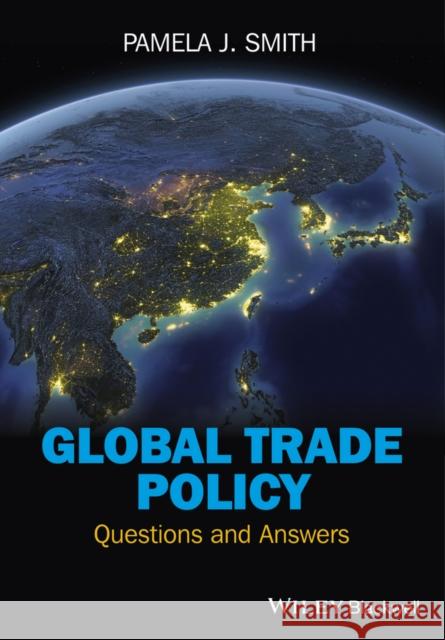
Pamela J. Smith
Global Trade Policy: Questions and Answers Smith, Pamela J. 9781118357651 John Wiley & Sons - książkaWidoczna okładka, to zdjęcie poglądowe, a rzeczywista szata graficzna może różnić się od prezentowanej.

Global Trade Policy: Questions and Answers

ISBN-13: 9781118357651 / Angielski / Miękka / 2013 / 376 str.

Pamela J. Smith
cena 250,82
(netto: 238,88 VAT:  5%)

Najniższa cena z 30 dni: 248,77
Termin realizacji zamówienia:
ok. 30 dni roboczych.

Darmowa dostawa!
inne wydania

Using a unique, question-based format, Global Trade Policy offers accessible coverage of the key questions in trade and policy; it charts the changing policy landscape and evolving institutional arrangements for trade policies, examines trade theory, and provides students with an economic framework to better understand the current issues in national and international trade policy.

  • Uses a unique, question-based format to explore the questions and current debates in international trade policy and their implications
  • Explores trade theory to help guide discussions of trade policy, including traditional theories of inter-industry trade, as well as newer theories of intra-industry and intra-firm trade
  • Examines the national and international effects of widely used policies designed to directly and indirectly affect trade, and considers the evolving institutional arrangements for these
  • Charts the changing policy landscape from traditional trade policies - such as tariffs, quantitative restrictions, and export subsidies - to those including intellectual property rights, labor, the environment, and growth and development policies
  • Covers national as well as global perspectives and their interaction, helping to explain opposing views on trade policy and liberalization
  • Includes applied exercises enabling students to explore open-ended and realistic questions of policy debate, making it ideal for classroom use; an instructor's manual and a range of other resources are available at www.wiley.com/go/globaltradepolicy

This highly–accessible book outlines an economic framework for understanding the current debates in international trade policy.


Kategorie:
Nauka, Ekonomia i biznes
Kategorie BISAC:
Political Science > International Relations - Trade & Tariffs
Business & Economics > International - General
Wydawca:
John Wiley & Sons
Język:
Angielski
ISBN-13:
9781118357651
Rok wydania:
2013
Ilość stron:
376
Waga:
0.57 kg
Wymiary:
24.13 x 17.02 x 1.78
Oprawa:
Miękka
Wolumenów:
01
Dodatkowe informacje:
Bibliografia
Wydanie ilustrowane


International economics teaching at the undergraduate and master s level generally sequences trade theory, trade policy, exchange rate determination and balance of payments, and international monetary adjustment under alternative exchange rate regimes more or less in that order with applications to countries, regional arrangements, and institutions brought into the discussion throughout. This clearly written volume focuses on the first two dimensions of international economics in the real–sector context. In chapter 1, Smith (Univ. of Minnesota) covers traditional Ricardian and factor–endowment–based trade models; she develops partial and general trade equilibria in chapter 2 and intra–industry and intra–firm trade in chapter 3. This discussion is thoroughly up–to–date and highlights the gap in conceptual elegance between inter–industry and intra–industry trade models. In part 2, Smith applies partial and general equilibrium constructs to trade policy, starting with tariffs and proceeding to subsidies and quotas and other quantitative restrictions, then compares the welfare consequences of alternative trade interventions. The book s real value comes in part 4 on the trade consequences of all kinds of domestic policies whose consequences (and often intent) include distorting trade. This covers a dog s breakfast of measures often hard to sort out (e.g., policies on labor standards, the environment, human rights). Summing Up: Highly recommended. Upper–division undergraduate and graduate students.
I. Walter, New York University.
(Choice, May 2014)

Acknowledgments xi

List of Tables xv

List of Figures xvii

Preface xxi

Part One Trade Theory as Guidance to Trade Policy 1

1 Preliminaries: Trade Theory 3

1.1 What Are the Core Questions Asked by International Trade Economists? 3

1.2 How Can Trade Theory Provide Guidance to Trade Policy? 4

1.3 How Has International Trade Evolved over Time in Practice? 5

1.4 How Has Trade Theory Evolved over Time? 6

1.5 How Is the Book Organized? 9

Further Reading 11

2 Inter–industry Trade 13

2.1 What Are the Effects of Trade in the Long Run, When Countries Differ in Technologies? 14

2.1.1 What are the production possibilities? 15

2.1.2 What are the relative costs and prices in autarky? 16

2.1.3 What are the world prices with trade and patterns of trade? 17

2.1.4 What are the gains from trade? 20

2.1.5 What are the effects of liberalizing trade policy? 22

2.2 What Are the Effects of Trade in the Long Run, When Countries Differ in Endowments? 24

2.2.1 How are endowments and outputs related? 28

2.2.2 How are goods prices and factor prices related? 29

2.2.3 What are the production possibilities? 32

2.2.4 What are the relative costs and prices in autarky? 32

2.2.5 What are the world prices with trade and the patterns of trade? 33

2.2.6 What are the gains from trade? 35

2.2.7 What are the effects of liberalizing trade policy? 37

2.2.8 How does factor mobility change the trade patterns? 38

2.3 What Are the Effects of Trade in the Short Run, When Countries Differ in Immobile Endowments? 39

2.3.1 What are the production possibilities? 40

2.3.2 What are the relative costs and prices in autarky? 42

2.3.3 What are the world prices with trade? 46

2.3.4 What are the patterns of trade? 47

2.3.5 What are the gains and income distribution effects of trade? 47

2.3.6 What are the effects of liberalizing trade policy? 50

2.4 Summary Remarks 51

Applied Problems 54

Further Reading 55

3 Intra–Industry and Intra–Firm Trade 57

3.1 What Is Intra–Industry Trade and Its Effects? 58

3.1.1 What are the patterns and gains from intra–industry trade? 60

3.2 What Is Intra–Firm Trade and Its Effects? 65

3.2.1 What are the patterns and motives for foreign direct investment? 66

3.2.2 How is trade related to foreign direct investment? 68

3.2.3 What are the patterns and motives for outsourcing and offshoring? 69

3.3 Summary Remarks 71

Applied Problems 74

Further Reading 76

Notes 78

Part Two Trade Policies and Their Effects 81

4 Preliminaries: Trade Policy and Welfare Considerations 83

4.1 What Are Traditional Trade Policies? 83

4.2 What Approaches Are Used to Examine Trade Policy? 84

4.3 What Are the Welfare Effects of Liberalizing Trade Policy? 85

4.4 How Is Part Two Organized? 88

Further Reading 89

Note 90

5 Tariffs 91

5.1 What Are Tariffs, Their Types and Purpose? 91

5.2 What Are the Effects of Tariffs? 92

5.2.1 Case 1: What are the effects of a tariff imposed by a large importer? 95

5.2.2 Case 2: What are the effects of a tariff imposed by a small importer? 100

5.2.3 Case 3: What are the effects of a tariff when export supply is inelastic relative to import demand? 103

5.2.4 How is the burden of the tariff allocated across countries and agents? 106

5.3 What Are the Effects of Tariff Liberalization? 107

5.4 How Protective Are Tariffs of the Domestic Industry? 109

5.4.1 How does tariff escalation affect the protection of the domestic industry? 110

5.5 Summary Remarks 111

Applied Problems 115

Further Reading 116

Notes 117

6 Export Subsidies 119

6.1 What Are Export Subsidies, Their Types and Purpose? 119

6.2 What Are the Effects of Export Subsidies? 120

6.2.1 Case 1: What are the effects of an export subsidy imposed by a large exporter? 122

6.2.2 Case 2: What are the effects of an export subsidy imposed by a small exporter? 127

6.2.3 Case 3: What are the effects of an export subsidy when export supply is elastic relative to import
demand? 129

6.2.4 Case 4: What are the effects of an export subsidy imposed by a large country with a comparative
disadvantage? 132

6.2.5 How is the burden of the export subsidy allocated across countries and agents? 136

6.3 What Are the Effects of Liberalizing Export Subsidies? 137

6.4 Summary Remarks 138

Applied Problems 142

Further Reading 143

Note 143

7 Quantitative Restrictions 145

7.1 What Are Quantitative Restrictions, Their Types and Purpose? 145

7.2 What Are the Effects of Quantitative Restrictions? 147

7.2.1 Case 1: What are the effects of an import quota imposed by a large importer? 149

7.2.2 Case 2: What are the effects of an export quota (or voluntary export restriction) imposed by a
large exporter? 153

7.2.3 Case 3: What are the effects of a ban imposed between two large countries? 154

7.3 Summary Remarks 157

Applied Problems 160

Further Reading 160

8 Policy Comparisons 163

8.1 What Are Policy Equivalents, and Their Purpose? 163

8.2 What Are the Relative Effects of Policy Equivalents? 164

8.2.1 What are the relative effects of tariffs, quotas, and VERs? 164

8.2.2 What are the relative effects of bans? 168

8.2.3 What are the relative effects of export subsidies? 168

8.2.4 How do the policies compare? 169

8.3 What Are the Relative Effects of Liberalizing Policies? 172

8.4 What Are the Effects of Substituting Policies? 174

8.5 Summary Remarks 176

Applied Problems 180

Further Reading 182

Note 182

Part Three Trade–Related Policies 183

9 Preliminaries: Trade–Related Policies and Trade in Services 185

9.1 What Are Trade–Related Policies? 185

9.2 How Have Trade–Related Policies Evolved over Time in Practice? 186

9.3 How Have Trade Policies Toward Services Evolved over Time in Practice? 188

9.4 How Is Part Three Organized? 190

Further Reading 191

Notes 192

10 Intellectual Property Rights 193

10.1 What Are Intellectual Property Rights, Their Types, and Purpose? 193

10.2 What Are the Effects of Intellectual Property Rights? 196

10.2.1 What are the domestic effects of intellectual property rights? 196

10.2.2 What are the effects of country differences in intellectual property rights? 197

10.2.3 What are the relative effects of intellectual property rights on trade, foreign direct investment,
and licensing? 200

10.3 How Have Intellectual Property Rights Evolved over Time in Practice? 202

10.4 What Are the Intellectual Property Rights Issues on the Policy Frontier? 206

10.5 Summary Remarks 208

Applied Problems 211

Further Reading 212

Notes 214

11 Environmental Policies 215

11.1 What Are Trade–Related Environmental Policies, Their Types and Purpose? 215

11.2 What Are the Effects of Trade Policy on the Environment? 216

11.3 What Are the Effects of Environmental Policy on Trade? 219

11.4 What Are the Implications of Using Trade Policy to Address Environmental Externalities? 221

11.4.1 Case 1: Can trade policy correct a negative production externality in a small exporter? 223

11.4.2 Case 2: Can trade policy correct a negative consumption externality in a small importer? 228

11.5 Summary Remarks 232

Applied Problems 235

Further Reading 237

Notes 238

12 Labor Policies 239

12.1 What Are Trade–Related Labor Policies, Their Types, and Purpose? 239

12.2 What Are the Effects of Trade Policy on Labor? 241

12.2.1 What are the long–run effects of trade on wages? 242

12.2.2 What are the short–run effects of trade on wages? 254

12.3 How Can the Gains and Losses from Trade Be Redistributed within Countries? 264

12.4 What Are the Effects of Labor Policy on Trade? 265

12.5 Summary Remarks 267

Applied Problems 270

Further Reading 271

Notes 272

13 Growth and Development Policies 273

13.1 What Are Trade–Related Development and Growth Policies, Their Types, and Purpose? 273

13.2 What Are the Effects of Trade on Development and Growth? 275

13.2.1 What are the effects of trade on country welfare? 275

13.2.2 What are the effects of trade on growth? 282

13.2.3 What are the effects of trade on income distribution? 286

13.3 What Are the Effects of Growth on Development (or Welfare) in the Presence of Trade? 287

13.3.1 What are the effects of economic growth on relative outputs? 288

13.3.2 What are the effects of output changes on the terms of trade? 288

13.3.3 What are the effects of terms of trade changes on welfare? 292

13.4 Summary Remarks 295

Applied Problems 298

Further Reading 299

Notes 301

Part Four Trade Arrangements 303

14 Regional and Multilateral Arrangements 305

14.1 What Are the Institutional Arrangements for Trade Policy? 306

14.1.1 What are the prominent multilateral arrangements for trade policy in practice? 308

14.2 What Are the Effects of Alterative Arrangements for Trade Policy? 310

14.2.1 What are the effects of regional liberalization? 311

14.2.2 What are the effects of multilateral liberalization? 315

14.2.3 What are the effects of country exclusion from multilateral arrangements? 317

14.3 Are Regional Arrangements Stepping Stones or Stumbling Blocks to Multilateral Liberalization? 321

14.4 Summary Remarks 323

Applied Problems 327

Further Reading 329

Notes 331

References 333

Index 339

Pamela J. Smith is Associate Professor of applied economics at the University of Minnesota and teaches international trade and policy at the graduate and undergraduate levels

In Global Trade Policy, economist Pamela J. Smith explores the key questions raised about global trade and policy today  and the answers that emerge from economic research. During the past two decades, the character of global trade and policy has changed in unprecedented ways. Attention has turned from traditional trade policies  such as tariffs, quantitative restrictions, and export subsidies  to trade related policies including intellectual property rights, labor policies, environmental policies, and growth and development policies. The institutional arrangements for these policies continue to evolve with substantial international debate. Offering accessible coverage for students of economics, business, public policy, and applied economics, this book provides an economic framework for understanding the current policy debates in global trade. Readers are first given background knowledge of trade theory to help guide discussions of trade policy, including traditional theories of inter industry trade, as well as newer theories of intra industry and intra firm trade. They then examine the national and global effects of widely used policies designed to directly affect trade, the indirect impacts of newer trade related policies, and the institutional arrangements for these policies. The distinctive question based format provides an accessible structure for students to grasp the key issues in this field, and the inclusion of reading lists and applied exercises enable them to explore open ended and realistic questions of policy debate.


Udostępnij

Facebook - konto krainaksiazek.pl


Opinie o Krainaksiazek.pl na Opineo.pl

Partner Mybenefit

Krainaksiazek.pl w programie rzetelna firma Krainaksiaze.pl - płatności przez paypal

Czytaj nas na:

Facebook - krainaksiazek.pl
  • książki na zamówienie
  • granty
  • książka na prezent
  • kontakt
  • pomoc
  • opinie
  • regulamin
  • polityka prywatności

Zobacz:

  • Księgarnia czeska

  • Wydawnictwo Książkowe Klimaty

1997-2026 DolnySlask.com Agencja Internetowa

© 1997-2022 krainaksiazek.pl
     
KONTAKT | REGULAMIN | POLITYKA PRYWATNOŚCI | USTAWIENIA PRYWATNOŚCI
Zobacz: Księgarnia Czeska | Wydawnictwo Książkowe Klimaty | Mapa strony | Lista autorów
KrainaKsiazek.PL - Księgarnia Internetowa

Polityka prywatnosci - link
Krainaksiazek.pl - płatnośc Przelewy24
Przechowalnia Przechowalnia







