• Wyszukiwanie zaawansowane
  • Kategorie
  • Kategorie BISAC
  • Książki na zamówienie
  • Promocje
  • Granty
  • Książka na prezent
  • Opinie
  • Pomoc
  • Załóż konto
  • Zaloguj się

Global Seismicity Dynamics and Data-Driven Science: Seismicity Modelling by Big Data Analytics » książka

zaloguj się | załóż konto
Logo Krainaksiazek.pl

koszyk

konto

szukaj
topmenu
Księgarnia internetowa
Szukaj
Książki na zamówienie
Promocje
Granty
Książka na prezent
Moje konto
Pomoc
 
 
Wyszukiwanie zaawansowane
Pusty koszyk
Bezpłatna dostawa dla zamówień powyżej 20 złBezpłatna dostawa dla zamówień powyżej 20 zł

Kategorie główne

• Nauka
 [2948695]
• Literatura piękna
 [1824038]

  więcej...
• Turystyka
 [70868]
• Informatyka
 [151073]
• Komiksy
 [35227]
• Encyklopedie
 [23181]
• Dziecięca
 [621575]
• Hobby
 [138961]
• AudioBooki
 [1642]
• Literatura faktu
 [228651]
• Muzyka CD
 [371]
• Słowniki
 [2933]
• Inne
 [445341]
• Kalendarze
 [1243]
• Podręczniki
 [164416]
• Poradniki
 [479493]
• Religia
 [510449]
• Czasopisma
 [502]
• Sport
 [61384]
• Sztuka
 [243086]
• CD, DVD, Video
 [3417]
• Technologie
 [219673]
• Zdrowie
 [100865]
• Książkowe Klimaty
 [124]
• Zabawki
 [2168]
• Puzzle, gry
 [3372]
• Literatura w języku ukraińskim
 [260]
• Art. papiernicze i szkolne
 [7838]
Kategorie szczegółowe BISAC

Global Seismicity Dynamics and Data-Driven Science: Seismicity Modelling by Big Data Analytics

ISBN-13: 9789811551086 / Angielski / Twarda / 2020 / 231 str.
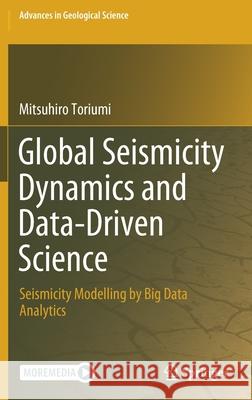
Mitsuhiro Toriumi
Global Seismicity Dynamics and Data-Driven Science: Seismicity Modelling by Big Data Analytics Toriumi, Mitsuhiro 9789811551086 Springer - książkaWidoczna okładka, to zdjęcie poglądowe, a rzeczywista szata graficzna może różnić się od prezentowanej.

Global Seismicity Dynamics and Data-Driven Science: Seismicity Modelling by Big Data Analytics

ISBN-13: 9789811551086 / Angielski / Twarda / 2020 / 231 str.

Mitsuhiro Toriumi
cena 564,88
(netto: 537,98 VAT:  5%)

Najniższa cena z 30 dni: 539,74
Termin realizacji zamówienia:
ok. 22 dni roboczych.

Darmowa dostawa!
inne wydania
Kategorie:
Nauka, Geografia
Kategorie BISAC:
Science > Geofizyka
Mathematics > Matematyka stosowana
Nature > Natural Disasters
Wydawca:
Springer
Seria wydawnicza:
Advances in Geological Science
Język:
Angielski
ISBN-13:
9789811551086
Rok wydania:
2020
Wydanie:
2021
Numer serii:
000829961
Ilość stron:
231
Waga:
0.51 kg
Wymiary:
23.39 x 15.6 x 1.42
Oprawa:
Twarda
Wolumenów:
01
Dodatkowe informacje:
Wydanie ilustrowane


Chapter 1. Introduction

Chapter 2. Nature of Earthquakes in the Solid Earth
   2-1. Global Earthquake Distribution and Plate Tectonics
   2-2. Earthquake Propagation and Shear Instability
   2-3. Earthquakes and Global Network of Seismic Stations

Chapter 3.  Global Seismicity of the Solid Earth
   3-1. Stochastic Natures of Seismicity
   3-2. Two Types of Earthquakes and Their Occurrences
   3-3. The Global Seismicity of Subduction Zones 
   3-4. The Global Seismicity of Mid Oceanic Ridges
   3-5. Global Moment Release Rates by Large Earthquakes
   3-6. Stress Orientation and Seismic Anisotropy of the Plate Boundary 

Chapter 4. Data – Driven Sciences for Geosciences 
   4-1. Matrix Decomposition Method and Sparse Modeling
   4-2. Deep Neural Network Approximation
   4-3. State - Space Modeling of Time Series
   4-4. Frobenius Norm Maximum Method for Dynamics

Chapter 5. Data-Driven Science of Seismicity
   5-1. Data Cloud of the Global and Japanese Seismicity
   5-2. Data – Driven Sciences of Global Seismicity Dynamics
   5-3. The Characteristic Features of the Correlated Global Seismicity 
   5-4. Global Seismic Moment Release Rate and Correlated Seismicity Rates
   5-5. Correlated Seismicity Rate Variations of Global Ocean Ridges

Chapter 6. Down Scaling Seismicity of Japanese Regions
   6-1. Outline of Tectonics of the Japanese Islands 
   6-2. Seismicity of Japanese Islands Regions
   6-3. Seismicity Cloud of Japanese Islands Crust and Mantle
   6-4. Characteristic Features of Correlated Seismicity Rates
   6-5. Characteristic Features of Correlated Seismicity Rates Time Series
   6-6. Correlated Seismicity Rates on z1-z2-z3 Diagram
   6-7. Coherency of Correlated Seismicity Rates between Mantle and Crust
   6-8. Annual Variation of the Correlated Seismicity Rates
   6-9. Annual Variation of the Partial b-value Time Series 
   6-10. Correlated Seismicity of Non - Snowy and Snowy Regions of Japanese Islands
   6-11. Partial b123 and b234 Values and Correlated Seismicity Rates
   6-12. Correlated Seismicity Rates between Global and Japanese Islands Region

Chapter 7. Correlated Seismicity of the Northern California Region
   7-1. Introduction
   7-2. Seismicity Cloud of the Northern California Region
   7-3. Correlated Seismicity Rates in Northern California
   7-4. Partial b-values Variations of the Northern California Region
   7-5. Comparison between Global Subduction Zones and Northern California Regions

Chapter 8. Model of Seismicity Dynamics from Data-Driven Science
   8-1. Minimal Model of Global Seismicity Dynamics
   8-2. Synthetic Coherency of Seismicity Dynamics by Slider Block Model

Chapter 9. Seismicity Dynamics Model of Global Earth and Japanese Island Region
   9-1. Minimal Model of the Global and Japanese Seismicity Dynamics
   9-2. Minimal Dynamic Model of Japanese Correlated Seismicity
   9-3. Partial b-value Change and its Annual Variation

Chapter 10. Predictive Modeling of Global and Regional Seismicity Rates
   10-1. State - Space Modeling of Global and Japanese Seismicity Dynamics 
   10-2. Inversion of the Global Seismicity Rates from Correlated Seismicity
   10-3. Data-Driven Sciences and Machine Learning of Global Seismicity
   10-4. The Main Sequence of Relations between Global Correlated Seismicity
 Rates and Local Seismicity Rates: The Cases of Japanese Islands, Sumatra
 and Chile.
   10-5. Global Seismicity Dynamics and Plate Tectonics
   10-6. Possibility of Deep Learning Recurrent Neural Network for Prediction
 of the Seismic Activity
   10-7. System Model of the Correlated Seismicity, Plate Boundary Slip, and Fluid Flux in the Subduction zone 

Chapter 11. Future Problems of Prediction of Giant Plate Boundary Earthquakes

Appendix I. Application of Recurrent Neural Network (RNN) Modeling for Global Seismicity Dynamics

Appendix II. Comments on Databases and Software Used in This Book

Mitsuhiro Toriumi is a senior researcher at the Japan Agency of Marine – Earth Science and Technology (JAMSTEC). He was chief scientist of the board of innovation center of JAMSTEC and studied application of data-driven science and machine learning for global and regional seismicity. He was the research director of the Institute for Research on Earth Evolution (IFREE) and a professor in the Department of Complex Science and Engineering and a professor in the Faculty of Science, The University of Tokyo. During his early career, he was an associate professor of the Faculty of Science of Ehime University and an assistant professor of The University of Tokyo. He is an invited professor of the Open University of Japan. He has published and edited several books in the field of petrology, rheology, earth science, and solid earth science. He is a committee member of the Research Organization of Information and Systems of Japan and an adviser in Core Research for Evolutionary Science and Technology (Information and Measurement). He has been awarded the Geological Society of Japan Award.

The recent explosion of global and regional seismicity data in the world requires new methods of investigation of microseismicity and development of their modelling to understand the nature of whole earth mechanics. In this book, the author proposes a powerful tool to reveal the characteristic features of global and regional microseismicity big data accumulated in the databases of the world. The method proposed in this monograph is based on (1) transformation of stored big data to seismicity density data archives, (2) linear transformation of microseismicity density data matrixes to correlated seismicity matrixes by means of the singular value decomposition method, (3) time series analyses of globally and regionally correlated seismicity rates, and (4) the minimal non-linear equations approximation of their correlated seismicity rate dynamics. Minimal non-linear modelling is the manifestation for strongly correlated seismicity time series controlled by Langevin-type stochastic dynamic equations involving deterministic terms and random Gaussian noises. A deterministic term is composed minimally with correlated seismicity rate vectors of a linear term and of a term with a third exponent. Thus, the dynamics of correlated seismicity in the world contains linearly changing stable nodes and rapid transitions between them with transient states. This book contains discussions of future possibilities of stochastic extrapolations of global and regional seismicity in order to reduce earthquake disasters worldwide. The dataset files are available online and can be downloaded at springer.com.


Udostępnij

Facebook - konto krainaksiazek.pl


Opinie o Krainaksiazek.pl na Opineo.pl

Partner Mybenefit

Krainaksiazek.pl w programie rzetelna firma Krainaksiaze.pl - płatności przez paypal

Czytaj nas na:

Facebook - krainaksiazek.pl
  • książki na zamówienie
  • granty
  • książka na prezent
  • kontakt
  • pomoc
  • opinie
  • regulamin
  • polityka prywatności

Zobacz:

  • Księgarnia czeska

  • Wydawnictwo Książkowe Klimaty

1997-2026 DolnySlask.com Agencja Internetowa

© 1997-2022 krainaksiazek.pl
     
KONTAKT | REGULAMIN | POLITYKA PRYWATNOŚCI | USTAWIENIA PRYWATNOŚCI
Zobacz: Księgarnia Czeska | Wydawnictwo Książkowe Klimaty | Mapa strony | Lista autorów
KrainaKsiazek.PL - Księgarnia Internetowa

Polityka prywatnosci - link
Krainaksiazek.pl - płatnośc Przelewy24
Przechowalnia Przechowalnia







