• Wyszukiwanie zaawansowane
  • Kategorie
  • Kategorie BISAC
  • Książki na zamówienie
  • Promocje
  • Granty
  • Książka na prezent
  • Opinie
  • Pomoc
  • Załóż konto
  • Zaloguj się

Global Ecology in Historical Perspective: Monsoon Asia and Beyond » książka


zaloguj się | załóż konto
Logo Krainaksiazek.pl

koszyk

konto

szukaj
topmenu
Księgarnia internetowa
Szukaj
Książki na zamówienie
Promocje
Granty
Książka na prezent
Moje konto
Pomoc
 
 
Wyszukiwanie zaawansowane
Pusty koszyk
Bezpłatna dostawa dla zamówień powyżej 20 złBezpłatna dostawa dla zamówień powyżej 20 zł

Kategorie główne

• Nauka
 [2949965]
• Literatura piękna
 [1857847]

  więcej...
• Turystyka
 [70818]
• Informatyka
 [151303]
• Komiksy
 [35733]
• Encyklopedie
 [23180]
• Dziecięca
 [617748]
• Hobby
 [139972]
• AudioBooki
 [1650]
• Literatura faktu
 [228361]
• Muzyka CD
 [398]
• Słowniki
 [2862]
• Inne
 [444732]
• Kalendarze
 [1620]
• Podręczniki
 [167233]
• Poradniki
 [482388]
• Religia
 [509867]
• Czasopisma
 [533]
• Sport
 [61361]
• Sztuka
 [243125]
• CD, DVD, Video
 [3451]
• Technologie
 [219309]
• Zdrowie
 [101347]
• Książkowe Klimaty
 [123]
• Zabawki
 [2362]
• Puzzle, gry
 [3791]
• Literatura w języku ukraińskim
 [253]
• Art. papiernicze i szkolne
 [7933]
Kategorie szczegółowe BISAC

Global Ecology in Historical Perspective: Monsoon Asia and Beyond

ISBN-13: 9789811965562 / Angielski / Twarda / 2023 / 329 str.
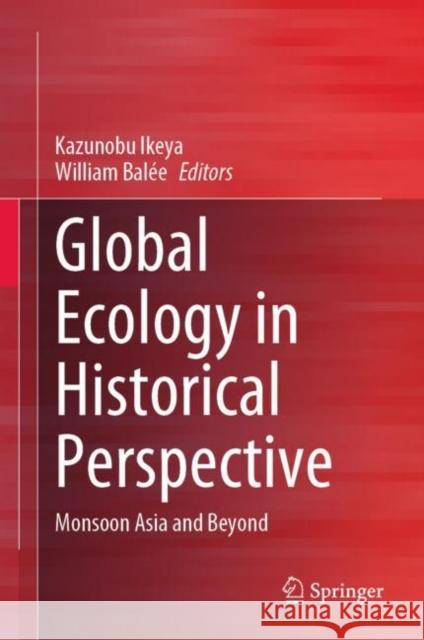
Kazunobu Ikeya; William Balée
Global Ecology in Historical Perspective: Monsoon Asia and Beyond Kazunobu Ikeya William Bal?e 9789811965562 Springer - książkaWidoczna okładka, to zdjęcie poglądowe, a rzeczywista szata graficzna może różnić się od prezentowanej.

Global Ecology in Historical Perspective: Monsoon Asia and Beyond

ISBN-13: 9789811965562 / Angielski / Twarda / 2023 / 329 str.

Kazunobu Ikeya; William Balée
cena 564,88 zł
(netto: 537,98 VAT:  5%)

Najniższa cena z 30 dni: 539,74 zł
Termin realizacji zamówienia:
ok. 22 dni roboczych
Bez gwarancji dostawy przed świętami

Darmowa dostawa!
inne wydania

This book primarily examines human-animal and human-plant interactions in Asian forests (Southeast Asia and Japan) and inland waters (China). For comparison, cases from the Americas (whales in the Arctic, sea turtles in the Caribbean, and plants in the Amazon) and Central Asia are also included. The relationship between plants, animals, and humans in Asia is quite unique from a global perspective. For example, "satoyama" in Japan means ecotone area, or the boundary between a village and a forest. There, as the number of inhabitants declines, bears, wild boars, and other animals increasingly ravage crops, sometimes attacking humans as well.By showing the regional nature of human-animal and human-plant interactions in Asia, this book provides for the first time a framework for understanding the world's animal and plant-human relationships. It is assumed that the relationships between humans and animals and plants during this period were diverse, including hunting, taming, semi-domestication, and full domestication. At the same time, for regions outside of Asia, the extent to which these diverse relationships were adapted and how diversity was formed is explained from the perspective of historical ecology.Customers can expect to derive perspectives on the coexistence of human-animal and plant-animal relationships from this book in the near future.The conservation of rare species, diverse habitats, and biodiversity is a central theme in considering the relationship between modern civilization and the global environment. In post-industrial Japan, one focus has been the protection of iconic animals such as storks, crested ibis, dugongs, and sea turtles, while damage to crops and humans by deer, wild boars, monkeys, bears, and other common animals has become an important social issue. How can the world's 7.7 billion-plus people live in harmony with other species? We would like to get some hints on how to solve the problems we are facing.


This book primarily examines human-animal and human-plant interactions in Asian forests (Southeast Asia and Japan) and inland waters (China). For comparison, cases from the Americas (whales in the Arctic, sea turtles in the Caribbean, and plants in the Amazon) and Central Asia are also included. The relationship between plants, animals, and humans in Asia is quite unique from a global perspective. For example, "satoyama" in Japan means ecotone area, or the boundary between a village and a forest. There, as the number of inhabitants declines, bears, wild boars, and other animals increasingly ravage crops, sometimes attacking humans as well.

By showing the regional nature of human-animal and human-plant interactions in Asia, this book provides for the first time a framework for understanding the world's animal and plant-human relationships. It is assumed that the relationships between humans and animals and plants during this period were diverse, including hunting, taming, semi-domestication, and full domestication. At the same time, for regions outside of Asia, the extent to which these diverse relationships were adapted and how diversity was formed is explained from the perspective of historical ecology.

Customers can expect to derive perspectives on the coexistence of human-animal and plant-animal relationships from this book in the near future.

The conservation of rare species, diverse habitats, and biodiversity is a central theme in considering the relationship between modern civilization and the global environment. In post-industrial Japan, one focus has been the protection of iconic animals such as storks, crested ibis, dugongs, and sea turtles, while damage to crops and humans by deer, wild boars, monkeys, bears, and other common animals has become an important social issue. How can the world's 7.7 billion-plus people live in harmony with other species? We would like to get some hints on how to solve the problems we are facing.



Kategorie:
Nauka, Kultura. Etnografia
Kategorie BISAC:
Social Science > Antropologia - Kultury
Science > Life Sciences - Ecology
Technology & Engineering > Agriculture - Forestry
Wydawca:
Springer
Język:
Angielski
ISBN-13:
9789811965562
Rok wydania:
2023
Dostępne języki:
Ilość stron:
329
Oprawa:
Twarda

Chapter 1: Comparison of Landscape Transformations in the Japanese Archipelago and the Brazilian Amazon.- Chapter 2: Trends for Ethnoecology in the French-Speaking Tropics and Beyond: Origins and Evolution.- Chapter 3: “Back to the Trees!”: Historical Ecology in Amazonia.- Chapter 4: The Changing Mountain Landscapes in Japan: Wild Bear–Human Interactions in the Short Term.- Chapter 5: Undoing Monkey Attraction to the Village: A Food-and-Threat Response to Wildlife Crop-Raiding in Rural Japan.- Chapter 6: Rearing Wild Boar in Okinawa: Thinking About Their Domestication.- Chapter 7: Adaptive Strategies of Cormorant Fishers in Response to Decreased Fishing Area: A case study of Poyang Lake, Jiangxi Province, China.- Chapter 8: Gayal–Human Relationships in the Forests of Bangladesh.- Chapter 9: Bamboo Culture in Monsoon Asia: A Study of the Hmong Farmer in Northern Thailand.- Chapter 10: Use and Knowledge of Sago Palms in Borneo: A Case of the Penan Hunter-Gatherers.- Chapter 11: Taro (Colocasia esculenta) in Asia and the Pacific: Models for Domestication as a Food and Fodder Crop.- Chapter 12: Historical Changes in Human Relationships with Whales: Historical Ecology of Iñupiat and Bowhead Whales in Alaska, USA.- Chapter 13: Historical Ecology of Sea Turtle Fishing by the Indigenous Lowland Peoples of Eastern Nicaragua: a 40-Year Record.- Chapter 14: Sweet Cassava and Bananas in the Peruvian Amazon: Shipibo Cultivation Methods on the Floodplains.- Chapter 15: Constructed Biodiversity, Forest Management, and Use of Fire in Ancient Amazonia: Archaeological Testimony to the Last 14,000 Years of Indigenous History.- Chapter 16: Relations between People, Water, and Domestic Animals in an Ancient Oasis City.

Kazunobu Ikeya
ProfessorNational Museum of Ethnology, Japan
Field of Study: Environmental anthropology, cultural geography Prof. Ikeya received his Ph.D. from Tohoku University in 2003. He has conducted field work among the San in 
Africa and the Japanese and Chukchi in Northeast Asia.
William  Balée   
ProfessorTulane University, USA
Field of Study: Cultural anthropology; Amazonia; historical ecology; ethnobiology Prof. Balée received his PhD from Columbia University in 1984. He has conducted fieldwork among Ka'apor, Guajá, Araweté, Tembé, Assurini do Xingu, and Sirionó societies.

This book primarily examines human-animal and human-plant interactions in Asian forests (Southeast Asia and Japan) and inland waters (China). For comparison, cases from the Americas (whales in the Arctic, sea turtles in the Caribbean, and plants in the Amazon) and Central Asia are also included. The relationship between plants, animals, and humans in Asia is quite unique from a global perspective. For example, "satoyama" in Japan means ecotone area, or the boundary between a village and a forest. There, as the number of inhabitants declines, bears, wild boars, and other animals increasingly ravage crops, sometimes attacking humans as well.

By showing the regional nature of human-animal and human-plant interactions in Asia, this book provides for the first time a framework for understanding the world's animal and plant-human relationships. It is assumed that the relationships between humans and animals and plants during this period were diverse, including hunting, taming, semi-domestication, and full domestication. At the same time, for regions outside of Asia, the extent to which these diverse relationships were adapted and how diversity was formed is explained from the perspective of historical ecology.

Customers can expect to derive perspectives on the coexistence of human-animal and plant-animal relationships from this book in the near future.

The conservation of rare species, diverse habitats, and biodiversity is a central theme in considering the relationship between modern civilization and the global environment. In post-industrial Japan, one focus has been the protection of iconic animals such as storks, crested ibis, dugongs, and sea turtles, while damage to crops and humans by deer, wild boars, monkeys, bears, and other common animals has become an important social issue. How can the world's 7.7 billion-plus people live in harmony with other species? We would like to get some hints on how to solve the problems we are facing.



Udostępnij

Facebook - konto krainaksiazek.pl


Opinie o Krainaksiazek.pl na Opineo.pl

Partner Mybenefit

Krainaksiazek.pl w programie rzetelna firma Krainaksiaze.pl - płatności przez paypal

Czytaj nas na:

Facebook - krainaksiazek.pl
  • książki na zamówienie
  • granty
  • książka na prezent
  • kontakt
  • pomoc
  • opinie
  • regulamin
  • polityka prywatności

Zobacz:

  • Księgarnia czeska

  • Wydawnictwo Książkowe Klimaty

1997-2025 DolnySlask.com Agencja Internetowa

© 1997-2022 krainaksiazek.pl
     
KONTAKT | REGULAMIN | POLITYKA PRYWATNOŚCI | USTAWIENIA PRYWATNOŚCI
Zobacz: Księgarnia Czeska | Wydawnictwo Książkowe Klimaty | Mapa strony | Lista autorów
KrainaKsiazek.PL - Księgarnia Internetowa

Polityka prywatnosci - link
Krainaksiazek.pl - płatnośc Przelewy24
Przechowalnia Przechowalnia



