• Wyszukiwanie zaawansowane
  • Kategorie
  • Kategorie BISAC
  • Książki na zamówienie
  • Promocje
  • Granty
  • Książka na prezent
  • Opinie
  • Pomoc
  • Załóż konto
  • Zaloguj się

Global Arctic: An Introduction to the Multifaceted Dynamics of the Arctic » książka


zaloguj się | załóż konto
Logo Krainaksiazek.pl

koszyk

konto

szukaj
topmenu
Księgarnia internetowa
Szukaj
Książki na zamówienie
Promocje
Granty
Książka na prezent
Moje konto
Pomoc
 
 
Wyszukiwanie zaawansowane
Pusty koszyk
Bezpłatna dostawa dla zamówień powyżej 20 złBezpłatna dostawa dla zamówień powyżej 20 zł

Kategorie główne

• Nauka
 [2949965]
• Literatura piękna
 [1857847]

  więcej...
• Turystyka
 [70818]
• Informatyka
 [151303]
• Komiksy
 [35733]
• Encyklopedie
 [23180]
• Dziecięca
 [617748]
• Hobby
 [139972]
• AudioBooki
 [1650]
• Literatura faktu
 [228361]
• Muzyka CD
 [398]
• Słowniki
 [2862]
• Inne
 [444732]
• Kalendarze
 [1620]
• Podręczniki
 [167233]
• Poradniki
 [482388]
• Religia
 [509867]
• Czasopisma
 [533]
• Sport
 [61361]
• Sztuka
 [243125]
• CD, DVD, Video
 [3451]
• Technologie
 [219309]
• Zdrowie
 [101347]
• Książkowe Klimaty
 [123]
• Zabawki
 [2362]
• Puzzle, gry
 [3791]
• Literatura w języku ukraińskim
 [253]
• Art. papiernicze i szkolne
 [7933]
Kategorie szczegółowe BISAC

Global Arctic: An Introduction to the Multifaceted Dynamics of the Arctic

ISBN-13: 9783030812553 / Angielski / Miękka / 2023 / 486 str.
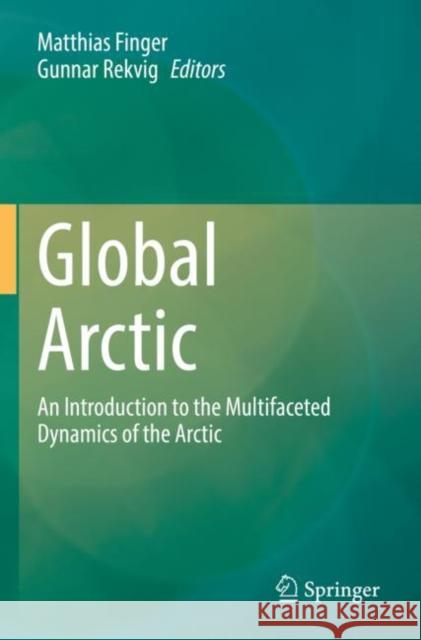
Matthias Finger; Gunnar Rekvig
Global Arctic: An Introduction  to the Multifaceted Dynamics of the Arctic Matthias Finger Gunnar Rekvig 9783030812553 Springer - książkaWidoczna okładka, to zdjęcie poglądowe, a rzeczywista szata graficzna może różnić się od prezentowanej.

Global Arctic: An Introduction to the Multifaceted Dynamics of the Arctic

ISBN-13: 9783030812553 / Angielski / Miękka / 2023 / 486 str.

Matthias Finger; Gunnar Rekvig
cena 564,88
(netto: 537,98 VAT:  5%)

Najniższa cena z 30 dni: 539,74
Termin realizacji zamówienia:
ok. 22 dni roboczych
Bez gwarancji dostawy przed świętami

Darmowa dostawa!
inne wydania

The Arctic has become a global arena. This development can only be comprehensively understood from a transdisciplinary perspective encompassing ecological, cultural, societal, economic, industrial, geopolitical, and security considerations. This book offers thorough explanations of Arctic developments and challenges. Global warming is in large part the driving force behind the transformation of the Arctic by making access possible to the areas previously out of reach for mining and shipping. An all-year ice-free Arctic Ocean, a reality possible as soon as perhaps 2030, creates a new dynamic in the North. The retreating ice edge enables the exploitation of previously inaccessible resources such as hydrocarbon deposits and rare metals, as well as the shortest sea route from Asia to Europe. Consequently, the Northern Sea Route (NSR) promises faster and cheaper shipping. Russia, along side foreign investment, especially from China, is financing the needed infrastructure.A warming Arctic, however, also has negative impacts. The Arctic is home to fragile ecosystems that are already showing signs of deteriorating. The Arctic has seen unprecedented wildfires, which, together with the release of trapped methane from the disappearing permafrost, will, in turn, accelerate global warming. A warmer Arctic Ocean will also negatively impact fisheries. Couple this with other global changes, such as ocean acidification and modified ocean currents, and the global outlook is bleak. Additionally, the security situation in the Arctic is worsening. After the 2014 Ukraine crisis, the West imposed sanctions on the Russian Federation, which have revived the divisions of the Cold War. The reemergence of these postures is threatening the highly successful Barents Cooperation and other initiatives for peace in the circumpolar North. This book offers new insights and presents arguments for how to mitigate the challenges the Arctic is facing today.


The Arctic has become a global arena. This development can only be comprehensively understood from a transdisciplinary perspective encompassing ecological, cultural, societal, economic, industrial, geopolitical, and security considerations. This book offers thorough explanations of Arctic developments and challenges. Global warming is in large part the driving force behind the transformation of the Arctic by making access possible to the areas previously out of reach for mining and shipping. An all-year ice-free Arctic Ocean, a reality possible as soon as perhaps 2030, creates a new dynamic in the North. The retreating ice edge enables the exploitation of previously inaccessible resources such as hydrocarbon deposits and rare metals, as well as the shortest sea route from Asia to Europe. Consequently, the Northern Sea Route (NSR) promises faster and cheaper shipping. Russia, along side foreign investment, especially from China, is financing the needed infrastructure. A warming Arctic, however, also has negative impacts. The Arctic is home to fragile ecosystems that are already showing signs of deteriorating. The Arctic has seen unprecedented wildfires, which, together with the release of trapped methane from the disappearing permafrost, will, in turn, accelerate global warming. A warmer Arctic Ocean will also negatively impact fisheries. Couple this with other global changes, such as ocean acidification and modified ocean currents, and the global outlook is bleak. Additionally, the security situation in the Arctic is worsening. After the 2014 Ukraine crisis, the West imposed sanctions on the Russian Federation, which have revived the divisions of the Cold War. The reemergence of these postures is threatening the highly successful Barents Cooperation and other initiatives for peace in the circumpolar North. This book offers new insights and presents arguments for how to mitigate the challenges the Arctic is facing today.

Kategorie:
Nauka
Kategorie BISAC:
Science > Earth Sciences - Geography
Social Science > Popular Culture
Political Science > Public Policy - Environmental Policy
Wydawca:
Springer
Język:
Angielski
ISBN-13:
9783030812553
Rok wydania:
2023
Dostępne języki:
Ilość stron:
486
Waga:
0.91 kg
Wymiary:
23.5 x 15.5
Oprawa:
Miękka

 Introduction – The global Arctic: a “laboratory of the Anthropocene” (Matthias Finger)

Part I: Evolving images of the Arctic

-      The Arctic as a frontier (Peter Schweitzer)

-      Early industrialization of the Arctic (Chris Southcott)

-      The Arctic of the Cold War (Jyrki Käkönen)

-      The Arctic of the indigenous peoples (Yves Cszonka)

-      The Post – Cold War Arctic: a region of peace (Lassi Heininen)

-      The Asian Arctic (Rasmus Bertelsen)

-      The Arctic as the last frontier: tourism (Edward Huijbens)

Part II: The significance of the Arctic in Earth System dynamics

-      The physical geography of the Arctic (Serguey Aplonov)

-      Global warming and its effects on the Arctic (Koni Steffen)

-      Climate effects of other pollutants (Kaarle Kuupiainen)

-      Global warming, permafrost thawing and its feedback loops (Ben Abbott)

-      Impacts of global warming on Arctic biota (Mathilde LeMoullec)

-      The implications of a warming Arctic on the Earth System (Petteri Taalas)

Part III: The economics of a GlobalArctic

-      The fight for the last resources: oil, gas and minerals (Andrey Krivorotov)

-      Fisheries – how long? (Franz Mueter)

-      New Arctic trade routes and shipping (TBD)

-      Infrastructure development in the Arctic (Alexander Pelyasov)

-      The Chinese Arctic (Liisa Kauppila)

-      The Arctic of Transnational Corporations (Matthias Finger)

Part IV: Governance

-      Sub-national governance: the case of Nunavut (TBD)

-      Regional governance: the case of the Barents region (Florian Vidal)

-      Inter-national governance: the Arctic Council (Timo Koivurouva)

-      What role for the EU? (Andreas Raspotnik)

-      Global Governance? The case of UNCLOS (Cécile Pelaudeix)

Conclusion: the GlobalArctic – a warning for Humankind (Matthias Finger)


Matthias Finger is a Professor Emeritus from Ecole Polytechnique Fédérale in Lausanne, Switzerland (EPFL), a part-time professor at the European University Institute (EUI) in Florence, Italy, a full professor at Istanbul Technical University (ITÜ) and a research professor at Northern Arctic Federal University (NaRFU), Arkhangelsk, Russia. 


Gunnar Rekvig is an Associate Professor at UiT the Arctic University of Norway (UiT), Norway, and the 2019-2021 Nansen Professor at the University of Akureyri (UNAK), Iceland. He was an Assistant Professor at Tokyo University of Foreign Studies (TUFS), Tokyo, Japan (2018-2019).     


The Arctic has become a global arena. This development can only be comprehensively understood from a transdisciplinary perspective encompassing ecological, cultural, societal, economic, industrial, geopolitical, and security considerations. This book offers thorough explanations of Arctic developments and challenges. Global warming is in large part the driving force behind the transformation of the Arctic by making access possible to the areas previously out of reach for mining and shipping. An all-year ice-free Arctic Ocean, a reality possible as soon as perhaps 2030, creates a new dynamic in the North. The retreating ice edge enables the exploitation of previously inaccessible resources such as hydrocarbon deposits and rare metals, as well as the shortest sea route from Asia to Europe. Consequently, the Northern Sea Route (NSR) promises faster and cheaper shipping. Russia, along side foreign investment, especially from China, is financing the needed infrastructure. 

A warming Arctic, however, also has negative impacts. The Arctic is home to fragile ecosystems that are already showing signs of deteriorating. The Arctic has seen unprecedented wildfires, which, together with the release of trapped methane from the disappearing permafrost, will, in turn, accelerate global warming. A warmer Arctic Ocean will also negatively impact fisheries. Couple this with other global changes, such as ocean acidification and modified ocean currents, and the global outlook is bleak. Additionally, the security situation in the Arctic is worsening. After the 2014 Ukraine crisis, the West imposed sanctions on the Russian Federation, which have revived the divisions of the Cold War. The reemergence of these postures is threatening the highly successful Barents Cooperation and other initiatives for peace in the circumpolar North. This book offers new insights and presents arguments for how to mitigate the challenges the Arctic is facing today.




Udostępnij

Facebook - konto krainaksiazek.pl


Opinie o Krainaksiazek.pl na Opineo.pl

Partner Mybenefit

Krainaksiazek.pl w programie rzetelna firma Krainaksiaze.pl - płatności przez paypal

Czytaj nas na:

Facebook - krainaksiazek.pl
  • książki na zamówienie
  • granty
  • książka na prezent
  • kontakt
  • pomoc
  • opinie
  • regulamin
  • polityka prywatności

Zobacz:

  • Księgarnia czeska

  • Wydawnictwo Książkowe Klimaty

1997-2025 DolnySlask.com Agencja Internetowa

© 1997-2022 krainaksiazek.pl
     
KONTAKT | REGULAMIN | POLITYKA PRYWATNOŚCI | USTAWIENIA PRYWATNOŚCI
Zobacz: Księgarnia Czeska | Wydawnictwo Książkowe Klimaty | Mapa strony | Lista autorów
KrainaKsiazek.PL - Księgarnia Internetowa

Polityka prywatnosci - link
Krainaksiazek.pl - płatnośc Przelewy24
Przechowalnia Przechowalnia



