• Wyszukiwanie zaawansowane
  • Kategorie
  • Kategorie BISAC
  • Książki na zamówienie
  • Promocje
  • Granty
  • Książka na prezent
  • Opinie
  • Pomoc
  • Załóż konto
  • Zaloguj się

Global Approaches to Site Contamination Law » książka


zaloguj się | załóż konto
Logo Krainaksiazek.pl

koszyk

konto

szukaj
topmenu
Księgarnia internetowa
Szukaj
Książki na zamówienie
Promocje
Granty
Książka na prezent
Moje konto
Pomoc
 
 
Wyszukiwanie zaawansowane
Pusty koszyk
Bezpłatna dostawa dla zamówień powyżej 20 złBezpłatna dostawa dla zamówień powyżej 20 zł

Kategorie główne

• Nauka
 [2949965]
• Literatura piękna
 [1857847]

  więcej...
• Turystyka
 [70818]
• Informatyka
 [151303]
• Komiksy
 [35733]
• Encyklopedie
 [23180]
• Dziecięca
 [617748]
• Hobby
 [139972]
• AudioBooki
 [1650]
• Literatura faktu
 [228361]
• Muzyka CD
 [398]
• Słowniki
 [2862]
• Inne
 [444732]
• Kalendarze
 [1620]
• Podręczniki
 [167233]
• Poradniki
 [482388]
• Religia
 [509867]
• Czasopisma
 [533]
• Sport
 [61361]
• Sztuka
 [243125]
• CD, DVD, Video
 [3451]
• Technologie
 [219309]
• Zdrowie
 [101347]
• Książkowe Klimaty
 [123]
• Zabawki
 [2362]
• Puzzle, gry
 [3791]
• Literatura w języku ukraińskim
 [253]
• Art. papiernicze i szkolne
 [7933]
Kategorie szczegółowe BISAC

Global Approaches to Site Contamination Law

ISBN-13: 9789400757448 / Angielski / Twarda / 2012 / 378 str.
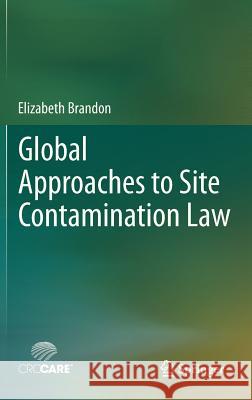
Elizabeth Brandon
Global Approaches to Site Contamination Law Elizabeth Brandon 9789400757448 Springer - książkaWidoczna okładka, to zdjęcie poglądowe, a rzeczywista szata graficzna może różnić się od prezentowanej.

Global Approaches to Site Contamination Law

ISBN-13: 9789400757448 / Angielski / Twarda / 2012 / 378 str.

Elizabeth Brandon
cena 605,23 zł
(netto: 576,41 VAT:  5%)

Najniższa cena z 30 dni: 578,30 zł
Termin realizacji zamówienia:
ok. 22 dni roboczych
Bez gwarancji dostawy przed świętami

Darmowa dostawa!
inne wydania

The book describes the complex and variable laws addressing site contamination, reviewing existing international, regional and national law of relevance to site contamination. It also offers detailed case studies of national approaches to the issue, and goes on to explore avenues for promoting the development of comprehensive domestic laws on site contamination, with a focus on the role of international law and actors. A detailed discussion analyzes such variations as a binding international legal instrument, a non-binding instrument, and a model framework for site contamination management. The text includes recommendations regarding the key elements needed for regulating site contamination at the national level. The author also offers an appropriate and feasible timetable for international action to promote better national law and policy regarding contaminated sites."


Kategorie:
Nauka, Prawo i administracja
Kategorie BISAC:
Technology & Engineering > Environmental - Pollution Control
Law > Environmental
Nature > Environmental Conservation & Protection - General
Wydawca:
Springer
Język:
Angielski
ISBN-13:
9789400757448
Rok wydania:
2012
Wydanie:
2013
Ilość stron:
378
Waga:
0.71 kg
Wymiary:
24.0 x 16.4 x 2.8
Oprawa:
Twarda
Wolumenów:
01
Dodatkowe informacje:
Bibliografia

Contents:

1. Introduction
1.1  Site Contamination Law in the Broader Context of Environmental Law
1.2  Terminology of Site Contamination 
1.2.1  ‘Site’ versus ‘Land, Soil and/or Water’     
1.2.2  ‘Contamination’ versus ‘Pollution’


2. The Nature and Extent of Site Contamination

2.1  Sources and Effects of Site Contamination

2.1.1  Common Types of Contaminating Activities       

2.1.2  Common Contaminants                             

2.1.3  Effects of Contamination    

2.2  Extent of Site Contamination

2.2.1  Geographical Locations and Trends

2.2.2  Number of Contaminated Sites and Proportion of Land Mass Affected

2.3  Remediation of Site Contamination – Common Approaches     

2.4  Progress in Remediation

2.5  Economic Considerations in Remediation of Site Contamination        

2.6  Regulatory Trends in Remediation of Site Contamination          

2.6.1   Historical Perspective – Trend to Site-Based Risk Assessment

2.6.2  Modern Approach – From Regulation to Brownfields Redevelopment         

2.6.3  Post-Remediation Measures (‘Long-Term Stewardship’)         


3. Current International Law Relating To Site Contamination

3.1  Terminology

3.1.1   International Law

3.1.2   Regional Law

3.1.3   Bilateral Law

3.1.4   Soft Law

3.1.5   Customary Law

3.2 Regulatory Measures  

3.2.1   Soil Protection         

3.2.2   Pollution and Pollutants    

3.2.3   General Environmental Protection          

3.3  Liability Measures

3.3.1   State Responsibility           

3.3.2  Civil Liability for Environmental Harm  

3.4  Summary

3.5Conclusions and Analysis                  


4. National Site Contamination Law                   

4.1  Definition of ‘National Site Contamination Law’                           

4.2  Categories of Site Contamination Law       

4.2.1 Countries with Extensive, Specific Provisions on Site Contamination          

4.2.2 Countries with Limited, Specific Provisions on Site Contamination   

4.2.3    Countries with No Provisions on Site Contamination

4.3  An Overview of National Site Contamination Law                        

4.3.1  Countries With Extensive, Specific Site Contamination Law  

4.3.2  Countries With Limited, Specific Legislation                  

4.3.3  Countries With No Specific Site Contamination Law   

4.4  Key Trends and Issues in The Development of National Site Contamination Law    

4.4.1  Concentration of Site Contamination Legislation                      

4.4.2  Regulatory ‘Model’ or Approach                

4.4.3  Brownfields Legislation                  

4.4.4  Policy versus Law and Technical/Scientific Standards                        

4.4.5  Key Features of Site Contamination Regimes in Specific Jurisdictions       

4.4.6  Factors Influencing Developments in Site Contamination Law                      

4.4.7   Influence of ‘Models’ with Particular Countries                        

4.4.8   Influence of Costs of Cleanup                 


5. Responsibility for Site Contamination

5.1  Definition of Responsible Parties    

5.2  Nature of Liability                                

5.2.1  Retrospectivity          

5.2.2  Strict Liability

5.2.3  Fault-Based Liability

5.2.4  Joint and Several Liablity

5.2.5   Proportionate Liability

5.3  Mechanisms for Imposing Liability               

5.3.1   The ‘Command and Control’Approach

5.3.2   Non-Traditional Mechanisms       

5.3.3   Transfer of Liability

5.4  Remediation of ‘Orphan’ Sites                                                         


6. Promoting National Site Contamination Law: The Challenge of Harmonisation                                                           

6.1  Defining Harmonisation        

6.2  Types of Harmonisation                     

6.2.1   Binding Protocol to an Existing Treaty, or a New/Amended Binding Treaty                  

6.2.2   Loan Conditions and Bilateral Aid Agreements                  

6.2.3   High-Level Declarations or Resolutions

6.2.4   Guidelines or Recommendations                               

6.2.5   ISO Standards              

6.2.6   Codes of Practice                      

6.2.7   A Model Law or Policy                                      

6.2.8   Emulation of ‘State of the Art’ Practices in Other Jurisdictions          

6.2.9   Emulation Due to Market Pressure         

6.3   Justifications for Harmonisation                  

6.4   Qualifications and Limitations Relating to Harmonisation         

6.5   Overcoming the Limitations of Harmonisation                  

6.6   Who Might Promote Harmonisation of Site Contamination

Law, and How?                                                                               


7. An International Response to Site Contamination                          

7.1 Reasons for an International Response to Site Contamination  

7.2       Site Contamination as a Matter of International Concern       

7.3       Examples of Recent International Regimes on Related or

Similar Matters                                                                                 

7.3.1   Chemicals and Contaminants                             

7.3.2   Soils/Degradation   

7.3.3   The Key Role of UNEP in Initiating New International Agreements 

7.3.4   Conclusions                                                

7.4       The Appropriate Form of an International Instrument              

7.4.1   A Binding International Instrument

7.4.2   Soft Law Options

7.4.3   A Regional Approach?

7.5       Possible Content of an International Instrument                                  


8. Alternatives to International Law – Other Means of Promoting National Site Contamination Law                                         

8.1 Outline of Alternatives             

8.1.1   Global and Regional Lending Institutions         

8.1.2   Bilateral Aid Initiatives       

8.1.3   ISO Standards         

8.1.4   Voluntary Codes of Practice         

8.1.5   A ‘Model Law’ on Site Contamination    

8.2       Comparative Evaluation of All Options                           

9. Recommended Features of a Model Law on Site Contamination             

9.1 Scope of a Model Law on Site Contamination

9.1.1   New versus Amended Legislation                       

9.1.2   A Universal Definition of Site Contamination   

9.1.3 Allocation of Liability for Remediation

9.1.4 Role of Private Professionals

9.1.5 Regulatory Process for Remediation

9.1.6 Voluntary Remediation/Brownfield Measures                 

9.1.7 Post-Remediation Measures

9.1.8 Public Participation                                      

9.2       How a Model Law on Site Contamination Might be Developed                     

9.2.1   Achieving Legitimacy, Transparency and Sensitivity to Local Conditions – Prior Assessment and Consultation

9.2.2   Securing the Uptake of Legislation Based on the Model Law                       

9.2.3   The Mechanics of Developing and Promoting a Model Law              

9.2.4   Who Will Prepare and Promote the Model Law?


10. Conclusions and Recommendations                       

10.1    Lack of International Law and Policy on Site Contamination            

10.2    The Need for Specific National Regulatory Regimes on Site

 Contamination       

10.3    Lack of Consistent Approaches to Site Contamination Law

and Policy at the National Level              

10.4    The Case for Harmonisation of Site Contamination Law        

10.4.1 Top-Down Harmonisation – The Prospects of an International Instrument on Site Contamination                                                 

10.4.2 Bottom-Up Approaches – A Model Law on Site Contamination        

10.5    Summary

Global Approaches to Site Contamination Law offers a clear explanation of the definitions and legal principles that address site contamination, and a comprehensive survey of the current state of relevant international law.

The book describes the complex and variable laws addressing site contamination, reviewing existing international, regional and national law of relevance to site contamination. It also offers detailed case studies of national approaches to the issue, and goes on to explore avenues for promoting the development of comprehensive domestic laws on site contamination, with a focus on the role of international law and actors.  A detailed discussion analyzes such variations as a binding international legal instrument, a non-binding instrument, and a model framework for site contamination management.  The text includes recommendations regarding the key elements needed for regulating site contamination at the national level. The author also offers an appropriate and feasible timetable for international action to promote better national law and policy regarding contaminated sites.


Udostępnij

Facebook - konto krainaksiazek.pl


Opinie o Krainaksiazek.pl na Opineo.pl

Partner Mybenefit

Krainaksiazek.pl w programie rzetelna firma Krainaksiaze.pl - płatności przez paypal

Czytaj nas na:

Facebook - krainaksiazek.pl
  • książki na zamówienie
  • granty
  • książka na prezent
  • kontakt
  • pomoc
  • opinie
  • regulamin
  • polityka prywatności

Zobacz:

  • Księgarnia czeska

  • Wydawnictwo Książkowe Klimaty

1997-2025 DolnySlask.com Agencja Internetowa

© 1997-2022 krainaksiazek.pl
     
KONTAKT | REGULAMIN | POLITYKA PRYWATNOŚCI | USTAWIENIA PRYWATNOŚCI
Zobacz: Księgarnia Czeska | Wydawnictwo Książkowe Klimaty | Mapa strony | Lista autorów
KrainaKsiazek.PL - Księgarnia Internetowa

Polityka prywatnosci - link
Krainaksiazek.pl - płatnośc Przelewy24
Przechowalnia Przechowalnia






