• Wyszukiwanie zaawansowane
  • Kategorie
  • Kategorie BISAC
  • Książki na zamówienie
  • Promocje
  • Granty
  • Książka na prezent
  • Opinie
  • Pomoc
  • Załóż konto
  • Zaloguj się

Geography and Drug Addiction » książka


zaloguj się | załóż konto
Logo Krainaksiazek.pl

koszyk

konto

szukaj
topmenu
Księgarnia internetowa
Szukaj
Książki na zamówienie
Promocje
Granty
Książka na prezent
Moje konto
Pomoc
 
 
Wyszukiwanie zaawansowane
Pusty koszyk
Bezpłatna dostawa dla zamówień powyżej 20 złBezpłatna dostawa dla zamówień powyżej 20 zł

Kategorie główne

• Nauka
 [2946350]
• Literatura piękna
 [1816154]

  więcej...
• Turystyka
 [70666]
• Informatyka
 [151172]
• Komiksy
 [35576]
• Encyklopedie
 [23172]
• Dziecięca
 [611458]
• Hobby
 [135995]
• AudioBooki
 [1726]
• Literatura faktu
 [225763]
• Muzyka CD
 [378]
• Słowniki
 [2917]
• Inne
 [444280]
• Kalendarze
 [1179]
• Podręczniki
 [166508]
• Poradniki
 [469467]
• Religia
 [507199]
• Czasopisma
 [496]
• Sport
 [61352]
• Sztuka
 [242330]
• CD, DVD, Video
 [3348]
• Technologie
 [219391]
• Zdrowie
 [98638]
• Książkowe Klimaty
 [124]
• Zabawki
 [2382]
• Puzzle, gry
 [3525]
• Literatura w języku ukraińskim
 [259]
• Art. papiernicze i szkolne
 [7107]
Kategorie szczegółowe BISAC

Geography and Drug Addiction

ISBN-13: 9781402085086 / Angielski / Twarda / 2008 / 300 str.
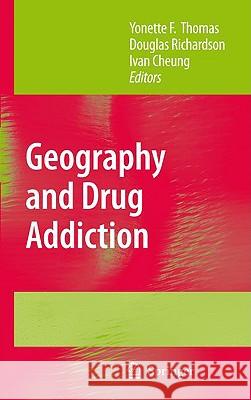
Geography and Drug Addiction  9781402085086 KLUWER ACADEMIC PUBLISHERS GROUP - książkaWidoczna okładka, to zdjęcie poglądowe, a rzeczywista szata graficzna może różnić się od prezentowanej.

Geography and Drug Addiction

ISBN-13: 9781402085086 / Angielski / Twarda / 2008 / 300 str.

cena 603,81
(netto: 575,06 VAT:  5%)

Najniższa cena z 30 dni: 578,30
Termin realizacji zamówienia:
ok. 16-18 dni roboczych.

Darmowa dostawa!

Making Connections: Geography and Drug Addiction Geography involves making connections connections in our world among people and places, cultures, human activities, and natural processes. It involves understa- ing the relationships and connections between seemingly disparate or unrelated ideas and between what is and what might be. Geography also involves connecting with people. When I rst encountered an extraordinarily vibrant, intelligent, and socially engaged scientist at a private d- ner several years ago, I was immediately captivated by the intensity of her passion to understand how and why people become addicted to drugs, and what could be done to treat or prevent drug addiction. Fortunately, she was willing to think beyond the bounds of her own discipline in her search for answers. Our conversation that evening, which began with her research on fundamental biochemical processes of drug addiction in the human body, evolved inevitably to an exploration of the ways in which research on the geographical context of drug addiction might contribute to the better understanding of etiology of addiction, its diffusion, its interaction with geographically variable environmental, social, and economic factors, and the strategies for its treatment and prevention. This fascinating woman, I soon learned, was Nora Volkow, the Director of the National Institute on Drug Abuse as well as the granddaughter of Leon Trotsky."


Kategorie:
Nauka, Geografia
Kategorie BISAC:
Science > Earth Sciences - Geography
Psychology > Psychopathology - Addiction
Wydawca:
KLUWER ACADEMIC PUBLISHERS GROUP
Język:
Angielski
ISBN-13:
9781402085086
Rok wydania:
2008
Wydanie:
2008
Ilość stron:
300
Waga:
1.10 kg
Wymiary:
23.62 x 16.0 x 2.79
Oprawa:
Twarda
Wolumenów:
01
Dodatkowe informacje:
Bibliografia
Wydanie ilustrowane

List of Tables.- List of Figures.- Acknowledgements.- Foreword.- Making Connections: Geography and Drug Addiction: Douglas Richardson.- PART I. INTEGRATING GEOGRAPHY IN DRUG ABUSE RESEACH: 1. Placing substance abuse: geographical perspectives on substance use and addiction: Sara McLafferty.- 2. Integrating geographic information system and social epidemiology in drug abuse research: Yonette Thomas, Douglas Richardson, and Ivan Cheung.- PART II. GEO-EPIDEMIOLOGY IN DRUG ABUSE RESEARCH: 3. Integrating GIS into the study of contextual factors affecting injection drug use along the Mexico/U.S. border: Kimberly Brouwer, et al.- 4. The spatial context of adolescent substance use: assessing the role of neighborhood alcohol availability and disadvantage: Karen Snedker, Jerald R. Herting, and Emily C. Walton.- 5. Migration patterns and substance use among young homeless travelers: Steve Lankenau, et al.- 6. Residential mobility and drug use among parolees in San Diego, California: implications for policy: Meagan Cahill and Nancy LaVigne.- 7. Social disorganization, alcohol and drug markets, and violence: a space-time model of community structure: Aniruddha Banerjee et al.- 8. Integrated assessment of addiction epidemiology in Hong Kong 1996 – 2005: Shui Shan Lee, Phoebe TT Pang.- 9. Residential segregation and the prevalence of injection drug use among black adult residents of U.S. metropolitan areas: Hannah Cooper et al.- 10. The relationship of ecological containment and heroin practices: Avelardo Valdez and Alice Cepeda.- 11. Comparing unintentional opiod poisoning mortality in metropolitan and non-metropolitan counties, United States, 1999 – 2003: Nabarun Dasgupta, Michele Jonsson Funk, and John S Brownstein.- 12. Spatial patterns of clandestine methamphetamine labs in Colorado Springs, Colorado: Max Lu and Jessica Burnum.- 13. A therapeutic landscape? Contextualizing methamphetamine in North Dakota: Kevin Romig and Alex Feidler.- 14. Are spatialvariables important? The case of markets for multiple drugs in British Bengal: Siddharth Chandra and Aaron Swoboda.- PART III. GEOGRAPHY OF INJECTION DRUG USERS AND HIV: 15. Human immunodeficiency virus (HIV) infection rates and heroin trafficking: fearful symmetries: Chris Beyrer.- 16. Metropolitan area characteristics, injection drug use and HIV among injectors: Samuel Friedman et al.- 17. Factors influencing drug use and HIV risk in two Nicaraguan cities: Michele Shedlin et al.- 18. Drug Use and HIV/AIDS: risk environments in post-soviet Russia: Dominique Moran.- 19. Substance abuse and HIV in China: the impact of residence and residential mobility: Xiushi Yang.- PART IV. GEOGRAPHIC DIMENSIONS OF DRUG TREATMENT AND PREVENTION: 20. Placing the dynamics of syringe exchange programs in the United States: Barbara Tempalski.- 21. The effect of individual, program, and neighborhood variables on continuity of treatment among dually diagnosed individuals: Gerald Stahler et al.- 22. Exploring the reciprocal effects of substance abuse treatment provision and area substance abuse: Matthew Archibald.- 23. Using a GIS framework to assess hurricane recovery needs of substance abuse clients in Katrina- and Rita-affected areas: Traci Green and Cynthia Pope.- 24. Using GIS to identify drug markets and reduce drug-related violence: a data driven strategy to implement a focused deterrence model and understand the elements of drug markets: Eleazer Hunt et al.- V. EMERGING RESEARCH DIRECTIONS: 25. Modeling the spatial patterns of substance and drug abuse in the U.S.: Suchi Gopal, Matt Adams, and Mark Vanelli.- 26. Reconceptualizing Sociogeographical Context for the Study of Drug Use, Abuse and Addiction: Mei-Po Kwan et al.- 27. Spatial analytic approaches to explaining the trends and patterns in two decades of drug overdose deaths in New York City: Charlie DiMaggio et al

The research in this book on the geographical context of drug addiction contributes to better understanding the etiology of addiction, its diffusion, its interaction with geographically variable environmental, social, and economic factors, and the strategies for its treatment and prevention. This book explores links between geography and drug abuse and identifies research ideas, connections, and research pathways which point to some promising avenues for future work in this area.

The topics explored in Geography and Drug Addiction include:

  • Spatial patterns of drug use and addiction
  • Linking spatial models with drug abuse research
  • Interaction of social and environmental factors with biochemical processes of addiction
  • Locational analyses of drug addiction treatment and service delivery facilities
  • Neighborhood scale studies of geographic factors (including the built environment) and their interaction with drug addiction, treatment, or prevention
  • Use of Geographic Information Systems (GIS) to better understanding and respond to drug addiction
  • Spatial diffusion modeling of addictive drug usage and its changing characteristics, including also predictive modeling
  • Social epidemiology and GIS

This book will serve as an excellent resource to geographers and drug abuse researchers, including sociologists, epidemiologists, social scientists in general and public health researchers, both in policy and academia.


Udostępnij

Facebook - konto krainaksiazek.pl


Opinie o Krainaksiazek.pl na Opineo.pl

Partner Mybenefit

Krainaksiazek.pl w programie rzetelna firma Krainaksiaze.pl - płatności przez paypal

Czytaj nas na:

Facebook - krainaksiazek.pl
  • książki na zamówienie
  • granty
  • książka na prezent
  • kontakt
  • pomoc
  • opinie
  • regulamin
  • polityka prywatności

Zobacz:

  • Księgarnia czeska

  • Wydawnictwo Książkowe Klimaty

1997-2026 DolnySlask.com Agencja Internetowa

© 1997-2022 krainaksiazek.pl
     
KONTAKT | REGULAMIN | POLITYKA PRYWATNOŚCI | USTAWIENIA PRYWATNOŚCI
Zobacz: Księgarnia Czeska | Wydawnictwo Książkowe Klimaty | Mapa strony | Lista autorów
KrainaKsiazek.PL - Księgarnia Internetowa

Polityka prywatnosci - link
Krainaksiazek.pl - płatnośc Przelewy24
Przechowalnia Przechowalnia






