• Wyszukiwanie zaawansowane
  • Kategorie
  • Kategorie BISAC
  • Książki na zamówienie
  • Promocje
  • Granty
  • Książka na prezent
  • Opinie
  • Pomoc
  • Załóż konto
  • Zaloguj się

Genetics and Genomics of the Brassicaceae » książka


zaloguj się | załóż konto
Logo Krainaksiazek.pl

koszyk

konto

szukaj
topmenu
Księgarnia internetowa
Szukaj
Książki na zamówienie
Promocje
Granty
Książka na prezent
Moje konto
Pomoc
 
 
Wyszukiwanie zaawansowane
Pusty koszyk
Bezpłatna dostawa dla zamówień powyżej 20 złBezpłatna dostawa dla zamówień powyżej 20 zł

Kategorie główne

• Nauka
 [2946600]
• Literatura piękna
 [1856966]

  więcej...
• Turystyka
 [72221]
• Informatyka
 [151456]
• Komiksy
 [35826]
• Encyklopedie
 [23190]
• Dziecięca
 [619653]
• Hobby
 [140543]
• AudioBooki
 [1577]
• Literatura faktu
 [228355]
• Muzyka CD
 [410]
• Słowniki
 [2874]
• Inne
 [445822]
• Kalendarze
 [1744]
• Podręczniki
 [167141]
• Poradniki
 [482898]
• Religia
 [510455]
• Czasopisma
 [526]
• Sport
 [61590]
• Sztuka
 [243598]
• CD, DVD, Video
 [3423]
• Technologie
 [219201]
• Zdrowie
 [101638]
• Książkowe Klimaty
 [124]
• Zabawki
 [2473]
• Puzzle, gry
 [3898]
• Literatura w języku ukraińskim
 [254]
• Art. papiernicze i szkolne
 [8170]
Kategorie szczegółowe BISAC

Genetics and Genomics of the Brassicaceae

ISBN-13: 9781461427780 / Angielski / Miękka / 2013 / 680 str.
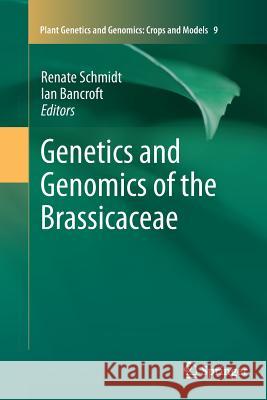
Renate Schmidt; Ian Bancroft
Genetics and Genomics of the Brassicaceae Renate Schmidt Ian Bancroft 9781461427780 Springer - książkaWidoczna okładka, to zdjęcie poglądowe, a rzeczywista szata graficzna może różnić się od prezentowanej.

Genetics and Genomics of the Brassicaceae

ISBN-13: 9781461427780 / Angielski / Miękka / 2013 / 680 str.

Renate Schmidt; Ian Bancroft
cena 806,99 zł
(netto: 768,56 VAT:  5%)

Najniższa cena z 30 dni: 771,08 zł
Termin realizacji zamówienia:
ok. 22 dni roboczych
Bez gwarancji dostawy przed świętami

Darmowa dostawa!
inne wydania

The Genetics and Genomics of the Brassicaceae provides a review of this important family (commonly termed the mustard family, or Cruciferae). The family contains several cultivated species, including radish, rocket, watercress, wasabi and horseradish, in addition to the vegetable and oil crops of the Brassica genus. There are numerous further species with great potential for exploitation in 21st century agriculture, particularly as sources of bioactive chemicals. These opportunities are reviewed, in the context of the Brassicaceae in agriculture. More detailed descriptions are provided of the genetics of the cultivated Brassica crops, including both the species producing most of the brassica vegetable crops (B. rapa and B. oleracea) and the principal species producing oilseed crops (B. napus and B. juncea). The Brassicaceae also include important "model" plant species. Most prominent is Arabidopsis thaliana, the first plant species to have its genome sequenced. Natural genetic variation is reviewed for A. thaliana, as are the genetics of the closely related A. lyrata and of the genus Capsella. Self incompatibility is widespread in the Brassicaceae, and this subject is reviewed. Interest arising from both the commercial value of crop species of the Brassicaceae and the importance of Arabidopsis thaliana as a model species, has led to the development of numerous resources to support research. These are reviewed, including germplasm and genomic library resources, and resources for reverse genetics, metabolomics, bioinformatics and transformation. Molecular studies of the genomes of species of the Brassicaceae revealed extensive genome duplication, indicative of multiple polyploidy events during evolution. In some species, such as Brassica napus, there is evidence of multiple rounds of polyploidy during its relatively recent evolution, thus the Brassicaceae represent an excellent model system for the study of the impacts of polyploidy and the subsequent process of diploidisation, whereby the genome stabilises. Sequence-level characterization of the genomes of Arabidopsis thaliana and Brassica rapa are presented, along with summaries of comparative studies conducted at both linkage map and sequence level, and analysis of the structural and functional evolution of resynthesised polyploids, along with a description of the phylogeny and karyotype evolution of the Brassicaceae. Finally, some perspectives of the editors are presented. These focus upon the Brassicaceae species as models for studying genome evolution following polyploidy, the impact of advances in genome sequencing technology, prospects for future transcriptome analysis and upcoming model systems.


Kategorie:
Nauka, Biologia i przyroda
Kategorie BISAC:
Science > Botanika
Science > Biotechnology
Nature > Plants - General
Wydawca:
Springer
Seria wydawnicza:
Plant Genetics and Genomics: Crops and Models
Język:
Angielski
ISBN-13:
9781461427780
Rok wydania:
2013
Wydanie:
2011
Numer serii:
000347124
Ilość stron:
680
Waga:
0.95 kg
Wymiary:
23.39 x 15.6 x 3.53
Oprawa:
Miękka
Wolumenów:
01
Dodatkowe informacje:
Wydanie ilustrowane

1. Phylogeny, Genome and Karyotype Evolution of Crucifers (Brassicaceae) Martin Lysak and Marcus Koch 2. The Brassicaceae in agriculture Suzanne Warwick 3. The noncoding landscape of the genome of Arabidopsis thaliana Georg Haberer, Yu Wang and Klaus Mayer 4. Natural variation in Arabidopsis thaliana Marten Koornneef, Matthieu Reymond and Carlos Alonso-Blanco 5. Chasing ghosts: comparative capping in the Brassicaceae Isobel Parkin 6. Comparative genome analysis at the sequence level Chris Town, Renate Schmidt and Ian Bancroft 7. Structural and functional evolution of resynthesized polyploids J. Chris Pires and Robert T. Gaeta 8. The genetics of Brassica rapa L. Nirala Ramchiary and Yong Pyo Lim 9. The genetics of Brassica oleracea Carlos Quiros and Mark Farnham 10. The genetics of Brassica napus Federico Iñiguez-Luy and Maria L. Federico 11. The genetics of Brassica juncea Akshay Pradhan and Deepak Pental 12. Arabidopsis lyrata genetics Outi Savolainen and Helmi Kuittinen 13. The genetics of Capsella Günter Theißen 14. Self-incompatibility in the Brassicaceae June Nasrallah 15. Sequencing the gene space of Brassica rapa Beom-Seok Park and Jeong-Hwan Mun 16. Germplasm and genomic library resources Emma M. Knee, Luz Rivero, Deborah Crist, Erich Grotewold and Randy Scholl 17. Resources for metabolomics Christoph Böttcher, Edda von Roepenack-Lahaye and Dierk Scheel 18. Transformation technology in the Brassicaceae Penny Sparrow 19. Resources for reverse genetic approaches in Arabidopsis thaliana Bekir Ülker and Bernd Weisshaar 20. Resources for reverse genetic approaches in Brassica species Thomas Wood, Pauline Stephenson and Lars Ostergaard 21. Bioinformatics resources for Arabidopsis thaliana Neil Graham and Sean May 22. Bioinformatics resources for the Brassica species Martin Trick 23. Perspectives on genetics and genomics of the Brassicaceae Renate Schmidt and Ian Bancroft

Professor Ian Bancroft completed his PhD at the University of Lancaster in 1986 and conducted his early postdoctoral research at Michigan State University, studying the genomes of cyanobacteria. He moved to the John Innes Centre in 1989 and has been expanding and applying his genomics expertise, initially in Arabidopsis thaliana, and since 1998 in the cultivated Brassica species. Renate Schmidt is leader of the group “Genome plasticity” at the Leibniz Institute of Plant Genetics and Crop Plant Research (IPK) in Gatersleben (Germany). She was educated as a molecular geneticist, and her research interests center on comparative genome analysis in the Brassicaceae and transgene expression in plants.

The Genetics and Genomics of the Brassicaceae provides a review of this important family (commonly termed the mustard family, or Cruciferae). The family contains several cultivated species, including radish, rocket, watercress, wasabi and horseradish, in addition to the vegetable and oil crops of the Brassica genus. There are numerous further species with great potential for exploitation in 21st century agriculture, particularly as sources of bioactive chemicals. These opportunities are reviewed, in the context of the Brassicaceae in agriculture. More detailed descriptions are provided of the genetics of the cultivated Brassica crops, including both the species producing most of the brassica vegetable crops (B. rapa and B. oleracea) and the principal species producing oilseed crops (B. napus and B. juncea). The Brassicaceae also include important “model” plant species. Most prominent is Arabidopsis thaliana, the first plant species to have its genome sequenced. Natural genetic variation is reviewed for A. thaliana, as are the genetics of the closely related A. lyrata and of the genus Capsella. Self incompatibility is widespread in the Brassicaceae, and this subject is reviewed. Interest arising from both the commercial value of crop species of the Brassicaceae and the importance of Arabidopsis thaliana as a model species, has led to the development of numerous resources to support research. These are reviewed, including germplasm and genomic library resources, and resources for reverse genetics, metabolomics, bioinformatics and transformation. Molecular studies of the genomes of species of the Brassicaceae revealed extensive genome duplication, indicative of multiple polyploidy events during evolution. In some species, such as Brassica napus, there is evidence of multiple rounds of polyploidy during its relatively recent evolution, thus the Brassicaceae represent an excellent model system for the study of the impacts of polyploidy and the subsequent process of diploidisation, whereby the genome stabilises. Sequence-level characterization of the genomes of Arabidopsis thaliana and Brassica rapa are presented, along with summaries of comparative studies conducted at both linkage map and sequence level, and analysis of the structural and functional evolution of resynthesised polyploids, along with a description of the phylogeny and karyotype evolution of the Brassicaceae. Finally, some perspectives of the editors are presented. These focus upon the Brassicaceae species as models for studying genome evolution following polyploidy, the impact of advances in genome sequencing technology, prospects for future transcriptome analysis and upcoming model systems. Professor Ian Bancroft completed his PhD at the University of Lancaster in 1986 and conducted his early postdoctoral research at Michigan State University, studying the genomes of cyanobacteria. He moved to the John Innes Centre in 1989 and has been expanding and applying his genomics expertise, initially in Arabidopsis thaliana, and since 1998 in the cultivated Brassica species. Renate Schmidt is leader of the group “Genome plasticity” at the Leibniz Institute of Plant Genetics and Crop Plant Research (IPK) in Gatersleben (Germany). She was educated as a molecular geneticist, and her research interests center on comparative genome analysis in the Brassicaceae and transgene expression in plants.



Udostępnij

Facebook - konto krainaksiazek.pl


Opinie o Krainaksiazek.pl na Opineo.pl

Partner Mybenefit

Krainaksiazek.pl w programie rzetelna firma Krainaksiaze.pl - płatności przez paypal

Czytaj nas na:

Facebook - krainaksiazek.pl
  • książki na zamówienie
  • granty
  • książka na prezent
  • kontakt
  • pomoc
  • opinie
  • regulamin
  • polityka prywatności

Zobacz:

  • Księgarnia czeska

  • Wydawnictwo Książkowe Klimaty

1997-2025 DolnySlask.com Agencja Internetowa

© 1997-2022 krainaksiazek.pl
     
KONTAKT | REGULAMIN | POLITYKA PRYWATNOŚCI | USTAWIENIA PRYWATNOŚCI
Zobacz: Księgarnia Czeska | Wydawnictwo Książkowe Klimaty | Mapa strony | Lista autorów
KrainaKsiazek.PL - Księgarnia Internetowa

Polityka prywatnosci - link
Krainaksiazek.pl - płatnośc Przelewy24
Przechowalnia Przechowalnia





