• Wyszukiwanie zaawansowane
  • Kategorie
  • Kategorie BISAC
  • Książki na zamówienie
  • Promocje
  • Granty
  • Książka na prezent
  • Opinie
  • Pomoc
  • Załóż konto
  • Zaloguj się

Gender-Competent Legal Education » książka


zaloguj się | załóż konto
Logo Krainaksiazek.pl

koszyk

konto

szukaj
topmenu
Księgarnia internetowa
Szukaj
Książki na zamówienie
Promocje
Granty
Książka na prezent
Moje konto
Pomoc
 
 
Wyszukiwanie zaawansowane
Pusty koszyk
Bezpłatna dostawa dla zamówień powyżej 20 złBezpłatna dostawa dla zamówień powyżej 20 zł

Kategorie główne

• Nauka
 [2949965]
• Literatura piękna
 [1857847]

  więcej...
• Turystyka
 [70818]
• Informatyka
 [151303]
• Komiksy
 [35733]
• Encyklopedie
 [23180]
• Dziecięca
 [617748]
• Hobby
 [139972]
• AudioBooki
 [1650]
• Literatura faktu
 [228361]
• Muzyka CD
 [398]
• Słowniki
 [2862]
• Inne
 [444732]
• Kalendarze
 [1620]
• Podręczniki
 [167233]
• Poradniki
 [482388]
• Religia
 [509867]
• Czasopisma
 [533]
• Sport
 [61361]
• Sztuka
 [243125]
• CD, DVD, Video
 [3451]
• Technologie
 [219309]
• Zdrowie
 [101347]
• Książkowe Klimaty
 [123]
• Zabawki
 [2362]
• Puzzle, gry
 [3791]
• Literatura w języku ukraińskim
 [253]
• Art. papiernicze i szkolne
 [7933]
Kategorie szczegółowe BISAC

Gender-Competent Legal Education

ISBN-13: 9783031143595 / Angielski / Twarda / 2023 / 709 str.
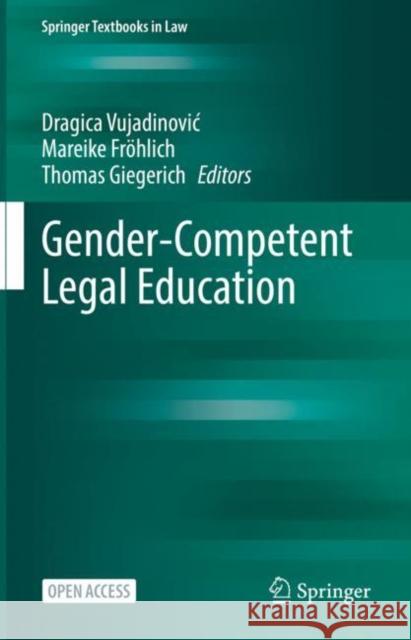
Dragica Vujadinovic; Mareike Fröhlich; Thomas Giegerich
Gender-Competent Legal Education Dragica Vujadinovic Mareike Fr?hlich Thomas Giegerich 9783031143595 Springer - książkaWidoczna okładka, to zdjęcie poglądowe, a rzeczywista szata graficzna może różnić się od prezentowanej.

Gender-Competent Legal Education

ISBN-13: 9783031143595 / Angielski / Twarda / 2023 / 709 str.

Dragica Vujadinovic; Mareike Fröhlich; Thomas Giegerich
cena 201,72 zł
(netto: 192,11 VAT:  5%)

Najniższa cena z 30 dni: 192,74 zł
Termin realizacji zamówienia:
ok. 22 dni roboczych
Bez gwarancji dostawy przed świętami

Darmowa dostawa!
inne wydania

Male-dominated law and legal knowledge essentially characterized the whole of pre-modern history in that the patriarchy represented the axis of social relations in both the private and public spheres. Indeed, modern and even contemporary law still have embedded elements of patriarchal heritage, even in the secular modern legal systems of Western developed countries, either within the content of legislation or in terms of its implementation and interpretation. This is true to a greater or lesser extent across legal systems, although the secular modern legal systems of the Western developed countries have made great advances in terms of gender equality. The traditional understanding of law has always been self-evidently dominated by men, but modern law and its understanding have also been more or less “malestreamed.” Therefore, it has become necessary to overcome the given “maskulinity” of legal thought.In contemporary legal and political orders, gender mainstreaming of law has been of the utmost importance for overcoming deeply and persistently embedded power relations and gender-based, unequal social relations. At the same time and equally importantly, the gender mainstreaming of legal education – to which this book aims to contribute – can help to gradually eliminate this male dominance and accompanying power relations from legal education and higher education as a whole.This open access textbook provides an overview of gender issues in all areas of law, including sociological, historical and methodological issues. Written for students and teachers around the globe, it is intended to provide both a general overview and in-depth knowledge in the individual areas of law. Relevant court decisions and case studies are supplied throughout the book.


Male-dominated law and legal knowledge essentially characterized the whole of pre-modern history in that the patriarchy represented the axis of social relations in both the private and public spheres. Indeed, modern and even contemporary law still have embedded elements of patriarchal heritage, even in the secular modern legal systems of Western developed countries, either within the content of legislation or in terms of its implementation and interpretation. This is true to a greater or lesser extent across legal systems, although the secular modern legal systems of the Western developed countries have made great advances in terms of gender equality. The traditional understanding of law has always been self-evidently dominated by men, but modern law and its understanding have also been more or less “malestreamed.” Therefore, it has become necessary to overcome the given “maskulinity” of legal thought. In contemporary legal and political orders, gender mainstreaming of law has been of the utmost importance for overcoming deeply and persistently embedded power relations and gender-based, unequal social relations. At the same time and equally importantly, the gender mainstreaming of legal education – to which this book aims to contribute – can help to gradually eliminate this male dominance and accompanying power relations from legal education and higher education as a whole. This open access textbook provides an overview of gender issues in all areas of law, including sociological, historical and methodological issues. Written for students and teachers around the globe, it is intended to provide both a general overview and in-depth knowledge in the individual areas of law. Relevant court decisions and case studies are supplied throughout the book.

Kategorie:
Nauka, Prawo i administracja
Kategorie BISAC:
Law > International
Social Science > Gender Studies
Political Science > General
Wydawca:
Springer
Seria wydawnicza:
Springer Textbooks in Law
Język:
Angielski
ISBN-13:
9783031143595
Rok wydania:
2023
Dostępne języki:
Numer serii:
001075276
Ilość stron:
709
Oprawa:
Twarda
Dodatkowe informacje:
Wydanie ilustrowane

Introduction by Mareike Fröhlich, Thomas Giegerich and Dragica Vujadinovic.- Part I Gender in a General Context: Gender Issues in Comparative Legal History by Una Divac, Maurilio Felici, Pietro Lo Iacono, Nina Kršljanin and Vojislav Stanimirović.- Feminist Political and Legal Theories by Antonio Álvarez del Cuvillo, Fabio Macioce and Sofia Strid.- Gender and Structural Inequalities from a Socio-legal Perspective by Eva Bermúdez Figueroa, Valerija Dabetić , Raquel Pastor Yuste and Zara Saeidzadeh.- Feminist Judgments by Marco Evola, Ivana Krstic and Fuensanta Rabadán Sánchez-Lafuente.- Gender Research and Feminist Methodologies by Zara Saeidzadeh.- Part II Gender in a Public Context: Human Rights Law through the Lens of the Gender Perspective by Marco Evola, Julia Jungfleisch and Tanasije Marinkovic.- The Evolving Recognition of Gender in International and European Law by Rigmor Argren, Marco Evola, Thomas Giegerich and Ivana Krstic.- Gender Equality Aspects on Public Law by Marko Davinic, Eleonor Kristoffersson and Tanasije Marinkovic.- Gender Perspective of Social Security Law by MªAngustias Benito and Carmen Jover Ramírez.- Gender Equitable Taxation by Marco Cedro, Eleonor Kristoffersson, Teresa Ponton Aricha and Lidija Živković.- Public Policies on Gender Equality by Vanesa Hervías Parejo and Branko Radulović.- Gender Competent Criminal Law by María Acale Sánchez, Ivana Marković and Susanne Strand.- Gender Perspective of Victimization, Crime and Penal Policy by Beatriz Cruz, Natalija Lukić and Susanne Strand.- Part III Gender in a Private Context: Gender Equality in the Different Fields of Private Law by Amalia Blandino, Letizia Coppo, Gabriele Carapezza Figlia, Snežana Dabic and Katarina Dolovic.- Gender Competent Family Law by Ivana Barac, Amalia Blandino, Letizia Coppo, Giampaolo Frezza, Uros Novakovic, Fuensanta Rabadán and Zara Saeidzadeh.- Labour Law and Gender by Thais Guerrero Padrón, Ljubinka Kovačević and Mª Isabel Ribes Moreno.- Integrating Gender Equality in Economics and Management by Lydia Bares Lopez, Francesca Costanza, Manuela Ortega Gil and Sofia Strid.- Gender, Business and the Law by Mareike Fröhlich, Tatjana Jevremović Petrović and Jelena Lepetić.

Dragica Vujadinović is Full Professor at the Faculty of Law at the University of Belgrade, teaching Political Theories, Gender Studies, Introduction to the Political System of the EU; she is also Head of Master in European Integration and the coordinator of the Erasmus+ project entitled: New Quality in Education for Gender Equality – Strategic Partnership for the Development of Master’s Study program “Law and Gender” – LAWGEM.

Mareike Fröhlich is a post-doc research associate at the Europa-Institut of Saarland and associated to the Jean Monnet Chair on EU Constitutional Framework for International Dispute Settlement and Rule of Law. She researches and teaches mainly in the field of European and International Economic Law as well as EU External Relations and EU Enlargement Policy. She is also Head of International Projects and Cooperation at the Europa-Institut.

Thomas Giegerich is Director of the Europa-Institut, Professor of European Law, Public International Law and Public Law at Saarland University/Germany as well as holder of the Jean Monnet Chair for European Integration, Antidiscrimination, Human Rights and Diversity (2017-2020). His main fields of research are European Law (EU Constitutional Law, Fundamental Rights, Antidiscrimination Law) and Public International Law, particularly International Human Rights Law.


Male-dominated law and legal knowledge essentially characterized the whole of pre-modern history in that the patriarchy represented the axis of social relations in both the private and public spheres. Indeed, modern and even contemporary law still have embedded elements of patriarchal heritage, even in the secular modern legal systems of Western developed countries, either within the content of legislation or in terms of its implementation and interpretation. This is true to a greater or lesser extent across legal systems, although the secular modern legal systems of the Western developed countries have made great advances in terms of gender equality. The traditional understanding of law has always been self-evidently dominated by men, but modern law and its understanding have also been more or less “malestreamed.” Therefore, it has become necessary to overcome the given “maskulinity” of legal thought.

In contemporary legal and political orders, gender mainstreaming of law has been of the utmost importance for overcoming deeply and persistently embedded power relations and gender-based, unequal social relations. At the same time and equally importantly, the gender mainstreaming of legal education – to which this book aims to contribute – can help to gradually eliminate this male dominance and accompanying power relations from legal education and higher education as a whole.

This open access textbook provides an overview of gender issues in all areas of law, including sociological, historical and methodological issues. Written for students and teachers around the globe, it is intended to provide both a general overview and in-depth knowledge in the individual areas of law. Relevant court decisions and case studies are supplied throughout the book.




Udostępnij

Facebook - konto krainaksiazek.pl


Opinie o Krainaksiazek.pl na Opineo.pl

Partner Mybenefit

Krainaksiazek.pl w programie rzetelna firma Krainaksiaze.pl - płatności przez paypal

Czytaj nas na:

Facebook - krainaksiazek.pl
  • książki na zamówienie
  • granty
  • książka na prezent
  • kontakt
  • pomoc
  • opinie
  • regulamin
  • polityka prywatności

Zobacz:

  • Księgarnia czeska

  • Wydawnictwo Książkowe Klimaty

1997-2025 DolnySlask.com Agencja Internetowa

© 1997-2022 krainaksiazek.pl
     
KONTAKT | REGULAMIN | POLITYKA PRYWATNOŚCI | USTAWIENIA PRYWATNOŚCI
Zobacz: Księgarnia Czeska | Wydawnictwo Książkowe Klimaty | Mapa strony | Lista autorów
KrainaKsiazek.PL - Księgarnia Internetowa

Polityka prywatnosci - link
Krainaksiazek.pl - płatnośc Przelewy24
Przechowalnia Przechowalnia




