Gear Motor Handbook » książka





Gear Motor Handbook
ISBN-13: 9783642795916 / Angielski / Miękka / 2013 / 607 str.
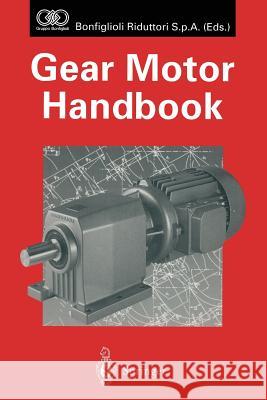
Gear Motor Handbook
ISBN-13: 9783642795916 / Angielski / Miękka / 2013 / 607 str.
(netto: 383,36 VAT: 5%)
Najniższa cena z 30 dni: 385,52
ok. 22 dni roboczych.
Darmowa dostawa!
In these years of constant growth and further development for our company, research and development has become more and more important, and has allowed us to be at the forefront in our business sector, where innovation is the obvious and decisive factor. It has therefore been consistent with our everyday business philosophy to involve ourselves deeply in writing and printing this handbook, which is designed to recognize the capacity and hard work of all employees working successfully in the Bonfiglioli Group. The book is intended to be a concrete contribution by Bonfiglioli Riduttori S.p.A. to the development and application of power transmissions. The book is addressed to all who have technical dealings with power transmissions, from university students to engineers active in the workplace. For this reason we have invited the cooperation of four prestigious professionals - Darle W. Dudley, Jacques Sprengers, Dierk SchrOder, and Hajime Yamashina - in the knowledge that only through the cooperation of the leading specialists in the field of power transmissions could we develop a truly useful and helpful handbook. It has been hard work, but we are sure the reader's appreciation will amply reward our efforts.
I: Editor: Darle W. Dudley.- 1 Introduction.- 1.1 History of the Art of Gear Making.- 1.2 Development of Gear Technology.- 1.3 Development of Gear Manufacturing Organizations.- 1.4 Developments at Bonfiglioli Riduttori.- 1.5 The content of This Technical Handbook.- II: Editor: Jacques Sprengers.- 1 The Dynamics of Solids.- 1.1 Introduction.- 1.2 Gravity Centre of Solids.- 1.3 Movements of Solids.- 1.4 Rectilinear Translating Movement.- 1.5 Movement of Rotation.- 1.6 Mechanical Energy, Work and Power.- 1.6.1 Introduction.- 1.6.2 Potential Energy.- 1.6.3 Kinetic Energy.- 1.6.4 Work in the Uniform Rectilinear Movement.- 1.6.5 Work in the Uniform Movement of Rotation.- 1.6.6 Power in the Uniform Rectilinear Movement.- 1.6.7 Power in the Movement of Rotation.- 1.7 Inertia.- 1.7.1 Introduction.- 1.7.2 Inertia of Solids During Translation.- 1.7.3 Balance of Rotors. Imbalances.- 1.7.4 Inertia During Accelerated Rotation. Moments of Inertia of Solids.- 1.8 Friction.- 1.8.1 Fundamental Equation.- 1.8.2 Angular Value of the Coefficient of Friction.- 1.8.3 Wedge Effect.- 1.8.4 Friction of a Roller on its Axis.- 1.8.5 Friction of a Belt around its Pulley.- 1.8.6 Adhesion.- 1.8.7 Friction on disks.- 1.8.8 Values of some Coefficients of Friction.- 1.9 Rolling Resistance.- 1.10 Torque Necessary for a Roller of Translation.- 1.11 Cranking Torque.- 1.12 Kinematic Chain.- 1.12.1 Definition.- 1.12.2 Torques.- 1.12.3 Moments of Inertia.- 1.12.4 Elastic Constants of Shafts.- 1.12.5 Application of a Lifting Winch on Bridge Crane.- 2 Strength of Materials.- 2.1 Single Traction or Compression.- 2.2 Shearing.- 2.3 Simple Bending.- 2.3.1 Plane Bending.- 2.3.2 Left Bending.- 2.4 Torsion.- 2.5 Buckling.- 2.6 Composition of Simple Stresses.- III: Editor: Jacques Sprengers.- 1 Stresses and Materials.- 1.1 Introduction.- 1.2 Stresses.- 1.3 Materials: Properties and Features.- 1.3.1 Permissible Static Stress.- 1.3.2 Fatigue. Endurance Limit.- 1.4 Materials.- 1.4.1 General Features.- 1.4.2 Ferrous Materials.- 1.4.3 Bronzes.- 2 Geometry and Gears.- 2.1 General Features.- 2.2 Involute to a Circle.- 2.3 Elementary Geometric Wheel. Meshing Theory.- 2.4 Standard Basic Rack Tooth Profile.- 2.5 Geometrical Wheel - Basic Rack Profile.- 2.6 Tooth Thickness.- 2.7 Influence of the Rack Shift Factor. Undercut and Meshing Interference.- 2.8 Reference Centre Distance. Modified Centre Distance.- 2.9 Contact Ratio.- 2.10 Calculation of an Angle Starting from its Involute.- 3 Mechanical Gears.- 3.1 General Spur Features.- 3.2 Cylindrical Wheels.- 3.2.1 Definition.- 3.2.2 Geometry.- 3.2.3 Standardized Basic Profile and Modules.- 3.2.4 Facewidth.- 3.2.5 Undercut.- 3.2.6 Tooth Thickness.- 3.2.7 Internal Toothing.- 3.3 Parallel Spur Gears.- 3.4 Helical Gears. Involute Helicoid.- 3.4.1 Helical Wheel.- 3.4.2 Helical Parallel Gear Pairs.- 3.4.3 Sliding.- 3.4.4 Forces.- 3.4.5 Gear Ratio - Speed Ratio.- 3.4.6 Normal Pressure.- 3.4.7 Rack Shift Factor.- 3.4.8 Gears that Reduce Speed/Gears that Increase Speed.- 3.4.9 Tooth Modifications.- 3.4.10 Mechanical Losses in Gears.- 3.5 Bevel Gear Pair.- 3.5.1 Definition.- 3.5.2 Equivalent Gears. Trestgold’s Hypothesis.- 3.5.3 Constant Tooth Depth Bevel Gear.- 3.5.4 Constant Tooth Depth Gear.- 3.5.5 Forces on Bevel Gear Pairs.- 3.5.6 Dimensions of the Blanks Forming the Gears.- 3.6 Worms and Worm Wheels.- 3.6.1 Definition.- 3.6.2 Main Dimension.- 3.6.3 Efficiency of Worms and Worm Wheels. Reversing.- 3.6.4 Tooth Profile.- 3.6.5 Forces.- 3.7 Single Planetary Gear Train.- 3.7.1 Description.- 3.7.2 Kinematic Relation.- 3.7.3 Forces.- 3.7.4 Advantages Derived from the Use of Planetary Train Gears.- 4 Gear Measuring.- 4.1 Measurement of the Tooth Thickness.- 4.1.1 Base Tangent Measurement.- 4.1.2 Normal Chordal Tooth Thickness Measurement.- 4.1.3 Measuring by Balls and Pins.- 4.2 Pitch Measurement.- 4.3 Profile Measurements.- 4.4 Measurement of the Helix Deviation.- 4.5 Composite Tangential Deviation.- 4.6 Composite Radial Deviation (Measurement on the two Flanks).- 4.7 Eccentricity.- 4.8 Precision in Gear Blank.- 4.9 Centre Distance Deviation and Axis Parallelism.- 4.10 Information on Standards.- 4.11 Backlash.- 4.12 Contact Pattern Measurement.- 5 Gear Calculation.- 5.1 Aspects of Teeth After Operation.- 5.2 Parallel Gear and Bevel Gear Pair Load Capacity.- 5.2.1 Prevention of Pitting (Contact Stress).- 5.2.2 Stress Applied to the Tooth Root.- 5.3 Standard ISO 6336 (or DIN 3990).- 5.3.1 Introduction.- 5.3.2 Influence Factors.- 5.3.3 Contact Stress Calculation.- 5.3.4 Calculation of the Tooth Bending Strength.- 5.3.5 Allowable Stress Number.- 5.4 Standard ISO 10300 (Bevel Gear Pairs).- 5.4.1 Introduction.- 5.4.2 Influence Factors.- 5.4.3 Contact Area.- 5.4.4 Contact Stress Calculation.- 5.4.5 Calculation of Tooth Bending Strength.- 5.4.6 Materials.- 5.5 Calculation with a Load Spectrum.- 5.5.1 Complex Calculation.- 5.5.2 Approximate Calculation.- 5.6 Worm and Worm Wheel Calculation.- 5.6.1 General Features.- 5.6.2 Load Capacity for Contact Stress.- 5.6.3 Wear Prevention.- 5.6.4 Tooth Strength.- 5.6.5 Standard Information.- 5.6.6 Reversing and Efficiency.- 6 Shafts.- 6.1 Definition and Function.- 6.2 Shafts and Forces in Gears.- 6.3 Study of the Theoretical Stresses.- 6.3.1 Bending.- 6.3.2 Torsion.- 6.3.3 Normal Stress.- 6.3.4 External Compression.- 6.4 Real Stresses (Stress Concentration Factor - Form Factor).- 6.5 Static Allowable Stress.- 6.5.1 Static Breaking Stress due to Traction.- 6.5.2 Elastic Limit.- 6.5.3 Allowable Static Stress.- 6.6 Allowable Stress for an Unlimited Duration.- 6.6.1 Endurance (Endurance Factor Yc).- 6.6.2 Factor Modifying Endurance.- 6.6.3 Allowable Stress for Unlimited Life Duration.- 6.7 Allowable Stress.- 6.8 Stress Concentration Factor.- 6.8.1 Definition.- 6.8.2 Notch Sensibility Factor.- 6.8.3 Notch Gradient.- 6.8.4 Notch Factor.- 6.8.5 Values of the Allowable Stress Concentration Coefficient and Notch Gradient.- 6.8.6 Static Stress Concentration Factor.- 6.9 Form Factor.- 6.10 Real Stress.- 6.11 Safety Factors.- 6.11.1 Simple Stress.- 6.11.2 Stress Reduced to Reference Stress.- 6.11.3 Composition of Stresses Following the same Direction.- 6.11.4 Stresses Having any Direction.- 6.11.5 Stresses Generated by a Spectrum of Loads.- 6.12 Stress Concentration Importance.- 6.13 Shaft Designing.- 6.14 Distortion of the Shaft.- 7 Fits Between the Shaft and the Hub and Fits Between the Shaft and the Shaft.- 7.1 ISO System Concerning Tolerances.- 7.2 Measurement of Roughness.- 7.3 Fixing by means of Prismatic Key.- 7.4 Interference Mounting.- 7.5 Fretting Corrosion.- 7.6 Splines.- 7.7 Couplings - Generalities.- 7.8 Rigid Couplings.- 7.9 Elastic Couplings.- 7.10 Gear Toothing Couplings.- 7.11 Clutch Couplings.- 7.12 Couplings by Means of Shrink Disks.- 8 Bearings.- 8.1 Generalities.- 8.2 Classification of Bearings on the Basis of the Rolling Elements.- 8.3 Classification of Bearings on the Basis of their Positioning.- 8.4 Calculation of Bearings.- 8.5 Variable Loads.- 8.6 Static Capacity.- 8.7 Dimensions of Bearings.- 8.8 Radial Deep Groove Ball Bearings.- 8.9 Double Row Self-Aligning Ball Bearings.- 8.10 Cylindrical Roller Bearings.- 8.11 Double Row Self-Aligning Roller Bearings.- 8.12 Angular Contact Ball Bearings.- 8.13 Taper Roller Bearings.- 8.14 Selection of Bearings.- 8.15 Bearing Fixings.- 8.16 Dismounting of Bearings.- 8.17 Maximum Speed and Number of Cycles.- 8.18 Oil Seals.- 9 Lubricants and Lubrication.- 9.1 Function of Lubrication.- 9.2 Lubricants.- 9.3 Mineral Lubricants.- 9.4 Greases.- 9.5 Synthetic Lubricants.- 9.6 Viscosity.- 9.6.1 Definition.- 9.6.2 Variation of Viscosity by Temperature.- 9.6.3 Viscosity Variation due to Pressure.- 9.6.4 Measurement of Viscosity.- 9.6.5 Standardized Designation of Viscosity (ISO).- 9.7 Other Properties of Lubricants.- 9.8 Causes of Deterioration.- 9.9 Selection of Lubricants.- 9.10 Working at Low Temperatures.- 9.11 Working at High Temperatures.- 9.12 Modalities of Lubrication of Gearing.- 9.13 Elasto-Hydro-Dynamic State (EHD).- 9.14 Scoring.- 10 Housings.- 10.1 Definitions and Function.- 10.2 Materials.- 10.3 Primary Function: Support the Bearings.- 10.4 Calculation with Finite Elements.- 10.5 Second Function: Seal.- 10.6 Third Function: External Fixing.- 10.7 Accessories.- 10.8 Working and Precision of Housings.- 10.9 Mounting Screwed Elements (Bolts and Nuts).- 10.10 Economic Conditions Influencing the Selection of Housings.- 11 Standard Gear Units.- 11.1 Definition and Fields of Application.- 11.2 Design Principle.- 11.3 Types of Gearboxes.- 11.4 Selection of a Gear Unit.- 11.5 Service Factor.- 11.6 Equivalent Power.- 11.7 Example of Calculation.- 11.8 Factors that Influence the Operation Factor.- 11.9 Particular Precautions.- 11.10 Gear Motors.- 12 Vibrations and Noises.- 12.1 Natural Vibration.- 12.2 Forced Vibration.- 12.3 Vibration Modalities.- 12.4 Flexion Vibration.- 12.5 Torsion Vibration.- 12.6 Sinusoidal Vibration Function.- 12.7 Periodic Vibration Function (Fourier).- 12.8 Modal Anlysis.- 12.9 Measurement of Vibrations.- 12.10 Causes of Vibrations in Gearboxes. Frequency of Meshing.- 12.11 Effects of Vibrations.- 12.12 Noise.- 12.13 Measurement of the Noise.- 12.14 Well-Considered Scales (dBA).- 12.15 Measurement of the Noise Produced by Gear Units.- 13 Thermal Power of the Gearing.- 13.1 Definition.- 13.2 Losses in Gearboxes.- 13.3 Losses During the Meshing.- 13.4 Losses due to Dipping.- 13.5 Losses in Bearings.- 13.6 Losses in Sealings.- 13.7 Total Losses.- 13.8 Dissipation of Heat.- 13.9 Efficiency of Gearboxes.- 13.10 Measurement of the Efficiency of Gearboxes.- 13.10.1 Open Circuit Measurement.- 13.10.2 Back to Back Measurement.- 13.11 Comparison Between the Different Types of Gear Units.- 14 The Manufacturing of Gearboxes.- 14.1 Introduction.- 14.2 The Raw Material.- 14.3 The Processing of Carters.- 14.4 The Processing of Shafts.- 14.5 The Working of Gear Blanks.- 14.6 Cutting Cylindrical Spur and Helical Gears.- 14.6.1 Particulars.- 14.6.2 Processing by Milling with Form Tools.- 14.6.3 Processing by Generation. Principle.- 14.6.4 Cutting by Rack-Tool.- 14.6.5 Cutting by Pinion-Tool.- 14.6.6 Processing by Lead-Miller (Hob).- 14.6.7 Processing by a Tool of Carbide or Fired Clay.- 14.7 The Processing of Bevel Gears.- 14.8 The Processing of Worm and Worm Wheels.- 14.9 The Finishing of Cylindrical Gears.- 14.9.1 Grinding.- 14.9.2 Shaving.- 14.9.3 Honing.- 14.9.4 Skiving.- 14.10 Finishing of Bevel Gears.- 14.11 Grinding of Worms.- 14.12 Assembly.- 15 Applications.- 15.1 The Application of Gears.- 15.2 Hoisting Instruments.- 15.2.1 Bridge Cranes.- 15.2.2 Cranes.- 15.3 Conveyors.- 15.3.1 Belt Conveyors.- 15.3.2 Chain Conveyors.- 15.3.3 Roller Conveyors.- 15.3.4 Screw Conveyors.- 15.4 Waste and Treatment of Used Water.- 15.4.1 Waste Treatment.- 15.4.2 The Treatment of Used Waters.- 15.5 Special Vehicles and Farm Machines.- 15.6 Equipments Used for Intermittent Operation.- 15.7 Precision Positioners.- Appendix. Hydraulic Motors and Variators.- A.l Hydraulic Motors.- A.2 Speed Variators.- A.2.1 Belt Variators.- A.2.2 Planetary Variators.- The ISO Standards Relating to Gears (TC 60).- IV: Editor: Dierk Schroder.- 1 Electric Machines-Standards and Definitions.- 1.1 Introduction and Standards.- 1.2 Duty and Rating.- 1.3 Machines with Different Duty Types.- 1.4 Operating Conditions: Altitude, Ambient Temperatures and Coolant Temperatures.- 1.5 Electrical Conditions.- 1.6 System: Production Machine-Driving Machine.- 1.6.1 Stationary Behaviour of the Production Machine.- 1.6.2 Stationary Behaviour of the Driving Machine: tM = f(n,?).- 1.6.3 Static Stability at the Operating Point.- 1.6.4 Rating of the Electrical Drive System.- 2 Electric Machines.- 2.1 Direct-Current Machine.- 2.2 Rotating-Field Machines.- 2.2.1 Fundamental Principle of the Rotating-Field Machines.- 2.2.2 Synchronous Machines.- 3 Direct-Current Machine.- 3.1 Signal-Flow Graph of Separately Excitated DC-Machine Armature Circuit.- 3.1.1 Normalization.- 3.1.2 Field Circuit Excitation Circuit.- 3.2 Transfer-Functions Transient Responses.- 3.2.1 Variable Command Behaviour and Variable Command Transfer Function.- 3.2.2 Load Behaviour and Disturbance Transfer-Function.- 3.2.3 Influence of ? on n (Field Weakening).- 3.3 Open-Loop Speed Control.- 3.3.1 Open-Loop Speed Control by Means of Armature Voltage.- 3.3.2 Open-Loop Control Through Field Weakening.- 3.3.3 Control Through Armature and Field-Voltage.- 3.3.4 Control with a Series-Resistor on the Armature Circuit.- 4 Converters and DC-Machine Control.- 4.1 DC-DC-Converter.- 4.1.1 DC-DC-Converter Principle.- 4.1.2 Control Strategies for DC-DC-Converters.- 4.1.3 DC-DC-Converters for one or Multiple Quadrant Operation of DC-DC-Motors.- 4.2 Line Commutated Converters.- 4.2.1 Three Phase “Y” Half Wave Converter.- 4.2.2 Single-Phase Converters.- 4.2.3 Three-Phase Bridge-Converter.- 4.2.4 Operating Limits Converter and Machine.- 4.2.5 Torque Reversal of DC-Machines Supplied by Converters.- 4.3 Control of DC-Drives (Current-Control, Speed Control).- 4.3.1 Control of the Armature Current.- 4.3.2 Speed Control.- 5 Three-Phase AC-Machines Signal Flow Graphs.- 5.1 Space-Vector Theory -Phasors.- 5.2 General Rotating Field Machine.- 5.3 Induction Machine in the Steady State Supplied from the Mains.- 5.3.1 Mains and Converter Power Supply.- 5.4 Single-Phase Equivalent Circuit in Steady-State Operation.- 5.4.1 Equivalent Electrical Circuit for the IM.- 5.5 Induction Machine Supplied by Inverter.- 5.5.1 Control Strategies Based on Constant Stator Flux.- 5.5.2 Control Strategies Based on Constant Rotor Flux.- 6 Synchronous Machine.- 6.1 Synchronous Machine with Salient Pole Rotor.- 6.6.1 Machine with Salient Pole Rotor with Impressed Stator Voltage-Signal Flow Graph.- 6.2 Synchronous Machine with Non-Salient Pole Rotor.- 6.3 Non-Salient Pole Rotor Synchronous Machine Control.- 7 Inverter Drives.- 7.1 Cycloconverter.- 7.2 Wound Rotor Induction Machine with Slip-Power Recovery (Subsynchronous Cascade; Scherbius Drive).- 7.3 Double Fed Induction Machine.- 7.4 The Load-Commutated Inverter Drive.- 7.5 Forced Commutation Current Source Inverter with Thyristors.- 7.6 Voltage Source Inverter with Intermediate Direct Voltage (VSI).- 7.6.1 VSI with Variable DC-Voltage.- 7.6.2 VSI with Constant Intermediate Direct Voltage.- 8 Basic Considerations for the Control of Rotating Field Machines.- 8.1 Decoupling.- 8.2 Field Orientation.- 9 Permanent Magnet Machines.- 9.1 Permanent Magnet Synchronous Machine.- 9.2 Brushless DC-Machine.- V: Editor: Haijme Yamashina.- 1 Outline of Total Quality Management.- 1.1 Definition of Quality.- 1.2 Brief History of Total Quality Management in Japan.- 1.2.1 Introduction of SQC (Statistical Quality Control).- 1.2.2 Necessity of Quality Assurance.- 1.2.3 Toward Total Quality Management.- 1.3 Importance of Production Techniques to Build-in Quality in New Innovative Product Development.- 1.3.1 Product and Process Technology.- 1.3.2 A Closer Look at the Production Process.- 1.3.3 Matching Manufacturing to Market Changes.- 1.3.4 Costs of Diversification.- 1.3.5 Mobile Competitive Edge.- 2 The QC Viewpoint.- 2.1 Customer Orientation.- 2.2 Customer’s Quality Requirements.- 2.2.1 Quality Requirements and Substitutional Characteristics.- 2.2.2 How to Express Quality.- 2.3 Management through Quality to Satisfy Customers.- 2.3.1 Problems in Conventional Management.- 2.3.2 Management by Rotating the Plan-Do-Check-Act Cycle.- 3 Quality Assurance.- 3.1 Basic Quality Assurance Policy.- 3.2 Quality Assurance Organization.- 3.3 Quality Assurance Process.- 3.4 Quality Assurance System Diagram.- 4 Main Quality Control Activities.- 4.1 Quality Control at the Product Design Stage.- 4.1.1 Quality Engineering.- 4.1.2 FMEA and FTA.- 4.2 Quality Control at the Preparation Stage for Production.- 4.2.1 Quality Engineering.- 4.2.2 Process FMEA.- 4.2.3 Process Capability Assessment.- 4.2.4 Fool-Proof System.- 4.2.5 Quality Control of Purchased Goods.- 4.3 Quality Control at the Daily Production Stage.- 4.3.1 Statistical Process Control (SPC) by Using the Control Chart.- 4.3.2 Every Aspect of Inspection.- 4.3.3 QA Network.- 4.3.4 Establishment of the Standard Operation.- 4.3.5 Role of the Foreman.- 4.3.6 Quality Maintenance.- 4.3.7 QC Circle Activities.- 4.3.8 Quality Control of Purchased Goods.- 4.4 Necessity of Education and Training and Training on the QC-Tools.- Author- and Subject Index.
Bonfiglioli Riduttori, a major supplier of power transmissions in the world market, has commissioned four leading and internationally known experts to write this comprehensive handbook on power transmission. All aspects are treated, from history and mathematical theory through detailed design refinements to quality control in the production process. The book is addressed to all who deal technically with power transmissions, from university students to professional users.
The book has five parts. In Part 1, Darle W. Dudley gives a historical overview of the development of power transmission technology over four millennia. In Part 2 Jacques Sprengers presents the underlying mechanical theory. Part 3 is devoted to an in-depths treatment of gears and the gearbox, ranging from sophisticated theory to the practical development of toothed gear wheels, shafts, housings, bearings, and so on. Part 4, by Dierk Schröder, focuses on electric machines in all their forms. Finally, in Part 5, Hajime Yamashina describes the reliability standards set by Bonfiglioli Riduttori and the quality assurance system established to maintain them.




Czytaj nas na:
1997-2026 DolnySlask.com Agencja Internetowa
KrainaKsiazek.PL - Księgarnia Internetowa


