Gaucher's Disease: From Diagnosis to Treatment » książka





Gaucher's Disease: From Diagnosis to Treatment
ISBN-13: 9781536180237
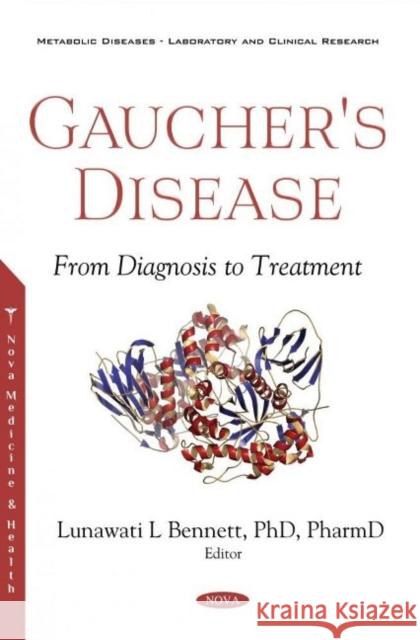
"Gaucher's Disease: From Diagnosis to Treatment" was designed as an educational resource for all professionals involved in the care of patients with Gaucher disease (GD). Chapter 1 is an introduction about GD. GD is the most common autosomal recessive lysosomal storage disease (LSD) due to the deficiency or absence of the activity of enzyme glucosylceramidase (GCase) or also known as acidic- glucosidase (GBA1) or uridine phosphate glucosylceramide synthase (UDP-GLC). Defects in these enzymes cause miss-sorting or loss function of lysosomal proteins leading to accumulation of glucocerebroside (GLC) in the tissue macrophages monocyte. Accumulation of GLC cause enlargement of the spleen, destruction of bone, anemia, thrombocytopenia, and abnormalities of the lungs. GD is classified into three types: type 1 GD (GD1) is a chronic and non-neuronopathic accounting for 95% of GD cases, and types 2 and 3 (GD2, GD3) involves nerve cell destruction causing acute brainstem dysfunction or progressive neuroleptic deterioration, respectively. Chapter 1 review disease classification, epidemiology, pathophysiology, and clinical manifestations of GD. Chapter 2 discusses GD diagnosis and clinical presentations from prenatal, newborn, first year of life, childhood, adolescence, and adulthood patients suspected to have GD. Several biomarkers, tools used to detect abnormal biomarkers such as chitotriosidase, pulmonary and activation-regulated chemokines, and other inflammatory markers are discussed, in addition to methods used to detect these biomarkers. Chapter 3 highlights available enzyme replacement therapy (ERT), clinical trials, dosing, and adverse drug reaction of each ERT, pregnancy information, and effect of ERT on endocrine and metabolic profiles. Chapter 4 discusses available substrate reduction therapy (SRT), clinical trials, dosing, adverse drug reaction, pregnancy information, drug-drug interaction and patients' polymorphism profiles that influence the dosing of SRT. Chapter 5 discusses type 2 and 3 GD which are the neuronopathic variants of the GD, genotype and phenotype of the patients, role of ERT or SRT or gene therapy, chaperone therapy, and hematopoietic stem cell transplantation. Chapter 6 discusses common complication of GD such as bone and hepatocellular abnormalities, increased risk of cancer and Parkinson Disease development. Chapter 7 highlights several novel therapies with their mechanisms of action, details regarding ongoing or completed clinical trials such as newer SRT lucerastat which is on clinical trials for possible use in GD3. At this time, there are no drugs available to treat GD2 or GD3. Promising novel therapy include pharmacology chaperone (PC), antioxidants, and gene therapy. There are 2 PCs currently being tested in clinical trial, ambroxol and arimoclomol. Ambroxol, an over the counter drugs has been used to treat various airway infections, showed promising result to cross blood brain barrier that provide promising options for GD3 treatment.




Czytaj nas na:
KrainaKsiazek.PL - Księgarnia Internetowa


