Gadamer's Path to Plato » książka





Gadamer's Path to Plato
ISBN-13: 9781606087725 / Angielski / Miękka / 2010 / 224 str.
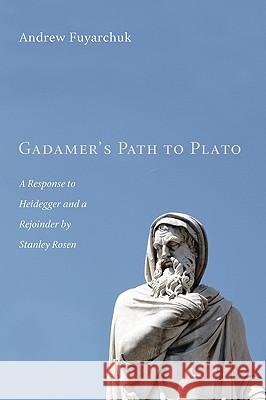
Gadamer's Path to Plato
ISBN-13: 9781606087725 / Angielski / Miękka / 2010 / 224 str.
(netto: 108,17 VAT: 5%)
Najniższa cena z 30 dni: 108,71
ok. 16-18 dni roboczych.
Darmowa dostawa!
Gadamer's Path to Plato investigates the formative years of Hans-Georg Gadamer's Plato studies, while studying with Martin Heidegger at Marburg University. It outlines the evolution of Heidegger's understanding of Plato, explains why his hermeneutics and phenomenological method inspired Gadamer, and why Heidegger's argument, that Plato was responsible for Western civilization's forgetting the meaning of existence, provoked him. Heidegger's provocation was crucial to the development of Gadamer's understanding of Plato. This book thus puts forward an argument for Gadamer's having indirectly refuted Heidegger's Plato. This involves a dialogical relationship to the past and a re-examination of the relation of Plato to Aristotle in matters of ethics, physics, and truth. Above all, however, it is Gadamer's concept of Platonic dialectic that refutes Heidegger. This challenge to Heidegger's Plato was commensurate with the origination of Gadamer's positive hermeneutical philosophy. In order to test the alleged openness of that philosophy to the other as other Gadamer's reading of the Republic is scrutinized by using the brilliant scholarship of Stanley Rosen. An examination of their interpretations of the Republic includes an inquiry into their intellectual influences. For Gadamer these include Hegel, the Tubingen school and Jacob Klein; for Rosen, the poetic genius of Leo Strauss. Rosen's mathematical and poetic orientation is then compared to Gadamer's dialectical orientation to Plato. The mathematical approach dovetails with a theory of human nature and procedural rationalism in Gadamer's hermeneutical philosophy that explains why he, in contrast to Rosen, bypasses important dimensions of the Republic such as the significance of particular characters and settings to understanding the whole. In turn, this methodological shortcoming calls into question the truth of Gadamer's method and, with it, the foundations of a truly open and pluralist society. ""In Gadamer's Path to Plato Fuyarchuk argues for the integration of the epistemological and erotic. In this movement of Erotic-knowing the inquiry rises from apprehension to comprehension. Gadamer's one-sided approach stays within the orbit of apprehension, which deprives that form of inquiry from entering the real of poesy. By contrast, Rosen with his more full-bodied approach, does justice to the poetic impulse which sustains the project of knowing. --David A. Ross author of The Flesh of Being: On Nietzsche's Thus Spoke Zarathustra ""Gadamer's Path to Plato argues that despite being more attentive to Plato's hermeneutical situation than Heidegger, Gadamer's Hegelian interpretation of what 'dialectic' means for Plato insufficiently attends to the 'phenomenological-existential' character of the dialogues. Consequently, as Fuyarchuk elucidates, Gadamer does not ultimately recognize, as does Rosen, the extent to which philosophy for Plato is an erotic desire to create through a beautiful medium."" --Philip A. Rose author of Which One's Pink? The Concept Albums of Roger Waters and Pink Floyd Andrew Fuyarchuk is an instructor of philosophy at Sheridan College and a PhD candidate at the Institute for Christian Studies in Toronto. He has published on Nietzsche's Zarathustra, Wagner's Tristan and Isolde, and Religion and Liberal Democracy in the Journal for the Fellowship of Catholic Scholars (Canadian chapter).
Gadamers Path to Plato investigates the formative years of Hans-Georg Gadamers Plato studies, while studying with Martin Heidegger at Marburg University. It outlines the evolution of Heideggers understanding of Plato, explains why his hermeneutics and phenomenological method inspired Gadamer, and why Heideggers argument, that Plato was responsible for Western civilizations forgetting the meaning of existence, provoked him. Heideggers provocation was crucial to the development of Gadamers understanding of Plato. This book thus puts forward an argument for Gadamers having indirectly refuted Heideggers Plato. This involves a dialogical relationship to the past and a re-examination of the relation of Plato to Aristotle in matters of ethics, physics, and truth. Above all, however, it is Gadamers concept of Platonic dialectic that refutes Heidegger. This challenge to Heideggers Plato was commensurate with the origination of Gadamers positive hermeneutical philosophy. In order to test the alleged openness of that philosophy to the other as other Gadamers reading of the Republic is scrutinized by using the brilliant scholarship of Stanley Rosen. An examination of their interpretations of the Republic includes an inquiry into their intellectual influences. For Gadamer these include Hegel, the Tubingen school and Jacob Klein; for Rosen, the poetic genius of Leo Strauss. Rosens mathematical and poetic orientation is then compared to Gadamers dialectical orientation to Plato. The mathematical approach dovetails with a theory of human nature and procedural rationalism in Gadamers hermeneutical philosophy that explains why he, in contrast to Rosen, bypasses important dimensions of the Republic such as the significance of particular characters and settings to understanding the whole. In turn, this methodological shortcoming calls into question the truth of Gadamers method and, with it, the foundations of a truly open and pluralist society. ""In Gadamers Path to Plato Fuyarchuk argues for the integration of the epistemological and erotic. In this movement of Erotic-knowing the inquiry rises from apprehension to comprehension. Gadamers one-sided approach stays within the orbit of apprehension, which deprives that form of inquiry from entering the real of poesy. By contrast, Rosen with his more full-bodied approach, does justice to the poetic impulse which sustains the project of knowing.--David A. Rossauthor of The Flesh of Being: On Nietzsches Thus Spoke Zarathustra ""Gadamers Path to Plato argues that despite being more attentive to Platos hermeneutical situation than Heidegger, Gadamers Hegelian interpretation of what dialectic means for Plato insufficiently attends to the phenomenological-existential character of the dialogues. Consequently, as Fuyarchuk elucidates, Gadamer does not ultimately recognize, as does Rosen, the extent to which philosophy for Plato is an erotic desire to create through a beautiful medium."" --Philip A. Roseauthor of Which Ones Pink? The Concept Albums of Roger Waters and Pink FloydAndrew Fuyarchuk is an instructor of philosophy at Sheridan College and a PhD candidate at the Institute for Christian Studies in Toronto. He has published on Nietzsches Zarathustra, Wagners Tristan and Isolde, and Religion and Liberal Democracy in the Journal for the Fellowship of Catholic Scholars (Canadian chapter).




Czytaj nas na:
KrainaKsiazek.PL - Księgarnia Internetowa


