• Wyszukiwanie zaawansowane
  • Kategorie
  • Kategorie BISAC
  • Książki na zamówienie
  • Promocje
  • Granty
  • Książka na prezent
  • Opinie
  • Pomoc
  • Załóż konto
  • Zaloguj się

Fundamentals of General Linear Acoustics » książka


zaloguj się | załóż konto
Logo Krainaksiazek.pl

koszyk

konto

szukaj
topmenu
Księgarnia internetowa
Szukaj
Książki na zamówienie
Promocje
Granty
Książka na prezent
Moje konto
Pomoc
 
 
Wyszukiwanie zaawansowane
Pusty koszyk
Bezpłatna dostawa dla zamówień powyżej 20 złBezpłatna dostawa dla zamówień powyżej 20 zł

Kategorie główne

• Nauka
 [2946600]
• Literatura piękna
 [1856966]

  więcej...
• Turystyka
 [72221]
• Informatyka
 [151456]
• Komiksy
 [35826]
• Encyklopedie
 [23190]
• Dziecięca
 [619653]
• Hobby
 [140543]
• AudioBooki
 [1577]
• Literatura faktu
 [228355]
• Muzyka CD
 [410]
• Słowniki
 [2874]
• Inne
 [445822]
• Kalendarze
 [1744]
• Podręczniki
 [167141]
• Poradniki
 [482898]
• Religia
 [510455]
• Czasopisma
 [526]
• Sport
 [61590]
• Sztuka
 [243598]
• CD, DVD, Video
 [3423]
• Technologie
 [219201]
• Zdrowie
 [101638]
• Książkowe Klimaty
 [124]
• Zabawki
 [2473]
• Puzzle, gry
 [3898]
• Literatura w języku ukraińskim
 [254]
• Art. papiernicze i szkolne
 [8170]
Kategorie szczegółowe BISAC

Fundamentals of General Linear Acoustics

ISBN-13: 9781118346419 / Angielski / Twarda / 2013 / 304 str.
Jacobsen
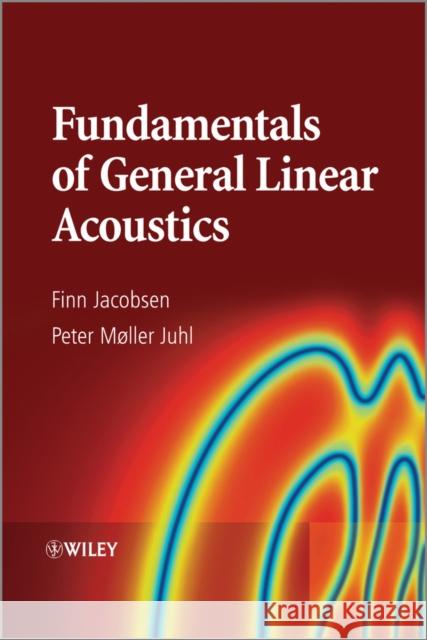
Fundamentals of General Linear Acoustics Jacobsen,  9781118346419 John Wiley & Sons - książkaWidoczna okładka, to zdjęcie poglądowe, a rzeczywista szata graficzna może różnić się od prezentowanej.

Fundamentals of General Linear Acoustics

ISBN-13: 9781118346419 / Angielski / Twarda / 2013 / 304 str.

Jacobsen
cena 348,18 zł
(netto: 331,60 VAT:  5%)

Najniższa cena z 30 dni: 345,32 zł
Termin realizacji zamówienia:
ok. 30 dni roboczych
Bez gwarancji dostawy przed świętami

Darmowa dostawa!

Acoustics deals with the production, control, transmission, reception, and effects of sound. Owing to acoustics being an interdisciplinary field, this book is intended to be equally accessible to readers from a range of backgrounds including electrical engineering, physics and mechanical engineering. This book introduces the fundamentals of acoustic wave motion. It addresses in a clear and systematic way some of the most difficult parts of acoustics for beginners, such as the widely different approximations due to the wide frequency range, the apparently arbitrary choice between the use of analytical solutions to the wave equation with boundary conditions, and the fundamentally different energy-based considerations used in noise control. As a result, it provides readers with a self-contained source of information on acoustics which can be used for self-study or as a graduate course text. Key features:

  • Places an emphasis on detailed derivations based on the fundamental laws of physics and interpretations of the resulting formulas.
  • Avoids, where possible, electrical and mechanical equivalent circuits, so as to make it accessible to readers with different backgrounds.
  • Introduces duct acoustics, sound in enclosures, and sound radiation and scattering.
  • Contains a set of appendices which includes material on signal analysis and processing as these tools are essential for the modern acoustician.


Kategorie:
Technologie
Kategorie BISAC:
Technology & Engineering > Signals & Signal Processing
Technology & Engineering > Acoustics & Sound
Wydawca:
John Wiley & Sons
Język:
Angielski
ISBN-13:
9781118346419
Rok wydania:
2013
Ilość stron:
304
Waga:
0.61 kg
Wymiary:
24.64 x 17.53 x 2.03
Oprawa:
Twarda
Wolumenów:
01
Dodatkowe informacje:
Bibliografia

About the Authors ix

Preface xi

List of Symbols xiii

1 Introduction 1

2 Fundamentals of Acoustic Wave Motion 3

2.1 Fundamental Acoustic Concepts 3

2.2 The Wave Equation 5

3 Simple Sound Fields 11

3.1 Plane Waves 11

3.2 Sound Transmission Between Fluids 18

3.3 Simple Spherical Waves 22

4 Basic Acoustic Measurements 25

4.1 Introduction 25

4.2 Frequency Analysis 25

4.3 Levels and Decibels 29

4.4 Noise Measurement Techniques and Instrumentation 32

5 The Concept of Impedance 41

5.1 Mechanical Impedance 41

5.2 Acoustic Impedance 43

5.3 Specific Impedance, Wave Impedance and Characteristic Impedance 46

6 Sound Energy, Sound Power, Sound Intensity and Sound Absorption 49

6.1 Introduction 49

6.2 Conservation of Sound Energy 50

6.3 Active and Reactive Intensity 55

6.4 Measurement of Sound Intensity 61

6.4.1 Errors Due to the Finite Difference Approximation 63

6.4.2 Errors Due to Scattering 64

6.4.3 Errors Due to Phase Mismatch 64

6.5 Applications of Sound Intensity 68

6.5.1 Sound Power Determination 68

6.5.2 Noise Source Identification and Visualisation of Sound Fields 70

6.5.3 Transmission Loss of Structures and Partitions 70

6.5.4 Measurement of the Emission Sound Pressure Level 71

6.6 Sound Absorption 71

7 Duct Acoustics 75

7.1 Introduction 75

7.2 Plane Waves in Ducts with Rigid Walls 75

7.2.1 The Sound Field in a Tube Terminated by an Arbitrary Impedance 75

7.2.2 Radiation of Sound from an Open–ended Tube 82

7.3 Sound Transmission Through Coupled Pipes 86

7.3.1 The Transmission Matrix 87

7.3.2 System Performance 92

7.3.3 Dissipative Silencers 97

7.4 Sound Propagation in Ducts with Mean Flow 99

7.5 Three–dimensional Waves in Ducts with Rigid Walls 101

7.5.1 The Sound Field in a Duct with Rectangular Cross Section 101

7.5.2 The Sound Field in a Duct with Circular Cross Section 107

7.5.3 The Sound Field in a Duct with Arbitrary Cross–sectional Shape 114

7.6 The Green s Function in a Semi–infinite Duct 116

7.7 Sound Propagation in Ducts with Walls of Finite Impedance 122

7.7.1 Ducts with Nearly Hard Walls 123

7.7.2 Lined Ducts 125

8 Sound in Enclosures 127

8.1 Introduction 127

8.2 The Modal Theory of Sound in Enclosures 127

8.2.1 Eigenfrequencies and Mode Shapes 128

8.2.2 The Modal Density 132

8.2.3 The Green s Function in an Enclosure 133

8.3 Statistical Room Acoustics 137

8.3.1 The Perfectly Diffuse Sound Field 139

8.3.2 The Sound Field in a Reverberation Room Driven with a Pure Tone 142

8.3.3 Frequency Averaging 147

8.3.4 The Sound Power Emitted by a Point Source in a Lightly Damped Room 148

8.4 The Decay of Sound in a Lightly Damped Room 151

8.4.1 The Modal Approach to Decay of Sound 151

8.4.2 The Statistical Approach to Decay of Sound 154

8.5 Applications of Reverberation Rooms 155

8.5.1 Sound Power Determination 155

8.5.2 Measurement of Sound Absorption 156

8.5.3 Measurement of Transmission Loss 156

9 Sound Radiation and Scattering 159

9.1 Introduction 159

9.2 Point Sources 159

9.2.1 Reciprocity 165

9.2.2 Sound Power Interaction of Coherent Sources 166

9.2.3 Fundamentals of Beamforming 169

9.3 Cylindrical Waves 171

9.3.1 Radiation from Cylindrical Sources 171

9.3.2 Scattering by Cylinders 183

9.4 Spherical Waves 187

9.4.1 Radiation from Spherical Sources 187

9.4.2 Scattering by Spheres 199

9.4.3 Ambisonics 201

9.5 Plane Sources 202

9.5.1 The Rayleigh Integral 203

9.5.2 The Wavenumber Approach 207

9.5.3 Fundamentals of Near Field Acoustic Holography 211

9.6 The Kirchhoff–Helmholtz Integral Equation 213

Appendix A Complex Representation of Harmonic Functions of Time 217

Appendix B Signal Analysis and Processing 221

B.1 Introduction 221

B.2 Classification of Signals 221

B.3 Transient Signals 222

B.3.1 The Fourier Transform 223

B.3.2 Time Windows 229

B.4 Periodic Signals 230

B.4.1 Fourier Series 230

B.4.2 The Fourier Transform of a Periodic Signal 232

B.4.3 Estimation of the Spectrum of a Periodic Signal 234

B.5 Random Signals 235

B.5.1 Autocorrelation Functions and Power Spectra 237

B.5.2 Cross–correlation Functions and Cross–power Spectra 239

B.5.3 Estimation of Correlation Functions and Power Spectra 241

B.6 Linear Systems 243

B.6.1 Impulse Response and Frequency Response 244

B.6.2 Estimation of the Frequency Response of a Linear System 248

B.6.3 Estimation of the Frequency Response of a Weakly Nonlinear System 254

B.7 Digital Signal Processing 255

B.7.1 Sampling 255

B.7.2 The Discrete Fourier Transform 256

B.7.3 Signal Analysis with the ′Fast Fourier Transform′ (FFT) 257

B.7.4 The Method Based on ′Maximum Length Sequences′ (MLS) 260

Appendix C Cylindrical and Spherical Bessel Functions; Legendre Functions; and Expansion Coefficients 263

C.1 Cylindrical Bessel Functions 263

C.2 Legendre Functions 265

C.3 Spherical Bessel Functions 266

C.4 Expansion Coefficients 267

Appendix D Fundamentals of Probability and Random Variables 269

D.1 Random Variables 269

D.2 The Central Limit Theorem 270

D.3 Chi and Chi–Square Statistics 270

Reference 271

Bibliography 273

Index 275

Finn Jacobsen, Department of Electrical Engineering, Technical University of Denmark (DTU)
Currently an Associate Professor in the Department of Electrical Engineering at DTU, Dr. Jacobsen has more than twenty–five years experience of teaching acoustics at MSc level, and more than 15 years experience of teaching fundamentals of acoustics at undergraduate level. He was Associate Editor of Acustica united with Acta Acustica from 1995 to 2003, and section leader of the Handbook of Signal Processing in Acoustics (Springer, 2008). He has also contributed 6 chapters in various handbooks on acoustics; published approx. 90 journal papers and more than 100 conference papers.

Peter Møller Juhl, Faculty of Engineering, University of Southern Denmark
Dr. Juhl is currently an Associate Professor at the Institute of Technology and Innovation, University of Southern Denmark. He teaches both undergraduate and postgraduate courses in the field of acoustics which range from quite elementary acoustics and signal analysis for students of audiology to basic and advanced acoustics for engineering students as well as courses on mechanical vibrations and numerical acoustics. He has also taught basic courses on physics for both engineers and physicists.

Acoustics deals with the production, control, transmission, reception, and effects of sound. Owing to acoustics being an interdisciplinary field, this book is intended to be equally accessible to readers from a range of backgrounds including electrical engineering, physics and mechanical engineering.

This book introduces the fundamentals of acoustic wave motion. It addresses in a clear and systematic way some of the most difficult parts of acoustics for beginners, such as the widely different approximations due to the wide frequency range, the apparently arbitrary choice between the use of analytical solutions to the wave equation with boundary conditions, and the fundamentally different energy–based considerations used in noise control. As a result, it provides readers with a self–contained source of information on acoustics which can be used for self–study or as a graduate course text.

Key features:

  • Places an emphasis on detailed derivations based on the fundamental laws of physics and interpretations of the resulting formulas.
  • Avoids, where possible, electrical and mechanical equivalent circuits, so as to make it accessible to readers with different backgrounds.
  • Introduces duct acoustics, sound in enclosures, and sound radiation and scattering.
  • Contains a set of appendices which includes material on signal analysis and processing as these tools are essential for the modern acoustician.



Udostępnij

Facebook - konto krainaksiazek.pl


Opinie o Krainaksiazek.pl na Opineo.pl

Partner Mybenefit

Krainaksiazek.pl w programie rzetelna firma Krainaksiaze.pl - płatności przez paypal

Czytaj nas na:

Facebook - krainaksiazek.pl
  • książki na zamówienie
  • granty
  • książka na prezent
  • kontakt
  • pomoc
  • opinie
  • regulamin
  • polityka prywatności

Zobacz:

  • Księgarnia czeska

  • Wydawnictwo Książkowe Klimaty

1997-2025 DolnySlask.com Agencja Internetowa

© 1997-2022 krainaksiazek.pl
     
KONTAKT | REGULAMIN | POLITYKA PRYWATNOŚCI | USTAWIENIA PRYWATNOŚCI
Zobacz: Księgarnia Czeska | Wydawnictwo Książkowe Klimaty | Mapa strony | Lista autorów
KrainaKsiazek.PL - Księgarnia Internetowa

Polityka prywatnosci - link
Krainaksiazek.pl - płatnośc Przelewy24
Przechowalnia Przechowalnia




