• Wyszukiwanie zaawansowane
  • Kategorie
  • Kategorie BISAC
  • Książki na zamówienie
  • Promocje
  • Granty
  • Książka na prezent
  • Opinie
  • Pomoc
  • Załóż konto
  • Zaloguj się

Fundamental Labour Rights and the Constitution: Constitutional Balancing in Italy and Spain » książka


zaloguj się | załóż konto
Logo Krainaksiazek.pl

koszyk

konto

szukaj
topmenu
Księgarnia internetowa
Szukaj
Książki na zamówienie
Promocje
Granty
Książka na prezent
Moje konto
Pomoc
 
 
Wyszukiwanie zaawansowane
Pusty koszyk
Bezpłatna dostawa dla zamówień powyżej 20 złBezpłatna dostawa dla zamówień powyżej 20 zł

Kategorie główne

• Nauka
 [2946912]
• Literatura piękna
 [1852311]

  więcej...
• Turystyka
 [71421]
• Informatyka
 [150889]
• Komiksy
 [35717]
• Encyklopedie
 [23177]
• Dziecięca
 [617324]
• Hobby
 [138808]
• AudioBooki
 [1671]
• Literatura faktu
 [228371]
• Muzyka CD
 [400]
• Słowniki
 [2841]
• Inne
 [445428]
• Kalendarze
 [1545]
• Podręczniki
 [166819]
• Poradniki
 [480180]
• Religia
 [510412]
• Czasopisma
 [525]
• Sport
 [61271]
• Sztuka
 [242929]
• CD, DVD, Video
 [3371]
• Technologie
 [219258]
• Zdrowie
 [100961]
• Książkowe Klimaty
 [124]
• Zabawki
 [2341]
• Puzzle, gry
 [3766]
• Literatura w języku ukraińskim
 [255]
• Art. papiernicze i szkolne
 [7810]
Kategorie szczegółowe BISAC

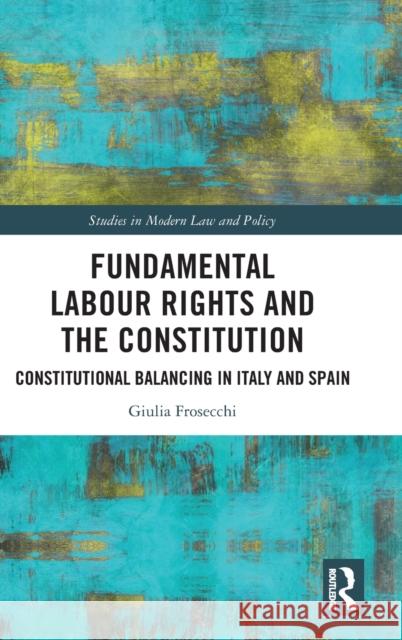
Fundamental Labour Rights and the Constitution: Constitutional Balancing in Italy and Spain

ISBN-13: 9780367725693 / Angielski
Giulia Frosecchi
Fundamental Labour Rights and the Constitution: Constitutional Balancing in Italy and Spain Giulia Frosecchi 9780367725693 Routledge - książkaWidoczna okładka, to zdjęcie poglądowe, a rzeczywista szata graficzna może różnić się od prezentowanej.

Fundamental Labour Rights and the Constitution: Constitutional Balancing in Italy and Spain

ISBN-13: 9780367725693 / Angielski

Giulia Frosecchi
cena 677,30
(netto: 645,05 VAT:  5%)

Najniższa cena z 30 dni: 675,91
Termin realizacji zamówienia:
ok. 22 dni roboczych
Bez gwarancji dostawy przed świętami

Darmowa dostawa!
inne wydania

This book reflects on constitutional balancing from the perspective of fundamental labour rights. It draws on neo-constitutional theories and builds on the assumption that fundamental labour rights, understood as rights aimed at protecting workers during their working life or after retirement, are the normative expression of founding values and can be balanced against equally axiological constitutional principles. The balancing of constitutional labour rights can be conducted by various institutional actors and by applying different techniques. This volume reviews the theoretical debates on judicial balancing and the approaches adopted by the Court of Justice of the European Union and the European Court of Human Rights, to proceed with a closer assessment of Italian and Spanish judicial traditions. In particular, it addresses the main profiles of the case law of the Italian and Spanish Constitutional Courts on labour and social law reforms adopted in the aftermath of the 2008 crisis, where balancing takes place between labour rights and economic principles. The analysis is focused on four main aspects: the fundamental labour rights in the balance; the role of the Courts; the technique applied by the Judges; and the constitutional interests subject to the balancing. It ultimately reveals that the axiological nature of fundamental labour rights is preserved and the economic and financial contingencies confirm their factual character, although they are occasionally recognised a prominent role in the ratio decidendi. The book will be a valuable resource for academics and researchers working in the areas of labour law, social security law, legal theory and constitutional law.


This book reflects on constitutional balancing from the perspective of fundamental labour rights. It draws on neo-constitutional theories and builds on the assumption that fundamental labour rights, understood as rights aimed at protecting workers during their working life or after retirement, are the normative expression of founding values and can be balanced against equally axiological constitutional principles. The balancing of constitutional labour rights can be conducted by various institutional actors and by applying different techniques. This volume reviews the theoretical debates on judicial balancing and the approaches adopted by the Court of Justice of the European Union and the European Court of Human Rights, to proceed with a closer assessment of Italian and Spanish judicial traditions. In particular, it addresses the main profiles of the case law of the Italian and Spanish Constitutional Courts on labour and social law reforms adopted in the aftermath of the 2008 crisis, where balancing takes place between labour rights and economic principles. The analysis is focused on four main aspects: the fundamental labour rights in the balance; the role of the Courts; the technique applied by the Judges; and the constitutional interests subject to the balancing. It ultimately reveals that the axiological nature of fundamental labour rights is preserved and the economic and financial contingencies confirm their factual character, although they are occasionally recognised a prominent role in the ratio decidendi. The book will be a valuable resource for academics and researchers working in the areas of labour law, social security law, legal theory and constitutional law.

Kategorie:
Nauka, Prawo i administracja
Kategorie BISAC:
Law > Labor & Employment
Law > Administrative Law & Regulatory Practice
Wydawca:
Routledge
Seria wydawnicza:
Studies in Modern Law and Policy
Język:
Angielski
ISBN-13:
9780367725693

List of abbreviations

Introduction: From the EU crisis to constitutional balancing

1 Constitutional balancing of fundamental labour rights

1.1 Introduction

1.2 Constitutional balancing as a method and its theoretical justifications

1.2.1 Against constitutional balancing

1.2.2 The balancing actors

1.2.3 The axiological nature of fundamental labour rights

1.3 Balancing technique(s)

1.3.1 The proportionality test, a critique

1.4 Balancing in fundamental social rights’ adjudication and the essential content dilemma

1.4.1 Italian and Spanish insights on the notion of essential content

1.5 Conclusions

2 Constitutional balancing techniques in the world: A glimpse

2.1 Introduction

2.2 A worldwide panoramic of constitutional balancing

2.3 Balancing in supranational courts

2.3.1 The CJEU way of balancing: a labour reading

2.3.2 The ECtHR way of balancing: a labour reading

2.3.3 On reasonableness

2.3.4 Around values, balancing and proportionality in supranational courts

2.4 A reappraisal of constitutional balancing in Italy and Spain

2.4.1 Balancing in the Italian constitutional case law

2.4.2 Applied balancing in the Spanish constitutional case law and the principle of proportionality

2.4.3 Financial and economic factors in the Constitutional Courts’ case law

2.5 Conclusions

3 Italian and Spanish post-crisis case law and “its” fundamental labour rights

3.1 Introduction

3.2 The relevant Italian post-crisis case law

3.2.1 Public employees’ wage reduction before the Court

3.2.2 Retirement benefits revaluation and the modulation of the Court

3.2.3 On compensation for unjustified dismissal

3.3 The relevant Spanish post-crisis case law

3.3.1 The first and comprehensive judgment on the 2012 labour reform

3.3.2 The second and consistent judgment, one year later

3.4 Fundamental labour rights in the balance

3.4.1 The right to work

3.4.2 The right to collective bargaining

3.4.3 The right to a sufficient and proportionate remuneration and the principle of adequacy of pensions in the Italian case law

3.5 Conclusions

4 Constitutional balancing in the Italian and Spanish post-crisis case law

4.1 Introduction

4.2 The role of the Courts

4.3 The technique applied to supervise the legislator’s balancing

4.3.1 The principle of reasonableness that permeates the Italian constitutional post-crisis case law

4.3.2 The stone guest of the Spanish constitutional post-crisis case law: the principle of proportionality

4.4 The terms balanced

4.4.1 The Italian post-crisis case law and the public financial contingencies

4.4.2 The Spanish post-crisis case law and the overriding fight against unemployment

4.4.3 The economic crisis argument, in the balance?

4.4.4 An uncontroversial axiological term: the freedom to conduct a business

4.5 Conclusions

Conclusions

Bibliography

Index

Giulia Frosecchi is researcher and lecturer of labour law and European social law at the University of Florence, Italy.


Udostępnij

Facebook - konto krainaksiazek.pl


Opinie o Krainaksiazek.pl na Opineo.pl

Partner Mybenefit

Krainaksiazek.pl w programie rzetelna firma Krainaksiaze.pl - płatności przez paypal

Czytaj nas na:

Facebook - krainaksiazek.pl
  • książki na zamówienie
  • granty
  • książka na prezent
  • kontakt
  • pomoc
  • opinie
  • regulamin
  • polityka prywatności

Zobacz:

  • Księgarnia czeska

  • Wydawnictwo Książkowe Klimaty

1997-2025 DolnySlask.com Agencja Internetowa

© 1997-2022 krainaksiazek.pl
     
KONTAKT | REGULAMIN | POLITYKA PRYWATNOŚCI | USTAWIENIA PRYWATNOŚCI
Zobacz: Księgarnia Czeska | Wydawnictwo Książkowe Klimaty | Mapa strony | Lista autorów
KrainaKsiazek.PL - Księgarnia Internetowa

Polityka prywatnosci - link
Krainaksiazek.pl - płatnośc Przelewy24
Przechowalnia Przechowalnia





