• Wyszukiwanie zaawansowane
  • Kategorie
  • Kategorie BISAC
  • Książki na zamówienie
  • Promocje
  • Granty
  • Książka na prezent
  • Opinie
  • Pomoc
  • Załóż konto
  • Zaloguj się

Functionalized Inorganic Fluorides: Synthesis, Characterization & Properties of Nanostructured Solids » książka


zaloguj się | załóż konto
Logo Krainaksiazek.pl

koszyk

konto

szukaj
topmenu
Księgarnia internetowa
Szukaj
Książki na zamówienie
Promocje
Granty
Książka na prezent
Moje konto
Pomoc
 
 
Wyszukiwanie zaawansowane
Pusty koszyk
Bezpłatna dostawa dla zamówień powyżej 20 złBezpłatna dostawa dla zamówień powyżej 20 zł

Kategorie główne

• Nauka
 [2946350]
• Literatura piękna
 [1816154]

  więcej...
• Turystyka
 [70666]
• Informatyka
 [151172]
• Komiksy
 [35576]
• Encyklopedie
 [23172]
• Dziecięca
 [611458]
• Hobby
 [135995]
• AudioBooki
 [1726]
• Literatura faktu
 [225763]
• Muzyka CD
 [378]
• Słowniki
 [2917]
• Inne
 [444280]
• Kalendarze
 [1179]
• Podręczniki
 [166508]
• Poradniki
 [469467]
• Religia
 [507199]
• Czasopisma
 [496]
• Sport
 [61352]
• Sztuka
 [242330]
• CD, DVD, Video
 [3348]
• Technologie
 [219391]
• Zdrowie
 [98638]
• Książkowe Klimaty
 [124]
• Zabawki
 [2382]
• Puzzle, gry
 [3525]
• Literatura w języku ukraińskim
 [259]
• Art. papiernicze i szkolne
 [7107]
Kategorie szczegółowe BISAC

Functionalized Inorganic Fluorides: Synthesis, Characterization & Properties of Nanostructured Solids

ISBN-13: 9780470740507 / Angielski / Twarda / 2010 / 614 str.
¬Abar;¬Abar
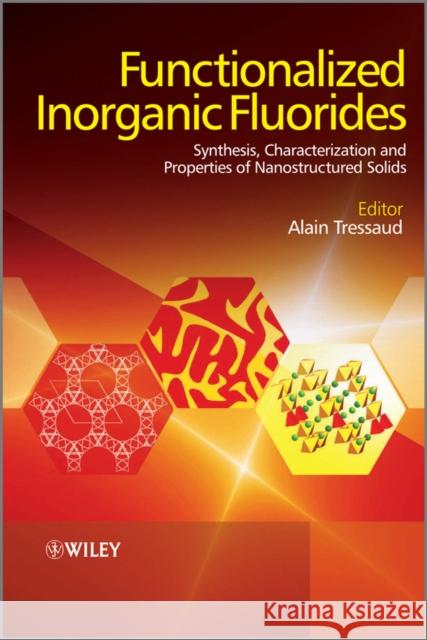
Functionalized Inorganic Fluorides: Synthesis, Characterization & Properties of Nanostructured Solids Tressaud, Alain 9780470740507 JOHN WILEY AND SONS LTD - książkaWidoczna okładka, to zdjęcie poglądowe, a rzeczywista szata graficzna może różnić się od prezentowanej.

Functionalized Inorganic Fluorides: Synthesis, Characterization & Properties of Nanostructured Solids

ISBN-13: 9780470740507 / Angielski / Twarda / 2010 / 614 str.

¬Abar;¬Abar
cena 768,69
(netto: 732,09 VAT:  5%)

Najniższa cena z 30 dni: 759,31
Termin realizacji zamówienia:
ok. 22 dni roboczych.

Darmowa dostawa!

Functionalized Inorganic Fluorides: Synthesis, Characterization & Properties of Nanostructured Solids covers several classes of nanostructured and functionalized inorganic fluorides, oxide-fluorides, and fluorinated oxides such as silica and alumina. Ranging from powders or glass-ceramics to thin layers and coatings, they have applications as more efficient and less aggressive catalysts, UV absorbers, planar optical waveguides, integrated lasers and optical amplifiers, luminescent materials, anti-reflective coatings and high Tc superconductors. With a focus on new types of solids, such as nanopowders, hybrids, mesoporous fluorides, and intercalation compounds, the book covers new synthesis routes; physical-chemical characterizations - including morphology, structure, spectroscopic and optical behaviour; detailed ab initio investigations and simulations; and -last but not least- potential applications.


Kategorie:
Technologie
Kategorie BISAC:
Technology & Engineering > Materials Science - General
Science > Chemia - Nieorganiczna
Wydawca:
JOHN WILEY AND SONS LTD
Język:
Angielski
ISBN-13:
9780470740507
Rok wydania:
2010
Ilość stron:
614
Waga:
1.13 kg
Wymiary:
24.89 x 17.27 x 3.81
Oprawa:
Twarda
Wolumenów:
01
Dodatkowe informacje:
Bibliografia
Wydanie ilustrowane

Preface.

List of Contributors.

1 Sol–Gel Synthesis of Nano–Scaled Metal Fluorides Mechanism and Properties (Erhard Kemnitz, Gudrun Scholz, Stephan Rüdiger).

1.1 Introduction.

1.2 Fluorolytic Sol–Gel Synthesis.

References.

2 Microwave–Assisted Route Towards Fluorinated Nanomaterials (Damien Dambournet, Alain Demourgues and Alain Tressaud).

2.1 Introduction.

2.2 Introduction to Microwave Synthesis.

2.3 Preparation of Nanosized Metal Fluorides.

2.4 Concluding Remarks.

Acknowledgements.

References.

3 High Surface Area Metal Fluorides as Catalysts (Erhard Kemnitz and Stephan Rüdiger).

3.1 Introduction.

3.2 High Surface Area Aluminium Fluoride as Catalyst.

3.3 Host–Guest Metal Fluoride Systems.

3.4 Hydroxy(oxo)fluorides as Bi–acidic Catalysts.

3.5 Oxidation Catalysis.

3.6 Metal Fluoride Supported Noble Metal Catalysts.

References.

4 Investigation of Surface Acidity using a Range of Probe Molecules (Alexandre Vimont, Marco Daturi and John M. Winfield).

4.1 Introduction.

4.2 Characterisation of Acidity on a Surface: Contrasts with Molecular Fluorides.

4.3 Experimental Methodology.

4.4 Experimental Studies of Surface Acidity.

4.5 Conclusions.

References.

5 Probing Short and Medium Range Order in Al–based Fluorides using High Resolution Solid State Nuclear Magnetic Resonance and Parameter Modelling (Christophe Legein, Monique Body, Jean–Yves Buzaré, Charlotte Martineau and Gilles Silly).

5.1 Introduction.

5.2 High Resolution NMR Techniques.

5.3 Application to Functionalized Al–Based Fluorides with Catalytic Properties.

5.4 Alkali and Alkaline–earth Fluoroaluminates: Model Compounds for Modelling of NMR Parameters.

5.5 Conclusion.

References.

6 Predictive Modelling of Aluminium Fluoride Surfaces (Christine. L. Bailey, Sanghamitra Mukhopadhyay, Adrian Wander, Barry Searle and Nicholas Harrison).

6.1 Introduction.

6.2 Methodology.

6.3 Geometric Structure of and –AIF3.

6.4 Characterization of AlF3 Surfaces.

6.5 Surface Composition under Reaction Conditions.

6.6 Characterization of Hydroxylated Surfaces.

6.7 Surface Catalysis.

6.8 Conclusions.

Acknowledgements.

References.

7 Inorganic Fluoride Materials from Solvay–Fluor and their Industrial Applications (Placido Garcia Juan, Hans–Walter Swidersky, Thomas Schwarze and Johannes Eicher).

7.1 Introduction.

7.2 Hydrogen Fluoride.

7.3 Elemental Fluorine, F2.

7.4 Iodine Pentafluoride, IF5.

7.5 Sulfur Hexafluoride, SF6.

7.6 Ammonium Bifluoride, NH4HF2.

7.7 Potassium Fluorometalates, KZnF3 and K2SiF6.

7.8 Cryolite and Related Hexafluoroaluminates, Na3AlF6, Li3AlF6, K3AlF6.

7.9 Potassium Fluoroborate, KBF4.

7.10 Fluoboric Acid, HBF4.

7.11 Barium Fluoride, BaF2.

7.12 Synthetic Calcium Fluoride, CaF2.

7.13 Sodium Fluoride, NaF.

7.14 Sodium Bifluoride, NaHF2.

7.15 Potassium Bifluoride, KHF2.

7.16 Potassium Fluoroaluminate, KAlF4.

7.17 Fluoroaluminate Fluxes in Aluminum Brazing.

7.18 Summary.

References.

8 New Nanostructured Fluorocompounds as UV Absorbers (Alain Demourgues, Laetitia Sronek and Nicolas Penin).

8.1 Introduction.

8.2 Synthesis of Tetravalent Ce and Ti–based Oxyfluorides.

8.3 Chemical Compositions and Structural Features of Ce and Ti–based Oxyfluorides:.

8.4 UV Shielding Properties of Divided Oxyfluorides.

8.5 Conclusion.

Acknowledgement.

References.

9 Oxyfluoride Transparent Glass Ceramics (Michel Mortier and Géraldine Dantelle).

9.1 Introduction.

9.2 Synthesis.

9.3 Different Systems.

9.4 Thermal Characterization.

9.5 Morphology of the Separated Phases.

9.6 Optical Properties of Glass–Ceramics.

9.7 Conclusion.

References.

10 Sol–Gel Route to Inorganic Fluoride Nanomaterials with Optical Properties (Shinobu Fujihara).

10.1 Introduction.

10.2 Principle of a Sol–Gel Method.

10.3 Fluorinating Reagents and Method of Fluorination.

10.4 Control of Shapes and Microstructures.

10.5 Optical Properties.

10.6 Concluding Remarks.

References.

11 Fluoride Glasses and Planar Optical Waveguides (Brigitte Boulard).

11.1 Introduction.

11.2 Rare Earth in Fluoride Glasses.

11.3 Fabrication of Waveguides: A Review.

11.4 Performances of Active Waveguides.

11.5 Fluoride Transparent Glass Ceramics: An Emerging Material.

11.6 Conclusion.

References.

12 Polyanion Condensation in Inorganic and Hybrid Fluoroaluminates (Karim Adil, Amandine Cadiau, Annie Hemon–Ribaud, Marc Leblanc and Vincent Maisonneuve).

12.1 Introduction.

12.2 Synthesis.

12.3 Extended Finite Polyanions (0D).

12.4 1D Networks.

12.5 2D Networks.

12.6 3D Networks.

12.7 Evolution of the Condensation of Inorganic Polyanions.

Acknowledgements.

Supplementary Materials.

References.

13 Synthesis, Structure and Superconducting/Magnetic Properties of Cu– and Mn– Based Oxyfluorides (Evgeny V. Antipov and Artem M. Abakumov).

13.1 Introduction.

13.2 Chemical Aspects of Fluorination of Complex Oxides.

13.3 Structural Aspects of Fluorination of Complex Cuprates and Superconducting Properties.

13.4 Fluorination of Manganites.

13.5 Conclusions.

References.

14 Doping Influence on the Defect Structure and Ionic Conductivity of Fluorine– containing Phases (Elena I. Ardashnikova, Vladimir A. Prituzhalovand I. B. Kutsenok).

14.1 Introduction.

14.2 Influence of Oxygen Ions on Fluoride Properties.

14.3 Cation Doping of Fluorides.

14.4 Active Lone Electron Pair of Cations and Ionic Conductivity.

14.5 Peculiarities of the Defect Structure of Nonstoichiometric Fluorite–like Phases.

14.6 Ionic Transfer in Fluorite–like Phases.

14.7 Peculiarities of the Defect Structure of Nonstoichiometric Tysonite–like Phases.

14.8 Ionic Transfer in Tysonite–like Phases.

14.9 Conclusions.

References.

15 Hybrid Intercalation Compounds Containing Perfluoroalkyl Groups (Yoshiaki Matsuo).

15.1 Introduction.

15.2 Preparation and Properties of Intercalation Compounds Containing Perfluoroalkyl Groups.

15.3 Photophysical and Photochemical Properties of Dyes in Intercalation Compounds Containing Perfluoroalkyl Groups.

15.4 Conclusion and Future Perspectives.

References.

16 The Fluoride Route: A Good Opportunity for the Preparation of 2D and 3D Inorganic Microporous Frameworks (Jean–Louis Paillaud, Philippe Caullet, Jocelyne Brendlé, Angélique Simon– Masseron and Joël Patarin).

16.1 Introduction.

16.2 Silica–based Microporous Materials.

16.3 Germanium–based Microporous Materials.

16.4 Phosphate–based Microporous Materials.

16.5 Synthetic Clays.

16.6 Conclusion.

References.

17 Access to Highly Fluorinated Silica by Direct F2 Fluorination (Alain Demourgues, Emilie Lataste, Etienne Durand and Alain Tressaud).

17.1 Introduction.

17.2 Mesoporous Silica and Fluorination Procedures.

17.3 About the Chemical Composition and Morphology of Highly Fluorinated Silica.

17.4 FTIR Analysis.

17.5 Thermal Stability and Water Affinity of Highly Fluorinated Silica.

17.6 Nuclear Magnetic Resonance Investigations.

17.7 Conclusions on the F2–gas Fluorination Mechanism of Mesoporous Silica.

Acknowledgements.

References.

18 Preparation and Properties of Rare–earth Containing Oxide Fluoride Glasses (Susumu Yonezawa, Jae–ho Kim and Masayuki Takashima).

18.1 Introduction.

18.2 Preparation and Basic Characteristics of Oxide Fluoride Glasses Containing LnF3.

18.3 Optical and Magnetic Properties of LnF3–BaF2–AlF3–GeO2 (SiO2) Glasses.

18.4 Conclusion.

References.

19 Switchable Hydrophobic–hydrophilic Fluorinated Layer for Offset Processing (Alain Tressaud, Christine Labrugère and Etienne Durand).

19.1 Introduction.

19.2 The Principles of Lithographic Printing Process.

19.3 Experimental Part.

19.4 Various Types of Surface Modifications using Fluorinated rf Plasmas.

19.5 Comparison of Surface Modifications of Porous Alumina using Various Fluorinated Media: CF4, C3F8 and c–C4F8.

19.6 Conclusion.

Acknowledgements.

References.

Index..

Inorganic fluorides and fluoride–based materials play an important role in many different applications, from silicon etching in microelectronics, isotopic enrichment of uranium in nuclear energy, to the technical revolution of fluoropolymers and fluoride coatings.

Numerous advances have been made recently through the elaboration and functionalization of inorganic fluorinated solids at the nanometre scale. Functionalized Inorganic Fluorides: Synthesis, Characterization & Properties of Nanostructured Solids covers several classes of nanostructured and functionalized inorganic fluorides, oxide–fluorides, and fluorinated oxides such as silica and alumina. Ranging from powders or glass–ceramics to thin layers and coatings, they have applications as more efficient and less aggressive catalysts, UV absorbers, planar optical waveguides, integrated lasers and optical amplifiers, luminescent materials, anti–reflective coatings and high Tc superconductors.

With a focus on new types of solids, such as nanopowders, hybrids, mesoporous fluorides, and intercalation compounds, the book covers new synthesis routes; physical–chemical characterizations – including morphology, structure, spectroscopic and optical behaviour; detailed ab initio investigations and simulations; and –last but not least– potential applications.


Udostępnij

Facebook - konto krainaksiazek.pl


Opinie o Krainaksiazek.pl na Opineo.pl

Partner Mybenefit

Krainaksiazek.pl w programie rzetelna firma Krainaksiaze.pl - płatności przez paypal

Czytaj nas na:

Facebook - krainaksiazek.pl
  • książki na zamówienie
  • granty
  • książka na prezent
  • kontakt
  • pomoc
  • opinie
  • regulamin
  • polityka prywatności

Zobacz:

  • Księgarnia czeska

  • Wydawnictwo Książkowe Klimaty

1997-2026 DolnySlask.com Agencja Internetowa

© 1997-2022 krainaksiazek.pl
     
KONTAKT | REGULAMIN | POLITYKA PRYWATNOŚCI | USTAWIENIA PRYWATNOŚCI
Zobacz: Księgarnia Czeska | Wydawnictwo Książkowe Klimaty | Mapa strony | Lista autorów
KrainaKsiazek.PL - Księgarnia Internetowa

Polityka prywatnosci - link
Krainaksiazek.pl - płatnośc Przelewy24
Przechowalnia Przechowalnia






