• Wyszukiwanie zaawansowane
  • Kategorie
  • Kategorie BISAC
  • Książki na zamówienie
  • Promocje
  • Granty
  • Książka na prezent
  • Opinie
  • Pomoc
  • Załóż konto
  • Zaloguj się

Functional Biology of Plants » książka


zaloguj się | załóż konto
Logo Krainaksiazek.pl

koszyk

konto

szukaj
topmenu
Księgarnia internetowa
Szukaj
Książki na zamówienie
Promocje
Granty
Książka na prezent
Moje konto
Pomoc
 
 
Wyszukiwanie zaawansowane
Pusty koszyk
Bezpłatna dostawa dla zamówień powyżej 20 złBezpłatna dostawa dla zamówień powyżej 20 zł

Kategorie główne

• Nauka
 [2949524]
• Literatura piękna
 [1817948]

  więcej...
• Turystyka
 [70715]
• Informatyka
 [151291]
• Komiksy
 [35671]
• Encyklopedie
 [23176]
• Dziecięca
 [612440]
• Hobby
 [136066]
• AudioBooki
 [1740]
• Literatura faktu
 [226030]
• Muzyka CD
 [378]
• Słowniki
 [2918]
• Inne
 [445441]
• Kalendarze
 [1181]
• Podręczniki
 [166545]
• Poradniki
 [469898]
• Religia
 [508035]
• Czasopisma
 [502]
• Sport
 [61392]
• Sztuka
 [242759]
• CD, DVD, Video
 [3348]
• Technologie
 [219537]
• Zdrowie
 [98738]
• Książkowe Klimaty
 [124]
• Zabawki
 [2382]
• Puzzle, gry
 [3543]
• Literatura w języku ukraińskim
 [259]
• Art. papiernicze i szkolne
 [7107]
Kategorie szczegółowe BISAC

Functional Biology of Plants

ISBN-13: 9780470699393 / Angielski / Miękka / 2012 / 336 str.
Martin J Hodson
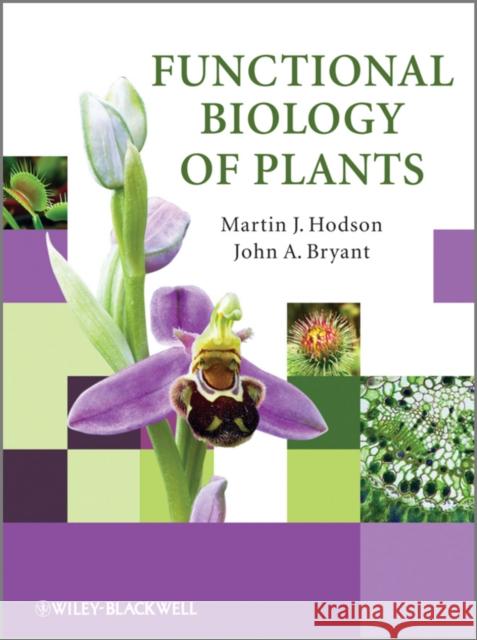
Functional Biology of Plants Martin J Hodson 9780470699393  - książkaWidoczna okładka, to zdjęcie poglądowe, a rzeczywista szata graficzna może różnić się od prezentowanej.

Functional Biology of Plants

ISBN-13: 9780470699393 / Angielski / Miękka / 2012 / 336 str.

Martin J Hodson
cena 401,87
(netto: 382,73 VAT:  5%)

Najniższa cena z 30 dni: 396,96
Termin realizacji zamówienia:
ok. 30 dni roboczych.

Darmowa dostawa!

Functional Biology of Plants provides students and researchers with a clearly written, well structured whole plant physiology text. Early in the text, it provides essential information on molecular and cellular processes so that the reader can understand how they are integrated into the development and function of the plant at whole-plant level. Thus, this beautifully illustrated book, presents a modern, applied integration of whole plant and molecular approaches to the study of plants. It is divided into four parts: Part 1: Genes and Cells, looks at the origins of plants, cell structure, biochemical processes and genes and development. Part 2: The Functioning Plant, describes the structure and function of roots, stems, leaves, flowers and seed and fruit development. Part 3: Interactions and Adaptations, examines environmental and biotic stresses and how plants adapt and acclimatise to these conditions. Part 4: Future Directions, illustrates the great importance of plant research by looking at some well chosen, topical examples such as GM crops, biomass and bio-fuels, loss of plant biodiversity and the question of how to feed the planet. Throughout the book there are text boxes to illustrate particular aspects of how humans make use of plants, and a comprehensive glossary proves invaluable to those coming to the subject from other areas of life science.


Kategorie:
Nauka, Biologia i przyroda
Kategorie BISAC:
Science > Botanika
Science > Life Sciences - Anatomy & Physiology
Język:
Angielski
ISBN-13:
9780470699393
Rok wydania:
2012
Ilość stron:
336
Waga:
0.74 kg
Wymiary:
24.38 x 18.8 x 1.52
Oprawa:
Miękka
Wolumenów:
01
Dodatkowe informacje:
Glosariusz/słownik
Wydanie ilustrowane

"Martin Hodson and John Bryant have written the most captivating and elementary textbook on modern plant biology. It might be read from cover to cover by anyone seeking an introduction to the subject, but seems especially suited to high school, undergraduate and vocational courses."  (Expl Agric, 1 January 2013)

Named CHOICE Outstanding Title for 2012

Students who are new to plant science will be quite well served, as will graduate students and others needing to develop fuller understandings and perspectives on their research.  Summing Up: Highly recommended.  Lower–division undergraduates through researchers/faculty.   (Choice, 1 November 2012)

Preface, ix

Acknowledgements, x

1 Origins, 1

1.1 Plants what are they?, 1

1.2 Back to the beginning, 1

1.3 Eukaryotes emerge, 2

1.4 Photosynthetic eukaryotes the first ′plants′, 3

1.5 The greening of Earth plants invade the land, 4

1.6 Embracing the terrestrial lifestyle, 6

1.7 Arrival of the angiosperms, 8

1.8 Sex and the alternation of generations, 11

2 Introduction to Plant Cells, 14

2.1 Plant cells, 14

2.2 Cell walls, 15

2.3 The plasma membrane, 21

2.4 Cell compartmentation, 23

2.5 Chloroplasts, 24

2.6 Mitochondria, 27

2.7 The nucleus, 29

2.8 The vacuole, 31

2.9 Endomembrane systems, 31

2.10 Microbodies/peroxisomes, 32

2.11 Ribosomes, 34

2.12 The cytoskeleton, 34

2.13 The mitotic cell cycle, 36

2.14 Metabolism, 42

3 Genes, Gene Expression and Development, 56

3.1 Genes, 56

3.2 Gene expression, 59

3.3 Chloroplasts and mitochondria, 65

3.4 Control of gene expression switching genes on and off, 69

3.5 Molecular aspects of development, 75

3.6 Plant hormones, 75

3.7 Light receptors, 86

3.8 Concluding comments, 92

4 From Embryo to Establishment, 94

4.1 Introduction, 94

4.2 Embryogenesis, 94

4.3 Endosperm, 99

4.4 Perisperm, 100

4.5 Late embryo growth, storage deposition and desiccation, 100

4.6 Seed coat, 109

4.7 ′Recalcitrant′ seeds, 109

4.8 Apomixis, 109

4.9 Seeds and fruit, 110

4.10 Fruit development and ripening, 112

4.11 Dormancy and quiescence, 114

4.12 Germination, 115

4.13 Establishment, 120

5 Roots, 124

5.1 External morphology of roots, 124

5.2 Root anatomy, 124

5.3 Root growth, 126

5.4 Soil chemistry and water relations, 130

5.5 Plant mineral nutrition, 132

5.6 Movement of nutrients to the root surface, 133

5.7 Absorption of water and nutrients, 133

5.8 Mycorrhizae, 139

5.9 Root nodules and nitrogen fixation, 139

5.10 Tropisms, 142

5.11 Gravitropism in roots, 143

6 Stems, 145

6.1 Structure of the stem, 145

6.2 The young stem, 145

6.3 The shoot apical meristem, 146

6.4 Shoot organizational forms, 148

6.5 The mature stem, 148

6.6 The tallest, largest and oldest plants, 151

6.7 Ageing and senescence, 152

6.8 Long–distance xylem transport, 154

6.9 Translocation in the phloem, 155

6.10 Biological clocks in plants, 157

6.11 Phototropism how do stems curve towards the light?, 160

6.12 Gravitropism in stems, 160

6.13 Thigmotropism, 161

6.14 Nastic movements, 161

6.15 Bud dormancy, 163

7 Leaves, 166

7.1 External morphology of leaves, 166

7.2 The anatomy of the leaf, 166

7.3 Control of leaf growth and development, 167

7.4 Photosynthesis, 168

7.5 Photorespiration, 174

7.6 The photosynthesis/transpiration dilemma, 177

7.7 C4 photosynthesis, 178

7.8 Crassulacean acid metabolism (CAM), 181

7.9 Sources and sinks, 182

7.10 Stomata, 184

7.11 Leaf senescence and abscission, 186

8 Flowers, 189

8.1 Introduction, 189

8.2 What is a flower?, 189

8.3 Organization of flowers and flowering inflorescences and life–styles, 191

8.4 Formation of flowers, 192

8.5 Gametogenesis, 198

8.6 Pollination and fertilization, 204

8.7 Evolution, 214

9 Environmental Stresses, 216

9.1 Responses to stress, 216

9.2 Temperature, 217

9.3 Waterlogging, 221

9.4 Drought, 223

9.5 Salinity, 226

9.6 Chemical stress, 228

9.7 Light and radiation, 232

10 Acclimation and Adaptation to Environmental Stresses, 235

10.1 Adaptation and acclimation responses, 235

10.2 Temperature, 236

10.3 Resistance and adaptation to waterlogging, 240

10.4 Resistance and adaptation to drought, 243

10.5 Resistance and adaptation to salinity, 247

10.6 Tolerance and adaptation to toxic metals, 252

10.7 Adaptations to light and radiation, 256

11 Biotic Stresses, 260

11.1 Plant/plant competition, 260

11.2 Plant/animal interactions, 265

11.3 Plant pathology, 271

12 Plants and the Future, 284

12.1 Climate change, 284

12.2 Loss of plant biodiversity, 288

12.3 Biomass and biofuels derived from plants, 291

12.4 Genetically modified crops, 297

12.5 Conclusion, 300

Glossary, 302

Index, 309

Dr Martin J. Hodson, School of Biological & Molecular Sciences, Oxford Brookes University. Martin Hodson is a Visiting Researcher in Environmental Biology in the School of Life Sciences at Oxford Brookes University.

Professor John A. Bryant, Emeritus Professor, School of Biosciences, University of Exeter. John Bryant is Professor Emeritus of Cell and Molecular Biology at the University of Exeter; Visiting Professor in Molecular Biology at West Virginia State University, USA; Chair of Christians in Science and is a past President of the Society for Experimental Biology.

Functional Biology of Plants provides students and researchers with a clearly written, well structured whole plant physiology text. Early in the text, it provides essential information on molecular and cellular processes so that the reader can understand how they are integrated into the development and function of the plant at whole–plant level. Thus, this beautifully illustrated book, presents a modern, applied integration of whole–plant and molecular approaches to the study of plants.

The book is divided into four parts:

Part 1: Genes and Cells, looks at the evolutionary origins of plants, cell structure, biochemical processes and genes and development.

Part 2: The Functioning Plant, describes the structure and function of roots, stems, leaves, flowers and seed and fruits development.

Part 3: Interactions and Adaptations, examines environmental and biotic stresses and how plants adapt and acclimatise to these conditions.

Part 4: Future Directions, illustrates the great importance of plant research by looking at some well chosen, topical examples including responses to climate  change, biomass and bio–fuels, loss of plant biodiversity and genetic modification of crop plants.

Text boxes, many of which illustrate particular aspects of how humans make use of plants, are included throughout the text and a comprehensive glossary will prove invaluable to those coming to the subject from other area of life science.

  • A modern integration of whole plant and molecular approaches.
  • Focuses on the networks of processes and functions within organs and their integration in the whole plant.
  • Covers generic aspects of plant development.
  • Beautifully illustrated with full colour illustrations throughout.
  • Clearly written by two authors with many years of teaching experience.


Udostępnij

Facebook - konto krainaksiazek.pl


Opinie o Krainaksiazek.pl na Opineo.pl

Partner Mybenefit

Krainaksiazek.pl w programie rzetelna firma Krainaksiaze.pl - płatności przez paypal

Czytaj nas na:

Facebook - krainaksiazek.pl
  • książki na zamówienie
  • granty
  • książka na prezent
  • kontakt
  • pomoc
  • opinie
  • regulamin
  • polityka prywatności

Zobacz:

  • Księgarnia czeska

  • Wydawnictwo Książkowe Klimaty

1997-2026 DolnySlask.com Agencja Internetowa

© 1997-2022 krainaksiazek.pl
     
KONTAKT | REGULAMIN | POLITYKA PRYWATNOŚCI | USTAWIENIA PRYWATNOŚCI
Zobacz: Księgarnia Czeska | Wydawnictwo Książkowe Klimaty | Mapa strony | Lista autorów
KrainaKsiazek.PL - Księgarnia Internetowa

Polityka prywatnosci - link
Krainaksiazek.pl - płatnośc Przelewy24
Przechowalnia Przechowalnia






