• Wyszukiwanie zaawansowane
  • Kategorie
  • Kategorie BISAC
  • Książki na zamówienie
  • Promocje
  • Granty
  • Książka na prezent
  • Opinie
  • Pomoc
  • Załóż konto
  • Zaloguj się

Fuel Cells, Engines and Hydrogen: An Exergy Approach » książka


zaloguj się | załóż konto
Logo Krainaksiazek.pl

koszyk

konto

szukaj
topmenu
Księgarnia internetowa
Szukaj
Książki na zamówienie
Promocje
Granty
Książka na prezent
Moje konto
Pomoc
 
 
Wyszukiwanie zaawansowane
Pusty koszyk
Bezpłatna dostawa dla zamówień powyżej 20 złBezpłatna dostawa dla zamówień powyżej 20 zł

Kategorie główne

• Nauka
 [2946350]
• Literatura piękna
 [1816154]

  więcej...
• Turystyka
 [70666]
• Informatyka
 [151172]
• Komiksy
 [35576]
• Encyklopedie
 [23172]
• Dziecięca
 [611458]
• Hobby
 [135995]
• AudioBooki
 [1726]
• Literatura faktu
 [225763]
• Muzyka CD
 [378]
• Słowniki
 [2917]
• Inne
 [444280]
• Kalendarze
 [1179]
• Podręczniki
 [166508]
• Poradniki
 [469467]
• Religia
 [507199]
• Czasopisma
 [496]
• Sport
 [61352]
• Sztuka
 [242330]
• CD, DVD, Video
 [3348]
• Technologie
 [219391]
• Zdrowie
 [98638]
• Książkowe Klimaty
 [124]
• Zabawki
 [2382]
• Puzzle, gry
 [3525]
• Literatura w języku ukraińskim
 [259]
• Art. papiernicze i szkolne
 [7107]
Kategorie szczegółowe BISAC

Fuel Cells, Engines and Hydrogen: An Exergy Approach

ISBN-13: 9780470019047 / Angielski / Twarda / 2006 / 200 str.
Frederick J. Barclay
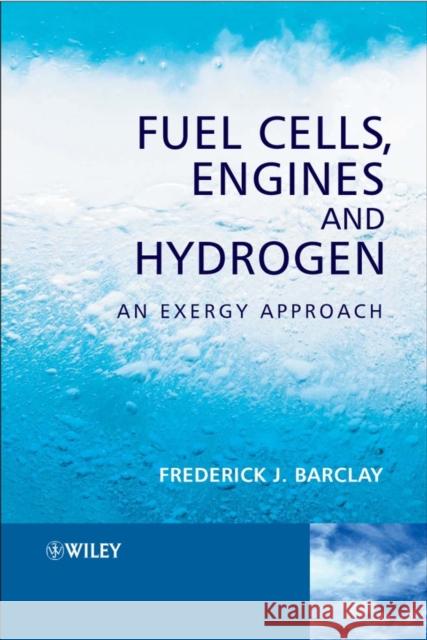
Fuel Cells, Engines and Hydrogen: An Exergy Approach Barclay, Frederick J. 9780470019047 JOHN WILEY AND SONS LTD - książkaWidoczna okładka, to zdjęcie poglądowe, a rzeczywista szata graficzna może różnić się od prezentowanej.

Fuel Cells, Engines and Hydrogen: An Exergy Approach

ISBN-13: 9780470019047 / Angielski / Twarda / 2006 / 200 str.

Frederick J. Barclay
cena 561,69
(netto: 534,94 VAT:  5%)

Najniższa cena z 30 dni: 554,83
Termin realizacji zamówienia:
ok. 30 dni roboczych.

Darmowa dostawa!

Fuel cell technology is the most exciting and legitimate alternative source of power currently available to us as world resources of non-renewable fuel continue to be depleted. No other power generating technology holds the same benefits that fuel cells offer, including high reliability and efficiency, negligible environmental impact, and security of supply. Fuel cells run on hydrogen - the simplest and most plentiful gas in the universe - although they can also run on carbon monoxide, methane, or even coal. Their applications are diverse, from powering automobiles, buildings and portable electronics, to converting methane gas from wastewater plants and landfills into electricity.

"Fuel Cells, Engines and Hydrogen" is a controversial text that challenges the accepted industry parameters for measuring fuel cell performance and efficiency. Based on his inter-disciplinary experience in the fields of power, nuclear power, and desalination, the author contends that the development potential of the fuel cell is related to the quantity fuel chemical exergy, which, like electrical potential, is a quantitative measure of work done. The fuel cell community currently characterises these devices in terms of the enthalpy of combustion (calorific value) - however the author argues a correct, qualitatively different and fourfold larger characterisation is via the fuel chemical exergy, in units of work, and not energy. He asserts that the distortion introduced by this accepted perspective needs to be corrected before relatively efficient fuel cells, integrated with comparatively low performing gas turbines, reach the market.

"Fuel Cells, Engines and Hydrogen" features a foreword by Dr Gerry Agnew, Executive VP Engineering of Rolls Royce Fuel Cells Systems Ltd. It is essential reading for all engineers involved with fuel cells and/ or the manufacture of hydrogen from natural gas, as well as academics in related disciplines such as thermodynamics, physical chemistry, materials, physics, mechanical and chemical engineering.


Kategorie:
Technologie
Kategorie BISAC:
Technology & Engineering > Power Resources - General
Wydawca:
JOHN WILEY AND SONS LTD
Język:
Angielski
ISBN-13:
9780470019047
Rok wydania:
2006
Ilość stron:
200
Waga:
0.41 kg
Wymiary:
23.52 x 15.75 x 1.63
Oprawa:
Twarda
Wolumenów:
01
Dodatkowe informacje:
Bibliografia
Wydanie ilustrowane

Foreword.

Introduction, and Commentary on Matters Affecting all Chapters.

1. Altered Perspectives.

1.1 Power Storage.

1.2 Circulators.

1.3 Incompleteness.

1.4 The Hydrogen Mine.

1.5 Coal Gasification.

1.6 SOFCs.

1.7 MCFCs.

1.8 The PEFC.

1.9 Engines.

2. Regenerative Fuel Cells or Redox Flow Batteries.

2.1 Introduction to the Regenesys System.

2.2 History and Patents.

2.3 Regenesys Technologies Ltd; Power Storage.

2.4 Elementary Chemistry.

2.5 Modus Operandi of Regenesys.

2.6 Some Construction Details.

2.7 Ion and Electron Transfer.

2.8 Power Storage Applications.

2.9 Initial Operating Experience.

2.10 Electrical Equipment.

2.11 Remarks.

2.12 Conclusions.

3. Irreversible Thermodynamics.

3.1 Cells and Electrolysers with and without Circulators.

3.2 Irreversibility An Introduction via Joule s Experiment.

3.3 PEFC Irreversibility.

3.4 Bacon s Fuel Cell; Avoidance of Irreversibility.

3.5 Fuel Cell Engineering.

3.6 Irreversibility in Calculation Routes.

3.7 Juggling with Irreversibilities.

3.8 Air–Breathing Fuel Cells Irreversibilities.

3.9 Liquid Electrolytes at the Electrode, Ice Films, Marangoni Forces and Diffusion Irreversibilities.

3.10 Overvoltage An Electrical Irreversibility.

3.11 Biconductor Layers at the Electrode/Electrolyte Interface.

3.12 IR Drop.

3.13 Remarks.

4. Solid Oxide Fuel Cells (SOFCs).

4.1 Introduction.

4.1.1 The SOFC.

4.1.2 Electrolytes.

4.1.3 Electrolyte Thickness.

4.1.4 Cell Performance.

4.1.5 Competitive Cells.

4.1.6 Oxygen Ion Concentration.

4.1.7 Unused Fuel.

4.1.8 SOFC Internal Process.

4.1.9 SOFC Preheating for Start–Up.

4.1.10 SOFC Manoeuvrability.

4.1.11 Direct Hydrocarbon Oxidation.

4.2 Siemens Westinghouse.

4.2.1 Siemens SOFC Integration with Gas Turbines.

4.3 Rolls–Royce.

4.4 NGK Insulators.

4.5 Mitsubishi Materials Corporation (MMTL).

4.6 Imperial College London and Ceres Power Ltd.

4.7 Ceramic Fuel Cells Ltd, Australia.

4.8 Forschungs Zentrum Julich (FZJ).

4.9 Global Thermoelectric.

4.10 Allied Signal.

4.11 Acumentrics.

4.12 Adelan.

4.13 Sulzer Hexis.

4.14 ECN/INDEC Petten, the Netherlands.

4.15 Remarks.

5. Molten Carbonate Fuel Cells (MCFCs).

5.1 Introduction to the MCFC.

5.1.1 MCFCs of FCE and MTU.

5.1.2 Detailed Fuel Cell Description.

5.1.3 Matrix Initiation.

5.1.4 Matrix and Cathode Deterioration.

5.1.5 Performance of Complete Cells.

5.1.6 Bipolar Plates.

5.1.7 Stacks.

5.1.8 Gas Turbine Integration with an MCFC.

5.1.9 Nickel Oxide Deposition at the Cathode at High Pressure.

5.1.10 Nickel Behaviour, Short–Circuiting.

5.1.11 MCFC Integration with Coal Gasification.

5.2 MCFC Status.

5.3 Remarks.

6. Polymer Electrolyte and Direct Methanol Fuel Cells.

6.1 Introduction.

6.1.1 Ballard Power Systems.

6.1.2 Ballard History.

6.1.3 Ballard Status.

6.1.4 Ballard Stacks.

6.1.5 Flexible Graphite and Ballard.

6.1.6 Ballard MEAs.

6.1.7 Nafion and Alternatives.

6.1.8 Alternative Flow Plate Materials Used by Competitors.

6.1.9 Ballard Operating Experience.

6.2 Electrocatalysis in the SPFC.

6.3 Cathode Voltage Losses in the PEFC.

6.4 The PEFC Hydrogen Economy in Iceland.

6.5 Fuel Supply.

6.6 DMFCS.

6.7 Tokyo Gas Company, Desulphuriser.

6.8 Remarks.

7. Fuel Cell Economics and Prognosis.

7.1 Opening Remarks.

7.2 Fuel Cell Economics Selected Summaries.

7.3 Non–Fuel–Cell Motor Vehicle Economics.

7.4 Price Waterhouse Fuel Cell Industry Survey.

7.5 Remarks.

Appendix A: Equilibrium Thermodynamics of Perfect Fuel Cells.

A.1 Thermodynamic Preamble to the Fuel Cell Equilibrium Diagram.

A.2 Utilisation of Equilibrium Diagram for Calculation of Chemical Exergy.

A.3 Chemical Exergy of Methane and Related High–Efficiency Hydrogen Production.

A.4 Elaboration of Figures A.4 and A.5, the Equilibrium Methane Oxidation Routes.

A.5 Practical Power Production for the Future.

Appendix B: Patent Search Examples.

Appendix C: List of Web Sites.

Bibliography.

Index.

Now an independent consultant, Frederick J. Barclay (BSc, ARCST, FIEE, FIMechE, FInstP) is internationally respected for his work in the fields of the thermodynamics of power, desalination, fuel cells, and exergy aspects of combined heat and power. He has been involved in this area for many years and has a vast experience of the subject in practice. He is the author of a number of highly regarded papers on this subject.

Fuel cell technology is the most exciting and legitimate alternative source of power currently available to us as world resources of non–renewable fuel continue to be depleted. No other power generating technology holds the same benefits that fuel cells offer, including high reliability and efficiency, negligible environmental impact, and security of supply. Fuel cells run on hydrogen the simplest and most plentiful gas in the universe – although they can also run on carbon monoxide, methane, or even coal. Their applications are diverse, from powering automobiles, buildings and portable electronics, to converting methane gas from wastewater plants and landfills into electricity.

Fuel Cells, Engines and Hydrogen is a controversial text that challenges the accepted industry parameters for measuring fuel cell performance and efficiency. Based on his inter–disciplinary experience in the fields of power, nuclear power, and desalination, the author contends that the development potential of the fuel cell is related to the quantity fuel chemical exergy, which, like electrical potential, is a quantitative measure of work done. The fuel cell community currently characterises these devices in terms of the enthalpy of combustion (calorific value) however the author argues a correct, qualitatively different and fourfold larger characterisation is via the fuel chemical exergy, in units of work, and not energy. He asserts that the distortion introduced by this accepted perspective needs to be corrected before relatively efficient fuel cells, integrated with comparatively low performing gas turbines, reach the market.

Fuel Cells, Engines and Hydrogen features a foreword by Dr Gerry Agnew, Executive VP Engineering of Rolls Royce Fuel Cells Systems Ltd. It is essential reading for all engineers involved with fuel cells and/ or the manufacture of hydrogen from natural gas, as well as academics in related disciplines such as thermodynamics, physical chemistry, materials, physics, mechanical and chemical engineering.

Barclay, Frederick J. Now an independent consultant, Frederick J. Barcla... więcej >


Udostępnij

Facebook - konto krainaksiazek.pl


Opinie o Krainaksiazek.pl na Opineo.pl

Partner Mybenefit

Krainaksiazek.pl w programie rzetelna firma Krainaksiaze.pl - płatności przez paypal

Czytaj nas na:

Facebook - krainaksiazek.pl
  • książki na zamówienie
  • granty
  • książka na prezent
  • kontakt
  • pomoc
  • opinie
  • regulamin
  • polityka prywatności

Zobacz:

  • Księgarnia czeska

  • Wydawnictwo Książkowe Klimaty

1997-2026 DolnySlask.com Agencja Internetowa

© 1997-2022 krainaksiazek.pl
     
KONTAKT | REGULAMIN | POLITYKA PRYWATNOŚCI | USTAWIENIA PRYWATNOŚCI
Zobacz: Księgarnia Czeska | Wydawnictwo Książkowe Klimaty | Mapa strony | Lista autorów
KrainaKsiazek.PL - Księgarnia Internetowa

Polityka prywatnosci - link
Krainaksiazek.pl - płatnośc Przelewy24
Przechowalnia Przechowalnia





