Franz Daniel Pastorius and Transatlantic Culture: German Beginnings, Pennsylvania Conclusions » książka





Franz Daniel Pastorius and Transatlantic Culture: German Beginnings, Pennsylvania Conclusions
ISBN-13: 9783000549014 / Angielski / Twarda / 2016 / 346 str.
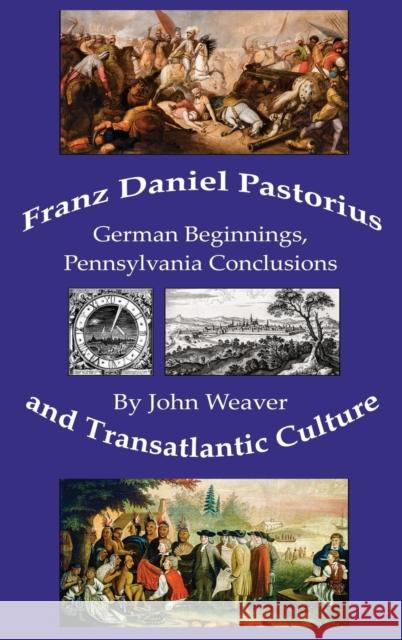
Franz Daniel Pastorius and Transatlantic Culture: German Beginnings, Pennsylvania Conclusions
ISBN-13: 9783000549014 / Angielski / Twarda / 2016 / 346 str.
(netto: 152,08 VAT: 5%)
Najniższa cena z 30 dni: 152,71
ok. 16-18 dni roboczych.
Darmowa dostawa!
This study provides a detailed introduction to Franz Daniel Pastorius in the context of his early life in Germany, delineating his bicultural perceptions and convictions as a jurist, classicist and radical social critic. It is based on his Pennsylvania correspondence, autobiographical writing, scholarship and poetry as well as documentary evidence and historical evaluation from innumerable German sources. Epigraphs from Pastorius' writing and scholarship provide reflective commentary and highlight many of his intriguing epigrams and poems. A prologue describes Pastorius' father Melchior Adam and his search for salvation in Hapsburg Europe. Chapter One examines contradictory approaches to Pastorius as a pious and pragmatic immigrant and scholar-poet, and portrays the Franconian and German culture of his youth, indicating historical reasons for his conversion to Lutheran Pietism in 1679 and his emigration in 1683.
Chapter Two describes Pastorius' childhood and youth, noting the vitality of his community and family life, and his disciplined growth from childhood spontaneity to an identity anticipating adult responsibilities as a Lutheran burgomaster's son in the free imperial city of Windsheim. The chapter identifies tensions involving authoritarianism and latent resistance to authority especially in Pastorius' Gymnasium schooling and in the complex relationship of father and son. Chapter Three traces his student career at NUrnberg and other German universities (1668-76), studying philosophy, language and law, and attaining a doctorate in civil and canon law. This academic milieu in the baroque era reveals learned compulsions related to the tensions of his upbringing. The chapter notes his courtly delights and cultural attainments as well as their social costs, and examines Pastorius' commentary, including poetry and commonplace entries on esthetic pleasures, and satire and criticism epitomized in Gospel references to rich Dives and the beggar Lazarus. A detailed description of his mature poetry of flirtation and sensuality augments his fervent social criticism.
Chapter Four presents Pastorius' adult experience of Europe and America, describing the start of his law career during two years of strife in Windsheim (1677-79), when his family and friends helped to suppress a popular insurrection against abuses of oligarchic rule. It examines the complicity and guilt that led him to reject the home and community he dearly loved, and to join the learned Lutheran Pietists of Frankfurt am Main, and it describes the baroque tensions he continued to encounter as he practiced law in Frankfurt and the Palatinate and toured Europe (1679-83). His predictions of a European Armageddon (1683-84), reflecting these tensions, are explained on several levels, including the destructive potential of the era of the Thirty Years' War and the 1688 Palatine Devastation. The chapter analyzes Pastorius' reports and letters from Pennsylvania, in which he piously urges humane reforms and pragmatically describes the economy, politics and society of the province, often focusing on the Lenni Lenape or Delaware Indians. It examines his opposition to black slavery and to the exploitation of Native Americans (and related criticism of European cultural imperialism in India) as well as his praise of material and ethical satisfactions in the New World. This context illumines his personal maturation in Pennsylvania, a diverse and evolving culture with secular influences of neoclassicism and the Enlightenment.
The study as a whole reflects Franconian and European culture through the prism of Pastorius' Pennsylvania writings. Overall, his unique perspective provides a fresh critique of contemporaneous society, religion and politics.
More at http: //www.pastorius.info
This study provides a detailed introduction to Franz Daniel Pastorius in the context of his early life in Germany, delineating his bicultural perceptions and convictions as a jurist, classicist and radical social critic. It is based on his Pennsylvania correspondence, autobiographical writing, scholarship and poetry as well as documentary evidence and historical evaluation from innumerable German sources. Epigraphs from Pastorius’ writing and scholarship provide reflective commentary and highlight many of his intriguing epigrams and poems. A prologue describes Pastorius’ father Melchior Adam and his search for salvation in Hapsburg Europe. Chapter One examines contradictory approaches to Pastorius as a pious and pragmatic immigrant and scholar-poet, and portrays the Franconian and German culture of his youth, indicating historical reasons for his conversion to Lutheran Pietism in 1679 and his emigration in 1683.
Chapter Two describes Pastorius’ childhood and youth, noting the vitality of his community and family life, and his disciplined growth from childhood spontaneity to an identity anticipating adult responsibilities as a Lutheran burgomaster’s son in the free imperial city of Windsheim. The chapter identifies tensions involving authoritarianism and latent resistance to authority especially in Pastorius’ Gymnasium schooling and in the complex relationship of father and son. Chapter Three traces his student career at Nürnberg and other German universities (1668-76), studying philosophy, language and law, and attaining a doctorate in civil and canon law. This academic milieu in the baroque era reveals learned compulsions related to the tensions of his upbringing. The chapter notes his courtly delights and cultural attainments as well as their social costs, and examines Pastorius’ commentary, including poetry and commonplace entries on esthetic pleasures, and satire and criticism epitomized in Gospel references to rich Dives and the beggar Lazarus. A detailed description of his mature poetry of flirtation and sensuality augments his fervent social criticism.
Chapter Four presents Pastorius’ adult experience of Europe and America, describing the start of his law career during two years of strife in Windsheim (1677-79), when his family and friends helped to suppress a popular insurrection against abuses of oligarchic rule. It examines the complicity and guilt that led him to reject the home and community he dearly loved, and to join the learned Lutheran Pietists of Frankfurt am Main, and it describes the baroque tensions he continued to encounter as he practiced law in Frankfurt and the Palatinate and toured Europe (1679-83). His predictions of a European Armageddon (1683-84), reflecting these tensions, are explained on several levels, including the destructive potential of the era of the Thirty Years’ War and the 1688 Palatine Devastation. The chapter analyzes Pastorius’ reports and letters from Pennsylvania, in which he piously urges humane reforms and pragmatically describes the economy, politics and society of the province, often focusing on the Lenni Lenape or Delaware Indians. It examines his opposition to black slavery and to the exploitation of Native Americans (and related criticism of European cultural imperialism in India) as well as his praise of material and ethical satisfactions in the New World. This context illumines his personal maturation in Pennsylvania, a diverse and evolving culture with secular influences of neoclassicism and the Enlightenment.
The study as a whole reflects Franconian and European culture through the prism of Pastorius’ Pennsylvania writings. Overall, his unique perspective provides a fresh critique of contemporaneous society, religion and politics.
More at http://www.pastorius.info




Czytaj nas na:
KrainaKsiazek.PL - Księgarnia Internetowa


