• Wyszukiwanie zaawansowane
  • Kategorie
  • Kategorie BISAC
  • Książki na zamówienie
  • Promocje
  • Granty
  • Książka na prezent
  • Opinie
  • Pomoc
  • Załóż konto
  • Zaloguj się

Foundations of Celestial Mechanics » książka


zaloguj się | załóż konto
Logo Krainaksiazek.pl

koszyk

konto

szukaj
topmenu
Księgarnia internetowa
Szukaj
Książki na zamówienie
Promocje
Granty
Książka na prezent
Moje konto
Pomoc
 
 
Wyszukiwanie zaawansowane
Pusty koszyk
Bezpłatna dostawa dla zamówień powyżej 20 złBezpłatna dostawa dla zamówień powyżej 20 zł

Kategorie główne

• Nauka
 [2950560]
• Literatura piękna
 [1849509]

  więcej...
• Turystyka
 [71097]
• Informatyka
 [151150]
• Komiksy
 [35848]
• Encyklopedie
 [23178]
• Dziecięca
 [617388]
• Hobby
 [139064]
• AudioBooki
 [1657]
• Literatura faktu
 [228597]
• Muzyka CD
 [383]
• Słowniki
 [2855]
• Inne
 [445295]
• Kalendarze
 [1464]
• Podręczniki
 [167547]
• Poradniki
 [480102]
• Religia
 [510749]
• Czasopisma
 [516]
• Sport
 [61293]
• Sztuka
 [243352]
• CD, DVD, Video
 [3414]
• Technologie
 [219456]
• Zdrowie
 [101002]
• Książkowe Klimaty
 [124]
• Zabawki
 [2311]
• Puzzle, gry
 [3459]
• Literatura w języku ukraińskim
 [254]
• Art. papiernicze i szkolne
 [8079]
Kategorie szczegółowe BISAC

Foundations of Celestial Mechanics

ISBN-13: 9783031045752 / Angielski / Twarda / 2022 / 392 str.
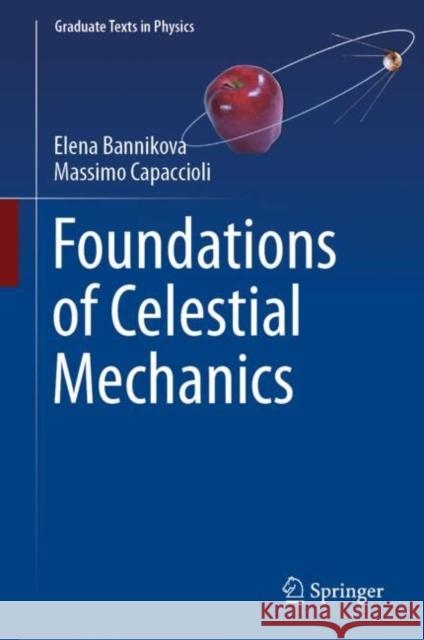
Elena Bannikova; Massimo Capaccioli
Foundations of Celestial Mechanics Elena Bannikova Massimo Capaccioli 9783031045752 Springer - książkaWidoczna okładka, to zdjęcie poglądowe, a rzeczywista szata graficzna może różnić się od prezentowanej.

Foundations of Celestial Mechanics

ISBN-13: 9783031045752 / Angielski / Twarda / 2022 / 392 str.

Elena Bannikova; Massimo Capaccioli
cena 402,53
(netto: 383,36 VAT:  5%)

Najniższa cena z 30 dni: 385,52
Termin realizacji zamówienia:
ok. 22 dni roboczych
Dostawa w 2026 r.

Darmowa dostawa!
inne wydania

This book provides an introduction to classical celestial mechanics. It is based on lectures delivered by the authors over many years at both Padua University (MC) and V.N. Karazin Kharkiv National University (EB). The book aims to provide a mathematical description of the gravitational interaction of celestial bodies. The approach to the problem is purely formal. It allows the authors to write equations of motion and solve them to the greatest degree possible, either exactly or by approximate techniques, when there is no other way. The results obtained provide predictions that can be compared with the observations. Five chapters are supplemented by appendices that review certain mathematical tools, deepen some questions (so as not to interrupt the logic of the mainframe with heavy technicalities), give some examples, and provide an overview of special functions useful here, as well as in many other fields of physics. The authors also present the original investigation of torus potential. This book is aimed at senior undergraduate students of physics or astrophysics, as well as graduate students undertaking a master’s degree or Ph.D.


This book provides an introduction to classical celestial mechanics. It is based on lectures delivered by the authors over many years at both Padua University (MC) and V.N. Karazin Kharkiv National University (EB). The book aims to provide a mathematical description of the gravitational interaction of celestial bodies. The approach to the problem is purely formal. It allows the authors to write equations of motion and solve them to the greatest degree possible, either exactly or by approximate techniques, when there is no other way. The results obtained provide predictions that can be compared with the observations. Five chapters are supplemented by appendices that review certain mathematical tools, deepen some questions (so as not to interrupt the logic of the mainframe with heavy technicalities), give some examples, and provide an overview of special functions useful here, as well as in many other fields of physics. The authors also present the original investigation of torus potential. This book is aimed at senior undergraduate students of physics or astrophysics, as well as graduate students undertaking a master’s degree or Ph.D.

Kategorie:
Nauka, Fizyka
Kategorie BISAC:
Science > Fizyka relatywistyczna
Science > Astronomia, przestrzeń i czas
Mathematics > Matematyka stosowana
Wydawca:
Springer
Seria wydawnicza:
Graduate Texts in Physics
Język:
Angielski
ISBN-13:
9783031045752
Rok wydania:
2022
Dostępne języki:
Numer serii:
000394232
Ilość stron:
392
Waga:
0.75 kg
Wymiary:
23.39 x 15.6 x 2.39
Oprawa:
Twarda
Dodatkowe informacje:
Wydanie ilustrowane

1 N-body problem 11
1.1 Self-gravitating systems of massive points . . . . . . . . . . . . . 14
1.2 Fundamental rst integrals . . . . . . . . . . . . . . . . . . . . . 17
1.2.1 Conservation of momentum . . . . . . . . . . . . . . . . 18
1.2.2 Angular momentum conservation . . . . . . . . . . . . . 21
1.2.3 Energy conservation . . . . . . . . . . . . . . . . . . . . 23
1.3 Barycentric and relative systems . . . . . . . . . . . . . . . . . . 25
1.4 N-body problem solution . . . . . . . . . . . . . . . . . . . . . . 26
1.5 Virial theorem . . . . . . . . . . . . . . . . . . . . . . . . . . . . 28
2 The two-body problem 31
2.1 Motion about center of mass . . . . . . . . . . . . . . . . . . . . 34
2.2 Reduction to the plane . . . . . . . . . . . . . . . . . . . . . . . 38
2.3 E ective potential energy . . . . . . . . . . . . . . . . . . . . . 40
2.4 The trajectory . . . . . . . . . . . . . . . . . . . . . . . . . . . . 42
2.5 Laplace{Runge{Lenz vector . . . . . . . . . . . . . . . . . . . . 43
2.6 Geometry of conics . . . . . . . . . . . . . . . . . . . . . . . . . 46
2.6.1 Ellipse . . . . . . . . . . . . . . . . . . . . . . . . . . . . 47
2.6.2 Parabola . . . . . . . . . . . . . . . . . . . . . . . . . . . 50
2.6.3 Hyperbola . . . . . . . . . . . . . . . . . . . . . . . . . . 52
2.7 Conic orbits . . . . . . . . . . . . . . . . . . . . . . . . . . . . . 53
2.7.1 Elliptical orbit . . . . . . . . . . . . . . . . . . . . . . . . 56
2.7.2 Parabolic orbit . . . . . . . . . . . . . . . . . . . . . . . 61
2.7.3 Hyperbolic orbit . . . . . . . . . . . . . . . . . . . . . . 62
2.8 Keplerian elements . . . . . . . . . . . . . . . . . . . . . . . . . 63
2.9 Ephemerides . . . . . . . . . . . . . . . . . . . . . . . . . . . . . 65
2.10 The method of Laplace . . . . . . . . . . . . . . . . . . . . . . . 70
2.11 Ballistics and space ight . . . . . . . . . . . . . . . . . . . . . . 80
3 The three-body problem 85
3.1 Stationary solutions . . . . . . . . . . . . . . . . . . . . . . . . . 87
3.1.1 Collinear solutions . . . . . . . . . . . . . . . . . . . . . 92
3.1.2 Triangular solutions . . . . . . . . . . . . . . . . . . . . . 94
3.2 The restricted problem . . . . . . . . . . . . . . . . . . . . . . . 97
3.3 Zero{velocity curves . . . . . . . . . . . . . . . . . . . . . . . . 101
3.3.1 The (x; y) plane . . . . . . . . . . . . . . . . . . . . . . 102
3.3.2 The (x; z) plane . . . . . . . . . . . . . . . . . . . . . . . 104
3.3.3 The (y; z) plane . . . . . . . . . . . . . . . . . . . . . . . 105
3.4 About the Lagrangian points . . . . . . . . . . . . . . . . . . . . 107
3.5 Stability of the Lagrangian points . . . . . . . . . . . . . . . . . 108
3.5.1 The equilibrium conditions . . . . . . . . . . . . . . . . . 108
3.5.2 Collinear solutions . . . . . . . . . . . . . . . . . . . . . 110
3.5.3 Triangular solutions . . . . . . . . . . . . . . . . . . . . . 111
3.6 Variation of the elements . . . . . . . . . . . . . . . . . . . . . . 113
3.6.1 Variation of the orientation elements . . . . . . . . . . . 116
3.6.2 Variation of the geometric elements . . . . . . . . . . . . 118
4 Analytical mechanics 125
4.1 Lagrange function . . . . . . . . . . . . . . . . . . . . . . . . . . 127
4.2 Generalized coordinates . . . . . . . . . . . . . . . . . . . . . . 129
4.3 Lagrange equations . . . . . . . . . . . . . . . . . . . . . . . . . 131
4.4 Hamilton function . . . . . . . . . . . . . . . . . . . . . . . . . . 133
4.5 Canonical equations . . . . . . . . . . . . . . . . . . . . . . . . . 137
4.6 Constants of motion . . . . . . . . . . . . . . . . . . . . . . . . 138
4.7 Elliptical orbit . . . . . . . . . . . . . . . . . . . . . . . . . . . . 140
4.8 Canonical transformations . . . . . . . . . . . . . . . . . . . . . 150
4.8.1 Characteristic function . . . . . . . . . . . . . . . . . . . 151
4.8.2 Forms of the characteristic function . . . . . . . . . . . . 154
4.8.3 Canonicity conditions . . . . . . . . . . . . . . . . . . . . 155
4.8.4 Canonical invariants . . . . . . . . . . . . . . . . . . . . 161
4.8.5 In nitesimal canonical transformations . . . . . . . . . . 163
4.8.6 Canonical systems of motion constants . . . . . . . . . . 168
4.8.7 Canonical elements for elliptical orbit . . . . . . . . . . . 175
4.9 Jacobi equation . . . . . . . . . . . . . . . . . . . . . . . . . . . 179
4.9.1 Jacobi equation: special cases . . . . . . . . . . . . . . . 182
4.9.2 2{body problem with Hamilton{Jacoby . . . . . . . . . . 186
4.10 Element variation . . . . . . . . . . . . . . . . . . . . . . . . . . 191
4.10.1 Constant variation method: an example . . . . . . . . . 194
4.11 Apsidal precession . . . . . . . . . . . . . . . . . . . . . . . . . 197
4.12 Orbits in General Relativity . . . . . . . . . . . . . . . . . . . . 200
5 Gravitational potential 207
5.1 Gauss theorem . . . . . . . . . . . . . . . . . . . . . . . . . . . 208
5.2 Theorens of Poisson and Laplace . . . . . . . . . . . . . . . . . 210
5.3 Potential of a massive point . . . . . . . . . . . . . . . . . . . . 212
5.4 Spherical bodies . . . . . . . . . . . . . . . . . . . . . . . . . . . 215
5.5 Legendre equation . . . . . . . . . . . . . . . . . . . . . . . . . 221
5.5.1 Spherical harmonics . . . . . . . . . . . . . . . . . . . . 221
5.5.2 Legendre equation and spherical harmonics . . . . . . . . 223
5.5.3 Associated Legendre function . . . . . . . . . . . . . . . 225
5.5.4 Spherical harmonics of integer degree . . . . . . . . . . . 227
5.6 Expansion of the potential . . . . . . . . . . . . . . . . . . . . . 230
5.7 Thin layer . . . . . . . . . . . . . . . . . . . . . . . . . . . . . . 233
5.8 Homogeneous spheroid . . . . . . . . . . . . . . . . . . . . . . . 235
5.9 Potential of a homogeneus ellipsoid . . . . . . . . . . . . . . . . 238
5.10 Ellipsoid: outer point potential . . . . . . . . . . . . . . . . . . 242
5.11 Potential: explicit form . . . . . . . . . . . . . . . . . . . . . . . 244
5.12 Earth distortion . . . . . . . . . . . . . . . . . . . . . . . . . . . 247
5.13 Potential with dominating body . . . . . . . . . . . . . . . . . . 249
5.14 Torus potential . . . . . . . . . . . . . . . . . . . . . . . . . . . 251
A Spherical trigonometry elements 261
B Transformation formulas 267
C Vector operators 271
D The mirror theorem 275
E Kepler's equation 277
E.1 Lagrange's theorem . . . . . . . . . . . . . . . . . . . . . . . . . 277
E.2 Fourier's theorem . . . . . . . . . . . . . . . . . . . . . . . . . . 279
E.3 Numerical solutions . . . . . . . . . . . . . . . . . . . . . . . . . 280
F Hydrogen atom 283
F.1 Bohr's atom . . . . . . . . . . . . . . . . . . . . . . . . . . . . . 284
F.2 Quantum approach . . . . . . . . . . . . . . . . . . . . . . . . . 285
G Variation of constants 287
H Lagrange multipliers 291
H.1 Variation of constants . . . . . . . . . . . . . . . . . . . . . . . 292
I Visual binary orbits 295
J Three bodies: planarity 301
K Gravitational impact 305
L Poisson and Lagrange brackets 309
L.1 Poisson brackets . . . . . . . . . . . . . . . . . . . . . . . . . . . 309
L.2 Lagrange brackets . . . . . . . . . . . . . . . . . . . . . . . . . . 311
L.3 Brackets of Poisson and Lagrange . . . . . . . . . . . . . . . . . 313
M Special functions 315
M.1 Gamma function . . . . . . . . . . . . . . . . . . . . . . . . . . 315
M.2 Beta function . . . . . . . . . . . . . . . . . . . . . . . . . . . . 317
M.3 Bessel functions . . . . . . . . . . . . . . . . . . . . . . . . . . . 319
M.3.1 First kind Bessel functions . . . . . . . . . . . . . . . . . 319
M.3.2 Second kind Bessel functions . . . . . . . . . . . . . . . . 323
M.3.3 Hankel functions . . . . . . . . . . . . . . . . . . . . . . 324
M.3.4 Modi ed Bessel functions . . . . . . . . . . . . . . . . . 324
M.3.5 Spherical Bessel functions . . . . . . . . . . . . . . . . . 325
M.4 Hypergeometric function . . . . . . . . . . . . . . . . . . . . . . 327
M.5 Error function . . . . . . . . . . . . . . . . . . . . . . . . . . . . 329
N Orthogonal functions 331
N.1 Least squares . . . . . . . . . . . . . . . . . . . . . . . . . . . . 331
N.2 Orthogonal polynomials . . . . . . . . . . . . . . . . . . . . . . 334
N.3 Legendre polynomials . . . . . . . . . . . . . . . . . . . . . . . . 335
N.4 Spherical harmonics . . . . . . . . . . . . . . . . . . . . . . . . . 343
N.5 Application of spherical harmonics . . . . . . . . . . . . . . . . 348
N.6 Hermite polynomials . . . . . . . . . . . . . . . . . . . . . . . . 350
N.7 Application of Hermite polynomials . . . . . . . . . . . . . . . . 352
N.8 Laguerre polynomials . . . . . . . . . . . . . . . . . . . . . . . . 352
N.9 Chebyshev polynomials . . . . . . . . . . . . . . . . . . . . . . . 355
O Harmonic functions 357
O.1 Special problems . . . . . . . . . . . . . . . . . . . . . . . . . . 361
P Principles of mechanics 363
P.1 Variational formulation of motion . . . . . . . . . . . . . . . . . 363
P.2 Conservation laws . . . . . . . . . . . . . . . . . . . . . . . . . . 365
P.3 Maupertuis's principle . . . . . . . . . . . . . . . . . . . . . . . 368
P.4 Geodesic lines . . . . . . . . . . . . . . . . . . . . . . . . . . . . 369
Q Invariance and conservation 373
Q.1 Continuous trajectories . . . . . . . . . . . . . . . . . . . . . . . 373
Q.2 Time-invariance . . . . . . . . . . . . . . . . . . . . . . . . . . . 375
Q.3 Invariance to translations . . . . . . . . . . . . . . . . . . . . . . 375
Q.4 Rotational invariance . . . . . . . . . . . . . . . . . . . . . . . . 376
R Numerical methods 377
R.1 The Euler method . . . . . . . . . . . . . . . . . . . . . . . . . 377
R.2 Implicit Runge-Kutta method . . . . . . . . . . . . . . . . . . . 378
R.3 Runge-Kutta fourth-order method . . . . . . . . . . . . . . . . . 379

Elena Bannikova is Ukrainian Astrophysicists. She is working as Leading Scientific Researcher in the Institute of Radio Astronomy of the National Academy of Sciences of Ukraine. She is also Professor of the Department of Astronomy and Space Informatics (the Faculty of Physics) of V.N.Karazin Kharkiv National University where she is lecturing courses on Celestial Mechanics, Cosmology, Gravity: from Aristotle to black holes. Her fields of research are active galactic nuclei, gravitational potential, N-body simulations, gravitational lensing. She is co-investigator of some national projects including the recent one on “Astrophysical Relativistic Galactic Objects (ARGO): the life cycle of active nucleus”. In 2021 she has been awarded the title of “Knight” by the President of the Italian Republic.

Massimo Capaccioli is Italian Astrophysicist. He has served as Professor of astronomy at the Universities of Padua and then of Naples Federico II, where he is currently Emeritus. The results of his studies, dealing mainly with the dynamics and evolution of stellar systems and the observational cosmology, are presented in over 550 scientific articles in international journals. For a long time director of the Capodimonte Astronomical Observatory in Naples, he has conceived and managed, in synergy with the European Southern Observatory (ESO), the construction of the VLT Survey Telescope (VST), one of the largest reflectors fully dedicated to astronomical surveys. He has chaired the Italian Astronomical Society (SAIt) for a decade and for a three-year turn the National Society of Sciences, Letters, and Arts in Naples. He has collaborated with various Italian newspapers and with the national public broadcasting company of Italy (RAI). He has authored both university manuals and popular books. The list of his honors includes the title of Commander of the Italian Republic for scientific merits (2005), the honorary professorship granted by the University of Moscow Lomonosov in 2010, the honorary doctor-degrees by the Universities of Dubna (Russia, 2015), Kharkiv (Ukraine, 2017), and Pyatigorsk (Russia, 2019), and the medals Struve (2010; Russian Academy of Sciences), Tacchini (2013; SAIt), Karazin (2019; Karazin University, Kharkiv, Ukraine), and Gamov (2019: University of Odessa, Ukraine). He is Member of some academies in Italy and of the Academia Europaea, and since 2021 foreign Member of the National Academy of Sciences of Ukraine.

This book provides an introduction to classical celestial mechanics. It is based on lectures delivered by the authors over many years at both Padua University (MC) and V.N. Karazin Kharkiv National University (EB). The book aims to provide a mathematical description of the gravitational interaction of celestial bodies. The approach to the problem is purely formal. It allows the authors to write equations of motion and solve them to the greatest degree possible, either exactly or by approximate techniques, when there is no other way. The results obtained provide predictions that can be compared with the observations. Five chapters are supplemented by appendices that review certain mathematical tools, deepen some questions (so as not to interrupt the logic of the mainframe with heavy technicalities), give some examples, and provide an overview of special functions useful here, as well as in many other fields of physics. The authors also present the original investigation of torus potential. This book is aimed at senior undergraduate students of physics or astrophysics, as well as graduate students undertaking a master’s degree or Ph.D.




Udostępnij

Facebook - konto krainaksiazek.pl


Opinie o Krainaksiazek.pl na Opineo.pl

Partner Mybenefit

Krainaksiazek.pl w programie rzetelna firma Krainaksiaze.pl - płatności przez paypal

Czytaj nas na:

Facebook - krainaksiazek.pl
  • książki na zamówienie
  • granty
  • książka na prezent
  • kontakt
  • pomoc
  • opinie
  • regulamin
  • polityka prywatności

Zobacz:

  • Księgarnia czeska

  • Wydawnictwo Książkowe Klimaty

1997-2025 DolnySlask.com Agencja Internetowa

© 1997-2022 krainaksiazek.pl
     
KONTAKT | REGULAMIN | POLITYKA PRYWATNOŚCI | USTAWIENIA PRYWATNOŚCI
Zobacz: Księgarnia Czeska | Wydawnictwo Książkowe Klimaty | Mapa strony | Lista autorów
KrainaKsiazek.PL - Księgarnia Internetowa

Polityka prywatnosci - link
Krainaksiazek.pl - płatnośc Przelewy24
Przechowalnia Przechowalnia



