• Wyszukiwanie zaawansowane
  • Kategorie
  • Kategorie BISAC
  • Książki na zamówienie
  • Promocje
  • Granty
  • Książka na prezent
  • Opinie
  • Pomoc
  • Załóż konto
  • Zaloguj się

Food Fraud Prevention: Introduction, Implementation, and Management » książka


zaloguj się | załóż konto
Logo Krainaksiazek.pl

koszyk

konto

szukaj
topmenu
Księgarnia internetowa
Szukaj
Książki na zamówienie
Promocje
Granty
Książka na prezent
Moje konto
Pomoc
 
 
Wyszukiwanie zaawansowane
Pusty koszyk
Bezpłatna dostawa dla zamówień powyżej 20 złBezpłatna dostawa dla zamówień powyżej 20 zł

Kategorie główne

• Nauka
 [2946600]
• Literatura piękna
 [1856966]

  więcej...
• Turystyka
 [72221]
• Informatyka
 [151456]
• Komiksy
 [35826]
• Encyklopedie
 [23190]
• Dziecięca
 [619653]
• Hobby
 [140543]
• AudioBooki
 [1577]
• Literatura faktu
 [228355]
• Muzyka CD
 [410]
• Słowniki
 [2874]
• Inne
 [445822]
• Kalendarze
 [1744]
• Podręczniki
 [167141]
• Poradniki
 [482898]
• Religia
 [510455]
• Czasopisma
 [526]
• Sport
 [61590]
• Sztuka
 [243598]
• CD, DVD, Video
 [3423]
• Technologie
 [219201]
• Zdrowie
 [101638]
• Książkowe Klimaty
 [124]
• Zabawki
 [2473]
• Puzzle, gry
 [3898]
• Literatura w języku ukraińskim
 [254]
• Art. papiernicze i szkolne
 [8170]
Kategorie szczegółowe BISAC

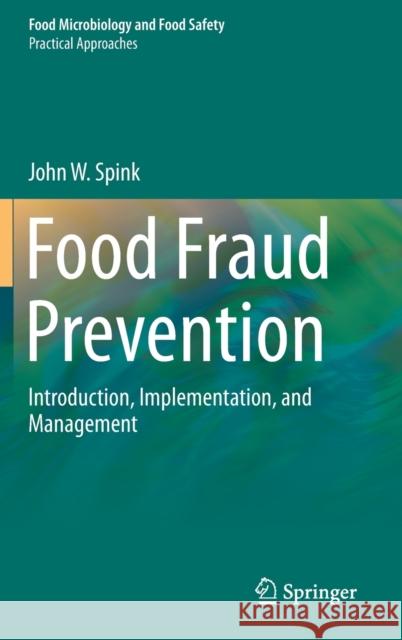
Food Fraud Prevention: Introduction, Implementation, and Management

ISBN-13: 9781493996193 / Angielski / Twarda / 2019 / 627 str.
John Spink
Food Fraud Prevention: Introduction, Implementation, and Management Spink, John W. 9781493996193 Springer - książkaWidoczna okładka, to zdjęcie poglądowe, a rzeczywista szata graficzna może różnić się od prezentowanej.

Food Fraud Prevention: Introduction, Implementation, and Management

ISBN-13: 9781493996193 / Angielski / Twarda / 2019 / 627 str.

John Spink
cena 645,58 zł
(netto: 614,84 VAT:  5%)

Najniższa cena z 30 dni: 578,30 zł
Termin realizacji zamówienia:
ok. 22 dni roboczych
Bez gwarancji dostawy przed świętami

Darmowa dostawa!

This textbook provides a foundation for the theories and concepts to fully develop, implement, and manage a Food Fraud Prevention Strategy. The scope of focus includes all types of fraud (from adulterant-substances to stolen goods to counterfeits) and all types of products (from ingredients through to finished goods at retail). The root cause analysis is focused to combat the human adversary is based on Criminology Situational Crime Prevention theory. The overall prevention strategy expands fully through the system to the final resource-allocation decision-making based on the COSO principle of Enterprise Risk Management/ ERM. The content includes a detailed review of the Food Fraud Definitions and Scope, Basic Prevention Concepts, a thorough presentation of the Food Fraud Prevention concepts and approach, the application of Business Decision Making and COSO based Enterprise Risk Management ERM, Criminology Foundational Concepts then an Application Review, Supply Chain Management Fundamentals and then Application, a review of The Role of the Public Private Partnership, Standards & Certifications with a focus on the Global Food Safety Initiative (GFSI), International Public and Private Response, Michael Porter theory based Marketing and Competitive Strategy, and finally a thorough review of Risk Analysis Basic Fundamentals and Implementation that includes full vulnerability assessment examples. The overall system is managed within the Food Fraud Prevention Cycle (FFPC) and starts with a pre-filter or Food Fraud Initial Screening (FFIS).


Kategorie:
Nauka, Biologia i przyroda
Kategorie BISAC:
Technology & Engineering > Food Science - Chemistry & Biotechnology
Law > Criminal Law - General
Science > Mikrobiologia
Wydawca:
Springer
Seria wydawnicza:
Food Microbiology and Food Safety
Język:
Angielski
ISBN-13:
9781493996193
Rok wydania:
2019
Wydanie:
2019
Ilość stron:
627
Waga:
1.12 kg
Wymiary:
23.39 x 15.6 x 3.66
Oprawa:
Twarda
Wolumenów:
01
Dodatkowe informacje:
Wydanie ilustrowane

Chapter 1: Introduction (Part 1 of 2): Food Fraud Definitions and Scope.- Chapter 2: Introduction (Part 2 of 2): Basic Prevention Concepts.- Chapter 3: Food Fraud Prevention Overview (Part 1 of 3): Basics.- Chapter 4: Food Fraud Prevention Overview (Part 2 of 3): The Approach.- Chapter 5: Food Fraud Prevention Overview (Part 3 of 3): The Implementation.- Chapter 6: Business Decision Making and ERM/COSO.- Chapter 7: Criminology Theory (Part 1 of 2): Foundational Concepts.- Chapter 8: Criminology Theory (Part 2 of 2): Application Review.- Chapter 9: Supply Chain Management (Part 1 of 2): Fundamentals.-Chapter 10: Supply Chain Management (Part 2 of 2): Application Applied to Food Fraud Prevention.- Chapter 11:Standards & Certifications (Part 1 of 2): The Role of the Public Private Partnership.- Chapter 12: Standards & Certifications (Part 2 of 2): Global Food Safety Initiative (GFSI).- Chapter 13: International Public and Private Response.- Chapter 14: Marketing, Competitive Strategy, and Competitive Intelligence.- Chapter 15: Risk Analysis (Part 1 of 3): Basic Fundamentals.- Chapter 16: Risk Analysis (Part 2 of 3): Application to Food Fraud.- Chapter 17: Risk Analysis (Part 3 of 3): Implementation.- Chapter 18: Conclusion.- Back Matter.

The concepts in this book are based on the practical application experience and peer-reviewed journal publications of Dr. John Spink, who is the Director of the Food Fraud Initiative and an Assistant Professor in the Eli Broad College of Business at Michigan State University. His vulnerability-reducing research focus started in 2006 with intellectual property rights counterfeiting, and then expanded to all types of product fraud.  In 2013 his focus shifted primarily to food fraud. He is the most widely published author regarding food fraud prevention, with fundamental works such as the 2011 “Defining the Public Health Threat of Food Fraud,” the 2013 “Defining the Types of Counterfeiters, Counterfeiting, and Offender Organizations,” the 2016 “Introducing the Food Fraud Initial Screening model (FFIS),” the 2019 “Introducing the Food Fraud Prevention Cycle (FFPC)” and the 2019 “Food Fraud Prevention: Overview and Requirements to Address ’How to Start?’ and ‘How Much is Enough?’” His leadership positions include product fraud related activities such as with “ISO 22000 Food Safety” and “TC292 Security Management/ Fraud Countermeasures,” GFSI Food Fraud Think Tank, and U.S. Pharmacopeia (USP). Global activities include engagements with the European Commission, INTERPOL and Operation Opson, Food Safety Authority of Ireland (FSAI), UK National Food Crime Unit (NFCU), New Zealand MPI, Codex Alimentarius, WHO/FAO, INFOSAN, the Codex Alimentarius Electronic Work Group on Food Fraud, Trinidad & Tobago Ministry of Agriculture, ISLI, AOAC, and served as an Advisor on Food Fraud to the Chinese National Center for Food Safety Risk Assessment (CFSA).

This textbook provides a foundation for the theories and concepts to fully develop, implement, and manage a Food Fraud Prevention Strategy. The scope of focus includes all types of fraud (from adulterant-substances to stolen goods to counterfeits) and all types of products (from ingredients through to finished goods at retail). The root cause analysis is focused to combat the human adversary is based on Criminology Situational Crime Prevention theory. The overall prevention strategy expands fully through the system to the final resource-allocation decision-making based on the COSO principle of Enterprise Risk Management/ ERM. The content includes a detailed review of the Food Fraud Definitions and Scope, Basic Prevention Concepts, a thorough presentation of the Food Fraud Prevention concepts and approach, the application of Business Decision Making and COSO based Enterprise Risk Management ERM, Criminology Foundational Concepts then an Application Review, Supply Chain Management Fundamentals and then  Application, a review of The Role of the Public Private Partnership, Standards & Certifications with a focus on the Global Food Safety Initiative (GFSI), International Public and Private Response, Michael Porter theory based Marketing and Competitive Strategy, and finally a thorough review of Risk Analysis Basic Fundamentals and Implementation that includes full vulnerability assessment examples. The overall system is managed within the Food Fraud Prevention Cycle (FFPC) and starts with a pre-filter or Food Fraud Initial Screening (FFIS).



Spink, John John Spink pioneered a technique of processing bla... więcej >


Udostępnij

Facebook - konto krainaksiazek.pl


Opinie o Krainaksiazek.pl na Opineo.pl

Partner Mybenefit

Krainaksiazek.pl w programie rzetelna firma Krainaksiaze.pl - płatności przez paypal

Czytaj nas na:

Facebook - krainaksiazek.pl
  • książki na zamówienie
  • granty
  • książka na prezent
  • kontakt
  • pomoc
  • opinie
  • regulamin
  • polityka prywatności

Zobacz:

  • Księgarnia czeska

  • Wydawnictwo Książkowe Klimaty

1997-2025 DolnySlask.com Agencja Internetowa

© 1997-2022 krainaksiazek.pl
     
KONTAKT | REGULAMIN | POLITYKA PRYWATNOŚCI | USTAWIENIA PRYWATNOŚCI
Zobacz: Księgarnia Czeska | Wydawnictwo Książkowe Klimaty | Mapa strony | Lista autorów
KrainaKsiazek.PL - Księgarnia Internetowa

Polityka prywatnosci - link
Krainaksiazek.pl - płatnośc Przelewy24
Przechowalnia Przechowalnia





