• Wyszukiwanie zaawansowane
  • Kategorie
  • Kategorie BISAC
  • Książki na zamówienie
  • Promocje
  • Granty
  • Książka na prezent
  • Opinie
  • Pomoc
  • Załóż konto
  • Zaloguj się

Flea Biology and Control: The Biology of the Cat Flea Control and Prevention with Imidacloprid in Small Animals » książka


zaloguj się | załóż konto
Logo Krainaksiazek.pl

koszyk

konto

szukaj
topmenu
Księgarnia internetowa
Szukaj
Książki na zamówienie
Promocje
Granty
Książka na prezent
Moje konto
Pomoc
 
 
Wyszukiwanie zaawansowane
Pusty koszyk
Bezpłatna dostawa dla zamówień powyżej 20 złBezpłatna dostawa dla zamówień powyżej 20 zł

Kategorie główne

• Nauka
 [2946912]
• Literatura piękna
 [1852311]

  więcej...
• Turystyka
 [71421]
• Informatyka
 [150889]
• Komiksy
 [35717]
• Encyklopedie
 [23177]
• Dziecięca
 [617324]
• Hobby
 [138808]
• AudioBooki
 [1671]
• Literatura faktu
 [228371]
• Muzyka CD
 [400]
• Słowniki
 [2841]
• Inne
 [445428]
• Kalendarze
 [1545]
• Podręczniki
 [166819]
• Poradniki
 [480180]
• Religia
 [510412]
• Czasopisma
 [525]
• Sport
 [61271]
• Sztuka
 [242929]
• CD, DVD, Video
 [3371]
• Technologie
 [219258]
• Zdrowie
 [100961]
• Książkowe Klimaty
 [124]
• Zabawki
 [2341]
• Puzzle, gry
 [3766]
• Literatura w języku ukraińskim
 [255]
• Art. papiernicze i szkolne
 [7810]
Kategorie szczegółowe BISAC

Flea Biology and Control: The Biology of the Cat Flea Control and Prevention with Imidacloprid in Small Animals

ISBN-13: 9783642626043 / Angielski / Miękka / 2014 / 192 str.
Friederike Kramer; Norbert Mencke
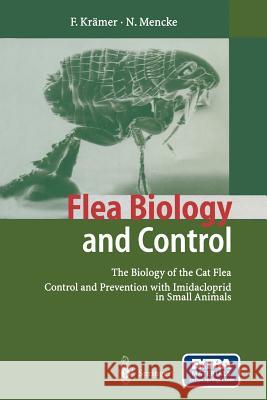
Flea Biology and Control: The Biology of the Cat Flea Control and Prevention with Imidacloprid in Small Animals Krämer, Friederike 9783642626043 Springer - książkaWidoczna okładka, to zdjęcie poglądowe, a rzeczywista szata graficzna może różnić się od prezentowanej.

Flea Biology and Control: The Biology of the Cat Flea Control and Prevention with Imidacloprid in Small Animals

ISBN-13: 9783642626043 / Angielski / Miękka / 2014 / 192 str.

Friederike Kramer; Norbert Mencke
cena 201,24
(netto: 191,66 VAT:  5%)

Najniższa cena z 30 dni: 192,74
Termin realizacji zamówienia:
ok. 22 dni roboczych
Bez gwarancji dostawy przed świętami

Darmowa dostawa!

1 Fleas are wingless insects with a laterally compressed body of about 1.5-4 mm length. Like all insects they possess six legs and three body segments. Taxonomically they belong to the order Siphonaptera (Eckert et al. 2000) (Table 1). This family contains several species and subspecies. Fleas represent one of the most important ectoparasites (Mehl horn 2000; Mehlhorn et al. 2001b). At the moment there are more than 2000 described species and subspecies throughout the world (Borror et al. 1981). These species belong to the families Pulicidae, including Pulex spp., Ctenocephalides spp., Spilopsyllus spp. and Archaeopsyllus spp., or the familia Ceratophyllidae with the genuses Ceratophyllus or Nosopsyllus to mention only some of the most important veterinary and human representatives. Fleas have a history of about 60 million years and were already found on prehistoric mammals. While becoming parasitic the original exterior of the two-wing insects, also designated as the order Diptera, has changed by losing the wings in the adults, whereas the larval form still has similarity with the larva of the order Diptera (Strenger 1973). About 95% of the -2000 different flea species parasitize on mammals, 5% live on birds. Table 1. Taxonomy of fleas Systematic Taxonomy Phylum Arthropoda Tracheata (=Antennata) Subphylum Classis Insecta (Hexapoda) Ordo Siphonapterida Familia Pulicidae Familia CeratophyUidae Genus Ctenocephalides. Genus Ceratophyllus. Nosopsyllus Pulex.


Kategorie:
Nauka, Medycyna
Kategorie BISAC:
Science > Life Sciences - Zoology - Entomology
Medical > Microbiology
Medical > Weterynaria
Wydawca:
Springer
Język:
Angielski
ISBN-13:
9783642626043
Rok wydania:
2014
Wydanie:
Softcover Repri
Ilość stron:
192
Waga:
0.30 kg
Wymiary:
23.39 x 15.6 x 1.14
Oprawa:
Miękka
Wolumenów:
01

1 Introduction.- 2 General Morphology.- 3 Taxonomy.- 4 Dissemination and Economic, Veterinary and Medical Importance.- Origin and Distribution.- Economic Importance.- Veterinary Importance.- Medical Importance.- 5 Developmental Cycle of Fleas.- Eggs.- Larvae.- Pupae.- Preemerged Adults.- Adults.- 6 Flea Epidemiology.- 7 Flea-Related Dermatitis.- Flea Bite Dermatitis.- Flea Allergy Dermatitis (FAD).- Clinical Signs.- Differential Diagnosis of FAD.- Histopathological Findings.- Immunopathogenesis of FAD.- Diagnosis of FAD and Flea Bite Dermatitis.- Treatment of Flea-Related Skin Diseases.- Adjunctive Medical Therapy.- Hyposensitization.- Treatment of the Premises.- Indoor Treatment.- Outdoor Treatment.- 8 Resistance.- 9 Imidacloprid.- History of Imidacloprid.- Chemical Properties of Imidacloprid.- Biological Profile, Mode of Action and Direct Insecticidal Activity.- Biological Profile.- Mode of Action and Direct Insecticidal Activity.- Indirect Insecticidal Effects.- Resistance of Sucking Pests Against Imidacloprid.- Toxicology and Pharmacology of Imidacloprid.- Symptomatology of Insects.- Pharmacology of Imidacloprid.- Pharmacokinetics and Metabolism of Imidacloprid.- Toxicology of Imidacloprid.- Toxicology of Imidacloprid 10% Spot-on.- Tolerability of Imidacloprid 10% Spot-on in Dogs and Cats.- Ecological Effects and Ecotoxicological Studies.- Safety Assessment for Humans.- Imidacloprid as a Veterinary Product for Flea Control.- Clinical Efficacy of Imidacloprid (Advantage®) in Dogs and Cats.- Laboratory Studies in Dogs.- Field Studies in Dogs.- Laboratory Studies in Cats.- Field Studies in Cats.- Comparative Studies (Between Imidacloprid and Other Compounds for Flea Control).- Laboratory Studies.- Field Studies.- Larvicidal Effect of Imidacloprid and Efficacy Enhancement (with PBO).- Larvicidal Effect.- Efficacy Enhancement.- Environmental and Habitual Factors Influencing Imidacloprid Treatment.- Effects of Shampooing and Repeated Water Exposure.- ‘Umbrella Effect’.- Small Domestic Animals.- Rabbits.- Ferrets.- Rodents and Other Small Animals.- Ectoparasitic Spectrum of Activity.- Louse Infestation.- Sheep Ked Infestation.- References.

The book describes in great detail the complex life cycle of fleas. The text is based on the example of the cat flea (Ctenocephalides felis), the most important ectoparasite. The cat flea parasitizes not only dogs and cats but also warm-blooded animals and even humans. Besides being the cause of painfully itching bites and allergic skin diseases it is also a vector for viruses, bacteria, nematodes and cestodes. Over the years the market for insecticide use in small animals has become a major segment of the chemical-pharmaceutical industry.
Insecticides of the new generation should not only fight the existing infestation (therapy) but should also effectively prevent new infestations for weeks (prophylaxis). The latest class of chemicals developed to this effect are chloronicotinyls (syn. neonicotinoides). Imidacloprid is the first member of this class of insecticides with a high selectivity towards the site of action within an insect. Applied to the skin it combats flea infestation and prevents new infestations for at least four weeks. Flea Biology and Control describes the entire development behind the compound, starting with its discovery all the way to its use in the final product.


Udostępnij

Facebook - konto krainaksiazek.pl


Opinie o Krainaksiazek.pl na Opineo.pl

Partner Mybenefit

Krainaksiazek.pl w programie rzetelna firma Krainaksiaze.pl - płatności przez paypal

Czytaj nas na:

Facebook - krainaksiazek.pl
  • książki na zamówienie
  • granty
  • książka na prezent
  • kontakt
  • pomoc
  • opinie
  • regulamin
  • polityka prywatności

Zobacz:

  • Księgarnia czeska

  • Wydawnictwo Książkowe Klimaty

1997-2025 DolnySlask.com Agencja Internetowa

© 1997-2022 krainaksiazek.pl
     
KONTAKT | REGULAMIN | POLITYKA PRYWATNOŚCI | USTAWIENIA PRYWATNOŚCI
Zobacz: Księgarnia Czeska | Wydawnictwo Książkowe Klimaty | Mapa strony | Lista autorów
KrainaKsiazek.PL - Księgarnia Internetowa

Polityka prywatnosci - link
Krainaksiazek.pl - płatnośc Przelewy24
Przechowalnia Przechowalnia






