• Wyszukiwanie zaawansowane
  • Kategorie
  • Kategorie BISAC
  • Książki na zamówienie
  • Promocje
  • Granty
  • Książka na prezent
  • Opinie
  • Pomoc
  • Załóż konto
  • Zaloguj się

Flame-Retardant Polymeric Materials: Volume 2 » książka


zaloguj się | załóż konto
Logo Krainaksiazek.pl

koszyk

konto

szukaj
topmenu
Księgarnia internetowa
Szukaj
Książki na zamówienie
Promocje
Granty
Książka na prezent
Moje konto
Pomoc
 
 
Wyszukiwanie zaawansowane
Pusty koszyk
Bezpłatna dostawa dla zamówień powyżej 20 złBezpłatna dostawa dla zamówień powyżej 20 zł

Kategorie główne

• Nauka
 [2946912]
• Literatura piękna
 [1852311]

  więcej...
• Turystyka
 [71421]
• Informatyka
 [150889]
• Komiksy
 [35717]
• Encyklopedie
 [23177]
• Dziecięca
 [617324]
• Hobby
 [138808]
• AudioBooki
 [1671]
• Literatura faktu
 [228371]
• Muzyka CD
 [400]
• Słowniki
 [2841]
• Inne
 [445428]
• Kalendarze
 [1545]
• Podręczniki
 [166819]
• Poradniki
 [480180]
• Religia
 [510412]
• Czasopisma
 [525]
• Sport
 [61271]
• Sztuka
 [242929]
• CD, DVD, Video
 [3371]
• Technologie
 [219258]
• Zdrowie
 [100961]
• Książkowe Klimaty
 [124]
• Zabawki
 [2341]
• Puzzle, gry
 [3766]
• Literatura w języku ukraińskim
 [255]
• Art. papiernicze i szkolne
 [7810]
Kategorie szczegółowe BISAC

Flame-Retardant Polymeric Materials: Volume 2

ISBN-13: 9781468469752 / Angielski / Miękka / 2012 / 334 str.
Menachem Lewin
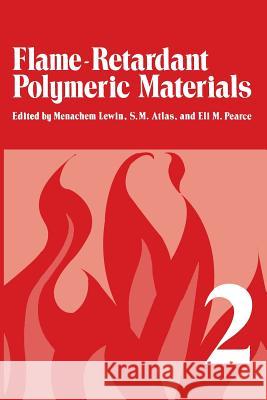
Flame-Retardant Polymeric Materials: Volume 2 Lewin, Menachem 9781468469752 Springer - książkaWidoczna okładka, to zdjęcie poglądowe, a rzeczywista szata graficzna może różnić się od prezentowanej.

Flame-Retardant Polymeric Materials: Volume 2

ISBN-13: 9781468469752 / Angielski / Miękka / 2012 / 334 str.

Menachem Lewin
cena 201,72
(netto: 192,11 VAT:  5%)

Najniższa cena z 30 dni: 192,74
Termin realizacji zamówienia:
ok. 22 dni roboczych
Bez gwarancji dostawy przed świętami

Darmowa dostawa!

Flammability has been recognized as an increasingly important social and scientific problem. Fire statistics in the United States (Report of the National Commission on Fire Prevention and Control, "America Burning," 1973) emphasized the vast devastation to life and property--12, OOO lives lost annually due to fire, and these deaths are usually caused by inhaling smoke or toxic gases; 300,000 fire injuries; 11.4 billion dollars in fire cost at which 2.7 billion dollars is related to property loss; a billion dollars to burn injury treatment; and 3.3 billion dollars in productivity loss. It is obvious that much human and economic misery can be attributed to fire situations. In relation to this, polymer flammability has been recognized as an in creasingly important social and scientific problem. The development of flame-retardant polymeric materials is a current example where the initia tive for major scientific and technological developments is motivated by sociological pressure and legislation. This is part of the important trend toward a safer environment and sets a pattern for future example. Flame retardancy deals with our basic everyday life situations-housing, work areas, transportation, clothing and so forth-the "macroenvironment" capsule within which "homosapiens" live. As a result, flame-retardant polymers are now emerging as a specific class of materials leading to new and diversified scientific and technological ventures."


Kategorie:
Technologie
Kategorie BISAC:
Technology & Engineering > Textiles & Polymers
Technology & Engineering > Materials Science - General
Technology & Engineering > Chemical & Biochemical
Wydawca:
Springer
Język:
Angielski
ISBN-13:
9781468469752
Rok wydania:
2012
Wydanie:
Softcover Repri
Ilość stron:
334
Waga:
0.51 kg
Wymiary:
22.9 x 15.2
Oprawa:
Miękka
Wolumenów:
01
Dodatkowe informacje:
Wydanie ilustrowane

1 Structure, Pyrolysis, and Flammability of Cellulose.- 1. Introduction.- 2. The Fine Structure of Cellulose.- 3. The Major Products of Cellulose Pyrolysis: Levoglucosan and Char.- 3.1. Levoglucosan Formation.- 3.2. Other Products.- 3.3. Char Formation.- 4. Vacuum Pyrolysis.- 4.1. Mechanism, Rates, and Products.- 4.2. Kinetics.- 4.3. Structural Changes.- 4.4. Thermal Analysis.- 5. Air Pyrolysis.- 5.1. General.- 5.2. Kinetics and Fine Structure.- 5.3. Levoglucosan Formation, Fine Structure, and Combustibility.- 6. Flame Retardancy.- 6.1. Mechanism and Flame-Retardant Structural Considerations.- 6.2. Flame Retardancy and Fine Structure of Cellulose.- 7. References.- 2 Synergism and Flame Retardancy.- 1. Introduction.- 2. Synergism.- 3. Synergistic Reactions in Fire Retardation.- 3.1. Antimony-Halogen Synergism.- 3.2. Phosphorus-Halogen Synergism.- 3.3. Nitrogen-Phosphorus Synergism.- 3.4. Synergism with Free-Radical Initiators.- 3.5. Synergism and Condensed Phase Reactions.- 4. Synergism and Future Studies on Fire Retardation.- 5. References.- 3 Ignition of Polymers.- 1. Introduction.- 2. Autoignition Studies.- 2.1. Experimental Technique.- 2.2. General Kinetic Model of the Ignition Process.- 2.3. Autoignition Data for Single-Component Systems.- 2.4. Effects of Selected Experimental Variables.- 3. Autoignition of Multicomponent Systems.- 3.1. Polymers with Flame-Retardant Additives.- 3.2. Multipolymer Systems.- 4. The State of the Art.- 5. References.- 4 Phosphorus-Based Flame Retardants.- 1. Introduction.- 2. Inorganic Phosphorus Compounds.- 2.1. Red Phosphorus.- 2.2. Ammonium Phosphates.- 2.3. Insoluble Ammonium Polyphosphate.- 2.4. Ammonia-P2O5 Products.- 2.5. Phosphoric-Acid-Based Systems for Cellulosics.- 3. Organic Phosphorus Flame Retardants—Additive Types.- 3.1. Alkyl Acid Phosphates.- 3.2. Trialkyl Phosphates.- 3.3. Dimethyl Methylphosphonate.- 3.4. Halogenated Alkyl Phosphates and Phosphonates.- 3.5. Oligomeric Halogen-Free Phosphorus Esters.- 3.6. Oligomeric Cyclic Phosphonate.- 3.7. Oligomeric Phenylphosphonates.- 3.8. Tricresyl Phosphates and Related Phosphates.- 3.9. Triphenyl Phosphate.- 3.10. Phosphonitrilics.- 3.11. Phosphonium Bromides.- 3.12. Phosphine Oxides.- 4. Organic Phosphorus Compounds—Reactive Types.- 4.1. Organophosphorus Monomers.- 4.2. Phosphorus-Containing Diols and Polyols.- 4.3. Reactive Organophosphorus Compounds in Textile Finishing.- 5. Mode of Action of Phosphorus Flame Retardants.- 5.1. Condensed Phase Mechanisms.- 5.2. Vapor Phase Mechanisms.- 6. Trends and Future Developments.- 7. References.- 5 Flammability of Cotton-Polyester Blend Fabrics.- 1. Theory of Flame-Retardant Action.- 2. Flame-Retardant Treatments for Polyester-Cotton Blends.- 3. References.- 6 Factors Affecting the Combustion of Polystyrene and Styrene.- 1. Introduction.- 2. Physical and Thermal Properties of Polystyrene and Styrene.- 3. The Pyrolysis and Combustion of Polystyrene and Styrene.- 3.1. The Pyrolysis and Combustion of Polymers.- 3.2. The Pyrolysis of Polystyrene.- 3.3. Inhibiting the Pyrolysis of Polystyrene.- 3.4. The Pyrolysis and Combustion of Polystyrene.- 3.5. The Pyrolysis amd Combustion of Styrene Monomer.- 4. The Mechanisms of Flame Retardation.- 4.1. Theories of Flame Retardancy.- 4.2. The Mechanisms of Halogen Flame Retardants.- 5. The Effects of Halogen Flame Retardants on the Combustion of Polystyrene and Styrene.- 6. The Role of Synergists in the Combustion of Styrenic Materials Inhibited by Halogen Compounds.- 7. The Use of Phosphorus Compounds as Flame Retardants for Polystyrene.- 8. Test Methods and Their Usefulness to Combustion Studies.- 9. Conclusions.- 10. References.- 7 Phenolic Fibers.- 1. Introduction.- 2. Preparation of Phenolic Fibers.- 2.1. Selection of Precursor Resin and Spinning Characteristics.- 2.2. Curing Process.- 2.3. Acetylation of Phenolic Fibers.- 3. Properties of Phenolic Fibers.- 3.1. Flame Resistance.- 3.2. Mechanical Properties.- 3.3. Processibility.- 4. Thermal and Chemical Resistance.- 5. Uses.- 5.1. Commercial Uses.- 5.2. Use of Phenolic Fibers as Precursor Fibers.- 6. References.- 8 Flame-Resistant Wool and Wool Blends.- 1. Introduction.- 2. Wool.- 3. Research Strategies for Flame-Resistant Wool.- 3.1. Historical.- 4. Flammability Test Methods.- 5. Inorganic Compounds.- 5.1. Sodium Hydrosulfite-Formaldehyde-Borax Treatment.- 5.2. Phosphoric, Sulfuric, and Sulfamic Acids and Their Salts.- 5.3. Tris(hydroxymethyl)phosphonium Derivatives.- 5.4. Zirconium and Titanium Compounds.- 5.5. Tungsten, Molybdenum, and Vanadium Compounds.- 5.6. Tin Compounds.- 6. Organic Compounds.- 6.1. Tetrabromophthalic Anhydride and Related Compounds.- 6.2. Iodinated Wool.- 6.3. Tris(2,3-dibromopropyl) Phosphate and Related Compounds.- 6.4. Vinyl Phosphonate Esters.- 6.5. Tris(1-aziridinyl) Phosphine Oxide.- 7. Mechanisms of Flame Retardation.- 8. Safety of Flame-Resistant Fabrics.- 9. References.- 9 Smoke and Tenability: A Perspective on the Materials Approach to the Fire Problem.- 1. Introduction: Combustion versus Fire.- 2. Fire: Ignition and Materials.- 3. Smoke: A Hazard Analysis.- 4. Smoke: The Measurement Problem.- 5. Correlation: Studies of Small- and Large-Scale Smoke Tests.- 6. Smoke Hazard Control: The Fire Detector Aspect.- 7. Smoke Hazard: The Materials Perspective.- 8. Smoke Hazard Assessment: Summary.- 9. References.


Udostępnij

Facebook - konto krainaksiazek.pl


Opinie o Krainaksiazek.pl na Opineo.pl

Partner Mybenefit

Krainaksiazek.pl w programie rzetelna firma Krainaksiaze.pl - płatności przez paypal

Czytaj nas na:

Facebook - krainaksiazek.pl
  • książki na zamówienie
  • granty
  • książka na prezent
  • kontakt
  • pomoc
  • opinie
  • regulamin
  • polityka prywatności

Zobacz:

  • Księgarnia czeska

  • Wydawnictwo Książkowe Klimaty

1997-2025 DolnySlask.com Agencja Internetowa

© 1997-2022 krainaksiazek.pl
     
KONTAKT | REGULAMIN | POLITYKA PRYWATNOŚCI | USTAWIENIA PRYWATNOŚCI
Zobacz: Księgarnia Czeska | Wydawnictwo Książkowe Klimaty | Mapa strony | Lista autorów
KrainaKsiazek.PL - Księgarnia Internetowa

Polityka prywatnosci - link
Krainaksiazek.pl - płatnośc Przelewy24
Przechowalnia Przechowalnia






