• Wyszukiwanie zaawansowane
  • Kategorie
  • Kategorie BISAC
  • Książki na zamówienie
  • Promocje
  • Granty
  • Książka na prezent
  • Opinie
  • Pomoc
  • Załóż konto
  • Zaloguj się

Flame - Retardant Polymeric Materials: Volume 3 » książka


zaloguj się | załóż konto
Logo Krainaksiazek.pl

koszyk

konto

szukaj
topmenu
Księgarnia internetowa
Szukaj
Książki na zamówienie
Promocje
Granty
Książka na prezent
Moje konto
Pomoc
 
 
Wyszukiwanie zaawansowane
Pusty koszyk
Bezpłatna dostawa dla zamówień powyżej 20 złBezpłatna dostawa dla zamówień powyżej 20 zł

Kategorie główne

• Nauka
 [2939893]
• Literatura piękna
 [1808953]

  więcej...
• Turystyka
 [70366]
• Informatyka
 [150555]
• Komiksy
 [35137]
• Encyklopedie
 [23160]
• Dziecięca
 [608786]
• Hobby
 [136447]
• AudioBooki
 [1631]
• Literatura faktu
 [225099]
• Muzyka CD
 [360]
• Słowniki
 [2914]
• Inne
 [442115]
• Kalendarze
 [1068]
• Podręczniki
 [166599]
• Poradniki
 [468390]
• Religia
 [506548]
• Czasopisma
 [506]
• Sport
 [61109]
• Sztuka
 [241608]
• CD, DVD, Video
 [3308]
• Technologie
 [218981]
• Zdrowie
 [98614]
• Książkowe Klimaty
 [124]
• Zabawki
 [2174]
• Puzzle, gry
 [3275]
• Literatura w języku ukraińskim
 [260]
• Art. papiernicze i szkolne
 [7376]
Kategorie szczegółowe BISAC

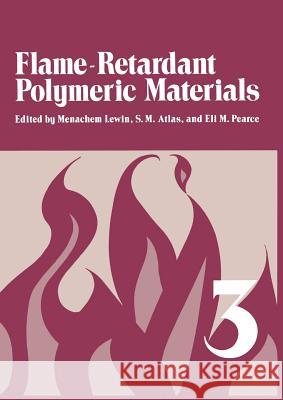
Flame - Retardant Polymeric Materials: Volume 3

ISBN-13: 9781475701142 / Angielski / Miękka / 2012 / 238 str.
Lewin, Menachem
Flame - Retardant Polymeric Materials: Volume 3 Lewin, Menachem 9781475701142 Springer - książkaWidoczna okładka, to zdjęcie poglądowe, a rzeczywista szata graficzna może różnić się od prezentowanej.

Flame - Retardant Polymeric Materials: Volume 3

ISBN-13: 9781475701142 / Angielski / Miękka / 2012 / 238 str.

Lewin, Menachem
cena 401,58
(netto: 382,46 VAT:  5%)

Najniższa cena z 30 dni: 385,52
Termin realizacji zamówienia:
ok. 22 dni roboczych.

Darmowa dostawa!

Flammability has been recognized as an increasingly important social and scientific problem. Fire statistics in the United States (Report on the National Commission on Fire Prevention and Control, "America Burning," 1973) emphasized the vast devastation to life and property-12,000 lives lost annually due to fire and these deaths are usually caused by inhaling smoke or toxic gases; 300,000 fire injuries; 11. 4 billion dollars in fire cost of which 2. 7 billion dollars is related to property loss; a billion dollars to burn injury treatment; and 3. 3 billion dollars in productivity loss. It is obvious that much human and economic misery can be attributed to fire situations. In relation to this, polymer flammability has been recognized as an increasingly important social and scientific problem. The development of flame-retardant polymeric materials is a current example where the initiative for major scientific and technological developments is motivated by sociological pressure and legisla- tion. This is part of the important trend toward a safer environment and sets a pattern for future example. Flame retardancy deals with our basic everyday life situations-housing, work areas, transportation, clothing and so forth- the "macroenvironment" capsule within which "homosapiens" live. As a result, flame-retardant polymers are now emerging as a specific class of materials leading to new and diversified scientific and technological ventures.


Kategorie:
Technologie
Kategorie BISAC:
Technology & Engineering > Materials Science - General
Technology & Engineering > Textiles & Polymers
Technology & Engineering > Chemical & Biochemical
Wydawca:
Springer
Język:
Angielski
ISBN-13:
9781475701142
Rok wydania:
2012
Wydanie:
Softcover Repri
Ilość stron:
238
Waga:
0.67 kg
Wymiary:
29.7 x 21.0
Oprawa:
Miękka
Wolumenów:
01

1 The Flame Retardation of Polyolefins.- 1. Introduction.- 2. Flame Retardancy Tests.- 3. Polypropylene.- 4. Polypropylene Copolymers.- 5. Low-Density Polyethylene (LDPE).- 6. High-Density Polyethylene.- 7. Cross-Linked Polyethylene.- 8. Ionomers.- 9. Polybutylene.- 10. Ethylene-Propylene-Dimer Rubber.- 11. Ethylene-Propylene-Dimer (EPDM) Rubber Wire and Cable Insulation.- 12. References.- 2 Methods for Reduction of Smoke from Burning Polymers.- 1. Introduction.- 2. Smoke.- 2.1. Phenomenon.- 2.2. Smoke Measurement.- 2.3. Factors Affecting Measured Smoke Values.- 3. Smoke Inhibition Technology.- 3.1. Background.- 3.2. Smoke Inhibition in Polymers.- 4. Summary and Conclusions.- 5. References.- 3 Experimental Evaluation of Flammability Parameters of Polymeric Materials.- Abstract.- Objectives.- 1. Introduction.- 2. Experimental Procedures.- 2.1. Sample and Sample Container.- 2.2. Total Flow Rate of Mixture of Air-O2-N2 and Mass Fraction of Oxygen.- 2.3. External Heat Flux.- 2.4. Ignition.- 2.5. Mass Loss Rate.- 2.6. Total Mass Flow Rate of Mixture of Products and Air.- 2.7. Convective Heat Release Rate.- 2.8. Mass Generation Rates of Gaseous Pyrolysis-Combustion Products.- 2.9. Mass Generation Rate of the Pyrolyzate Fraction Collected on a Filter Paper.- 2.10. Optical Transmission Through the Mixture of Pyrolysis-Combustion Products and Air.- 3. Ignition.- 3.1. Concept.- 3.2. Measurements and Calculations.- 3.3. Data for Ignition Parameters.- 3.4. Conclusion.- 4. Mass Loss Rate in the Pyrolysis and Combustion of Polymers.- 4.1. Pyrolysis.- 4.2. Combustion.- 4.3. Conclusions.- 5. Mass Generation (or Depletion) Rates of Products.- 5.1. Concept.- 5.2. Measurements and Calculations.- 5.3. Data for the Distribution of Carbon in the Combustion Products.- 5.4. Conclusions.- 6. Heat Release Rate.- 6.1. Concept.- 6.2. Measurements and Calculations.- 6.3. Data for the Heat Release Rate Fractions.- 6.4. Conclusions.- 7. Optical Transmission Through the Mixture of Pyrolysis-Combustion Products and Air.- 7.1. Concept.- 7.2. Measurements and Calculations.- 7.3. Data for Modified Mass Absorbancy Index of “Pyrolyzate”.- 7.4. Conclusions.- 8. Generation of Toxic Compounds.- 8.1 Concept.- 9. Fire Extinction.- 9.1 Concept.- 10. Nomenclature.- 11. List of Components for Experimental Apparatus.- 12. References.- 4 Flammability Evaluation Methods for Textiles.- 1. Introduction.- 2. Evaluation Methods for Fabrics Which Are Expected to Self-Extinguish.- 2.1. Vertical Tests.- 2.2. Horizontal Tests.- 3. Standards for Both Self-Extinguishing and Flammable Fabrics.- 4. Test Methods for Flammable Fabrics.- 4.1. Flame Spread Rate Tests.- 5. Ignition Time Tests.- 6. Heat Evolution Measurements.- 7. Extinguishability.- 8. Effect of Laundering, Soiling, and Weathering on Flammability.- 9. OI and Other Research Methods.- 10. Evaluation Methods for Specific End-Use Items.- 10.1. Blankets.- 10.2. Carpets.- 10.3. Curtains and Draperies.- 10.4. Mattresses.- 10.5. Upholstered Furniture.- 10.6. Protective Clothing.- 11. Thermal Behavior of Textile Materials.- 12. References.- 5 The Analysis of Polymers and Polymer Degradation Products by Mass Spectrometry.- 1. Introduction.- 2. Direct Analysis of Polymers.- 3. Analysis of Polymer Degradation Products.- 3.1. Thermal Degradation.- 3.2. Dielectric Breakdown.- 3.3. Mechanical Stress-Induced Degradation.- 3.4. Photolytic Degradation.- 4. Conclusion.- 5. References.


Udostępnij

Facebook - konto krainaksiazek.pl


Opinie o Krainaksiazek.pl na Opineo.pl

Partner Mybenefit

Krainaksiazek.pl w programie rzetelna firma Krainaksiaze.pl - płatności przez paypal

Czytaj nas na:

Facebook - krainaksiazek.pl
  • książki na zamówienie
  • granty
  • książka na prezent
  • kontakt
  • pomoc
  • opinie
  • regulamin
  • polityka prywatności

Zobacz:

  • Księgarnia czeska

  • Wydawnictwo Książkowe Klimaty

1997-2026 DolnySlask.com Agencja Internetowa

© 1997-2022 krainaksiazek.pl
     
KONTAKT | REGULAMIN | POLITYKA PRYWATNOŚCI | USTAWIENIA PRYWATNOŚCI
Zobacz: Księgarnia Czeska | Wydawnictwo Książkowe Klimaty | Mapa strony | Lista autorów
KrainaKsiazek.PL - Księgarnia Internetowa

Polityka prywatnosci - link
Krainaksiazek.pl - płatnośc Przelewy24
Przechowalnia Przechowalnia






