• Wyszukiwanie zaawansowane
  • Kategorie
  • Kategorie BISAC
  • Książki na zamówienie
  • Promocje
  • Granty
  • Książka na prezent
  • Opinie
  • Pomoc
  • Załóż konto
  • Zaloguj się

Finding Lost Space: Theories of Urban Design » książka


zaloguj się | załóż konto
Logo Krainaksiazek.pl

koszyk

konto

szukaj
topmenu
Księgarnia internetowa
Szukaj
Książki na zamówienie
Promocje
Granty
Książka na prezent
Moje konto
Pomoc
 
 
Wyszukiwanie zaawansowane
Pusty koszyk
Bezpłatna dostawa dla zamówień powyżej 20 złBezpłatna dostawa dla zamówień powyżej 20 zł

Kategorie główne

• Nauka
 [2946600]
• Literatura piękna
 [1856966]

  więcej...
• Turystyka
 [72221]
• Informatyka
 [151456]
• Komiksy
 [35826]
• Encyklopedie
 [23190]
• Dziecięca
 [619653]
• Hobby
 [140543]
• AudioBooki
 [1577]
• Literatura faktu
 [228355]
• Muzyka CD
 [410]
• Słowniki
 [2874]
• Inne
 [445822]
• Kalendarze
 [1744]
• Podręczniki
 [167141]
• Poradniki
 [482898]
• Religia
 [510455]
• Czasopisma
 [526]
• Sport
 [61590]
• Sztuka
 [243598]
• CD, DVD, Video
 [3423]
• Technologie
 [219201]
• Zdrowie
 [101638]
• Książkowe Klimaty
 [124]
• Zabawki
 [2473]
• Puzzle, gry
 [3898]
• Literatura w języku ukraińskim
 [254]
• Art. papiernicze i szkolne
 [8170]
Kategorie szczegółowe BISAC

Finding Lost Space: Theories of Urban Design

ISBN-13: 9780471289562 / Angielski / Miękka / 1991 / 256 str.
Roger Trancik
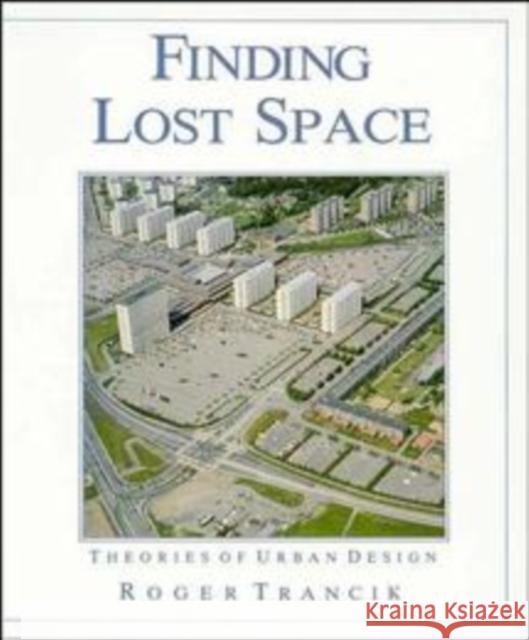
Finding Lost Space: Theories of Urban Design Trancik, Roger 9780471289562 John Wiley & Sons - książkaWidoczna okładka, to zdjęcie poglądowe, a rzeczywista szata graficzna może różnić się od prezentowanej.

Finding Lost Space: Theories of Urban Design

ISBN-13: 9780471289562 / Angielski / Miękka / 1991 / 256 str.

Roger Trancik
cena 482,39 zł
(netto: 459,42 VAT:  5%)

Najniższa cena z 30 dni: 477,46 zł
Termin realizacji zamówienia:
ok. 30 dni roboczych
Bez gwarancji dostawy przed świętami

Darmowa dostawa!

The problem of "lost space," or the inadequate use of space, afflicts most urban centers today. The automobile, the effects of the Modern Movement in architectural design, urban-renewal and zoning policies, the dominance of private over public interests, as well as changes in land use in the inner city have resulted in the loss of values and meanings that were traditionally associated with urban open space. This text offers a comprehensive and systematic examination of the crisis of the contemporary city and the means by which this crisis can be addressed. Finding Lost Space traces leading urban spatial design theories that have emerged over the past eighty years: the principles of Sitte and Howard; the impact of and reactions to the Functionalist movement; and designs developed by Team 10, Robert Venturi, the Krier brothers, and Fumihiko Maki, to name a few. In addition to discussions of historic precedents, contemporary approaches to urban spatial design are explored. Detailed case studies of Boston, Massachusetts; Washington, D.C.; Goteborg, Sweden; and the Byker area of Newcastle, England demonstrate the need for an integrated design approach--one that considers figure-ground, linkage, and place theories of urban spatial design. These theories and their individual strengths and weaknesses are defined and applied in the case studies, demonstrating how well they operate in different contexts. This text will prove invaluable for students and professionals in the fields of architecture, landscape architecture, and city planning. Finding Lost Space is going to be a primary text for the urban designers of the next generation. It is the first book in the field to absorb the lessons of the postmodern reaction, including the work of the Krier brothers and many others, and to integrate these into a coherent theory and set of design guidelines. Without polemics, Roger Trancik addresses the biggest issue in architecture and urbanism today: how can we regain in our shattered cities a public realm that is made of firmly shaped, coherently linked, humanly meaningful urban spaces? Robert Campbell, AIA Architect and architecture critic Boston Globe


Kategorie:
Sztuka, Architektura
Kategorie BISAC:
Architecture > Budynki użyteczności publicznej
Wydawca:
John Wiley & Sons
Język:
Angielski
ISBN-13:
9780471289562
Rok wydania:
1991
Ilość stron:
256
Waga:
0.63 kg
Wymiary:
24.99 x 21.06 x 1.37
Oprawa:
Miękka
Wolumenów:
01
Dodatkowe informacje:
Bibliografia

What is Lost Space?

Development of Twentieth–Century Space.

Urban Space Precedents.

Three Theories of Urban Spatial Design.

Case Studies.

Toward an Integrated Approach to Urban Design.

Notes.

Bibliography.

Index.

Roger Trancik has twenty years of professional and academic experience in urban design. He has held professorships at Harvard Graduate School of Design and Chalmers University of Technology in Sweden and is currently a professor in the Cornell University Landscape Architecture Program. He is a Member of the American Society of Landscape Architects and maintains an international consulting practice in Ithaca, New York.

The problem of "lost space," or the inadequate use of space, afflicts most urban centers today. The automobile, the effects of the Modern Movement in architectural design, urban–renewal and zoning policies, the dominance of private over public interests, as well as changes in land use in the inner city have resulted in the loss of values and meanings that were traditionally associated with urban open space. This text offers a comprehensive and systematic examination of the crisis of the contemporary city and the means by which this crisis can be addressed. Finding Lost Space traces leading urban spatial design theories that have emerged over the past eighty years: the principles of Sitte and Howard; the impact of and reactions to the Functionalist movement; and designs developed by Team 10, Robert Venturi, the Krier brothers, and Fumihiko Maki, to name a few. In addition to discussions of historic precedents, contemporary approaches to urban spatial design are explored. Detailed case studies of Boston, Massachusetts; Washington, D.C.; Göteborg, Sweden; and the Byker area of Newcastle, England demonstrate the need for an integrated design approach one that considers figure–ground, linkage, and place theories of urban spatial design. These theories and their individual strengths and weaknesses are defined and applied in the case studies, demonstrating how well they operate in different contexts. This text will prove invaluable for students and professionals in the fields of architecture, landscape architecture, and city planning. Finding Lost Space is going to be a primary text for the urban designers of the next generation. It is the first book in the field to absorb the lessons of the postmodern reaction, including the work of the Krier brothers and many others, and to integrate these into a coherent theory and set of design guidelines. Without polemics, Roger Trancik addresses the biggest issue in architecture and urbanism today: how can we regain in our shattered cities a public realm that is made of firmly shaped, coherently linked, humanly meaningful urban spaces? Robert Campbell, AIA Architect and architecture critic Boston Globe

Trancik, Roger Roger Trancik has twenty years of professional and... więcej >


Udostępnij

Facebook - konto krainaksiazek.pl


Opinie o Krainaksiazek.pl na Opineo.pl

Partner Mybenefit

Krainaksiazek.pl w programie rzetelna firma Krainaksiaze.pl - płatności przez paypal

Czytaj nas na:

Facebook - krainaksiazek.pl
  • książki na zamówienie
  • granty
  • książka na prezent
  • kontakt
  • pomoc
  • opinie
  • regulamin
  • polityka prywatności

Zobacz:

  • Księgarnia czeska

  • Wydawnictwo Książkowe Klimaty

1997-2025 DolnySlask.com Agencja Internetowa

© 1997-2022 krainaksiazek.pl
     
KONTAKT | REGULAMIN | POLITYKA PRYWATNOŚCI | USTAWIENIA PRYWATNOŚCI
Zobacz: Księgarnia Czeska | Wydawnictwo Książkowe Klimaty | Mapa strony | Lista autorów
KrainaKsiazek.PL - Księgarnia Internetowa

Polityka prywatnosci - link
Krainaksiazek.pl - płatnośc Przelewy24
Przechowalnia Przechowalnia





