• Wyszukiwanie zaawansowane
  • Kategorie
  • Kategorie BISAC
  • Książki na zamówienie
  • Promocje
  • Granty
  • Książka na prezent
  • Opinie
  • Pomoc
  • Załóż konto
  • Zaloguj się

Fertility Transition in the Developing World » książka


zaloguj się | załóż konto
Logo Krainaksiazek.pl

koszyk

konto

szukaj
topmenu
Księgarnia internetowa
Szukaj
Książki na zamówienie
Promocje
Granty
Książka na prezent
Moje konto
Pomoc
 
 
Wyszukiwanie zaawansowane
Pusty koszyk
Bezpłatna dostawa dla zamówień powyżej 20 złBezpłatna dostawa dla zamówień powyżej 20 zł

Kategorie główne

• Nauka
 [2949965]
• Literatura piękna
 [1857847]

  więcej...
• Turystyka
 [70818]
• Informatyka
 [151303]
• Komiksy
 [35733]
• Encyklopedie
 [23180]
• Dziecięca
 [617748]
• Hobby
 [139972]
• AudioBooki
 [1650]
• Literatura faktu
 [228361]
• Muzyka CD
 [398]
• Słowniki
 [2862]
• Inne
 [444732]
• Kalendarze
 [1620]
• Podręczniki
 [167233]
• Poradniki
 [482388]
• Religia
 [509867]
• Czasopisma
 [533]
• Sport
 [61361]
• Sztuka
 [243125]
• CD, DVD, Video
 [3451]
• Technologie
 [219309]
• Zdrowie
 [101347]
• Książkowe Klimaty
 [123]
• Zabawki
 [2362]
• Puzzle, gry
 [3791]
• Literatura w języku ukraińskim
 [253]
• Art. papiernicze i szkolne
 [7933]
Kategorie szczegółowe BISAC

Fertility Transition in the Developing World

ISBN-13: 9783031118395 / Angielski / Miękka / 2022 / 144 str.
John Bongaarts;Dennis Hodgson
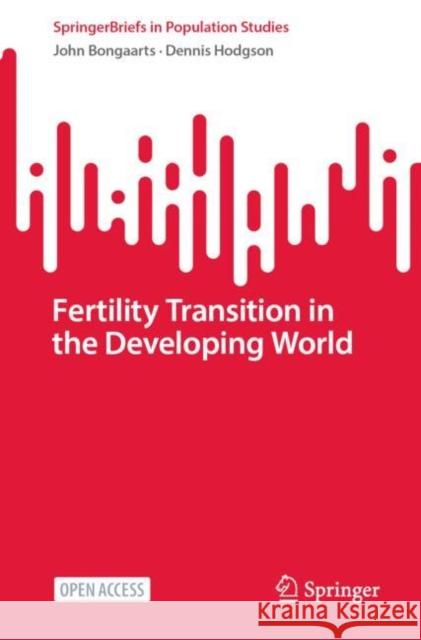
Fertility Transition in the Developing World John Bongaarts, Dennis Hodgson 9783031118395 Springer International Publishing AG - książkaWidoczna okładka, to zdjęcie poglądowe, a rzeczywista szata graficzna może różnić się od prezentowanej.

Fertility Transition in the Developing World

ISBN-13: 9783031118395 / Angielski / Miękka / 2022 / 144 str.

John Bongaarts;Dennis Hodgson
cena 121,01
(netto: 115,25 VAT:  5%)

Najniższa cena z 30 dni: 115,63
Termin realizacji zamówienia:
ok. 22 dni roboczych
Bez gwarancji dostawy przed świętami

Darmowa dostawa!

This open access book provides an overview and analysis of the causes and consequences of the massive and highly consequential transition in reproductive behaviour that occurred in Asia, Latin America, and Africa since the mid-20th century. In the 1950s contraceptive use was rare and women typically spend most of their reproductive years bearing and rearing children. By 2020 fertility and contraceptive use in Asia and Latin America reached levels commonly observed in the developed world. Africa’s fertility is still high, but transitions have started in all countries. This monograph is the first to provide a comprehensive analysis of these trends and their determinants, covering changes in reproductive behaviour (e.g., use of contraception and abortion), preferences (e.g., desire to limit and space births) and the role of socioeconomic development (e.g., education). The role of government policies and in particular family planning programs is discussed in depth. Particular attention is given to provide a balanced assessment of several political and scientific controversies that have beset the field. As such this book provides an interesting read for a wide audience of undergraduate and graduate students, researchers, and public health policy makers.


Kategorie:
Nauka, Socjologia i społeczeństwo
Kategorie BISAC:
Social Science > Ludność i demografia
Political Science > Public Policy - Social Policy
Medical > Zdrowie publiczne
Wydawca:
Springer International Publishing AG
Seria wydawnicza:
SpringerBriefs in Population Studies
Język:
Angielski
ISBN-13:
9783031118395
Rok wydania:
2022
Dostępne języki:
Angielski
Ilość stron:
144
Waga:
0.25 kg
Wymiary:
23.523.5 x 15.5
Oprawa:
Miękka
Dodatkowe informacje:
Wydanie ilustrowane

1. Fertility Trends in the Developing World, 1950-2020
1.1 Background
1.2 Fertility trends
1.3 Analytic Framework for the Determinants of Fertility
1.3.1 Path 1: Conventional Theories
1.3.2 Path 2: Revisionist Theories and Family Planning Programs
1.3.3 Path 3. Coercive Policies.
References
 
2. Country Fertility Transition Patterns
2.1 Introduction
2.2 Data
2.3 Fertility Trends
2.4 Transition Phases
2.4.1 Pre-Transition Fertility
2.4.2 Onset of Transition
2.4.3 Pace of Decline
2.4.4 The End of the Transition
2.4.5 Fertility in 2020
2.4.6 Post-Transitional Fertility
2.5 Stalled Transitions
2.6 Conclusion
References
 
3. Transitions in Individual Reproductive Behavior and Preferences
3.1 Introduction
3.2 Data
3.3 Contraception and its Impact on Fertility
3.3.1 Contraceptive Prevalence Trends
3.3.2 Contraceptive Use and Fertility: Cross-sectional Evidence
3.3.3 Contraceptive Use and Fertility: Longitudinal Evidence
3.4. Abortion and its Impact on Fertility
3.5. Why Contraceptive Use Rises: The Roles of Demand and Implementation.
3.6 The Reproductive Consequences of Imperfect Birth control
Appendix
References
 
4. Socio-economic Determinants of Fertility
4.1 Introduction
4.2 Data
4.3 Which Socio-economic Variable is the Main Driver of Fertility Transitions?
4.4 Education and Fertility Transition Patterns
4.5 Explanations of Anomalies
References
 
5. Controversies Surrounding Fertility Policies
5.1 Introduction
5.2 Controversies During the Pre-transition Phase, 1950-1970
5.2.1 From Transition Theory to Advocacy of Family Planning Programs
5.2.2 The Rise of a Population Control Movement
5.2.3 Fears of Famine, Failure and a Population Bomb
5.3 Controversies During the Rapid Decline Phase, 1970-2000
5.3.1 Controversy at the 1974 UN Conference on Population
5.3.2 Questions of Coercion, Reproductive Health and Reproductive Rights
5.3.3 Does Fertility Decline Promote Development? Do Family Planning Programs Promote Fertility Decline?
5.3.4 Africa and the AIDS Crisis
5.4 Conclusion
References
 
6. Does Fertility Decline Stimulate Development? 
6.1 Introduction
6.2 Age Structure Effects of Declining Fertility
6.3 The Components of Growth in GDP per Capita
6.4 The First Demographic Dividend
6.5 The Second Demographic Dividend
6.6 Multi-sectoral Benefits from Fertility Decline
6.7 Conclusion
References
 
7. The Impact of Voluntary Family Planning Programs on Contraceptive Use, Fertility, and Population 
7.1 Introduction
7.2 Family Planning Programs and Obstacles to the Use of Contraception
7.3 Program Impact on Contraceptive Use
7.3.1 Controlled Experiments
7.3.2 Natural Experiments
7.3.4 Natural Experiments: Adjusted Results
7.3.5 Regressions: program impact on contraceptive use, demand, and implementation
7.4 Program Impact on Fertility
7.4.1 Controlled Experiments
7.4.2 Natural Experiments
7.4.3 Natural Experiments: Adjusted Results
7.4.4  Regressions: Program Impact on Fertility
7.5 Program Impact on Population Trends
7.6 Critics of Family Planning Programs
7.7 Conclusion
References
 
8. The Developing World’s Fertility Transition: 2000-2020
8.1 Introduction
8.2 Characteristics of the Three Fertility Groups
8.3 Characteristics of Geographic Groups 
8.4 The Challenges Facing the Developing World’s High Fertility Population 
8.5 The Challenges Facing the Developing World’s Middle Fertility Population 
8.6 The Challenges Facing the Developing World’s Low Fertility Population 
8.7 Conclusion
References
 
9. Conclusion
9.1 Introduction
9.2 What We Know Now That We Didn’t Know Back in 1950
9.3 The benefits of the fertility transition
9.4 The Global Consequences of Low Fertility

John Bongaarts is a Distinguished Scholar of the Population Council where he has been employed since 1973. He holds a Ph.D. in Biomedical Engineering from the University of Illinois and was a Post-Doctoral Fellow in Population Dynamics at the John’s Hopkins School of Public Health. Bongaarts’ research has focused on a range of population and public health issues, including population projections, determinants of fertility and mortality, the impact of family planning programs and population policy options in both the developed and developing world. He has published over 250 papers, chapters and books. Honors include the Robert J. Lapham Award and the Mindel Sheps Award from the Population Association of America, and the Research Career Development Award from the National Institutes of Health.  He is a member of the U.S. National Academy of Sciences and the Royal Dutch Academy of Sciences and is a Laureate of the International Union for the Scientific Study of Population.

Dennis Hodgson is Emeritus Professor of Sociology at Fairfield University where he taught from 1976 until 2014. He has been on the editorial committee of Population and Development Review from 2010 through 2021. He holds a Ph.D. in Sociology from Cornell University where he was a student in its International Population Program from 1969 until 1976.  Hodgson’s research has focused on understanding the relationship of population trends to the development of population theory and policy.  He has published a number of articles analysing the post-WWII period when most demographers came to see the rapid growth of population in the developing world as a crisis in need of policy intervention.  He has also published articles on the role that population concerns have played at various times in US history, from the 18th century through the early 20th century.


Udostępnij

Facebook - konto krainaksiazek.pl


Opinie o Krainaksiazek.pl na Opineo.pl

Partner Mybenefit

Krainaksiazek.pl w programie rzetelna firma Krainaksiaze.pl - płatności przez paypal

Czytaj nas na:

Facebook - krainaksiazek.pl
  • książki na zamówienie
  • granty
  • książka na prezent
  • kontakt
  • pomoc
  • opinie
  • regulamin
  • polityka prywatności

Zobacz:

  • Księgarnia czeska

  • Wydawnictwo Książkowe Klimaty

1997-2025 DolnySlask.com Agencja Internetowa

© 1997-2022 krainaksiazek.pl
     
KONTAKT | REGULAMIN | POLITYKA PRYWATNOŚCI | USTAWIENIA PRYWATNOŚCI
Zobacz: Księgarnia Czeska | Wydawnictwo Książkowe Klimaty | Mapa strony | Lista autorów
KrainaKsiazek.PL - Księgarnia Internetowa

Polityka prywatnosci - link
Krainaksiazek.pl - płatnośc Przelewy24
Przechowalnia Przechowalnia





