• Wyszukiwanie zaawansowane
  • Kategorie
  • Kategorie BISAC
  • Książki na zamówienie
  • Promocje
  • Granty
  • Książka na prezent
  • Opinie
  • Pomoc
  • Załóż konto
  • Zaloguj się

Faunal Heritage of Rajasthan, India: General Background and Ecology of Vertebrates » książka


zaloguj się | załóż konto
Logo Krainaksiazek.pl

koszyk

konto

szukaj
topmenu
Księgarnia internetowa
Szukaj
Książki na zamówienie
Promocje
Granty
Książka na prezent
Moje konto
Pomoc
 
 
Wyszukiwanie zaawansowane
Pusty koszyk
Bezpłatna dostawa dla zamówień powyżej 20 złBezpłatna dostawa dla zamówień powyżej 20 zł

Kategorie główne

• Nauka
 [2946912]
• Literatura piękna
 [1852311]

  więcej...
• Turystyka
 [71421]
• Informatyka
 [150889]
• Komiksy
 [35717]
• Encyklopedie
 [23177]
• Dziecięca
 [617324]
• Hobby
 [138808]
• AudioBooki
 [1671]
• Literatura faktu
 [228371]
• Muzyka CD
 [400]
• Słowniki
 [2841]
• Inne
 [445428]
• Kalendarze
 [1545]
• Podręczniki
 [166819]
• Poradniki
 [480180]
• Religia
 [510412]
• Czasopisma
 [525]
• Sport
 [61271]
• Sztuka
 [242929]
• CD, DVD, Video
 [3371]
• Technologie
 [219258]
• Zdrowie
 [100961]
• Książkowe Klimaty
 [124]
• Zabawki
 [2341]
• Puzzle, gry
 [3766]
• Literatura w języku ukraińskim
 [255]
• Art. papiernicze i szkolne
 [7810]
Kategorie szczegółowe BISAC

Faunal Heritage of Rajasthan, India: General Background and Ecology of Vertebrates

ISBN-13: 9781493951895 / Angielski / Miękka / 2016 / 645 str.
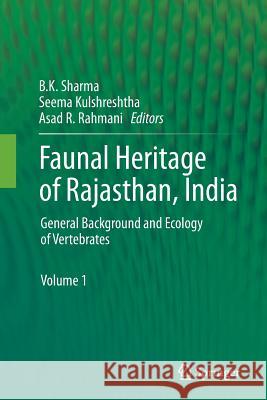
B. K. Sharma; Seema Kulshreshtha; Asad R. Rahmani
Faunal Heritage of Rajasthan, India: General Background and Ecology of Vertebrates Sharma, B. K. 9781493951895 Springer - książkaWidoczna okładka, to zdjęcie poglądowe, a rzeczywista szata graficzna może różnić się od prezentowanej.

Faunal Heritage of Rajasthan, India: General Background and Ecology of Vertebrates

ISBN-13: 9781493951895 / Angielski / Miękka / 2016 / 645 str.

B. K. Sharma; Seema Kulshreshtha; Asad R. Rahmani
cena 805,10
(netto: 766,76 VAT:  5%)

Najniższa cena z 30 dni: 771,08
Termin realizacji zamówienia:
ok. 22 dni roboczych
Bez gwarancji dostawy przed świętami

Darmowa dostawa!

This is the first ever monumental and scientific documentation of the faunal wealth of the Indian Desert state of Rajasthan, covering the species diversity, distribution and conservation status. A scholarly contribution to the field of knowledge, it provides novel and vital information on the vertebrate faunal heritage of India's largest state. Broadly falling under the Indo-Malaya Ecozone, the three major biomes of Rajasthan include Deserts and Xeric Shrublands; Tropical and Sub-tropical Dry Broadleaf Forests and Tropical and Sub-tropical Moist Broadleaf Forests and the ecoregions thus covered are North Western Thorn Scrub Forests and the Thar Desert; Khathiar-Gir Dry Deciduous Forests and the Upper Gangtic Plains Moist Deciduous Forests, respectively. Contrary to popular belief, the well known Thar or Great Indian Desert occupies only a part of the state. Rajasthan is diagonally divided by the Aravalli mountain ranges into arid and semi-arid regions. The later has a spectacular variety of highly diversified and unique yet fragile ecosystems comprising lush green fields, marshes, grasslands, rocky patches and hilly terrains, dense forests, the southern plateau, fresh water wetlands and salt lakes. Apart from the floral richness, there is faunal abundance from fishes to mammals. The flagship and threatened species of Tiger; Leopard; Great Indian Bustard and Lesser Florican; White-Napped Tit; Raptors; Demoiselle and Sarus Crane; Chelones; Bats; Wild Ungulates; Small Cats; Bear; Wolf; Wild Dog; Otter; Uromastyx; Giant Flying Squirrel, Gharial and Gangetic Dolphin have been described in the 45 chapters penned by top notch wildlife experts and academics. Chapters covering fossil records; conservation of biodiversity via the age old 'Public Science of the Desert'; Anthropological Account of Communities and Tribes; socio-cultural, mythological and historical aspects of faunal conservation and the fauna in retrospect; wildlife trade; ecotourism; climate and other environmental factors like Indira Gandhi Nahar Pariyojna (IGNP) believed to have changed the ecological face of Western Rajasthan; Protected Area Network; the tiger re-introduction experiment; and community conservation are key attractions. The world famous heronry, tiger reserves, wildlife sanctuaries and some threat-ridden biodiversity rich areas shall certainly draw the attention of readers from around the world. The last chapter highlighting issues and insights on conservation and management and initiatives and gaps in research will help researchers from India and abroad to identify potential areas of future collaborative work. The strategies suggested herein can be a powerful tool for international conservational advocacy. Supported by rare photographs and paintings, the extensive content has implications for faunal ecology in similar habitats elsewhere on the Earth. Broadly falling under the Indo-Malaya Ecozone, the three major biomes of Rajasthan include Deserts and Xeric Shrublands; Tropical and Sub-tropical Dry Broadleaf Forests and Tropical and Sub-tropical Moist Broadleaf Forests and the ecoregions thus covered are North Western Thorn Scrub Forests and the Thar Desert; Khathiar-Gir Dry Deciduous Forests and the Upper Gangtic Plains Moist Deciduous Forests, respectively. Contrary to popular belief, the well known Thar or Great Indian Desert occupies only a part of the state. Rajasthan is diagonally divided by the Aravalli mountain ranges into arid and semi-arid regions. The later has a spectacular variety of highly diversified and unique yet fragile ecosystems comprising lush green fields, marshes, grasslands, rocky patches and hilly terrains, dense forests, the southern plateau, fresh water wetlands and salt lakes. Apart from the floral richness, there is faunal abundance from fishes to mammals. The flagship and threatened species of Tiger; Leopard; Great Indian Bustard and Lesser Florican; White-Napped Tit; Raptors; Demoiselle and Sarus Crane; Chelones; Bats; Wild Ungulates; Small Cats; Bear; Wolf; Wild Dog; Otter; Uromastyx; Giant Flying Squirrel, Gharial and Gangetic Dolphin have been described in the 45 chapters penned by top notch wildlife experts and academics. Chapters covering fossil records; conservation of biodiversity via the age old 'Public Science of the Desert'; Anthropological Account of Communities and Tribes; socio-cultural, mythological and historical aspects of faunal conservation and the fauna in retrospect; wildlife trade; ecotourism; climate and other environmental factors like Indira Gandhi Nahar Pariyojna (IGNP) believed to have changed the ecological face of Western Rajasthan; Protected Area Network; the tiger re-introduction experiment; and community conservation are key attractions. The world famous heronry, tiger reserves, wildlife sanctuaries and some threat-ridden biodiversity rich areas shall certainly draw the attention of readers from around the world. The last chapter highlighting issues and insights on conservation and management and initiatives and gaps in research will help researchers from India and abroad to identify potential areas of future collaborative work. The strategies suggested herein can be a powerful tool for international conservational advocacy. Supported by rare photographs and paintings, the extensive content has implications for faunal ecology in similar habitats elsewhere on the Earth. Apart from the floral richness, there is faunal abundance from fishes to mammals. The flagship and threatened species of Tiger; Leopard; Great Indian Bustard and Lesser Florican; White-Napped Tit; Raptors; Demoiselle and Sarus Crane; Chelones; Bats; Wild Ungulates; Small Cats; Bear; Wolf; Wild Dog; Otter; Uromastyx; Giant Flying Squirrel, Gharial and Gangetic Dolphin have been described


Kategorie:
Nauka, Biologia i przyroda
Kategorie BISAC:
Nature > Environmental Conservation & Protection - General
Science > Life Sciences - Ecology
Science > Life Sciences - Zoology - Ichthyology & Herpetology
Wydawca:
Springer
Język:
Angielski
ISBN-13:
9781493951895
Rok wydania:
2016
Wydanie:
Softcover Repri
Ilość stron:
645
Wymiary:
23.5 x 15.5
Oprawa:
Miękka
Wolumenów:
01
Dodatkowe informacje:
Glosariusz/słownik
Wydanie ilustrowane

"The compendium is a valuable contribution of lasting value to the ecology of Rajasthan despite its primary focus on vertebrate fauna. ... the book will be enjoyed by zoologists, ecologists, conservationists, wildlife managers, and by many people from outside the State of Rajasthan who will gain useful insights into its natural heritage." (Brij Gopal, International Journal of Ecology and Environmental Sciences, Vol. 41 (1-2), 2015)

Dedication-1.- Dedication-2.- Foreword.- Preface.- Acknowledgements.- Table of Contents.- Contributors.- Part I: Unveiling the Vivacious Rajasthan.- The Majestic Rajasthan: An Introduction.- Physiography and Biological Diversity of Rajasthan.- Historical, Socio-cultural and Mythological Aspects of Faunal Conservation in Rajasthan.- An Anthropological Account of Bonhomie and Opprobrium between Communities and Animals in Rajasthan.- Fossil Records of Rajasthan-. Part II: Faunal Ecology: An Insight-Piscifauna and Herpetofauna.- Ichthyofauna of Rajasthan.- Chelonian Status and Conservation in Rajasthan.- Important species of Lizards in the Thar Desert of Rajasthan.- Natural History Observations on the Indian Spiny-tailed Lizard (Uromastyx hardwickii) in the Thar Desert.- Ophidians of Rajasthan.- Part III: Faunal Ecology: An Insight-Avifauna.- Conservation of Bustards with Special Reference to Great Indian Bustard (Ardeotis nigriceps): The State Bird of Rajasthan.- Distribution, Status and Conservation of Lesser Florican Spheotides indica in Rajasthan.- Status and Distribution of Raptors in Rajasthan.- White-napped Tit Parus nuchalis - A vulnerable Species in Rajasthan.- Part IV: Faunal Ecology: An Insight-The Mammal Conglomerate.- Non-human Primates of Rajasthan.- Status of Tiger in Rajasthan.- Status, Distribution and Conservation of Leopard (Panthera pardus fusca) in Rajasthan.- Small Cats of Rajasthan.- Major Canids of Rajasthan.- The Status and Conservation of Sloth Bears in Rajasthan.- Chiropteran Fauna of Rajasthan-Taxonomy, Distribution and Status.- Non-Volant Small Mammals of Rajasthan.- Squirrels of Rajasthan with special reference to Elliot’s Giant Flying Squirrel Petaurista petaurista philippensis.-Wild Ungulates in Rajasthan.- Appendices.- Glossary.- Further Reading.- Index.- The Book and Its Audience.- About the Editors.

This is the first ever monumental and scientific documentation of the faunal wealth of the Indian Desert state of Rajasthan. This volume, the first of two, provides background on Rajasthan and covers species diversity and distribution of fauna. A scholarly contribution to the field of knowledge, it provides novel and vital information on the vertebrate faunal heritage of India’s largest state.

Broadly falling under the Indo-Malaya Ecozone, the three major biomes of Rajasthan include deserts and xeric shrublands, tropical and subtropical dry broadleaf forests, and tropical and subtropical moist broadleaf forests. The corresponding ecoregions to the above biomes are, respectively, the Thar Desert and northwestern thorn scrub forests, the Khathiar-Gir dry deciduous forests, and the Upper Gangtic Plains moist deciduous forests. Contrary to popular belief, the well-known Thar or Great Indian Desert occupies only a part of the state. Rajasthan is diagonally divided by the Aravalli mountain ranges into arid and semi-arid regions. The latter have a spectacular variety of highly diversified and unique yet fragile ecosystems comprising lush green fields, marshes, grasslands, rocky patches and hilly terrains, dense forests, the southern plateau, fresh water wetlands, and salt lakes.

Apart from the floral richness, there is faunal abundance from fishes to mammals. In this volume, the various flagship and threatened species are described in the 24 chapters penned by top notch wildlife experts and academics. The world famous heronry, tiger reserves, wildlife sanctuaries and some threat-ridden biodiversity rich areas shall certainly draw the attention of readers from around the world.          


Udostępnij

Facebook - konto krainaksiazek.pl


Opinie o Krainaksiazek.pl na Opineo.pl

Partner Mybenefit

Krainaksiazek.pl w programie rzetelna firma Krainaksiaze.pl - płatności przez paypal

Czytaj nas na:

Facebook - krainaksiazek.pl
  • książki na zamówienie
  • granty
  • książka na prezent
  • kontakt
  • pomoc
  • opinie
  • regulamin
  • polityka prywatności

Zobacz:

  • Księgarnia czeska

  • Wydawnictwo Książkowe Klimaty

1997-2025 DolnySlask.com Agencja Internetowa

© 1997-2022 krainaksiazek.pl
     
KONTAKT | REGULAMIN | POLITYKA PRYWATNOŚCI | USTAWIENIA PRYWATNOŚCI
Zobacz: Księgarnia Czeska | Wydawnictwo Książkowe Klimaty | Mapa strony | Lista autorów
KrainaKsiazek.PL - Księgarnia Internetowa

Polityka prywatnosci - link
Krainaksiazek.pl - płatnośc Przelewy24
Przechowalnia Przechowalnia






