• Wyszukiwanie zaawansowane
  • Kategorie
  • Kategorie BISAC
  • Książki na zamówienie
  • Promocje
  • Granty
  • Książka na prezent
  • Opinie
  • Pomoc
  • Załóż konto
  • Zaloguj się

Failed Peacemaking: Counter-Peace and International Order » książka


zaloguj się | załóż konto
Logo Krainaksiazek.pl

koszyk

konto

szukaj
topmenu
Księgarnia internetowa
Szukaj
Książki na zamówienie
Promocje
Granty
Książka na prezent
Moje konto
Pomoc
 
 
Wyszukiwanie zaawansowane
Pusty koszyk
Bezpłatna dostawa dla zamówień powyżej 20 złBezpłatna dostawa dla zamówień powyżej 20 zł

Kategorie główne

• Nauka
 [2952079]
• Literatura piękna
 [1850969]

  więcej...
• Turystyka
 [71058]
• Informatyka
 [151066]
• Komiksy
 [35579]
• Encyklopedie
 [23181]
• Dziecięca
 [620496]
• Hobby
 [139036]
• AudioBooki
 [1646]
• Literatura faktu
 [228729]
• Muzyka CD
 [379]
• Słowniki
 [2932]
• Inne
 [445708]
• Kalendarze
 [1409]
• Podręczniki
 [164793]
• Poradniki
 [480107]
• Religia
 [510956]
• Czasopisma
 [511]
• Sport
 [61267]
• Sztuka
 [243299]
• CD, DVD, Video
 [3411]
• Technologie
 [219640]
• Zdrowie
 [100984]
• Książkowe Klimaty
 [124]
• Zabawki
 [2281]
• Puzzle, gry
 [3363]
• Literatura w języku ukraińskim
 [258]
• Art. papiernicze i szkolne
 [8020]
Kategorie szczegółowe BISAC

Failed Peacemaking: Counter-Peace and International Order

ISBN-13: 9783031300806 / Angielski
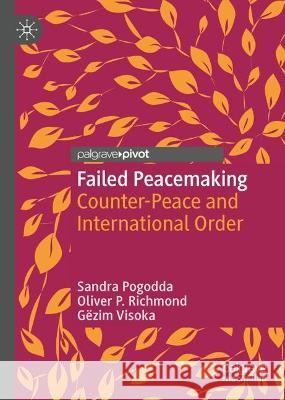
Sandra Pogodda; Oliver P. Richmond; Gëzim Visoka
Failed Peacemaking: Counter-Peace and International Order Sandra Pogodda Oliver P G?zim Visoka 9783031300806 Palgrave MacMillan - książkaWidoczna okładka, to zdjęcie poglądowe, a rzeczywista szata graficzna może różnić się od prezentowanej.

Failed Peacemaking: Counter-Peace and International Order

ISBN-13: 9783031300806 / Angielski

Sandra Pogodda; Oliver P. Richmond; Gëzim Visoka
cena 201,24
(netto: 191,66 VAT:  5%)

Najniższa cena z 30 dni: 173,46
Termin realizacji zamówienia:
ok. 22 dni roboczych.

Darmowa dostawa!

This book investigates why peace and reform processes across the world have recently been stagnating or have become blocked. They have failed to maintain security, rights, development, and justice in the liberal international order. The book identifies the related rise of counter-peace processes at the heart of failed peacemaking efforts, and explores the implications for an emerging multi-polar order where local and international tools for peace and reform appear to be ineffective. Across a range of recent cases, from Cambodia, the Balkans, the Sahel region, DRC, Colombia, Afghanistan, and many others, such dynamics are becoming clearer. In particular, small-scale blocking tactics across different peace processes have been evolving into larger political strategies which are then disseminated within revisionist and revanchist international networks. Ultimately, this phenomenon has undermined liberal international order.Spoilers and tactical blockages to peace have connected across local, national, regional and international scales, highlighting ideological divisions. Drawing on counter-revolutionary theory, the concept of counter-peace is used as a tool to critically interrogate a systemic array of blockages to peace. Distinct counter-peace patterns are now entangled in peace and reform processes, including  the stalemate pattern, the limited counter-peace, and the unmitigated counter-peace patterns. Across cases, once tactical blockages begin to form these patterns, they become systemic and ultimately enable conflict escalation. Consequently, the intimate entanglement of the existing international peace architecture with counter-peace processes points to ideological divisions in international order, as well as the growing gulf between diminished practices of peace and reform with critical scholarship on peace, justice, and sustainability.


This book investigates why peace and reform processes across the world have recently been stagnating or have become blocked. They have failed to maintain security, rights, development, and justice in the liberal international order. The book identifies the related rise of counter-peace processes at the heart of failed peacemaking efforts, and explores the implications for an emerging multi-polar order where local and international tools for peace and reform appear to be ineffective. Across a range of recent cases, from Cambodia, the Balkans, the Sahel region, DRC, Colombia, Afghanistan, and many others, such dynamics are becoming clearer. In particular, small-scale blocking tactics across different peace processes have been evolving into larger political strategies which are then disseminated within revisionist and revanchist international networks. Ultimately, this phenomenon has undermined liberal international order.Spoilers and tactical blockages to peace have connected across local, national, regional and international scales, highlighting ideological divisions. Drawing on counter-revolutionary theory, the concept of counter-peace is used as a tool to critically interrogate a systemic array of blockages to peace. Distinct counter-peace patterns are now entangled in peace and reform processes, including  the stalemate pattern, the limited counter-peace, and the unmitigated counter-peace patterns. Across cases, once tactical blockages begin to form these patterns, they become systemic and ultimately enable conflict escalation. Consequently, the intimate entanglement of the existing international peace architecture with counter-peace processes points to ideological divisions in international order, as well as the growing gulf between diminished practices of peace and reform with critical scholarship on peace, justice, and sustainability.

Kategorie:
Nauka, Polityka
Kategorie BISAC:
Political Science > International Relations - General
Political Science > Security (National & International)
Political Science > Peace
Wydawca:
Palgrave MacMillan
Seria wydawnicza:
Rethinking Peace and Conflict Studies
Język:
Angielski
ISBN-13:
9783031300806

1. Introduction.- 2. Conceptualising the Counter-Peace.- 3. Locating the Counter-Peace.- 4. Stalemate Pattern.- 5. Limited Peace Pattern.- 6. Unmitigated Counter-Peace.- 7. The Rise of Counter-Peace on the International Stage.- 8. Transitions in International Order and the Tools of Peacemaking: Back to the Future?.- 9. On Entanglement and the Impact on International Order.- 10. Conclusion.

Sandra Pogodda is Lecturer in Peace and Conflict Studies at the Department of Politics, University of Manchester, UK.

Oliver P. Richmond is Research Professor at the Department of Politics, University of Manchester, UK. He is also International Professor at Dublin City University, Ireland, and Distinguished Visiting Professor at EWHA University, Seoul, Korea.

Gëzim Visoka is Associate Professor of Peace and Conflict Studies at the School of Law and Government, Dublin City University, Ireland.

This book investigates why peace and reform processes across the world have recently been stagnating or have become blocked. They have failed to maintain security, rights, development, and justice in the liberal international order. The book identifies the related rise of counter-peace processes at the heart of failed peacemaking efforts, and explores the implications for an emerging multi-polar order where local and international tools for peace and reform appear to be ineffective. Across a range of recent cases, from Cambodia, the Balkans, the Sahel region, DRC, Colombia, Afghanistan, and many others, such dynamics are becoming clearer. In particular, small-scale blocking tactics across different peace processes have been evolving into larger political strategies which are then disseminated within revisionist and revanchist international networks. Ultimately, this phenomenon has undermined liberal international order.

Spoilers and tactical blockages to peace have connected across local, national, regional and international scales, highlighting ideological divisions. Drawing on counter-revolutionary theory, the concept of counter-peace is used as a tool to critically interrogate a systemic array of blockages to peace. Distinct counter-peace patterns are now entangled in peace and reform processes, including  the stalemate pattern, the limited counter-peace, and the unmitigated counter-peace patterns. Across cases, once tactical blockages begin to form these patterns, they become systemic and ultimately enable conflict escalation. Consequently, the intimate entanglement of the existing international peace architecture with counter-peace processes points to ideological divisions in international order, as well as the growing gulf between diminished practices of peace and reform with critical scholarship on peace, justice, and sustainability.

Sandra Pogodda is Lecturer in Peace and Conflict Studies at the Department of Politics, University of Manchester, UK.

Oliver P. Richmond is Research Professor at the Department of Politics, University of Manchester, UK. He is also International Professor at Dublin City University, Ireland, and Distinguished Visiting Professor at EWHA University, Seoul, Korea.

Gëzim Visoka is Associate Professor of Peace and Conflict Studies at the School of Law and Government, Dublin City University, Ireland.


Udostępnij

Facebook - konto krainaksiazek.pl


Opinie o Krainaksiazek.pl na Opineo.pl

Partner Mybenefit

Krainaksiazek.pl w programie rzetelna firma Krainaksiaze.pl - płatności przez paypal

Czytaj nas na:

Facebook - krainaksiazek.pl
  • książki na zamówienie
  • granty
  • książka na prezent
  • kontakt
  • pomoc
  • opinie
  • regulamin
  • polityka prywatności

Zobacz:

  • Księgarnia czeska

  • Wydawnictwo Książkowe Klimaty

1997-2026 DolnySlask.com Agencja Internetowa

© 1997-2022 krainaksiazek.pl
     
KONTAKT | REGULAMIN | POLITYKA PRYWATNOŚCI | USTAWIENIA PRYWATNOŚCI
Zobacz: Księgarnia Czeska | Wydawnictwo Książkowe Klimaty | Mapa strony | Lista autorów
KrainaKsiazek.PL - Księgarnia Internetowa

Polityka prywatnosci - link
Krainaksiazek.pl - płatnośc Przelewy24
Przechowalnia Przechowalnia



