• Wyszukiwanie zaawansowane
  • Kategorie
  • Kategorie BISAC
  • Książki na zamówienie
  • Promocje
  • Granty
  • Książka na prezent
  • Opinie
  • Pomoc
  • Załóż konto
  • Zaloguj się

Eyestrain Reduction in Stereoscopy » książka


zaloguj się | załóż konto
Logo Krainaksiazek.pl

koszyk

konto

szukaj
topmenu
Księgarnia internetowa
Szukaj
Książki na zamówienie
Promocje
Granty
Książka na prezent
Moje konto
Pomoc
 
 
Wyszukiwanie zaawansowane
Pusty koszyk
Bezpłatna dostawa dla zamówień powyżej 20 złBezpłatna dostawa dla zamówień powyżej 20 zł

Kategorie główne

• Nauka
 [2946912]
• Literatura piękna
 [1852311]

  więcej...
• Turystyka
 [71421]
• Informatyka
 [150889]
• Komiksy
 [35717]
• Encyklopedie
 [23177]
• Dziecięca
 [617324]
• Hobby
 [138808]
• AudioBooki
 [1671]
• Literatura faktu
 [228371]
• Muzyka CD
 [400]
• Słowniki
 [2841]
• Inne
 [445428]
• Kalendarze
 [1545]
• Podręczniki
 [166819]
• Poradniki
 [480180]
• Religia
 [510412]
• Czasopisma
 [525]
• Sport
 [61271]
• Sztuka
 [242929]
• CD, DVD, Video
 [3371]
• Technologie
 [219258]
• Zdrowie
 [100961]
• Książkowe Klimaty
 [124]
• Zabawki
 [2341]
• Puzzle, gry
 [3766]
• Literatura w języku ukraińskim
 [255]
• Art. papiernicze i szkolne
 [7810]
Kategorie szczegółowe BISAC

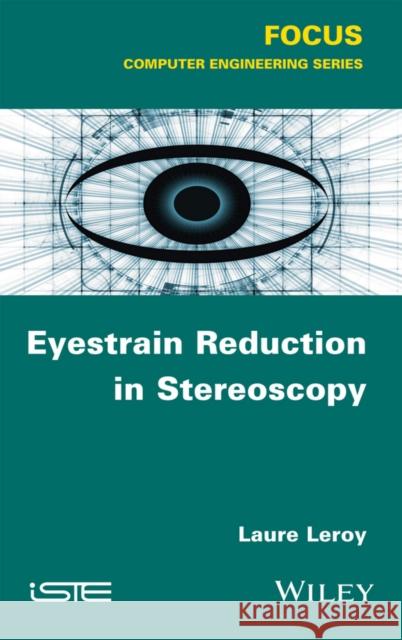
Eyestrain Reduction in Stereoscopy

ISBN-13: 9781848219984 / Angielski / Twarda / 2016 / 190 str.
Laure Leroy
Eyestrain Reduction in Stereoscopy Laure Leroy 9781848219984 Wiley-Iste - książkaWidoczna okładka, to zdjęcie poglądowe, a rzeczywista szata graficzna może różnić się od prezentowanej.

Eyestrain Reduction in Stereoscopy

ISBN-13: 9781848219984 / Angielski / Twarda / 2016 / 190 str.

Laure Leroy
cena 709,07
(netto: 675,30 VAT:  5%)

Najniższa cena z 30 dni: 706,15
Termin realizacji zamówienia:
ok. 30 dni roboczych
Dostawa w 2026 r.

Darmowa dostawa!

Stereoscopic processes are increasingly used in virtual reality and entertainment. This technology is interesting because it allows for a quick immersion of the user, especially in terms of depth perception and relief clues. However, these processes tend to cause stress on the visual system if used over a prolonged period of time, leading some to question the cause of side effects that these systems generate in their users, such as eye fatigue. This book explores the mechanisms of depth perception with and without stereoscopy and discusses the indices which are involved in the depth perception. The author describes the techniques used to capture and retransmit stereoscopic images. The causes of eyestrain related to these images are then presented along with their consequences in the long and short term. The study of the causes of eyestrain forms the basis for an improvement in these processes in the hopes of developing mechanisms for easier virtual viewing.


Kategorie:
Informatyka
Kategorie BISAC:
Computers > Artificial Intelligence - Computer Vision & Pattern Recognition
Medical > Okulistyka
Wydawca:
Wiley-Iste
Język:
Angielski
ISBN-13:
9781848219984
Rok wydania:
2016
Ilość stron:
190
Waga:
0.44 kg
Wymiary:
23.9 x 16.6 x 1.6
Oprawa:
Twarda
Wolumenów:
01
Dodatkowe informacje:
Bibliografia

Acknowledgments ix

Introduction xi

Chapter 1. Principles of Depth and Shape Perception 1

1.1. Function of the eye 1

1.2. Depth perception without stereoscopy 2

1.2.1. Monocular cues 2

1.2.2. Proprioceptive cues 7

1.3. Depth perception through stereoscopic vision 9

1.4. Perception of inclinations and curves 10

1.4.1. Perception of inclination and obliqueness 10

1.4.2. Perception of curves 14

1.5. Artificial stereoscopic vision 22

Chapter 2. Technological Elements 25

2.1. Taking a picture 25

2.2. Reproduction 26

2.2.1. Colorimetric differentiation 27

2.2.2. Differentiation by polarization 28

2.2.3. Active glasses 30

2.2.4. Auto–stereoscopic screens 31

2.2.5. Virtual reality headsets 33

2.3. Motion parallax restitution 34

2.3.1. Pseudoscopic movement 34

2.3.2. Correcting pseudoscopic movements 35

2.3.3. Monoscopic motion parallax 40

Chapter 3. Causes of Visual Fatigue in Stereoscopic Vision 41

3.1. Conflict between accommodation and convergence 41

3.2. Too much depth 44

3.3. High spatial frequencies 46

3.3.1. Limits of fusion 49

3.3.2. Comfort and high frequencies. 50

3.4. High temporal frequency 52

3.5. Conflicts with monoscopic cues 52

3.6. Vertical disparities 53

3.7. Improper device settings 55

3.7.1. Quality of image and display 55

3.7.2. Differences between left and right images 56

3.7.3. Speed of correction of pseudoscopic movements 57

Chapter 4. Short– and Long–term Consequences 59

4.1. Short–term effects 59

4.1.1. Decreasing ease of accommodation 59

4.1.2. Decrease in stereoscopic acuity 59

4.1.3. Effects on the punctum proximum 61

4.1.4. More subjective effects 61

4.2. Long–term consequences 62

4.2.1. Long–term effects on children 62

Chapter 5. Measuring Visual Fatigue 63

5.1. Visual acuity 63

5.1.1. Different possible measurements 64

5.1.2. Optotypes 64

5.2. Proximum accommodation function 65

5.3. Ease of accommodation 66

5.4. Stereoscopic acuity 67

5.4.1. Tests of distance vision 67

5.4.2. Tests of near vision 68

5.5. Disassociated heterophorias 71

5.6. Fusional reserves 72

5.7. Subjective tests 74

Chapter 6. Reducing Spatial Frequencies 75

6.1. Principle 75

6.2. Technical solution 75

6.2.1. Wavelets 76

6.2.2. BOX FILTER 92

6.2.3. Using a rolling average and other blurs 98

6.2.4. Comparison of algorithms 103

6.2.5. Chosen solution 114

6.3. Experiment 116

6.3.1. The task 116

6.4. Measurements of fatigue taken 118

6.4.1. Objective measurements 118

6.4.2. Procedure 119

6.4.3. The subjects 120

6.5. Result 120

6.5.1. Proximum accommodation function 120

6.5.2. Ease of accommodation 121

6.5.3. Stereoscopic acuity 122

6.5.4. Effectiveness in execution of the task 122

6.5.5. Subjective measurements 123

6.5.6. Conclusions 124

6.5.7. Discussion 124

Chapter 7. Reducing the Distance Between the Virtual Cameras 131

7.1. Principle 131

7.1.1. Usefulness of stereoscopy in depth perception 132

7.1.2. The objects 133

7.1.3. Hypothesis 142

7.2. Experiment 142

7.2.1. Tasks 142

7.2.2. Experimental conditions 143

7.2.3. Subjects 144

7.2.4. Measurements 144

7.3. Results 145

7.3.1. Results for fatigue 145

7.3.2. Perception results 147

7.4. Discussion 152

7.4.1. Influence on visual fatigue 152

7.4.2. Influence on visual perception 153

Conclusion 155

Bibliography 157

Index 167

Laure Leroy is Associate Professor at the University of Paris 8 in France. Her research focuses on virtual reality systems.


Udostępnij

Facebook - konto krainaksiazek.pl


Opinie o Krainaksiazek.pl na Opineo.pl

Partner Mybenefit

Krainaksiazek.pl w programie rzetelna firma Krainaksiaze.pl - płatności przez paypal

Czytaj nas na:

Facebook - krainaksiazek.pl
  • książki na zamówienie
  • granty
  • książka na prezent
  • kontakt
  • pomoc
  • opinie
  • regulamin
  • polityka prywatności

Zobacz:

  • Księgarnia czeska

  • Wydawnictwo Książkowe Klimaty

1997-2025 DolnySlask.com Agencja Internetowa

© 1997-2022 krainaksiazek.pl
     
KONTAKT | REGULAMIN | POLITYKA PRYWATNOŚCI | USTAWIENIA PRYWATNOŚCI
Zobacz: Księgarnia Czeska | Wydawnictwo Książkowe Klimaty | Mapa strony | Lista autorów
KrainaKsiazek.PL - Księgarnia Internetowa

Polityka prywatnosci - link
Krainaksiazek.pl - płatnośc Przelewy24
Przechowalnia Przechowalnia






