Eyes Wide OPEN » książka





Eyes Wide OPEN
ISBN-13: 9781847471147 / Angielski / Miękka / 2007 / 84 str.
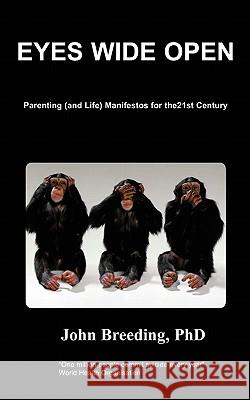
"Parenting (and Life) Manifestoes for the 21st Century"
By John Breeding
ISBN: 9781847471147
Published: 2007
Pages: 80
Key Themes: anti-psychiatry, empowerment, mental health services, North American author
Description
This book addresses the vulnerability of human life. It looks at how early life experiences can affect people psychologically. It is extremely informative.
About the Author
Prof. John Breeding is a father of two from Texas, USA, he was born in 1952. He is a psychology professor who became aware of the problem of modern psychiatry whilst working in mental health services. He always intended to become a Catholic priest until his teens, this would account for the 'spiritual' aspect of his thinking. He is extremely active in campaigning on the negative effects that prescribed medication can have on youngsters in the US.
Book Extract
"A Second Manifesto for the 21st Century
A full three decades ago, I learned something in my class on infant psychology at a major university.
The professor was great-ardent and intelligent, trained at the University of Minnesota Child Development Center, one of the most prestigious university spots in the academic world of child development. He was actively involved in researching infant life and experience. I learned that newborns could not focus their eyes for a while after birth, a couple of days more or less. I accepted this along with all kinds of other valuable information in my quest to understand life, my life in particular.
That was 1974. Twelve years later, on August 31, 1986, I learned that my newborn son was intensely focused immediately upon entry from his mother's womb into the world of air-eyes wide open, intense, and appearing angry after a very difficult struggle to get his big head through mother's cervix. I, too, was wide open after one of the most awesome peak experiences of my life.
Eighteen years later, in 2004, I met one of my teachers for the first time, and heard a sentence that gave me a clear way to think about this business of focusing infants and other "things I learned at school."
Thomas Szasz is the finest master of language and logic that I have met, particularly excelling in the art of creating aphorisms-short, pithy statements of truth. This day I listened to him speak on his chosen vocation, articulating the truth about psychiatry and our so-called mental health system. Dr. Szasz quoted American humorist Josh Billings' quip that, "The problem is not that people don't know anything, it's that they know so many things that ain't so " (I have later learned from Leonard Roy Frank, editor of Random House Webster's Quotationary, that this aphorism more likely came from Artemus Ward, who said that, "It's not so much what folks don't know that causes problems, it's what they do know that ain't so.")
This essay is an effort to answer the question of how people know so much that ain't so, and live in denial about what is. It is also a sequel to my first manifesto, written three years ago as a chapter in my book, True Nature and Great Misunderstandings, titled "A 21 st Century Manifesto for Parenting."
Parenting (and Life) Manifestoes for the 21st Century
By John BreedingISBN: 9781847471147
Published: 2007
Pages: 80
Key Themes: anti-psychiatry, empowerment, mental health services, North American authorDescriptionThis book addresses the vulnerability of human life. It looks at how early life experiences can affect people psychologically. It is extremely informative.About the AuthorProf. John Breeding is a father of two from Texas, USA, he was born in 1952. He is a psychology professor who became aware of the problem of modern psychiatry whilst working in mental health services. He always intended to become a Catholic priest until his teens, this would account for the spiritual aspect of his thinking. He is extremely active in campaigning on the negative effects that prescribed medication can have on youngsters in the US. Book ExtractA Second Manifesto for the 21st Century A full three decades ago, I learned something in my class on infant psychology at a major university. The professor was great-ardent and intelligent, trained at the University of Minnesota Child Development Center, one of the most prestigious university spots in the academic world of child development. He was actively involved in researching infant life and experience. I learned that newborns could not focus their eyes for a while after birth, a couple of days more or less. I accepted this along with all kinds of other valuable information in my quest to understand life, my life in particular. That was 1974. Twelve years later, on August 31, 1986, I learned that my newborn son was intensely focused immediately upon entry from his mothers womb into the world of air-eyes wide open, intense, and appearing angry after a very difficult struggle to get his big head through mothers cervix. I, too, was wide open after one of the most awesome peak experiences of my life. Eighteen years later, in 2004, I met one of my teachers for the first time, and heard a sentence that gave me a clear way to think about this business of focusing infants and other "things I learned at school." Thomas Szasz is the finest master of language and logic that I have met, particularly excelling in the art of creating aphorisms-short, pithy statements of truth. This day I listened to him speak on his chosen vocation, articulating the truth about psychiatry and our so-called mental health system. Dr. Szasz quoted American humorist Josh Billings quip that, "The problem is not that people dont know anything, its that they know so many things that aint so!" (I have later learned from Leonard Roy Frank, editor of Random House Websters Quotationary, that this aphorism more likely came from Artemus Ward, who said that, "Its not so much what folks dont know that causes problems, its what they do know that aint so.") This essay is an effort to answer the question of how people know so much that aint so, and live in denial about what is. It is also a sequel to my first manifesto, written three years ago as a chapter in my book, True Nature and Great Misunderstandings, titled "A 21 st Century Manifesto for Parenting."




Czytaj nas na:
KrainaKsiazek.PL - Księgarnia Internetowa


