• Wyszukiwanie zaawansowane
  • Kategorie
  • Kategorie BISAC
  • Książki na zamówienie
  • Promocje
  • Granty
  • Książka na prezent
  • Opinie
  • Pomoc
  • Załóż konto
  • Zaloguj się

Extraction Techniques in Analytical Sciences » książka


zaloguj się | załóż konto
Logo Krainaksiazek.pl

koszyk

konto

szukaj
topmenu
Księgarnia internetowa
Szukaj
Książki na zamówienie
Promocje
Granty
Książka na prezent
Moje konto
Pomoc
 
 
Wyszukiwanie zaawansowane
Pusty koszyk
Bezpłatna dostawa dla zamówień powyżej 20 złBezpłatna dostawa dla zamówień powyżej 20 zł

Kategorie główne

• Nauka
 [2946912]
• Literatura piękna
 [1852311]

  więcej...
• Turystyka
 [71421]
• Informatyka
 [150889]
• Komiksy
 [35717]
• Encyklopedie
 [23177]
• Dziecięca
 [617324]
• Hobby
 [138808]
• AudioBooki
 [1671]
• Literatura faktu
 [228371]
• Muzyka CD
 [400]
• Słowniki
 [2841]
• Inne
 [445428]
• Kalendarze
 [1545]
• Podręczniki
 [166819]
• Poradniki
 [480180]
• Religia
 [510412]
• Czasopisma
 [525]
• Sport
 [61271]
• Sztuka
 [242929]
• CD, DVD, Video
 [3371]
• Technologie
 [219258]
• Zdrowie
 [100961]
• Książkowe Klimaty
 [124]
• Zabawki
 [2341]
• Puzzle, gry
 [3766]
• Literatura w języku ukraińskim
 [255]
• Art. papiernicze i szkolne
 [7810]
Kategorie szczegółowe BISAC

Extraction Techniques in Analytical Sciences

ISBN-13: 9780470772850 / Angielski / Twarda / 2010 / 308 str.
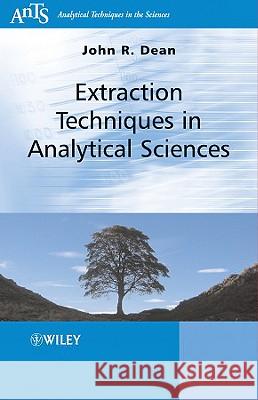
John A. Dean
Extraction Techniques in Analytical Sciences John A. Dean 9780470772850 John Wiley & Sons - książkaWidoczna okładka, to zdjęcie poglądowe, a rzeczywista szata graficzna może różnić się od prezentowanej.

Extraction Techniques in Analytical Sciences

ISBN-13: 9780470772850 / Angielski / Twarda / 2010 / 308 str.

John A. Dean
cena 722,07
(netto: 687,69 VAT:  5%)

Najniższa cena z 30 dni: 719,10
Termin realizacji zamówienia:
ok. 30 dni roboczych
Bez gwarancji dostawy przed świętami

Darmowa dostawa!
inne wydania

This book covers one of the most important areas in analytical sciences, i.e. that of extraction techniques for organic compounds in environmental and related matrices, e.g. food. This text discusses all of the key stages for analysing a sample for organic compounds from the initial sampling protocols through to the range of different extraction techniques used for solid, liquid and air samples and finally through to the final chromatographic analysis. The text provides detailed information on specific extraction techniques to prepare samples for organic compound analysis. The topics covered include the following:

  • Initial steps for solid, aqueous and air sampling.
  • Extraction techniques for aqueous samples, including LLE, purge and trap, SPE, SPME, SBSE, SDME, membrane microextraction and MEPS.
  • Extraction techniques for solid samples, including Soxhlet, "Soxtec," shake-flask, sonication, PFE, MAE, SFE and MSPD.
  • Extraction techniques for air sampling, including whole air, enrichment approaches and desorption techniques.
  • Pre-concentration approaches for post-extraction.
  • Practical aspects for chromatographic analysis (GC and HPLC) of organic compounds.
  • Quality assurance aspects of analysis.
  • Health and safety considerations.
Key features include the following:
  • Up-to-date information on the latest development in extraction techniques for organic compounds in environmental and food matrices.
  • Written in the AnTS style, it is ideal for use as a self-study guide, as the basis of a taught course or guided reading for new "early-career" researchers.
  • Includes a resources section to guide the reader to other sources of information.
Extraction Techniques in Analytical Sciences should prove invaluable to students who are studying university-level courses - "undergraduate- to postgraduate-taught." The text will also prove invaluable as a key starting point for individuals undertaking applied research in the fields of analytical, bioanalytical, environmental and food sciences. The Analytical Techniques in the Sciences series of books provides coverage of all of the major analytical techniques and their application in the most important areas of physical, life and material sciences. Each text is presented in an open learning/distance learning style, in which the learning objectives are clearly identified. The reader's understanding of the material is constantly evaluated by the use of self-assessment and discussion questions. Series Editor: David J. Ando

Kategorie:
Technologie
Kategorie BISAC:
Technology & Engineering > Materials Science - General
Technology & Engineering > Environmental - General
Science > Chemia - Organiczna
Wydawca:
John Wiley & Sons
Seria wydawnicza:
Analytical Techniques in the Sciences (Ants) *
Język:
Angielski
ISBN-13:
9780470772850
Rok wydania:
2010
Numer serii:
000318993
Ilość stron:
308
Waga:
0.57 kg
Wymiary:
23.9 x 16.2 x 2.2
Oprawa:
Twarda
Wolumenów:
01
Dodatkowe informacje:
Bibliografia
Glosariusz/słownik
Wydanie ilustrowane

Series Preface.

Preface.

Acknowledgements.

Acronyms, Abbreviations and Symbols.

About the Author.

1 Pre– and Post–Extraction Considerations.

1.1 Introduction.

1.2 Organic Compounds of Interest.

1.3 Pre–Sampling Issues.

1.4 Sampling Strategies: Solid, Aqueous and Air Samples.

1.5 An Introduction to Practical Chromatographic Analysis.

1.6 Quality Assurance Aspects.

1.7 Health and Safety Considerations.

References.

AQUEOUS SAMPLES.

2 Classical Approaches for Aqueous Extraction.

2.1 Introduction.

2.2 Liquid Liquid Extraction.

2.3 Purge and Trap for Volatile Organics in Aqueous Samples.

References.

3 Solid Phase Extraction.

3.1 Introduction.

3.2 Types of SPE Media (Sorbent).

3.3 SPE Formats and Apparatus.

3.4 Method of SPE Operation.

3.5 Solvent Selection.

3.6 Factors Affecting SPE.

3.7 Selected Methods of Analysis for SPE.

3.8 Automation and On–Line SPE.

References.

4 Solid Phase Microextraction.

4.1 Introduction.

4.2 Theoretical Considerations.

4.3 Experimental.

4.4 Methods of Analysis: SPME GC.

4.5 Methods of Analysis: SPME HPLC MS.

4.6 Automation of SPME.

References.

5 New Developments in Microextraction.

5.1 Introduction.

5.2 Stir–Bar Sorptive Extraction (SBSE).

5.3 Liquid–Phase Microextraction.

5.4 Membrane Microextraction.

5.5 Microextraction in a Packed Syringe (MEPS).

References.

SOLID SAMPLES.

6 Classical Approaches for Solid Liquid Extraction.

6.1 Introduction.

6.2 Soxhlet Extraction.

6.3 Automated Soxhlet Extraction or Soxtec .

6.4 Other Approaches for Solid Liquid Extraction.

References.

7 Pressurized Fluid Extraction.

7.1 Introduction.

7.2 Theoretical Considerations Relating to the Extraction Process.

7.3 Instrumentation for PFE.

7.4 Method Development for PFE.

7.5 Applications of PFE.

7.6 Comparative Studies.

7.7 Miscellaneous.

References.

8 Microwave–Assisted Extraction.

8.1 Introduction.

8.2 Instrumentation.

8.3 Applications of MAE.

References.

9 Matrix Solid Phase Dispersion.

9.1 Introduction.

9.2 Issues on the Comparison of MSPD and SPE.

9.3 A Review of Selected Applications.

References.

10 Supercritical Fluid Extraction.

10.1 Introduction.

10.2 Instrumentation for SFE.

10.3 Applications of SFE.

10.4 Selection of SFE Operating Parameters.

References.

GASEOUS SAMPLES.

11 Air Sampling.

11.1 Introduction.

11.2 Techniques Used for Air Sampling.

References.

COMPARISON OF EXTRACTION METHODS.

12 Comparison of Extraction Methods.

12.1 Introduction.

12.2 Role of Certified Reference Materials.

12.3 Comparison of Extraction Techniques for (Semi)–Solid Samples.

12.4 Comparison of Extraction Techniques for Liquid Samples.

12.5 Comparison of Extraction Techniques for Air Sampling.

References.

RESOURCES.

13 Resources for Extraction Techniques.

13.1 Introduction.

13.2 Role of Worldwide Web.

Responses to Self–Assessment Questions.

Glossary of Terms.

SI Units and Physical Constants.

Periodic Table.

General Index.

Application Index.

John R. Dean took his first degree in Chemistry at the University of Manchester Institute of Science and Technology (UMIST), followed by an M.Sc. in Analytical Chemistry and Instrumentation at Loughborough University of Technology, and finally a Ph.D. and D.I.C. in Physical Chemistry at the Imperial College of Science and Technology (University of London). He then spent two years as a postdoctoral research fellow at the Food Science Laboratory of the Ministry of Agriculture, Fisheries and Food in Norwich, in conjunction with the Polytechnic of the South West in Plymouth (now the University of Plymouth). His work there was focused on the development of directly coupled high performance liquid chromatography and inductively coupled plasma mass spectrometry methods for trace element speciation in foodstuffs. This was followed by a temporary lectureship in Inorganic Chemistry at Huddersfield Polytechnic (now the University of Huddersfield). In 1988, he was appointed to a lectureship in Inorganic/Analytical Chemistry at Newcastle Polytechnic (now Northumbria University). This was followed by promotion to Senior Lecturer (1990), Reader (1994), Principal Lecturer (1998) and Associate Dean (Research) (2004). He was also awarded a personal chair in 2004. In 2008 he became the Director of The Graduate School at Northumbria University as well as Professor of Analytical and Environmental Sciences in the School of Applied Sciences.

In 1998, he was awarded a D.Sc. (University of London) in Analytical and Environmental Science and was the recipient of the 23rd Society for Analytical Chemistry (SAC) Silver Medal in 1995. He has published extensively in analytical and environmental science. He is an active member of The Royal Society of Chemistry (RSC) Analytical Division, having served as a member of the Atomic Spectroscopy Group for 15 years (10 as Honorary Secretary) as well as a Past Chairman (1997 1999). He has served on the RSC Analytical Division Council for three terms and is a former Vice–President (2002 2004), as well as a past–Chairman of the North–East Region of the RSC (2001 2003).

This book covers one of the most important areas in analytical sciences, i.e. that of extraction techniques for organic compounds in environmental and related matrices, e.g. food. This text discusses all of the key stages for analysing a sample for organic compounds from the initial sampling protocols through to the range of different extraction techniques used for solid, liquid and air samples and finally through to the final chromatographic analysis. The text provides detailed information on specific extraction techniques to prepare samples for organic compound analysis.

The topics covered include the following:

  • Initial steps for solid, aqueous and air sampling.
  • Extraction techniques for aqueous samples, including LLE, purge and trap, SPE, SPME, SBSE, SDME, membrane microextraction and MEPS.
  • Extraction techniques for solid samples, including Soxhlet, "Soxtec", shake–flask, sonication, PFE, MAE, SFE and MSPD.
  • Extraction techniques for air sampling, including whole air, enrichment approaches and desorption techniques.
  • Pre–concentration approaches for post–extraction.
  • Practical aspects for chromatographic analysis (GC and HPLC) of organic compounds.
  • Quality assurance aspects of analysis.
  • Health and safety considerations.

Key features include the following:

  • Up–to–date information on the latest development in extraction techniques for organic compounds in environmental and food matrices.
  • Written in the AnTS style, it is ideal for use as a self–study guide, as the basis of a taught course or guided reading for new "early–career" researchers.
  • Includes a resources section to guide the reader to other sources of information.

Extraction Techniques in Analytical Sciences should prove invaluable to students who are studying university–level courses "undergraduate– to postgraduate–taught". The text will also prove invaluable as a key starting point for individuals undertaking applied research in the fields of analytical, bioanalytical, environmental and food sciences.

The Analytical Techniques in the Sciences series of books provides coverage of all of the major analytical techniques and their application in the most important areas of physical, life and material sciences. Each text is presented in an open learning/distance learning style, in which the learning objectives are clearly identified. The reader′s understanding of the material is constantly evaluated by the use of self–assessment and discussion questions. Series Editor: David J. Ando

Dean, John A. John A. Dean is professor emeritus of chemistry at... więcej >


Udostępnij

Facebook - konto krainaksiazek.pl


Opinie o Krainaksiazek.pl na Opineo.pl

Partner Mybenefit

Krainaksiazek.pl w programie rzetelna firma Krainaksiaze.pl - płatności przez paypal

Czytaj nas na:

Facebook - krainaksiazek.pl
  • książki na zamówienie
  • granty
  • książka na prezent
  • kontakt
  • pomoc
  • opinie
  • regulamin
  • polityka prywatności

Zobacz:

  • Księgarnia czeska

  • Wydawnictwo Książkowe Klimaty

1997-2025 DolnySlask.com Agencja Internetowa

© 1997-2022 krainaksiazek.pl
     
KONTAKT | REGULAMIN | POLITYKA PRYWATNOŚCI | USTAWIENIA PRYWATNOŚCI
Zobacz: Księgarnia Czeska | Wydawnictwo Książkowe Klimaty | Mapa strony | Lista autorów
KrainaKsiazek.PL - Księgarnia Internetowa

Polityka prywatnosci - link
Krainaksiazek.pl - płatnośc Przelewy24
Przechowalnia Przechowalnia





