Europeanisation of Private Enforcement of Competition Law: The Case of Albania » książka





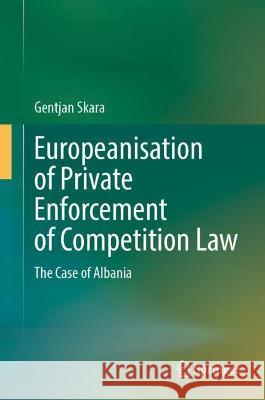
Europeanisation of Private Enforcement of Competition Law: The Case of Albania
ISBN-13: 9783030970338 / Angielski / Twarda / 2022 / 316 str.
Europeanisation of Private Enforcement of Competition Law: The Case of Albania
ISBN-13: 9783030970338 / Angielski / Twarda / 2022 / 316 str.
(netto: 497,21 VAT: 5%)
Najniższa cena z 30 dni: 501,19
ok. 22 dni roboczych
Dostawa w 2026 r.
Darmowa dostawa!
Table of Contents
1. Introduction
1.1. Public and Private Enforcement: Definition and Goal
1.2. Background: Introduction to Research
1.3. Research Purpose
1.4. Key Concepts and Delimitations
1.5. Methods of Research
1.6. Significance of the book
1.7. Outline of the book
2. Evolution of a General Framework of EU Law on Private enforcement
2.1. Introduction
2.2. Competition Policy in the European Countries: from the end of 20th Century until 21st Century
2.3. Evolution of the Competition Law in the ECSC and the EC/EU
2.3.1. The Origins and the Nature of Competition Rules in the ECSC
2.3.2. Origin and Nature of Competition Rules in the EEC Treaty
2.4. Competition Enforcement System: from Centralised toward a Decentralised System
2.5. CJEU as a Promoter and Safeguard of Private Enforcement2.5.1. EU right to damages for infringement of competition law
2.5.2. The Principle of National Procedural Autonomy
3. The Role of the Commission in Facilitating and Encouraging the Right to Damages
3.1. Introduction
3.2. Commission Rhetoric for Right to damages: from Deringer Report to Regulation 1/2003
3.3. Ashurst Study: Astonishing Diversity and total underdevelopment of Private Enforcement
3.4. Green Paper on the Damages Actions for Breach of the EC Antitrust Rules
3.5. White Paper on Damages Actions for Breach of the EC Antitrust Rules3.6. 2013 Package: Facilitating Private Enforcement in the EU
4. The Directive on Right to Damages: Legal Aspects and Implications
4.1. Introduction
4.2. Legal Basis of Directive 2014/104/EU: Single or Dual Legal Basis?4.3. Content of the Directive 2014/104/EU
4.4. Assessment of the Directive 2014/104/EU
4.5. Transposition Process and Temporal Application of the Directive 2014/104/EU
5. Transposition of the Directive 2014/104/EU in selected EU-Member States: the case of Austria, Italy and Slovenia
5.1. Introduction
5.2. Austria
5.2.1. Manner of Implementing of Directive 2014/104/EU
5.2.2. Scope of new rules: Material, Territorial and Temporal
5.2.3. Jurisdiction: Competent Courts
5.2.4. Relevant Substantive and Procedural Issues of KaWeRÄG 2017
5.2.4.1. Right to full Compensation
5.2.4.2. Limitation Periods
5.2.4.3. Joint and Several Liability
5.2.4.4. Quantification of Harm
5.2.4.5. Passing-on of overcharges
5.2.4.6. Standing
5.2.4.7. Disclosure of Evidence
5.2.4.8. Effect of National Competition Authority Decisions
5.2.4.9. Collective Redress
5.2.4.10. Consensual Dispute Resolution in Antitrust enforcement
5.3. Italy
5.3.1. Manner of Implementing the Directive 2014/104/EU
5.3.2. Scope of new rules: Material, Territorial and Temporal
5.3.3. Jurisdiction: Competent Courts
5.3.4. Relevant substantive and procedural issues of Decreto Legislativo 3/2017
5.3.4.1. Right to full Compensation
5.3.4.2. Limitation Periods5.3.4.3. Joint and Several Liability
5.3.4.4. Quantification of Harm
5.3.4.5. Passing-on of overcharges
5.3.4.6. Standing5.3.4.7. Disclosure of Evidence
5.3.4.8. Effect of National Competition Authority Decisions
5.3.4.9. Collective Redress
5.3.4.10. Consensual Dispute Resolution in Antitrust enforcement5.4. Slovenia
5.4.1. Manner of Implementing the Directive 2014/104/EU
5.4.2. Scope of new Rules: Material, Territorial and Temporal
5.4.3. Jurisdiction: Competent Courts5.4.4. Relevant Substantive and Procedural Issues of ZPOmK-1G
5.4.4.1. Right to full Compensation
5.4.4.2. Limitation Periods
5.4.4.3. Joint and Several Liability
5.4.4.4. Quantification of Harm
5.4.4.5. Passing-on of overcharges
5.4.4.6. Standing
5.4.4.7. Disclosure of Evidence
5.4.4.8. Effect of National Competition Authority Decisions
5.4.4.9. Collective Redress
5.4.4.10. Consensual Dispute Resolution in Antitrust Enforcement
6. Europeanisation of Albanian Competition Law: Roles and Perspectives of Private Enforcement
6.1. Introduction
6.2. Legal Europeanisation: EU conditionality and Approximation of Legislation
6.3. Alignment of Albanian Competition Law with EU competition law
6.3.1. From Centralised to an Open Market Economy: the Need for a Competition law
6.3.2. Voluntary Harmonisation of Competition Law with the EU Competition Acquis
6.3.3. Europeanisation of Albanian Competition Law
6.4. Private Enforcement of Competition Law in Albania
6.4.1. Material Scope
6.4.2. Jurisdiction: Competent Courts
6.4.3. Relevant Issues of the Private Enforcement in Albanian Legal System
6.4.3.1. Conditions for Tort Liability and the Right to Compensation
6.4.3.2. Limitation Period
6.4.3.3. Joint and Several Liability
6.4.3.4. Quantification of Harm
6.4.3.5. Passing–on overcharges
6.4.3.6. Standing to Claim Compensation
6.4.3.7. Disclosure of Evidence
6.4.3.8. Effect of National Competition Authority Decision
6.4.3.9. Collective Redress
6.4.3.10. Consensual Dispute Resolution
6.5. Missed Opportunities and Obstacles for the Development of Private Enforcement of Competition Law
6.6. Transposition of Directive 2014/104/EU into Albanian Legal System
7. Conclusions
References
Gentjan Skara holds an integrated diploma in law from University of Tirana (Albania) and two master degree: one in ‘European Studies’ from Epoka University (Albania) and a LLM master program for “South East European Law and European Integration” from University of Graz (Austria). During 2016-2019, Genti attended the PhD program in “EU Law and National Legal System” at University of Ferrara and defended his thesis on 31 March 2020. His PhD thesis focuses on the EU private enforcement of competition law and its impact on Albanian competition law. Moreover, from August 2020 to August 2021, Genti attended Post-PhD Program in “Law and Technology” organised from the Mediterranea International Centre for Human Rights (Italy). From October 2012, Genti has been a full-time member of the Department of Law at “Bedër” University College teaching International and EU law courses. His research interest includes: EU Law, Enlargement process, EU Competition law and Artificial Intelligence. Besides academic engagement, Genti is a National Legal expert for the “Internal Market and Competition” of EU acquis near the Ministry of European and Foreign Affairs, Republic of Albania.
This book argues that the European integration process (Europeanisation) is pushing the member states and candidate countries toward a greater convergence with the EU’s competition acquis. Through the transposition of the Directive 2014/104/EU, the member states have harmonised substantive and procedural rules, which is beneficial to individuals and enterprises because it provides a minimum protection across all member states. In addition, it is commonly agreed in academia that the prospect of EU membership brings positive domestic changes in the candidate countries. At the moment, Albania is waiting to open negotiations for the chapters of the EU acquis.
Firstly, this book addresses the evolution of private enforcement at the European level by examining the objectives, modalities, and actors that contributed to the development of private enforcement. Secondly, it analyses the Directive 2014/104/EU and how the three selected EU member states have transposed the directive into their domestic legal system considering the discretion margin left by Article 288 TFEU and a minimum harmonisation level defined in the directive. Thirdly, it provides a historical overview of private enforcement in Albania and shows how the Albanian Competition Authority has addressed the transposition of the Directive 2014/104/EU.




Czytaj nas na:
1997-2025 DolnySlask.com Agencja Internetowa
KrainaKsiazek.PL - Księgarnia Internetowa


