• Wyszukiwanie zaawansowane
  • Kategorie
  • Kategorie BISAC
  • Książki na zamówienie
  • Promocje
  • Granty
  • Książka na prezent
  • Opinie
  • Pomoc
  • Załóż konto
  • Zaloguj się

European Monetary Integration: EMS Developments and International Post-Maastricht Perspectives » książka


zaloguj się | załóż konto
Logo Krainaksiazek.pl

koszyk

konto

szukaj
topmenu
Księgarnia internetowa
Szukaj
Książki na zamówienie
Promocje
Granty
Książka na prezent
Moje konto
Pomoc
 
 
Wyszukiwanie zaawansowane
Pusty koszyk
Bezpłatna dostawa dla zamówień powyżej 20 złBezpłatna dostawa dla zamówień powyżej 20 zł

Kategorie główne

• Nauka
 [2944077]
• Literatura piękna
 [1814251]

  więcej...
• Turystyka
 [70679]
• Informatyka
 [151074]
• Komiksy
 [35590]
• Encyklopedie
 [23169]
• Dziecięca
 [611005]
• Hobby
 [136031]
• AudioBooki
 [1718]
• Literatura faktu
 [225599]
• Muzyka CD
 [379]
• Słowniki
 [2916]
• Inne
 [443741]
• Kalendarze
 [1187]
• Podręczniki
 [166463]
• Poradniki
 [469211]
• Religia
 [506887]
• Czasopisma
 [481]
• Sport
 [61343]
• Sztuka
 [242115]
• CD, DVD, Video
 [3348]
• Technologie
 [219293]
• Zdrowie
 [98602]
• Książkowe Klimaty
 [124]
• Zabawki
 [2385]
• Puzzle, gry
 [3504]
• Literatura w języku ukraińskim
 [260]
• Art. papiernicze i szkolne
 [7151]
Kategorie szczegółowe BISAC

European Monetary Integration: EMS Developments and International Post-Maastricht Perspectives

ISBN-13: 9783642799716 / Angielski / Miękka / 2011 / 384 str.
Paul J. J. Welfens
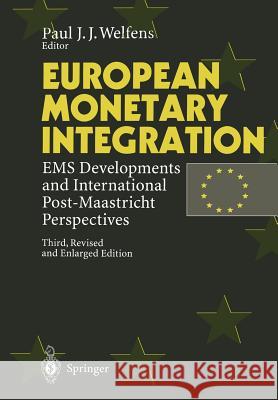
European Monetary Integration: EMS Developments and International Post-Maastricht Perspectives Welfens, Paul J. J. 9783642799716 Springer - książkaWidoczna okładka, to zdjęcie poglądowe, a rzeczywista szata graficzna może różnić się od prezentowanej.

European Monetary Integration: EMS Developments and International Post-Maastricht Perspectives

ISBN-13: 9783642799716 / Angielski / Miękka / 2011 / 384 str.

Paul J. J. Welfens
cena 201,24
(netto: 191,66 VAT:  5%)

Najniższa cena z 30 dni: 192,74
Termin realizacji zamówienia:
ok. 22 dni roboczych.

Darmowa dostawa!

EU monetary integration was reinforced in the 1980s when macroeconomic convergence and a dominant role of the German Bundesbank created the basis for relatively stable exchange rates and increasing EU trade volumes. The analysis here focuses on the EMS crisis of 1992/93, the topic of optimum currency areas and the problem of fiscal policies and regional stabilization in Europe, the US and Canada. This book gives an assessment of the EMS developments and shows how financial market liberalization as well as the EU single market project affect the process of economic and monetary union. The role of currency substitution and problems of the Bundesbank's monetary policy control in a changing international system are evaluated.


Kategorie:
Nauka, Ekonomia i biznes
Kategorie BISAC:
Business & Economics > Ekonomia monetarna
Business & Economics > Economics - General
Business & Economics > International - Economics & Trade
Wydawca:
Springer
Język:
Angielski
ISBN-13:
9783642799716
Rok wydania:
2011
Wydanie:
1996. Softcover
Ilość stron:
384
Waga:
0.64 kg
Wymiary:
24.41 x 16.99 x 2.13
Oprawa:
Miękka
Wolumenów:
01

European Monetary Union: Post-Maastricht Perspectives on Monetary and Real Integration in Europe.- 1. European Monetary Integration after Maastricht.- 1.1 The Ratification Crisis.- 1.2 Competitive Devaluation.- 1.3 Some Problems with the Maastricht Design of EMU.- 2. The Single Market Program and EC Monetary Integration.- 2.1 The Single Market and Monetary Union.- 2.2 Problems with the Kenen Criterion.- 3. Transition Problems towards EMU.- 3.1 Conflicts of Interest and Asymmetric Adjustment Capability.- 3.2 Institutional Aspects.- 3.3 Some German Points of View.- Discussant: Randall Henning.- The European Monetary System and European Integration: An Evaluation.- 1. Introduction.- 2. European Macroeconomic Convergence.- 3. Macroeconomic Convergence and Economic Integration.- 4. Conclusion 70.- Data.- Discussant: Vittorio Grilli.- Basic Features of a European Monetary Order.- 1. Introduction.- 2. Facing the Challenge of an EC Monetary Order.- 2.1 Lessons from the EMS.- 2.2 The Significance of Central Bank Independence.- 2.2.1 How to Achieve Independence.- 2.2.2 Instrumental Autonomy.- 2.3 Strategic Options and Organizational Aspects.- 3. The Need for Coherence of Fiscal and Monetary Policy.- 4. Perspectives.- Towards Monetary Union in the European Community: Why and How.- 1. Introduction.- 2. Where: The Meaning of Monetary Union.- 3. Why: Costs and Benefits from Monetary Union.- 3.1 Irrevocably-fixed Exchange Rates: Costs and Benefits.- 3.2 Additional Benefits from a Common Currency.- 4. How: Concrete Steps.- 4.1 Concrete Steps at the National Level: Disinflation and Convergence.- 4.2 Institutional versus Market-led Approaches to Monetary Union.- 4.3 The Institutional Approach: The Stages of the Delors Report.- 5. Summary and Conclusions.- Discussant: Alan G. Isaac.- German Monetary Unification and European Monetary Union: Theoretical Issues and Strategic Policy Problems.- 1. Introduction.- 2. Are Germany and Europe Optimum Currency Areas?.- 3. German Monetary Unification.- 3.1 Economic Structure and Monetary System in East Germany.- 3.2 Necessary Reforms.- 3.3 Benefits and Costs of Gradualism.- 3.4 Benefits and Costs of Big Leap.- 4. European Monetary Union.- 4.1 Economic Structures and Monetary Systems in Europe.- 4.2 Planned Reforms.- 4.3 Benefits and Costs of Gradualism.- 4.4 Benefits and Costs of Big Leap.- 5. Big Leap for Germany and Gradualism for Europe.- Discussant: John Williamson.- Liberalization and Regulation in the Process of Financial Market Integration in the European Community 163.- 1. Introduction.- 2. The Historical Record.- 3. Liberalization and Regulation in the Commission’s New Approach.- 4. Likely Impact of the New Approach: Microeconomics.- 5. Likely Impact of the New Approach: Macroeconomics.- 6. Conclusions.- Discussant: Sydney J. Key.- Problems of European Monetary Policy Coordination in the Transition Phase.- 1. Introduction.- 2. Open Questions In Stage One.- 2.1 Does Stage One Make a Difference?.- 2.2 What Kind of Coordination?.- 2.3 How to Ensure the Stability of the EMS?.- 2.4 What Are the Merits of Currency Competition?.- 3. Open Questions of Stage 2.- 3.1 Is There a Need For an ESCB Without Responsibilities?.- 3.2 The ESCB as a Joint Subsidiary of National Central Banks?.- 3.3 Can Monetary Policy Responsibilities Be Divided in Stage Two?.- 3.3.1 ESCB Management of Interest Rate Differentials.- 3.3.2 Third Currency Interventions by the ESCB.- 3.3.3 Minimum Reserve Policy of the ESCB.- 3.3.3.1 ECU Minimum Reserve Requirements for Central Banks.- 3.3.3.2 ECU Minimum Reserve Requirements for Commercial Banks in Europe.- 3.4 An Integrated Approach.- 4. Conclusions.- Discussant: Horst Ungerer.- Creating a European Central Bank after 1992: Issues of EC Monetary Integration and Problems of Institutional Innovation.- 1. Monetary and Real Integration in the EC.- 2. The European Monetary System in Perspective.- 2.1 The EMS Record.- 2.2 German Dominance in the EMS?.- 2.3 Problems of Integrating the U.K. into the EMS.- 3. EC 1992 and Monetary Integration.- 3.1 Delors Report and Resolution of the EC Parliament.- 3.2 EMS Hardening, EC 1992 and Monetary Integration.- 3.2.1 Real Integration, Financial Markets and Monetary Integration.- 3.2.2 The Role of Foreign Direct Investment in Asset Market Equilibrium.- 3.2.3 Market Integration and Intra-EC Price Adjustment.- 3.3 EC-External Aspects of European Monetary Integration.- 4. Creating an EC Central Bank.- 4.1 Benefits and Risks from Currency Unification and EC Central Banking.- 4.2 Problems of Institutional Innovation: Policy Failure and Market Failure.- Discussant: George M. von Furstenberg.- Monetary and Fiscal Policy in a European Monetary Union: Some Public Choice Considerations.- 1. Introduction.- 2. Determinants of Inflation in a Monetary Union.- 2.1 Monetary Union and Central Bank Collusion.- 2.2 Central Bank Credibility: EMU as a Commitment Mechanism.- 2.3 EMU and the Degree of Effective Policy Competition.- 2.4 Seigniorage and the Incentive to Inflate in a EMU.- 3. The Role of Fiscal Policy in a Monetary Union.- 3.1 Harmonization, International Transfers, and Fiscal Policy Coordination.- 3.2 The Role of Fiscal Restraints in a Monetary Union.- 3.3 The Effectiveness of Fiscal Restraints: Evidence from the US.- 4. Conclusions.- Discussant: Robert Solomon.- Whan Can the Fiscal System in the United States and Canada Tell Us about EMU.- 1. Introduction.- 2. The Fiscal System in United States and Canada.- 3. The Relative Importance of Asymmetric Shocks.- 4. The Impact of Federal Taxes and Transfers in the United States and Canada.- 5. Redistribution and Stabilization in the EC.- 6. Conclusions 320.- Data/Appendix.- Discussant: Susan M. Collins.- The European Community as an Optimum Currency Area.- 1. Introduction.- 2. Model in a McKinnon Setting.- 2.1 Model Extension.- 2.2 Empirical Results.- 3. Conclusion.- Discussant: Karen H. Johnson.- List of Contributors.- Appendix: Demand for Money and Currency Substitution in Europe.

Paul J. J. Welfens, geb. 1957 in Düren, Studium der Volkswirtschaftslehre in Wuppertal, Duisburg und Paris, Promotion 1985, Habilitation1989. Inhaber des Lehrstuhls für Volkswirtschaftslehre - Schwerpunkt Makroökonomische Theorie und Politik an der Bergischen Universität Wuppertal; Präsident des Europäischen Instituts für Internationale Wirtschaftsbeziehungen (EIIW); Jean-Monnet-Professor für Europäische Wirtschaftsintegration; zuvor Distinguished Research Fellow am AICGS/The Johns Hopkins University, Professor an der Universität Münster bzw. Potsdam, Visiting Alfred Grosser Professor Sciences Po, Paris.

Welfens, Paul J. J. Geboren 1957 in DA1/4ren, Studium der Volkswirtsch... więcej >


Udostępnij

Facebook - konto krainaksiazek.pl


Opinie o Krainaksiazek.pl na Opineo.pl

Partner Mybenefit

Krainaksiazek.pl w programie rzetelna firma Krainaksiaze.pl - płatności przez paypal

Czytaj nas na:

Facebook - krainaksiazek.pl
  • książki na zamówienie
  • granty
  • książka na prezent
  • kontakt
  • pomoc
  • opinie
  • regulamin
  • polityka prywatności

Zobacz:

  • Księgarnia czeska

  • Wydawnictwo Książkowe Klimaty

1997-2026 DolnySlask.com Agencja Internetowa

© 1997-2022 krainaksiazek.pl
     
KONTAKT | REGULAMIN | POLITYKA PRYWATNOŚCI | USTAWIENIA PRYWATNOŚCI
Zobacz: Księgarnia Czeska | Wydawnictwo Książkowe Klimaty | Mapa strony | Lista autorów
KrainaKsiazek.PL - Księgarnia Internetowa

Polityka prywatnosci - link
Krainaksiazek.pl - płatnośc Przelewy24
Przechowalnia Przechowalnia






