• Wyszukiwanie zaawansowane
  • Kategorie
  • Kategorie BISAC
  • Książki na zamówienie
  • Promocje
  • Granty
  • Książka na prezent
  • Opinie
  • Pomoc
  • Załóż konto
  • Zaloguj się

European Investigation Order: Where the Law Meets the Technology » książka


zaloguj się | załóż konto
Logo Krainaksiazek.pl

koszyk

konto

szukaj
topmenu
Księgarnia internetowa
Szukaj
Książki na zamówienie
Promocje
Granty
Książka na prezent
Moje konto
Pomoc
 
 
Wyszukiwanie zaawansowane
Pusty koszyk
Bezpłatna dostawa dla zamówień powyżej 20 złBezpłatna dostawa dla zamówień powyżej 20 zł

Kategorie główne

• Nauka
 [2946912]
• Literatura piękna
 [1852311]

  więcej...
• Turystyka
 [71421]
• Informatyka
 [150889]
• Komiksy
 [35717]
• Encyklopedie
 [23177]
• Dziecięca
 [617324]
• Hobby
 [138808]
• AudioBooki
 [1671]
• Literatura faktu
 [228371]
• Muzyka CD
 [400]
• Słowniki
 [2841]
• Inne
 [445428]
• Kalendarze
 [1545]
• Podręczniki
 [166819]
• Poradniki
 [480180]
• Religia
 [510412]
• Czasopisma
 [525]
• Sport
 [61271]
• Sztuka
 [242929]
• CD, DVD, Video
 [3371]
• Technologie
 [219258]
• Zdrowie
 [100961]
• Książkowe Klimaty
 [124]
• Zabawki
 [2341]
• Puzzle, gry
 [3766]
• Literatura w języku ukraińskim
 [255]
• Art. papiernicze i szkolne
 [7810]
Kategorie szczegółowe BISAC

European Investigation Order: Where the Law Meets the Technology

ISBN-13: 9783031316852 / Angielski
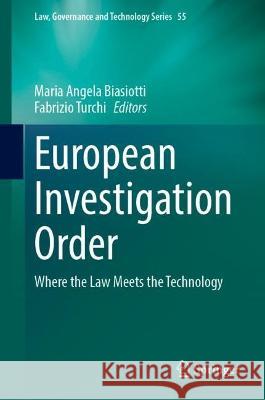
Maria Angela Biasiotti; Fabrizio Turchi
European Investigation Order: Where the Law Meets the Technology Maria Angela Biasiotti Fabrizio Turchi 9783031316852 Springer - książkaWidoczna okładka, to zdjęcie poglądowe, a rzeczywista szata graficzna może różnić się od prezentowanej.

European Investigation Order: Where the Law Meets the Technology

ISBN-13: 9783031316852 / Angielski

Maria Angela Biasiotti; Fabrizio Turchi
cena 685,93
(netto: 653,27 VAT:  5%)

Najniższa cena z 30 dni: 616,85
Termin realizacji zamówienia:
ok. 22 dni roboczych
Bez gwarancji dostawy przed świętami

Darmowa dostawa!
inne wydania

In the era of globalisation, cross-border crimes are becoming increasingly common. The nature of these crimes is complex, and cross-border evidence exchange is, therefore, crucial to the successful prosecution of these offences. The exchange of evidence between countries can provide invaluable assistance in solving crimes that have an international dimension.The European Investigation Order (EIO) allows judicial authorities to request evidence more quickly and easily than via traditional instruments. The EIO has become the primary legal tool for gathering trans-border evidence, replacing the traditional Mutual Legal Assistance (MLA) conventions previously used. However, the EIO is not the only pertinent legal instrument for cross-border evidence gathering within the EU. Accordingly, professionals need a clear understanding of this subject.Exchanging evidence among judicial authorities in the EU Member States presupposes two essential components. First, there must be a secure communication channel. This is provided by e-CODEX, which offers a European digital infrastructure for secure cross-border communication in the field of justice. Recently (May 30th, 2022), the e-CODEX system became the digital backbone of EU judicial cooperation in civil and criminal matters on the basis of Regulation 2022/850. To achieve effective evidence exchange via EIO/MLA legal instruments, there must also be a communication tool. This is provided by the e-Evidence Digital Exchange System, which is capable of managing any EIO/MLA procedures/instruments, from the e-Forms (EIO Annexes) to the whole business logic, on the basis of the e-CODEX system. Finally, it is essential to use a uniform standard for the representation of evidence data and metadata, so as to streamline the process and make investigations more effective, in particular when it comes to complicated criminal cases where it is key to find either correlations among different cases or to extract multiple types of data from the same inspection.The importance of cross-border evidence exchange in criminal matters cannot be overstated. This book addresses all the above-mentioned aspects, offering an up-to-date overview of scenarios in cross-border judicial cooperation from both juridical and technical standpoints.


In the era of globalisation, cross-border crimes are becoming increasingly common. The nature of these crimes is complex, and cross-border evidence exchange is, therefore, crucial to the successful prosecution of these offences. The exchange of evidence between countries can provide invaluable assistance in solving crimes that have an international dimension. 

The European Investigation Order (EIO) allows judicial authorities to request evidence more quickly and easily than via traditional instruments. The EIO has become the primary legal tool for gathering trans-border evidence, replacing the traditional Mutual Legal Assistance (MLA) conventions previously used. However, the EIO is not the only pertinent legal instrument for cross-border evidence gathering within the EU. Accordingly, professionals need a clear understanding of this subject.

Exchanging evidence among judicial authorities in the EU Member States presupposes two essential components. First, there must be a secure communication channel. This is provided by e-CODEX, which offers a European digital infrastructure for secure cross-border communication in the field of justice. Recently (May 30th, 2022), the e-CODEX system became the digital backbone of EU judicial cooperation in civil and criminal matters on the basis of Regulation 2022/850. To achieve effective evidence exchange via EIO/MLA legal instruments, there must also be a communication tool. This is provided by the e-Evidence Digital Exchange System, which is capable of managing any EIO/MLA procedures/instruments, from the e-Forms (EIO Annexes) to the whole business logic, on the basis of the e-CODEX system. Finally, it is essential to use a uniform standard for the representation of evidence data and metadata, so as to streamline the process and make investigations more effective, in particular when it comes to complicated criminal cases where it is key to find either correlations among different cases or to extract multiple types of data from the same inspection.
 
The importance of cross-border evidence exchange in criminal matters cannot be overstated. This book addresses all the above-mentioned aspects, offering an up-to-date overview of scenarios in cross-border judicial cooperation from both juridical and technical standpoints.

Kategorie:
Nauka, Prawo i administracja
Kategorie BISAC:
Law > International
Wydawca:
Springer
Seria wydawnicza:
Law, Governance and Technology
Język:
Angielski
ISBN-13:
9783031316852

Introduction: Setting the Scene on EIO and the Interaction between Law and Technology.- EU Legislation on EIO and Its Implementation in the Member States.- EU Initiatives on the Implementation of the EIO.- The Challenging Path towards the Establishment of the EU Legal Framework Regulating Cross-border Access to Digital Evidence.- Evidence Exchange under the EIO: Technological Challenges.- e-CODEX: A Secure Infra-structure for Cross-border Cooperation.- e-Evidence Digital Exchange System (eEDES).- Evidence Exchange Standard Package: An Application CASE Ontology Complied for the Preparation of the Evidence Package and Its Exchange.- Legal Framework for Digital Evidence Following the Implementation of the EIO Directive: Status Quo, Challenges and Experiences in Member States.- Data Protection and European Investigation Orders.- Different Perspectives on EIO.- Training on EIO: Overview of Training Courses in the EU.- Training on EIO: TREIO Project.

Maria Angela Biasiotti is a Research Director at IGSG-CNR. She has a degree in Law (1999) and a PhD in Information Technologies and Law (2008) from the Faculty of Law, Bologna University. In 2001, she started working at the Institute of Legal Information Theory and Techniques (CNR-ITTIG, now CNR-IGSG). In March 2014, she coordinated the EVIDENCE Project (European Informatics Data Exchange Framework for Court). In March 2018, she coordinated the EVIDENCE2e-Codex Project (Linking EVIDENCE into e-CODEX for EIO and MLA procedures in Europe). Since April 2020 she has coordinated the TREIO Project (Training on EIO). She combines a solid practical experience in law, she has practised as a lawyer in public law, administrative law and EC law for an Italian leading law firm) with a broad knowledge in ICT and law. Her main research areas involving legal informatics, computer law, legal information modelling and accessing, and legal information documentation management and dissemination, computer law, digital evidence, data protection. She is the author of many scientific works and contributions presented at international conferences. She organised conferences, workshops and summer schools in her domain of research and activity.

Fabrizio Turchi is a Technology Executive at IGSG-CNR. His research activities are the applications of IT to legal domain, legal standard and legal drafting, use of the XML technologies to devise legal documents models. He has been designing and developing web applications, formal parsers to identify parts and structures that exist inside textual documents and natural language processing techniques applied to legal documents for knowledge extraction, such as automated text classification and anonymity processes based on Named Entity Recognition (NER). His recent interests focus on the standard representation of the data and meta data of digital evidence, by using the UCO/CASE ontology. He has been involved in many European Projects dealing with the exchange of digital evidence among Competent Authorities in the EU Member States: EVIDENCE (European Informatics Data Exchange Framework for Court); EVIDENCE 2e-CODEX (Linking Evidence into e-CODEX for EIO and MLA procedures in Europe); EXEC-II (Electronic Xchange of e-Evidences); INSPECTr (Intelligence Network and Secure Platform for Evidence Correlation and Transfer).

In the era of globalisation, cross-border crimes are becoming increasingly common. The nature of these crimes is complex, and cross-border evidence exchange is, therefore, crucial to the successful prosecution of these offences. The exchange of evidence between countries can provide invaluable assistance in solving crimes that have an international dimension. 


The European Investigation Order (EIO) allows judicial authorities to request evidence more quickly and easily than via traditional instruments. The EIO has become the primary legal tool for gathering trans-border evidence, replacing the traditional Mutual Legal Assistance (MLA) conventions previously used. However, the EIO is not the only pertinent legal instrument for cross-border evidence gathering within the EU. Accordingly, professionals need a clear understanding of this subject.

Exchanging evidence among judicial authorities in the EU Member States presupposes two essential components. First, there must be a secure communication channel. This is provided by e-CODEX, which offers a European digital infrastructure for secure cross-border communication in the field of justice. Recently (May 30th, 2022), the e-CODEX system became the digital backbone of EU judicial cooperation in civil and criminal matters on the basis of Regulation 2022/850. To achieve effective evidence exchange via EIO/MLA legal instruments, there must also be a communication tool. This is provided by the e-Evidence Digital Exchange System, which is capable of managing any EIO/MLA procedures/instruments, from the e-Forms (EIO Annexes) to the whole business logic, on the basis of the e-CODEX system. Finally, it is essential to use a uniform standard for the representation of evidence data and metadata, so as to streamline the process and make investigations more effective, in particular when it comes to complicated criminal cases where it is key to find either correlations among different cases or to extract multiple types of data from the same inspection.
 
The importance of cross-border evidence exchange in criminal matters cannot be overstated. This book addresses all the above-mentioned aspects, offering an up-to-date overview of scenarios in cross-border judicial cooperation from both juridical and technical standpoints.




Udostępnij

Facebook - konto krainaksiazek.pl


Opinie o Krainaksiazek.pl na Opineo.pl

Partner Mybenefit

Krainaksiazek.pl w programie rzetelna firma Krainaksiaze.pl - płatności przez paypal

Czytaj nas na:

Facebook - krainaksiazek.pl
  • książki na zamówienie
  • granty
  • książka na prezent
  • kontakt
  • pomoc
  • opinie
  • regulamin
  • polityka prywatności

Zobacz:

  • Księgarnia czeska

  • Wydawnictwo Książkowe Klimaty

1997-2025 DolnySlask.com Agencja Internetowa

© 1997-2022 krainaksiazek.pl
     
KONTAKT | REGULAMIN | POLITYKA PRYWATNOŚCI | USTAWIENIA PRYWATNOŚCI
Zobacz: Księgarnia Czeska | Wydawnictwo Książkowe Klimaty | Mapa strony | Lista autorów
KrainaKsiazek.PL - Księgarnia Internetowa

Polityka prywatnosci - link
Krainaksiazek.pl - płatnośc Przelewy24
Przechowalnia Przechowalnia




