• Wyszukiwanie zaawansowane
  • Kategorie
  • Kategorie BISAC
  • Książki na zamówienie
  • Promocje
  • Granty
  • Książka na prezent
  • Opinie
  • Pomoc
  • Załóż konto
  • Zaloguj się

Ethnobotany for Beginners » książka

zaloguj się | załóż konto
Logo Krainaksiazek.pl

koszyk

konto

szukaj
topmenu
Księgarnia internetowa
Szukaj
Książki na zamówienie
Promocje
Granty
Książka na prezent
Moje konto
Pomoc
 
 
Wyszukiwanie zaawansowane
Pusty koszyk
Bezpłatna dostawa dla zamówień powyżej 20 złBezpłatna dostawa dla zamówień powyżej 20 zł

Kategorie główne

• Nauka
 [2949965]
• Literatura piękna
 [1857847]

  więcej...
• Turystyka
 [70818]
• Informatyka
 [151303]
• Komiksy
 [35733]
• Encyklopedie
 [23180]
• Dziecięca
 [617748]
• Hobby
 [139972]
• AudioBooki
 [1650]
• Literatura faktu
 [228361]
• Muzyka CD
 [398]
• Słowniki
 [2862]
• Inne
 [444732]
• Kalendarze
 [1620]
• Podręczniki
 [167233]
• Poradniki
 [482388]
• Religia
 [509867]
• Czasopisma
 [533]
• Sport
 [61361]
• Sztuka
 [243125]
• CD, DVD, Video
 [3451]
• Technologie
 [219309]
• Zdrowie
 [101347]
• Książkowe Klimaty
 [123]
• Zabawki
 [2362]
• Puzzle, gry
 [3791]
• Literatura w języku ukraińskim
 [253]
• Art. papiernicze i szkolne
 [7933]
Kategorie szczegółowe BISAC

Ethnobotany for Beginners

ISBN-13: 9783319528717 / Angielski / Miękka / 2017 / 71 str.
Ulysses Paulino Albuquerque; Marcelo Alves Ramos; Washington Soares Ferreira Junior
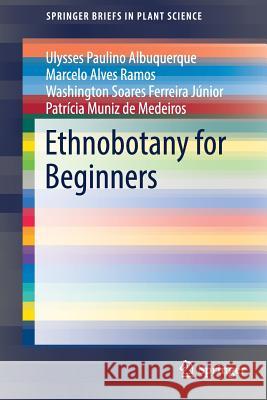
Ethnobotany for Beginners Ulysses Paulino Albuquerque Marcelo Alves Ramos Washington Soares Ferreir 9783319528717 Springer - książkaWidoczna okładka, to zdjęcie poglądowe, a rzeczywista szata graficzna może różnić się od prezentowanej.

Ethnobotany for Beginners

ISBN-13: 9783319528717 / Angielski / Miękka / 2017 / 71 str.

Ulysses Paulino Albuquerque; Marcelo Alves Ramos; Washington Soares Ferreira Junior
cena 282,42
(netto: 268,97 VAT:  5%)

Najniższa cena z 30 dni: 269,85
Termin realizacji zamówienia:
ok. 22 dni roboczych
Bez gwarancji dostawy przed świętami

Darmowa dostawa!

Designed for new scholars, this book features a quick and easy-to-read discussion of ethnobotany along with its major developments. The language is clear and concise, objective and straightforward, and structured to lead the reader from the beginning of this science to the most recent developments. While there are some books on ethnobotany, mainly dealing with methods, this book covers the topic in an introductory and comprehensive text that prepares the reader for more advanced study of ethnobotany.


Kategorie:
Nauka, Biologia i przyroda
Kategorie BISAC:
Science > Life Sciences - Ecology
Science > Botanika
Science > Life Sciences - Anatomy & Physiology
Wydawca:
Springer
Seria wydawnicza:
Springerbriefs in Plant Science
Język:
Angielski
ISBN-13:
9783319528717
Rok wydania:
2017
Wydanie:
2017
Numer serii:
000442570
Ilość stron:
71
Waga:
0.13 kg
Wymiary:
23.39 x 15.6 x 0.43
Oprawa:
Miękka
Wolumenów:
01
Dodatkowe informacje:
Wydanie ilustrowane

"It is an excellent review of current trends in ethnobotany as well as a summary of theory and praxis. ... This is a very helpful, authoritative, and above all, a thought-provoking contribution valuable to researchers and especially students beginning ethnobotanical research." (Lytton John Musselman, Economic Botany, Vol. 71 (04), 2017)

CHAPTER 1: HISTORY AND CONCEPTS

The term ethnobotany was formally designated in 1885 by the American researcher John William Harsberger. In an article published in 1896 (entitled The purposes of ethno-botany), Harshberger considered that ethnobotany could help to elucidate the cultural position of the tribes that use plants for food, shelter or clothing, and such elucidation could clarify the problem of plant distribution in the past. Harshberger understood that it would be possible to understand an entire culture from the use of plants, idea rejected by many researchers since the relationship with the nature is only a part of the components of a complex cultural system. Today we understand that the use and knowledge of plants, as part of complex social-ecological systems, can help us to understand how we relate to nature and how this relationship evolves over time and space. In this chapter, as we briefly tell the story of ethnobotany, we also present some key concepts for a newcomer scholar in the field.

CHAPTER 2: INTERESTS OF THE ETHNOBOTANICAL RESEARCH

Traditionally, the ethnobotanists from around the world have been busy recording the plants and their uses (including therapeutic forms in the case of medicinal plants) by human populations. This type of procedure has provided enormous advances in basic, applied, phytochemical and pharmacological research since the ethnobotanists supplied raw material to the investigators from related fields and data required for the intended analysis. In practice, the study of the interrelationships between culture and plants basically has received this kind of treatment. But the scenario has changed completely and today we are interested in understanding various aspects of these relations. For example, what happens to the botanical knowledge of a cultural group when it migrates to other regions of your country or even to other countries? How does the knowledge of plant resources change in relation to socioeconomic variables (such as gender and age)? What can explain these variations? In this chapter, we present some of the approaches that have most occupied the ethnobotanists worldwide.

CHAPTER 3: RESEARCH METHODS

Understanding the relationships between people and plants is not an easy task, since many variables can interfere with this relationship. To account for this complexity, ethnobotany has been used in a variety of methods from different scientific disciplines such as anthropology, botany, ecology and economy. It is the experience of many researchers who have favored the use of methods from other disciplines, considering that the definition of the methods of any science depends on theoretical concepts defined by it, as well as realized research goals. In this chapter we discuss quickly those methods and emphasize the importance of developing well-defined and relevant research questions.

CHAPTER 4: CLASSICAL APPROACHES
Ethnobotany is an interdisciplinary science. Throughout its development, there were different approaches that made the connection of ethnobotany with other scientific disciplines. Our goal in this chapter is to present the classical approaches of the area, such as folk taxonomy studies. Although we indicated that the approaches presented herein are classic, it is important to make clear that they are not temporally delimited (or with a marked end), that is, they can be still found in recent studies. 

CHAPTER 5: CURRENT TRENDS IN RESEARCH ON ETHNOBOTANY
Currently, what have the ethnobotanists thought about ethnobotany? More than 100 years of formal definition of this area of knowledge, it is possible to imagine that some things have changed in this trajectory. So in this chapter we will seek to address some of the current reflections on the path that ethnobotany has traveled, or which still have to go, to strengthening their identity as science. Of course, such thoughts do not match necessarily a consensus among all ethnobotanists, but emerge from concerns presented by some research groups. We will address the ethnical and scientific challenges for a science engaged in social demands. 

CHAPTER 6: ETHNOBOTANY, SCIENCE AND SOCIETY

Within the dynamic developed by the relationships people/plants and the multitude of issues and interactive levels that surround it, this forms a complex ethnical, social, philosophical, ideological, biological and practical set of implications that ensure the ethnobotany as a science that aims to the human progress. Thus, the results of an ethnobotanical research can/should return, in an elaborate and systematic way, to the social environment from which the information was collected. In this chapter, we discuss these complex interactions. 


COMMENTED LITERATURE AND ONLINE RESOURCES

Selection of references ad online materials (videos, websites, etc.) with comments and a brief summary to guide the newcomer reader in the area.

Ulysses Paulino Albuquerque
Universidade Federal Rural de Pernambuco 
Departamento de Biologia
Recife, Pernambuco
Brazil

Marcelo Alves Ramos
Universidade de Pernambuco
Recife, Pernambuco
Brazil

Washington Soares Ferreira Júnior
Universidade de Pernambuco
Petrolina, Pernambuco
Brazil

Patricia Muniz Medeiros
Universidade Federal de Alagoas
Maceió, Alagoas
Brazil


Udostępnij

Facebook - konto krainaksiazek.pl


Opinie o Krainaksiazek.pl na Opineo.pl

Partner Mybenefit

Krainaksiazek.pl w programie rzetelna firma Krainaksiaze.pl - płatności przez paypal

Czytaj nas na:

Facebook - krainaksiazek.pl
  • książki na zamówienie
  • granty
  • książka na prezent
  • kontakt
  • pomoc
  • opinie
  • regulamin
  • polityka prywatności

Zobacz:

  • Księgarnia czeska

  • Wydawnictwo Książkowe Klimaty

1997-2025 DolnySlask.com Agencja Internetowa

© 1997-2022 krainaksiazek.pl
     
KONTAKT | REGULAMIN | POLITYKA PRYWATNOŚCI | USTAWIENIA PRYWATNOŚCI
Zobacz: Księgarnia Czeska | Wydawnictwo Książkowe Klimaty | Mapa strony | Lista autorów
KrainaKsiazek.PL - Księgarnia Internetowa

Polityka prywatnosci - link
Krainaksiazek.pl - płatnośc Przelewy24
Przechowalnia Przechowalnia







