Ethnobiology of Mountain Communities in Asia » książka





Ethnobiology of Mountain Communities in Asia
ISBN-13: 9783030554934 / Angielski / Twarda / 2021 / 439 str.
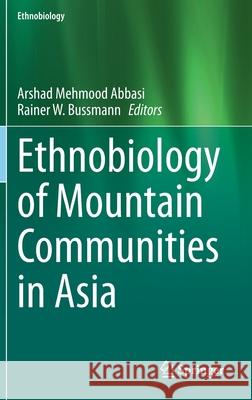
Ethnobiology of Mountain Communities in Asia
ISBN-13: 9783030554934 / Angielski / Twarda / 2021 / 439 str.
(netto: 653,27 VAT: 5%)
Najniższa cena z 30 dni: 655,41
ok. 16-18 dni roboczych.
Darmowa dostawa!
Preface.- Afghanistan.- Azerbaijan.- Bangladesh.- Bhutan.- Brunei Darussalam.- Cambodia.- China.- Cyprus.- India.- Indonesia.- Iran.- Iraq.- Israel.- Japan.- Jordan.- Korean.- Kyrgyzstan.- Laos.- Lebanon.- Malaysia.- Mauritius.- Myanmar. -Nepal.- Pakistan.- Palestine.- Philippines.- Russia.- Saudi Arabia.- Singapore.- South Korea.- Sri Lanka.- Taiwan.- Tajikistan.- Thailand.- Turkey.- Uzbekistan.- Vietnam.- Index.
List of possible contributors
Afghanistan
Jens Soelberg, University of Copenhagen, 2100 Copenhagen, Denmarkjso@sund.ku.dk2.
Azerbaijan
N. Mehdiyeva, Azerbaijan National Academy of Sciences, Baku, Azerbaijan, Naiba_m@mail.ru
Bangladesh
Jamil A. Shilpi, Khulna University, Khulna-9208, Bangladesh, jamilshilpi@yahoo.com
Bangladesh
Bhutan
Phurpa Wangchuk, University of Wollongong, Australia, phurpaw@yahoo.com
Rinchen Dorji, Fern ethnobotany, rdmagma@gmail.com
Brunei Darussalam
Norhayati Ahmad, University Brunei Darussalam, norhayati.ahmad@ubd.edu.bn
Stuart J. Davies, University Brunei Darussalam, Brunei Darussalam, sdavies@oeb.harvard.edu
Cambodia
Ida Theilade, University of Copenhagen, Rolighedsvej 25, 1958 Frederiksberg, Denmark, n.turreira@gmail.com, idat@ifro.ku.dk
Samnang Nguon, University of Battambang, Sangkat Prek Preah Sdach, Battambang City, Battambang Province, Cambodia, sciencesconf.org:botatropasia
China
Chunyan Yan, Guangdong Pharmaceutical University, Guangzhou 510006, PR China, ycybridge@163.com
Dayuan Xue, Nanjing Institute of Environmental Sciences, China, fdzh@vip.sina.com; xuedayuan@hotmail.com
Fu wu Xing, South China Botanical Garden, Guangzhou 510650, China, xinfw@scib.ac.cn
Hu Pan, Key Laboratory of Veterinary Pharmaceutical Development, Lanzhou 730050, PR China, shangxf928@126.com
XIAO Pei-gen, Institute of Medicinal Plant Development, Beijing 100193, China, huangluqi@263.net
Zhongzhen Zhao, Hong Kong Baptist University, Kowloon Tong, Hong Kong, China, zhongzhenzhao2@gmail.com
Cyprus
Andreas Lardos, University of London, 29-39 Brunswick Square, London, andreas.lardos@bluewin.ch
Demetra Paraskeva-Hadjichambi, Agricultural Research Institute, Nicosia, Cyprus, d.chadjihambi@cytanet.com.cy
India
Chandra Prakash Kala, Indian Institute of Forest Management, Madhya Pradesh India, cpkala@yahoo.co.uk
D. Dhyani, G.B. Pant Institute of Himalayan Environment and Development, Uttarakhand India, drddhyani@gmail.com
Harsh Singh, CSIR-National Botanical Research Institute, Uttar Pradesh, India, harshchamlegi@gmail.com
Hemalatha S, Hindu University, Varanasi-221005, India, shemalatha.phe@itbhu.ac.in
Marimuthu Anandharaj, Gandhigram Rural Institute-Deemed University, Tamilnadu, India, birundhashankari@gmail.com anandharaj49@gmail.com
Nima D Namsa, Tezpur University, Assam India, ndnamsa@yahoo.co.in
Prakash C. Phondani, G. B. Pant Institute of Himalayan Environment and Development, Kosi-Katarmal, Almora, Uttarakhand, India, prakashphondani@gmail.com
Ramachandra Naik M., Kuvempu University, Jnana Sahyadri, Shankaraghatta , Karnataka, rcnaik1@gmail.com
Ramandeep Singh, Sunrise University, Rajasthan, India, ramandeep_pharma@yahoo.com
Sumeet Gairola, CSIR-Indian Institute of Integrative Medicine, Jammu 180001, India, sumeetgairola@iiim.ac.in
Sobhan Kr. Mukherjee, University of Kalyani West Bengal, India, sobhankr@gmail.com, sobhankr@klyuniv.ac.in
Indonesia
Marina Silalahi, University Kristen Indonesia, Cawang 13510, Indonesia, http://dx.doi.org/10.1016/j.jep.2015.09.009
Iran
F. Khajoei Nasab, Shiraz University, Shiraz, Iran, farzaneh.khajoei@yahoo.com
Farzaneh Naghibi, Shahid Beheshti University of Medical Sciences, Tehran, Iran, fnaghibi@itmrc.org, fnaghibi@yahoo.com
Mahmoud Rafieian-Kopaei, Lorestan University of Medical Sciences, Khorramabad, Iran, rafieian@yahoo.com
Mohammad Sadegh Amiri, Payame Noor University, Tehran, Iran, M.S. Amiri@pnu.ac.ir
Peyman Rajaei, Islamic Azad University, Kerman, Iran, rajaeipeyman@gmail.com
Seyyed Ali Noorhosseini, Islamic Azad University, Rasht, Iran, noorhosseini.sa@gmail.com
Iraq
Hiwa M. Ahmed, Polytechnic University, Kurdistan, Iraq, hiwa2009@yahoo.com
Hugo de Boer, Uppsala University, Norbyvagen 18D, SE75236 Uppsala, Sweden, hugo.deboer@ebc.uu.se
Saman A. Ahmad, Sulaimani University, Sulaimani, Kurdistan, Iraq, samanchnaraye@gmail.com
Israel
Amots Dafni, University of Haifa, Haifa, 31905, Israel, adafni@research.haifa.ac.il
Japan
Reika Abe, Kochi University, Nankoku, Kochi 783-8502, Japan, reikaabe7@gmail.com
Jordan
Oraib Nawash, The Royal Botanic Garden, P.O. Box 99, Amman 11910, Jordan, onawash@royalbotanicgarden.com
Saleh Al- Quran, Mutah University, Karak, Jordan, salquran@gmail.com
Talal Aburjai, University of Jordan, Amman 11942, Jordan, aburjai@ju.edu.jo
Korea
Homervergel G. Ong, Hallym University, Chuncheon City, Republic of Korea, ydkim@hallym.ac.kr
Hyun Kim, Jeonju University, 303 Cheonjam-ro, Wansan-gu, Jeonju 560-759, Republic of Korea, hyunk@jj.ac.kr
Kyrgyzstan
Zbynek Polesny, Czech University of Life Sciences Prague, Kamycka 129, 165 21 Prague 6-Suchdol, Czech Republic
polesny@ftz.czu
Laos
Cory William Whitney, Rhine-Waal University of Applied Sciences, Germany, cory.whitney@hsrw.eu
Djaja Doel Soejarto, University of Illinois at Chicago, dds@uic.edu
Lebanon
Baydoun SA, Beirut Arab University, Taanayel, Lebanon, safaa.baydoun@bau.edu.lb
Malaysia
Jamia Azdina Jamal, Universiti Kebangsaan Malaysia, Jalan Raja Muda Abdul Aziz, 50300 Kuala Lumpur, Malaysia, jamia@pharmacy.ukm.my
Mongolia
Mauritius
M. Fawzi Mahomoodally, University of Mauritius, Reduit, Mauritius, f.mahomoodally@uom.ac.mu
Theeshan Bahorun, University of Mauritius, Réduit, Mauritius, tbahorun@uom.ac.mu
Myanmar
Young-Dong Kim, Chuncheon City, Republic of Korea, ydkim@hallym.ac.kr
Nepal
Birendra Malla, Kathmandu University, PO Box 6250, Kathmandu, Nepal, b.malla@nins.edu.np
Julie A. Hawkins, University of Reading, Reading RG6 6BX, UK, j.a.hawkins@reading.ac.uk
Maan Bahadur Rokaya, Charles University Praha, Czech Republic, rokayamaan@gmail.com
Nawal Shrestha, Peking University, Beijing 100871, China, nawalshrestha@gmail.com
Rajendra Acharya, Madan Bhandari Memorial Baneshwor, Kathmandu, Nepal, acharya.raj2010@gmail.com
Ripu M Kunwar, Ethnobotanical Society of Nepal, G.P.O. Box 19225, Kathmandu, Nepal, rkunwar@gmail.com
Santosh Kumar Rana, Tribhuvan University, Kirtipur, Kathmandu 44618, Nepal, rana.1.santosh@gmail.com
Sushma Shrestha, Department of Biology, Miami University, Oxford, OH 45056, USA, shrests@miamioh.edu
Pakistan
Abida Bano, Quaid-i-Azam University, Islamabad, Pakistan, abidabano86@yahoo.com
Arshad Mehmood Abbasi, COMSATS-Abbottabad, arshad799@yahoo.com
Barkatullah, University of Peshawar, Pakistan, bu_barq@yahoo.com
Ejaz Ahmed, PMAS-Arid Agriculture University, Rawalpindi, Pakistan, ejazabbasi2001@yahoo.com
Ghulam Mujataba Shah, Hazara University, Pakistan, Gmujtabashah72@yahoo.com
Hamayan Shaheen, AJK University, Pakistan, at ajku.edu.pk
Hassan Sher, University of Swat, hassan.botany@gmail.com
Humaira Shaheen, COMSATS, Pakistan, humaira.shaheen@comsats.edu.pk
Inayat Ur Rahman, Hazara University, Pakistan, hajibotanist@hu.edu.pk
Khalid Ahmad, COMSATS-Pakistan, khalid.taxonomist@gmail.com
Lal Badsha, Peshawar University, bmasood@upesh.edu.pk, badshahmasood1@gmail.com
Muhammad Abdul Aziz, Kohat University of Science and Technology, Pakistan, azizmhsd@gmail.com
Muhammad Azam Khan, AJK University, muhammadazam87@yahoo.com
Muhammad Hamayun, Wali Khan University, hamayun73@gmail.com
Mushtaq Ahmad, Quaid-i-Azam University, Islamabad 45320, Pakistan, mushtaqflora@hotmail.com
Rahmatullah Qureshi, Pir Mehr Ali Shah Arid Agriculture University, Pakistan, rahmatullahq@yahoo.com, phytotaxonomist@gmail.com
Shujaul Mulk Khan, Quaid-i-Azam University, shuja60@gmail.com, smulkkhan@gmail.com
Tahira Bibi, Sardar Bahadur Khan Women's University Quetta, Pakistan, tahira_botany@yahoo.com
Waheed Murad, Kohat University of Science and Technology, Pakistan, whdicp@yahoo.com
Palestine
Mohammed Saleem Ali-Shtayeh, An-Najah National University, Nablus. Palestine, shtayeh@najah.edu
Philippines
Inocencio E. Buot, Jr., University of the Philippines Los Bańos, Laguna, Philippines, ibuotjr@yahoo.com
Rose D. Arquion, Philippine Normal University, rosearquion@yahoo.com
Russia
Kevin A. Jernigan, University of Alaska Fairbanks, USA, kjernigan@alaska.edu
Saudia Arabia
Emad M. Abdallah, Qassim University, Saudi Arabia, emad100sdl@yahoo.com
Singapore
Hwee-Ling Koh, National University of Singapore, phakohhl@nus.edu.sg
South Korea
Jae-Min Chung, Korea National Arboretum, Pocheon 487-829, Korea, rhuso26@gmail.com; rhuso@korea.kr
Sri Lanka
Morley Somasundaram Muralitharan, University Geelong Victoria 3217 Australia, morleym@deakin.edu.au
Thembamala Emulse Nirmalan, University College of Jaffna, No 29, Brown Road, Kokuvil, Jaffna, Sri Lanka, christachelva@gmail.com
Taiwan
Jung-Nien Lai, National Yang-Ming University, Taipei, Taiwan, jnlaitpee@gmail.com
Tajikistan
Thailand, Angkhana Inta, Chiang Mai University, Thailand, aungkanainta@hotmail.com
Thailand
Kornkanok Tangjitman, Chiang Mai University, Thailand, k.tangjitman@gmail.com
Oratai Neamsuvan
Prince of Songkla University, Hat Thailand, oratai.n@psu.ac.th
Prasit Wangpakapattanawong, Chiang Mai University, Thailand, prasitwang@yahoo.com
Turkey
Rıdvan Polat, Giresun University, Giresun 28600, Turkey, rpolat10@hotmail.com
Seyid Ahmet Sargin, Alanya Alaaddin Keykubat University, Antalya, Turkey, sasargin@akdeniz.edu.tr
Sukran Kultur, Istanbul University, 34116 Beyazıt-_ Istanbul, Turkey, s_kultur@istanbul.edu.tr
Ugur Cakilcioglu, Fırat University, Elazıg 23119, Turkey, ftetik12@hotmail.com; ucakilcioglu@yahoo.com
Yelda Güzel, Mustafa Kemal University, 31040 Antakya, Hatay, Turkey, yeldaguzel@gmail.com
Uzbekistan
Vietnam
Ngoc Anh Luu Dam, Vietnam Academy of Science and Technology Vietnam, Ngocanh@vnmn.vast.vn
IndexDr. Bussmann earned his M.Sc. (Diploma) in Biology at Universität Tübingen, Germany, in 1993 and his doctorate at Universität Bayreuth, Germany, in 1994. He is an ethnobotanist and vegetation ecologist, and currently Affiliate Scientist at Museo Nacional de Historia Natural in La Paz, Bolivia, and co-director of Saving Knowledge, La Paz, Bolivia, as well as Principal Scientist at the Department of Ethnobotany, Institute of Botany, Ilia State University, both of which he co-founded. Before retiring from Missouri Botanical Garden, Dr. Bussmann was director of the William L. Brown Center at Missouri Botanical Garden, William L. Brown Curator of Economic Botany, and Senior Curator. Before accepting the directorship of WLBC, he held academic appointments as Research Fellow in Geography and the Environment at University of Texas at Austin from 2006 to 2007, as Associate Professor of Botany and Scientific Director of Harold Lyon Arboretum at University of Hawaii from 2003 to 2006, and as Assistant Professor at University of Bayreuth from 1997 to 2003, following a postdoc at the same institution from 1994 to 1997. He holds affiliate faculty appointments at Washington University St. Louis, USA; University of Missouri St. Louis, USA; Florida Atlantic University Boca Raton, USA; Universidade Federal da Paraíba, Brazil; Universidád Nacional Mayor de San Marcos, Perú; and at Ilia State University, Republic of Georgia, and serves as external thesis advisor at multiple other universities worldwide. His work focuses on ethnobotanical research, and the preservation of traditional knowledge, in Bolivia, Peru, Madagascar, the Caucasus, and the Himalayas. To date, Dr. Bussmann has authored over 250 peer reviewed papers, over 900 book chapters, and authored or edited over 35 books.
Director, Saving Knowledge, La Paz, Bolivia
rainer.bussmann@iliauni.edu.geDr. Arshad Mehmood Abbasi is working as Assistant Professor of Environmental Sciences at COMSATS University, Islamabad, Abbottabad Campus-Pakistan. Dr. Abbasi received his PhD in Ethnobotanical and Nutraceuticals aspects of plant species of Lesser Himalayas, Pakistan from Quaid-i-Azam University Islamabad Pakistan in 2013. He served as post-doctorate research fellow in the School of Food Science in South China University of Technology from 2014-2016. Dr. Abbasi research is mainly focused on: plant resource utilization by mountain communities of Himalayan region of Pakistan with particular reference to ethnobotanical and nutraceuticals aspects. To date Dr. Abbasi has authored 90+ research articles and 4 Book Chapters. Dr. Abbasi has also two international books in his credit: “Medicinal Plant Biodiversity of Lesser Himalayas-Pakistan” and Wild Edible Vegetables of Lesser Himalayas: Ethnobotanical and Nutraceutical Aspects published by Springer, USA in 2012 and 2015, respectively. So far, Dr. Abbasi has been awarded three outstanding research awards by Higher Education Commission (HEC) of Pakistan, Best researcher awards (2017 & 2019) by host University and foreign expert certificate by Chinese Government along with many other certificates. Dr. Abbasi is also serving as volunteer editor and reviewer of several journals of international repute including Journal of Ethnobiology and Ethnomedicines, Journal of Herbal Medicine, Food Chemistry, Pharmaceutical Biology, European Journal of Medicinal Plants, Pakistan Journal of Pharmaceutical Sciences, Asian Pacific Journal of Tropical Biomedicine and Pakistan Journal of Botany among several others. Dr. Abbasi is also member of International Society of Ethnobiology; Society of Ethnobiology, University of North Texas, USA; American Chemical Society (ASC) and Institutional APIFP Champion: Asia Pacific Institute of Food Professionals.
Natural resources and associated biological diversity provide the basis of livelihood for human population, particularly in the rural areas and mountain regions across the globe. Asia is home to the world's highest mountain regions including the Himalayas, Karakorum and Hindukush. These regions are renowned around the globe because of their unique beauty, climate, and biocultural diversity. Because of geoclimatic conditions, the mountains of Asia are medicinal and food plant diversity hot spots. The indigenous communities residing in the valleys of these mountains have their own culture and traditions, and have a long history of interaction with the surrounding plant diversity. Local inhabitants of these mountains areas possess significant traditional knowledge of plant species used as food, medicine, and for cultural purposes. So far, many workers have reported traditional uses of plant species from different regions of Asia including some mountain areas; however, there is not one inclusive document on the ethnobotany of mountains in Asia.
This book provides a comprehensive overview on ethno-ecological knowledge and cross cultural variation in the application of plant species among various communities residing in the mountains of Asia; cross cultural variation in traditional uses of plant species by the mountain communities; high value medicinal and food plant species; and threats and conservation status of plant species and traditional knowledge. This book should be useful to researchers of biodiversity and conservation, ethnobiologists, ethnoecologists, naturalists, phytochemists, pharmacists, policy makers, and all who have a devotion to nature.




Czytaj nas na:
1997-2026 DolnySlask.com Agencja Internetowa
KrainaKsiazek.PL - Księgarnia Internetowa


