• Wyszukiwanie zaawansowane
  • Kategorie
  • Kategorie BISAC
  • Książki na zamówienie
  • Promocje
  • Granty
  • Książka na prezent
  • Opinie
  • Pomoc
  • Załóż konto
  • Zaloguj się

Establishing Plus-Minus-Energy-Regions: The Maluku Archipelago in Indonesia » książka


zaloguj się | załóż konto
Logo Krainaksiazek.pl

koszyk

konto

szukaj
topmenu
Księgarnia internetowa
Szukaj
Książki na zamówienie
Promocje
Granty
Książka na prezent
Moje konto
Pomoc
 
 
Wyszukiwanie zaawansowane
Pusty koszyk
Bezpłatna dostawa dla zamówień powyżej 20 złBezpłatna dostawa dla zamówień powyżej 20 zł

Kategorie główne

• Nauka
 [2946912]
• Literatura piękna
 [1852311]

  więcej...
• Turystyka
 [71421]
• Informatyka
 [150889]
• Komiksy
 [35717]
• Encyklopedie
 [23177]
• Dziecięca
 [617324]
• Hobby
 [138808]
• AudioBooki
 [1671]
• Literatura faktu
 [228371]
• Muzyka CD
 [400]
• Słowniki
 [2841]
• Inne
 [445428]
• Kalendarze
 [1545]
• Podręczniki
 [166819]
• Poradniki
 [480180]
• Religia
 [510412]
• Czasopisma
 [525]
• Sport
 [61271]
• Sztuka
 [242929]
• CD, DVD, Video
 [3371]
• Technologie
 [219258]
• Zdrowie
 [100961]
• Książkowe Klimaty
 [124]
• Zabawki
 [2341]
• Puzzle, gry
 [3766]
• Literatura w języku ukraińskim
 [255]
• Art. papiernicze i szkolne
 [7810]
Kategorie szczegółowe BISAC

Establishing Plus-Minus-Energy-Regions: The Maluku Archipelago in Indonesia

ISBN-13: 9783030935955 / Angielski / Twarda / 2022 / 198 str.
Dieter D. Genske;Giovanni Maurice Pradipta
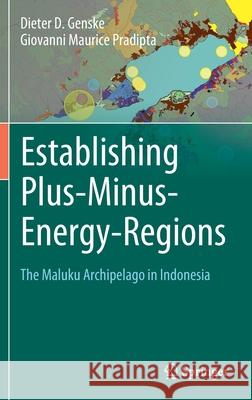
Establishing Plus-Minus-Energy-Regions: The Maluku Archipelago in Indonesia Genske, Dieter D. 9783030935955 Springer International Publishing - książkaWidoczna okładka, to zdjęcie poglądowe, a rzeczywista szata graficzna może różnić się od prezentowanej.

Establishing Plus-Minus-Energy-Regions: The Maluku Archipelago in Indonesia

ISBN-13: 9783030935955 / Angielski / Twarda / 2022 / 198 str.

Dieter D. Genske;Giovanni Maurice Pradipta
cena 563,56
(netto: 536,72 VAT:  5%)

Najniższa cena z 30 dni: 539,74
Termin realizacji zamówienia:
ok. 22 dni roboczych
Bez gwarancji dostawy przed świętami

Darmowa dostawa!
inne wydania

This book explains and illustrates how Indonesia as the largest and most populous country in Southeast Asia can become independent of fossil fuels by both reducing its energy needs and using renewable resources. A study presented in this work focuses on the Maluku Archipelago in eastern Indonesia with Ambon as its capital. Conventional energy is brought to the islands over long distances by partly simple means as boats, ships and aircrafts. This unsustainable situation calls for a decentralized renewable energy supply strategy.  
Based on the research presented in this book, it is clear that the archipelago has the potential to become a so-called plus-minus region. Plus-minus regions are regions that produce more renewable energy than they need and capture more CO2 than they emit. The authors are convinced that the presented strategy illustrated on the Maluku Archipelago can be transferred to other regions of the world and that only by developing plus-minus regions the international 2°C climate goal can be achieved. The model region thus serves as proof that the plus-minus target can also be achieved in emerging countries with limited financial resources.  

Kategorie:
Nauka
Kategorie BISAC:
Science > Earth Sciences - Geography
Technology & Engineering > Power Resources - Alternative & Renewable
Science > Environmental Science (see also Chemistry - Environmental)
Wydawca:
Springer International Publishing
Język:
Angielski
ISBN-13:
9783030935955
Rok wydania:
2022
Ilość stron:
198
Waga:
0.45 kg
Wymiary:
23.39 x 15.6 x 1.27
Oprawa:
Twarda
Wolumenów:
01
Dodatkowe informacje:
Wydanie ilustrowane

Part I: Time is running out 1 Why there is no time left 2 City, Urbanization, and Energy 3 Energy by Source and Demand 4 Energy Footprints, the Intra Muros-Principle and Plus-Minus-Regions 5 The Space-Resources Principle 6 The Spatial-Prototype Principle 7 The Principle of Closing Loops 8 The Social City Part II: Wonders of Thousands of Islands 9 Indonesia 9.1 Overview of Indonesia 9.2 Energy Status Quo of Indonesia 10 The Province of Maluku 10.1 Energy History 10.2 Energy Sectors and Energy Consumption in the Province of Maluku 10.3 Status Quo of Emissions in the Province 11 Ambon Island and Ambon City 11.1 Ambon City and Energy 11.2 Prototyping Ambon City and Ambon Island 12 Methodology of the Atlas x Part III: Turning Maluku towards a Sustainable Energy Future 13 Potentials for Energy Conservation 13.1 Living 13.2 Mobility 13.3 Working 14 Renewable Energy Potentials 14.1 Solar Energy 14.2 Hydropower 14.3 Wind Power 14.4 Bioenergy 14.5 Geothermal Energy 14.6 Thermal Energy from Wastewater 15 Two Scenarios for a Renewable Transition 15.1 National Strategic Scenario 15.2 Ambitious Innovation Scenario 15.3 The Strategy Matrix 16 The Moluccan Energy Transition Part IV: The Atlas 17 Atlas and Data 18 Mapping Results 18.1 Mapping Prototypes 18.2 Mapping Energy Consumption 18.3 Mapping Renewable Energy Production 18.4 Mapping Greenhouse Gas Emissions xi 19 Recommendations 19.1 Sufficiency measures 19.2 Efficiency Measures 19.3 Renewable Energy Generation 19.4 Infrastructure measures 19.5 Financing 20 Conclusion.

This book explains and illustrates how Indonesia as the largest and most populous country in Southeast Asia can become independent of fossil fuels by both reducing its energy needs and using renewable resources. A study presented in this work focuses on the Maluku Archipelago in eastern Indonesia with Ambon as its capital. Conventional energy is brought to the islands over long distances by partly simple means as boats, ships and aircrafts. This unsustainable situation calls for a decentralized renewable energy supply strategy.  


Based on the research presented in this book, it is clear that the archipelago has the potential to become a so-called plus-minus region. Plus-minus regions are regions that produce more renewable energy than they need and capture more CO2 than they emit.


The authors are convinced that the presented strategy illustrated on the Maluku Archipelago can be transferred to other regions of the world and that only by developing plus-minus regions the international 2°C climate goal can be achieved. The model region thus serves as proof that the plus-minus target can also be achieved in emerging countries with limited financial resources.



Udostępnij

Facebook - konto krainaksiazek.pl


Opinie o Krainaksiazek.pl na Opineo.pl

Partner Mybenefit

Krainaksiazek.pl w programie rzetelna firma Krainaksiaze.pl - płatności przez paypal

Czytaj nas na:

Facebook - krainaksiazek.pl
  • książki na zamówienie
  • granty
  • książka na prezent
  • kontakt
  • pomoc
  • opinie
  • regulamin
  • polityka prywatności

Zobacz:

  • Księgarnia czeska

  • Wydawnictwo Książkowe Klimaty

1997-2025 DolnySlask.com Agencja Internetowa

© 1997-2022 krainaksiazek.pl
     
KONTAKT | REGULAMIN | POLITYKA PRYWATNOŚCI | USTAWIENIA PRYWATNOŚCI
Zobacz: Księgarnia Czeska | Wydawnictwo Książkowe Klimaty | Mapa strony | Lista autorów
KrainaKsiazek.PL - Księgarnia Internetowa

Polityka prywatnosci - link
Krainaksiazek.pl - płatnośc Przelewy24
Przechowalnia Przechowalnia






