• Wyszukiwanie zaawansowane
  • Kategorie
  • Kategorie BISAC
  • Książki na zamówienie
  • Promocje
  • Granty
  • Książka na prezent
  • Opinie
  • Pomoc
  • Załóż konto
  • Zaloguj się

Essentials of WISC-V Assessment » książka


zaloguj się | załóż konto
Logo Krainaksiazek.pl

koszyk

konto

szukaj
topmenu
Księgarnia internetowa
Szukaj
Książki na zamówienie
Promocje
Granty
Książka na prezent
Moje konto
Pomoc
 
 
Wyszukiwanie zaawansowane
Pusty koszyk
Bezpłatna dostawa dla zamówień powyżej 20 złBezpłatna dostawa dla zamówień powyżej 20 zł

Kategorie główne

• Nauka
 [2939893]
• Literatura piękna
 [1808953]

  więcej...
• Turystyka
 [70366]
• Informatyka
 [150555]
• Komiksy
 [35137]
• Encyklopedie
 [23160]
• Dziecięca
 [608786]
• Hobby
 [136447]
• AudioBooki
 [1631]
• Literatura faktu
 [225099]
• Muzyka CD
 [360]
• Słowniki
 [2914]
• Inne
 [442115]
• Kalendarze
 [1068]
• Podręczniki
 [166599]
• Poradniki
 [468390]
• Religia
 [506548]
• Czasopisma
 [506]
• Sport
 [61109]
• Sztuka
 [241608]
• CD, DVD, Video
 [3308]
• Technologie
 [218981]
• Zdrowie
 [98614]
• Książkowe Klimaty
 [124]
• Zabawki
 [2174]
• Puzzle, gry
 [3275]
• Literatura w języku ukraińskim
 [260]
• Art. papiernicze i szkolne
 [7376]
Kategorie szczegółowe BISAC

Essentials of WISC-V Assessment

ISBN-13: 9781118980873 / Angielski / Miękka / 2017 / 656 str.
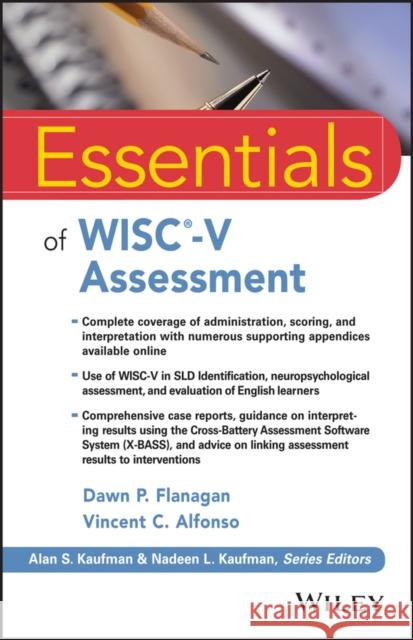
WA) Alfonso Spokane Vincent C. (Gonzaga University
Essentials of WISC-V Assessment Vincent C. (Gonzaga University, Spokane, WA) Alfonso 9781118980873 John Wiley & Sons Inc - książkaWidoczna okładka, to zdjęcie poglądowe, a rzeczywista szata graficzna może różnić się od prezentowanej.

Essentials of WISC-V Assessment

ISBN-13: 9781118980873 / Angielski / Miękka / 2017 / 656 str.

WA) Alfonso Spokane Vincent C. (Gonzaga University
cena 230,19
(netto: 219,23 VAT:  5%)

Najniższa cena z 30 dni: 226,92
Termin realizacji zamówienia:
ok. 30 dni roboczych.

Darmowa dostawa!

The comprehensive reference for informative WISC-V assessment Essentials of WISC-V Assessmentprovides step-by-step guidance for administering, scoring, and interpreting the Wechsler Intelligence Scale for Children (WISC-V). Packed with practical tips for more accurate assessment, this informative guide includes numerous case studies that illustrate a range of real-world issues. Special attention is devoted to the assessment of individuals who have significant learning difficulties, such as learning disabilities, and who speak English as a second language. The WISC-V is a valuable assessment tool, but it must be administered and scored appropriately to gain meaning from score interpretation. This book gives you an in-depth understanding of the WISC-V assessment and interpretive process to assist practitioners in:

  • Conducting efficient and informative WISC-V assessments
  • Utilizing WISC-V in cross-battery and neuropsychological assessment
  • Applying WISC-V in the identification of specific learning disabilities
  • Utilizing WISC-V in nondiscriminatory assessment of English language learners
  • Writing theory-based WISC-V reports
  • Linking WISC-V findings to interventions based on individual performance
As the world's most widely-used intelligence test for children, the WISC-V is useful in diagnosing intellectual disabilities and specific learning disabilities, as well as in identifying giftedness. In this volume, sample reports demonstrate how WISC-V assessment results may be linked to interventions, accommodations, modifications, and compensatory strategies that facilitate positive outcomes for children. Essentials of WISC-V Assessment is the all-in-one practical resource for both students and practitioners. The book can be used on its own or with companion software (purchased separately) that provides a user-friendly tool for producing psychometrically and theoretically defensible interpretations of WISC-V performance, and may be used to develop interventions based on each child's strengths and weaknesses.

Kategorie:
Nauka, Psychologia
Kategorie BISAC:
Psychology > Assessment, Testing & Measurement
Wydawca:
John Wiley & Sons Inc
Język:
Angielski
ISBN-13:
9781118980873
Rok wydania:
2017
Ilość stron:
656
Waga:
0.76 kg
Wymiary:
21.5 x 14.0 x 4.3
Oprawa:
Miękka
Wolumenów:
01

Acknowledgements

Series Preface

Foreword

Susie Engi Raiford, PhD; Pearson Clinical Assessment; San Antonio, Texas

Chapter 1: Overview of the WISC–V

W. Joel Schneider, Ph.D.; Dawn P. Flanagan, Ph.D.; and Vincent C. Alfonso, Ph.D.

From Prediction to Prevention

From Explanation to Enduring Empathy

General Trends in Intelligence Test Interpretation

Why the History of the Wechsler Scales Matters

Description of the WISC–V

Test Yourself

References

Chapter Two: How to Administer the WISC–V

Appropriate Testing Conditions

Rapport with Examinee

Testing Individuals with Special Needs

Administration Considerations

Rules for Starting and Discontinuing Subtests

Recording Responses

Timing

Querying

Subtest–By–Subtest Rules of Administration of the WISC–V Primary Subtests

Subtest–by–Subtest Rules of Administration of the WISC–V Secondary & Complementary Subtests

Frequently Asked Questions: Subtest Administration

Test Yourself

References

Chapter 3: How to Score the WISC–V

Types of Scores

Step–by–Step: How the WISC–V is Scored

Test Yourself

References

Chapter 4: How to Interpret The WISC–V

Getting Started

WISC–V Interpretation Step–by–Step

Conclusion

Test Yourself

References

Chapter 5: Strengths and Weaknesses of the WISC–V

Test Yourself

References

Chapter 6: A Neuropsychological Approach to Interpretation of the WISC–V

George McCloskey, Ph.D.; Jamie Slonim; Robert Whitaker, Psy.S. NCSP, ABSNP; Samantha Kaufman; Naoko Nagoshi, Ph.D.

Introduction

Levels of Interpretation

Neuropsychological Interpretation of WISC–V Performance

WISC–V Complementary Subtests

Summary

Test Yourself

References

Chapter 7: Use of the WISC–V in the Identification of Specific Learning Disabilities

The Dual Discrepancy/Consistency Operational Definition of SLD

Using X–BASS for SLD Identification: Three Steps to PSW Output

PSW–A Data Summary

PSW–A g–Value Data Summary

Dual Discrepancy/Consistency Model: PSW Analyses for SLD

Conclusions

Test Yourself

References

Chapter 8: Illustrative Case Report

Erin M. McDonough, Ph.D.

Psycho–Educational Evaluation Report

Chapter 9: Assessment of English Learners with the WISC–V

Samuel O. Ortiz, Ph.D.; Kristan E. Melo, M.S.; Meghan A. Opperman, B.A.

Introduction

Fairness, Bias, and Traditional Assessment Approaches

A Recommended Best Practice Approach

Best Practices in the Evaluation of ELs with the WISC–V

Case Study: Jose Maria

Conclusion

Test Yourself

References

Chapter 10: WISC–V and Q–interactive

Carlea Dries, M.A., M.Ed., N.C.C.; Ron Dumont, Ed.D., NCSP; Kathleen D. Viezel, Ph.D., NCSP

Introduction

Digital Platform

Hardware

Software

Setup

Administration

Training and Tech Support

Output

Security and Legal Issues

Considerations for University Trainers

Pricing

Overall Impressions and Recommendations

Test Yourself

References

Epilogue: Dorothea McCarthy Remembered

Alan S. Kaufman, Ph.D.

References

Appendix A: A Brief Overview of the Cattell–Horn–Carroll (CHC) Theory

Appendix B: Norms Tables for New Clinical Composites

Appendix C: Case Reports

Gail Cheramie, Ph.D.; Jamie Chaffin, Ed.D.; Robert Lichtenstein, Ph.D.

Comprehensive Evaluation

Psychoeducational Report

Psychoeducational Assessment Report

Appendix D: Form for Manifestations of Cognitive Weaknesses

Appendix E: Definition of Terms and Clarification of Concepts Used in the DD/C Definition and X–BASS

Appendix F: Task Characteristics of WISC–V Subtests

Appendix G: Cognitive Constructs Assessed with the WISC–V Subtests

Verbal Comprehension Domain Subtests

Cognitive Constructs Assessed with the Fluid Reasoning and Visual Spatial Subtests

Cognitive Capacities Assessed with the Working Memory Subtests and the Arithmetic and Immediate Symbol Translation Subtests

Cognitive Constructs assessed with the Processing Speed Subtests

Cognitive Constructs assessed with the Naming Speed Subtests

Cognitive Constructs Assessed with the Symbol Translation Tasks

Appendix H: Behavior Observations and Process–oriented Assessment at the Subtest, Item, and Cognitive Construct Levels

Verbal Comprehension Subtests

Fluid Reasoning and Visual Spatial Subtests

Working Memory Domain and Arithmetic and Symbol Translation Subtests

Processing Speed Subtests

Naming Speed Subtests

Appendix I: Cluster Analysis Interpretation

Steps for Completing Subtest Cluster Analyses

Verbal Comprehension Clinical Clusters and Cluster Contrasts

Verbal Comprehension Clinical Cluster Contrasts

Fluid Reasoning and Visual Spatial Clinical Clusters and Cluster Contrasts

Fluid Reasoning/Visual Spatial Clinical Cluster Contrasts

Working Memory Clinical Clusters and Clinical Cluster Contrasts

Appendix J: Subtest and Process Score Comparison Worksheets

Appendix K: CBRS Scores

Appendix L: Cross–Battery Assessment Software System (X–BASS): Dual–Discrepancy/Consistency Model: PSW Results for Amanda Farris

Appendix M: Factors That May Facilitate Learning and Aid in Bypassing or Minimizing the Effects of Deficits

About the Authors

Contributors

Dawn P. Flanagan, PhD, is Professor of Psychology at St. John s University and Clinical Assistant Professor of Psychology at Yale Child Study Center, Yale University School of Medicine. She serves as an expert witness, learning disabilities consultant, and psychoeducational test/measurement consultant and trainer for national and international organizations. Dr. Flanagan is an author of numerous publications and best known for her development of the Cross–Battery Assessment approach and the development of an operational definition of specific learning disability.

Vincent C. Alfonso, PhD, is the Dean of School of Education at Gonzaga University. He is the past president of Division 16 (School Psychology) of the American Psychological Association, fellow of Divisions 16 and 5 of the APA, and a certified school psychologist and licensed psychologist. He has been providing psychoeducational services to individuals across the lifespan for more than 20 years. He is the co–editor with Dawn Flanagan of Essentials of Specific Learning Disability Identification, and co–author of Essentials of Cross–Battery Assessment, Third Edition.

  • Complete coverage of administration, scoring, and interpretation with numerous supporting appendices available online
  • Use of WISC–V in SLD Identification, neuropsychological assessment, and evaluation of English learners
  • Comprehensive case reports, guidance on interpreting results using the Cross–Battery Assessment Software System (X–BASS), and advice on linking assessment results to interventions

A comprehensive review of the knowledge and skills needed to administer, score and interpret the new WISC®–V Assessment

Written by Dawn P. Flanagan and Vincent C. Alfonso two experts in assessment Essentials of WISC®–V Assessment offers practitioners step–by–step guidance for administering, scoring, and interpreting the Wechsler Intelligence Scale for Children (WISC–V). The WISC–V is the world′s most widely–used intelligence test for children and offers a tool for identifying children with intellectual disabilities and specific learning disabilities, as well as those who are gifted. Essentials of WISC–V Assessment is filled with practical suggestions for accurate assessment and contains illustrative, real–world case studies. In addition, this vital resource contains sample reports that show how WISC–V results are interpreted and reported using the Cross–Battery Assessment Software System (X–BASS) and linked to interventions that facilitate positive outcomes for children.

The companion software and a wealth of informative appendices that are available online facilitate WISC–V interpretation and assist the user in understanding test performance. As with all the volumes in the Essentials of Psychological Assessment series, this book is designed to help busy practitioners and school psychologists quickly acquire the knowledge and skills they need. The chapters feature numerous callout boxes highlighting key concepts, bulleted points, and extensive illustrative material, as well as test questions to help reinforce your grasp of the information covered.

Other titles in the Essentials of Psychological Assessment series:

  • Essentials of Assessment Report Writing
  • Essentials of Processing Assessment
  • Essentials of WIAT®–III and KTEA–3 Assessment
  • Essentials of WJ IV® Tests of Achievement Assessment
  • Essentials of WPPSI–IV Assessment
  • Essentials of Cross–Battery Assessment, Third Edition
  • Essentials of Executive Functioning Assessment
  • Essentials of WMS®–IV Assessment
  • Essentials of Specific Learning Disability Identification
  • Essentials of Evidence–Based Academic Interventions

Visit us on the Web at: www.wiley.com/essentials


Udostępnij

Facebook - konto krainaksiazek.pl


Opinie o Krainaksiazek.pl na Opineo.pl

Partner Mybenefit

Krainaksiazek.pl w programie rzetelna firma Krainaksiaze.pl - płatności przez paypal

Czytaj nas na:

Facebook - krainaksiazek.pl
  • książki na zamówienie
  • granty
  • książka na prezent
  • kontakt
  • pomoc
  • opinie
  • regulamin
  • polityka prywatności

Zobacz:

  • Księgarnia czeska

  • Wydawnictwo Książkowe Klimaty

1997-2026 DolnySlask.com Agencja Internetowa

© 1997-2022 krainaksiazek.pl
     
KONTAKT | REGULAMIN | POLITYKA PRYWATNOŚCI | USTAWIENIA PRYWATNOŚCI
Zobacz: Księgarnia Czeska | Wydawnictwo Książkowe Klimaty | Mapa strony | Lista autorów
KrainaKsiazek.PL - Księgarnia Internetowa

Polityka prywatnosci - link
Krainaksiazek.pl - płatnośc Przelewy24
Przechowalnia Przechowalnia






