• Wyszukiwanie zaawansowane
  • Kategorie
  • Kategorie BISAC
  • Książki na zamówienie
  • Promocje
  • Granty
  • Książka na prezent
  • Opinie
  • Pomoc
  • Załóż konto
  • Zaloguj się

Ergometry in Hypertensive Patients: Implications for Diagnosis and Treatment » książka


zaloguj się | załóż konto
Logo Krainaksiazek.pl

koszyk

konto

szukaj
topmenu
Księgarnia internetowa
Szukaj
Książki na zamówienie
Promocje
Granty
Książka na prezent
Moje konto
Pomoc
 
 
Wyszukiwanie zaawansowane
Pusty koszyk
Bezpłatna dostawa dla zamówień powyżej 20 złBezpłatna dostawa dla zamówień powyżej 20 zł

Kategorie główne

• Nauka
 [2946350]
• Literatura piękna
 [1816154]

  więcej...
• Turystyka
 [70666]
• Informatyka
 [151172]
• Komiksy
 [35576]
• Encyklopedie
 [23172]
• Dziecięca
 [611458]
• Hobby
 [135995]
• AudioBooki
 [1726]
• Literatura faktu
 [225763]
• Muzyka CD
 [378]
• Słowniki
 [2917]
• Inne
 [444280]
• Kalendarze
 [1179]
• Podręczniki
 [166508]
• Poradniki
 [469467]
• Religia
 [507199]
• Czasopisma
 [496]
• Sport
 [61352]
• Sztuka
 [242330]
• CD, DVD, Video
 [3348]
• Technologie
 [219391]
• Zdrowie
 [98638]
• Książkowe Klimaty
 [124]
• Zabawki
 [2382]
• Puzzle, gry
 [3525]
• Literatura w języku ukraińskim
 [259]
• Art. papiernicze i szkolne
 [7107]
Kategorie szczegółowe BISAC

Ergometry in Hypertensive Patients: Implications for Diagnosis and Treatment

ISBN-13: 9783642703744 / Angielski / Miękka / 2011 / 228 str.
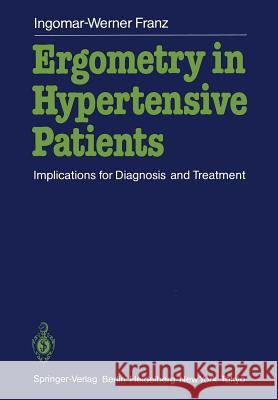
Ingomar W. Franz; Terry Telger; P. Sch Lmerich
Ergometry in Hypertensive Patients: Implications for Diagnosis and Treatment Telger, Terry 9783642703744 Springer - książkaWidoczna okładka, to zdjęcie poglądowe, a rzeczywista szata graficzna może różnić się od prezentowanej.

Ergometry in Hypertensive Patients: Implications for Diagnosis and Treatment

ISBN-13: 9783642703744 / Angielski / Miękka / 2011 / 228 str.

Ingomar W. Franz; Terry Telger; P. Sch Lmerich
cena 402,53
(netto: 383,36 VAT:  5%)

Najniższa cena z 30 dni: 385,52
Termin realizacji zamówienia:
ok. 16-18 dni roboczych.

Darmowa dostawa!

Within the field of general medicine, the last two decades have seen the curative procedures increasingly supplemented by func tions that can be summed up under the heading of "preventive health care." There is a close link between this development and the changing morbidity pattern. In highly developed countries the morbidity rate attributable to infectious diseases has been much reduced, while the various types of arteriosclerosis, some tumorous conditions, and so-called functional syndromes have attained massive incidence rates. Systematic epidemiologic studies have yielded the concept of risk factors, i. e., certain exogenous and endogenous factors whose elimination, ideally, would make it possible to avoid the manifestation of an illness or to ensure it did not become mani fest until later in life or in a milder form. The socioeconomic and sociomedical significance of these aspects is considerable, as can be seen from all the statistics on the reasons for incapacity and early retirement and on the relative contributions of different ill nesses to total mortality. Effective avoidance of illnesses by primary prophylaxis (elimi nation of the causes of disease) or early detection of the symp toms of disease (secondary prophylaxis) leading to early treat ment would be a particularly significant step forward, since in the case of most of the conditions mentioned above only pallia tive forms of treatment are available, and none that have any cu rative effect."


Kategorie:
Nauka, Medycyna
Kategorie BISAC:
Medical > Kardiologia
Medical > Family & General Practice
Medical > Urazy sportowe
Wydawca:
Springer
Język:
Angielski
ISBN-13:
9783642703744
Rok wydania:
2011
Wydanie:
Softcover Repri
Ilość stron:
228
Waga:
0.44 kg
Wymiary:
24.4 x 17.0
Oprawa:
Miękka
Wolumenów:
01

I. Methodology.- 1. Principles of Ergometry.- 1.1. Methodologic Principles.- 1.1.1. Physical Principles.- 1.1.2. Exercise Stages and Workload Increments.- 1.1.3. Standards for Ergometric Testing.- 1.2. Physiology and Pathophysiology of Ergometry.- 1.2.1. Hemodynamic Changes.- 1.2.2. Arterial Wall Changes.- 2. Blood Pressure Measurement during Ergometry.- 2.1. Study Population.- 2.2. Test Methodology.- 2.2.1. The Ergometer.- 2.2.2. Exercise Stages and Workload Increments.- 2.3. Heart Rate Measurement.- 2.4. Blood Pressure Measurement.- 2.5. Comparison of Direct and Indirect Blood Pressure Measurements.- 2.6. Environmental Specifications and Test Preparations.- II. Ergometry as an Aid to Diagnosis.- 1. Statement of Problem.- 2. Blood Pressure and Heart Rate Responses of Normal Individuals.- 2.1. Blood Pressure Responses of Men 20–50 Years of Age.- 2.1.1. Study Population.- 2.1.2. Resting Blood Pressure.- 2.1.3. Blood Pressure during Ergometry.- 2.1.4. Blood Pressure during Recovery.- 2.1.5. Heart Rate before, during and after Ergometry.- 2.2. Blood Pressure and Heart Rate Responses of Men 55–80 Years of Age.- 2.2.1. Study Population.- 2.2.2. Resting Blood Pressure.- 2.2.3. Blood Pressure during Ergometry.- 2.2.4. Blood Pressure during Recovery.- 2.2.5. Heart Rate before, during and after Ergometry.- 2.3. Blood Pressure and Heart Rate Responses of Women 20–50 Years of Age.- 2.3.1. Study Population.- 2.3.2. Resting Blood Pressure.- 2.3.3. Blood Pressure during Ergometry.- 2.3.4. Blood Pressure during Recovery.- 2.3.5. Heart Rate before, during and after Ergometry.- 2.4. Comparative Assessment of the Blood Pressure Responses of Normotensive Men and Women.- 2.5. Practical Utilization of Normal Values.- 2.6. Correlative Assessment of Diastolic Blood Pressures before, during and after Ergometry.- 3. Blood Pressure and Heart Responses of Hypertensive Patients.- 3.1. Reproducibility of Blood Pressure and Heart Rate Responses during and after Ergometry.- 3.1.1. Hypertensives.- 3.1.2. Borderline Hypertensives.- 3.2. Comparison of Hypertensive Males Varying in Age and Severity of Blood Pressure Elevation.- 3.2.1. Patients.- 3.2.2. Age Comparison of Hypertensives with Blood Pressures below 170/105 mm Hg.- 3.2.3. Age Comparison in Hypertensives with Blood Pressures above 170/105 mm Hg.- 3.2.4. Hypertensives of Equal Age but with Different Severities of Blood Pressure Elevation.- 3.3. Comparison of Hypertensive Females of Varying Ages.- 3.3.1. Patients.- 3.3.2. Blood Pressure and Heart Rate Responses.- 3.4. Summary and Conclusions.- 3.4.1. Mean Systolic and Diastolic Blood Pressure Responses.- 3.4.2. Reproducibility of the Blood Pressure.- 3.4.3. Analysis of Blood Pressure Responses by Hemodynamic Reaction Type.- 3.4.4. Analysis of the Upper Normotensive Limit.- 3.4.5. Individual Blood Pressure Response.- 4. Blood Pressure and Heart Rate Responses of Borderline Hypertensives.- 4.1. Blood Pressure and Heart Rate Responses of Men 20–50 Years of Age.- 4.1.1. Patients.- 4.1.2. Blood Pressure and Heart Rate Responses.- 4.2. Comparative Study of Borderline Hypertensives, Definite Hypertensives and Normotensives of Equal Age Distribution.- 4.2.1. Study Population.- 4.2.2. Blood Pressure and Heart Rate Responses.- 4.3. Follow-Up of the Borderline Hypertensives at 3.8 Years.- 4.3.1. Patients.- 4.3.2. Follow-Up of the “Exercise-Positive” Borderline Hypertensives.- 4.3.3. “Exercise-Negative” Borderline Hypertensives.- 4.4. Resting Blood Pressures of Borderline Hypertensives Compared with Hypertensives and Normotensives.- 4.4.1. Orthostatics.- 4.4.2. Emotional Influences.- 4.5. Summary and Conclusions.- 4.5.1. Prevalence and Course of Borderline Hypertension.- 4.5.2. The Early Diagnosis of Hypertension in Borderline Patients.- 4.5.3. Prognostic Evaluation of Borderline Hypertension.- 4.5.4. Therapeutic Implications.- 5. Blood Pressure Increments from Rest to Exercise in Normotensives, Borderline Hypertensives and Hypertensives.- 5.1. Results and Comparison with Invasive Measurements.- 5.2. Summary and Conclusions.- 6. Blood Pressure and Heart Rate Responses of Elderly Hypertensives.- 6.1. Comparative Study of Elderly Hypertensives and Normotensives of Equal Age Distribution.- 6.1.1. Study Population.- 6.1.2. Blood Pressure and Heart Rate Responses.- 6.2. Summary and Conclusions.- 6.2.1. Prevalence.- 6.2.2. Prognosis.- 6.2.3. Diagnostic Assessment.- 6.2.4. Therapeutic Implications.- 7. Ergometry for Assessing the Myocardial Oxygen Consumption and Cardiocorporeal Performance Capacity of Hypertensive Patients.- 7.1. Comparative Determination of the Rate-Pressure Product of Hypertensives and Normotensives.- 7.1.1. Study Population.- 7.1.2. Rate-Pressure Product of Younger Hypertensives, Borderline Hypertensives and Normotensives.- 7.1.3. Rate-Pressure Product of Elderly Hypertensives and Normotensives.- 7.2. Comparative Determination of the Physical Work Capacity 170 of Hypertensives and Normotensives.- 7.2.1. Study Population.- 7.2.2. PWC 170 of Hypertensives, Normotensives and Borderline Hypertensives.- 7.3. Assessment of Myocardial Oxygen Consumption and Cardiocorporeal Performance Capacity.- 7.3.1. Prognostic Significance of the Myocardial Oxygen Consumption.- 7.3.2. Economization through Endurance Training.- 7.3.3. Prescribing Physical Training in Hypertensive Patients.- III. Ergometry as an Aid to Patient Management.- 1. Importance of Exercise Blood Pressures as a Vascular Risk Factor.- 1.1. Development of Atherosclerosis in Arterial Hypertension.- 1.2. Severity of Stress-Induced Blood Pressure Elevations and Their Evaluation.- 1.3. Prognosis of Acute and Chronic Complications.- 1.4. The Pressor Response to Stress as a Causal Factor in Chronic Hypertensive Complications.- 2. The Control of Excessive Blood Pressures under Stress.- 2.1. Statement of Problem.- 2.2. Requirements of Antihypertensive Therapy.- 3. Antihypertensive Effect of Beta-Blocking Drugs.- 3.1. Comparison of Atenolol/Nadolol and Metoprolol.- 3.1.1. Patients and Methods.- 3.1.2. Effect 2, 8 and 24 Hours after Last Oral Dosing.- 3.2. Comparison of Pindolol, Metoprolol and Acebutolol.- 3.2.1. Patients and Methods.- 3.2.2. Effect during Sustained Submaximal and Maximal Exertion.- 3.2.3. Effect of Long-Term Treatment for 12–16 Months.- 4. Antihypertensive Effect of Diuretics Compared with Beta-Blocking Drugs and Their Combinations.- 4.1. Comparison of Hydrochlorothiazide/Amiloride Hydrochloride and Acebutolol.- 4.1.1. Patients and Methods.- 4.1.2. Comparison of Monotherapies.- 4.1.3. Efficacy of the Combination.- 4.2. Comparison of Mefruside and Acebutolol.- 4.2.1. Patients and Methods.- 4.2.2. Comparison of Monotherapies.- 4.2.3. Effect on Myocardial Oxygen Consumption.- 4.3. Fixed Combination of Timolol and Hydrochlorothiazide/Amiloride Hydrochloride.- 4.3.1. Patients and Methods.- 4.3.2. Blood Pressure and Heart Rate Responses.- 4.4. Fixed Combination of Acebutolol and Mefruside in Mild Hypertensives with Coronary Disease.- 4.4.1. Patients and Methods.- 4.4.2. Blood Pressure and Heart Rate Responses.- 4.4.3. Effect on Myocardial Oxygen Consumption and ST-Segment Depression.- 5. Antihypertensive Effect of Vasodilators Compared with Betablockers and Their Combinations.- 5.1.1. Patients and Methods.- 5.1.2. Comparison of Monotherapies.- 5.1.3. Efficacy of the Free Combination.- 5.1.4. Effect on Myocardial Oxygen Consumption.- 5.2. Comparison of Nifedipine, Nitrendipine and Acebutolol.- 5.2.1. Patients and Methods.- 5.2.2. Comparison of Monotherapies.- 5.2.3. Efficacy of the Free Combination.- 5.2.4. Efficacy during Bicycle Ergometry and during Isometric Exercise.- 6. Summary and Conclusions Regarding Beta Blockers, Diuretics and Vasodilators.- 6.1. Efficacy and Side-Effects of Beta-Blocking Drugs.- 6.2. Cardioprotective Effect of Beta-Blocking Drugs.- 6.3. Importance of Combined Beta Blocker-Diuretic Therapy.- 6.4. Evaluation of Monotherapy and Combined Therapy.- 6.5. Conclusions.- 7. Beta-Blocking Drugs and Diuretics for the Treatment of Hypertension in the Elderly.- 7.1. Fixed Combination of Metipranolol and Butizide.- 7.1.1. Patients and Methods.- 7.1.2. Blood Pressure and Heart Rate Responses.- 7.2. Fixed Combination of Timolol and Hydrochlorothiazide/Amiloride Hydrochloride.- 7.2.1. Patients.- 7.2.2. Blood Pressure Responses.- 7.2.3. ECG Findings.- 7.2.4. Myocardial Oxygen Consumption and Ergometric Stress Tolerance.- 7.2.5. Side-Effects.- 7.3. Summary and Conclusions.- 8. Antihypertensive Effect of Weight Reduction and Endurance Training.- 8.1. Patients and Methods.- 8.2. Blood Pressure and Heart Rate Responses.- 8.3. Effect on Myocardial Oxygen Consumption.- 8.4. Summary and Conclusions.- 8.4.1. Importance of Weight Reduction and Endurance Training.- 8.4.2. Comparison of Weight Reduction and Drug Therapy.- IV. References.- V. Subject Index.


Udostępnij

Facebook - konto krainaksiazek.pl


Opinie o Krainaksiazek.pl na Opineo.pl

Partner Mybenefit

Krainaksiazek.pl w programie rzetelna firma Krainaksiaze.pl - płatności przez paypal

Czytaj nas na:

Facebook - krainaksiazek.pl
  • książki na zamówienie
  • granty
  • książka na prezent
  • kontakt
  • pomoc
  • opinie
  • regulamin
  • polityka prywatności

Zobacz:

  • Księgarnia czeska

  • Wydawnictwo Książkowe Klimaty

1997-2026 DolnySlask.com Agencja Internetowa

© 1997-2022 krainaksiazek.pl
     
KONTAKT | REGULAMIN | POLITYKA PRYWATNOŚCI | USTAWIENIA PRYWATNOŚCI
Zobacz: Księgarnia Czeska | Wydawnictwo Książkowe Klimaty | Mapa strony | Lista autorów
KrainaKsiazek.PL - Księgarnia Internetowa

Polityka prywatnosci - link
Krainaksiazek.pl - płatnośc Przelewy24
Przechowalnia Przechowalnia






