• Wyszukiwanie zaawansowane
  • Kategorie
  • Kategorie BISAC
  • Książki na zamówienie
  • Promocje
  • Granty
  • Książka na prezent
  • Opinie
  • Pomoc
  • Załóż konto
  • Zaloguj się

Epistemology & Methodology I:: Exploring the World » książka


zaloguj się | załóż konto
Logo Krainaksiazek.pl

koszyk

konto

szukaj
topmenu
Księgarnia internetowa
Szukaj
Książki na zamówienie
Promocje
Granty
Książka na prezent
Moje konto
Pomoc
 
 
Wyszukiwanie zaawansowane
Pusty koszyk
Bezpłatna dostawa dla zamówień powyżej 20 złBezpłatna dostawa dla zamówień powyżej 20 zł

Kategorie główne

• Nauka
 [2952079]
• Literatura piękna
 [1850969]

  więcej...
• Turystyka
 [71058]
• Informatyka
 [151066]
• Komiksy
 [35579]
• Encyklopedie
 [23181]
• Dziecięca
 [620496]
• Hobby
 [139036]
• AudioBooki
 [1646]
• Literatura faktu
 [228729]
• Muzyka CD
 [379]
• Słowniki
 [2932]
• Inne
 [445708]
• Kalendarze
 [1409]
• Podręczniki
 [164793]
• Poradniki
 [480107]
• Religia
 [510956]
• Czasopisma
 [511]
• Sport
 [61267]
• Sztuka
 [243299]
• CD, DVD, Video
 [3411]
• Technologie
 [219640]
• Zdrowie
 [100984]
• Książkowe Klimaty
 [124]
• Zabawki
 [2281]
• Puzzle, gry
 [3363]
• Literatura w języku ukraińskim
 [258]
• Art. papiernicze i szkolne
 [8020]
Kategorie szczegółowe BISAC

Epistemology & Methodology I:: Exploring the World

ISBN-13: 9789027715111 / Angielski / Twarda / 1983 / 404 str.
Mario Bunge; M. Bunge
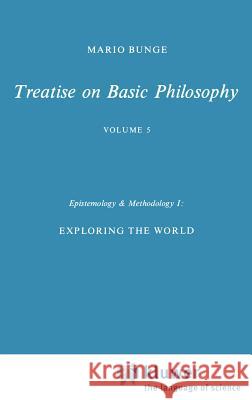
Epistemology & Methodology I:: Exploring the World Bunge, M. 9789027715111 Springer - książkaWidoczna okładka, to zdjęcie poglądowe, a rzeczywista szata graficzna może różnić się od prezentowanej.

Epistemology & Methodology I:: Exploring the World

ISBN-13: 9789027715111 / Angielski / Twarda / 1983 / 404 str.

Mario Bunge; M. Bunge
cena 442,79
(netto: 421,70 VAT:  5%)

Najniższa cena z 30 dni: 385,52
Termin realizacji zamówienia:
ok. 22 dni roboczych.

Darmowa dostawa!

In this Introduction we shall state the business of both descriptive and normative epistemology, and shall locate them in the map oflearning. This must be done because epistemology has been pronounced dead, and methodology nonexisting; and because, when acknowledged at all, they are often misplaced. 1. DESCRIPTIVE EPISTEMOLOGY The following problems are typical of classical epistemology: (i) What can we know? (ii) How do we know? (iii) What, if anything, does the subject contribute to his knowledge? (iv) What is truth? (v) How can we recognize truth? (vi) What is probable knowledge as opposed to certain knowledge? (vii) Is there a priori knowledge, and if so of what? (viii) How are knowledge and action related? (ix) How are knowledge and language related? (x) What is the status of concepts and propositions? In some guise or other all of these problems are still with us. To be sure, if construed as a demand for an inventory of knowledge the first problem is not a philosophical one any more than the question 'What is there?'. But it is a genuine philosophical problem if construed thus: 'What kinds of object are knowable-and which ones are not?' However, it is doubtful that philosophy can offer a correct answer to this problem without the help of science and technology. For example, only these disciplines can tell us whether man can know not only phenomena (appearances) but also noumena (things in themselves or self-existing objects).


Kategorie:
Nauka, Filozofia
Kategorie BISAC:
Philosophy > Political
Philosophy > Epistemology
Science > Philosophy & Social Aspects
Wydawca:
Springer
Seria wydawnicza:
Treatise on Basic Philosophy
Język:
Angielski
ISBN-13:
9789027715111
Rok wydania:
1983
Wydanie:
1983
Numer serii:
000071415
Ilość stron:
404
Waga:
0.79 kg
Wymiary:
23.67 x 16.56 x 3.4
Oprawa:
Twarda
Wolumenów:
01
Dodatkowe informacje:
Bibliografia
Wydanie ilustrowane

of Epistemology I.- 1. Descriptive Epistemology.- 2. Normative Epistemology (Methodology).- 3. Epistemology and Biology.- 4. Epistemology and Psychology.- 5. The Place of Epistemology.- 6. Uses of Epistemology.- 7. Concluding Remarks.- I. Cognition and Communication.- 1. Cognition.- 1. The Knowing Subject.- 1.1. The Cognitive Organ.- 1.2. Brain States and Processes.- 2. Cognitive Functions.- 2.1. Perceiving, Thinking, and all that.- 2.2. Learning.- 3. Development and Evolution.- 3.1. Cognitive Development.- 3.2. Cognitive Evolution.- 4. Concluding Remarks.- 2. Knowledge.- 1. From Cognition to Knowledge.- 1.1. Knowledge Acquisition and Use.- 1.2. Knowledge Evolution.- 2. Modes of Knowledge.- 2.1. Basic Categories.- 2.2. Tacit and Explicit Knowledge.- 3. Belief.- 3.1. Belief System.- 3.2. Belief and Knowledge.- 4. Inquiry.- 4.1. Field of Knowledge.- 4.2. How is Knowledge Possible?.- 5. Concluding Remarks.- 3. Communication.- 1. Subject and World.- 1.1. Subject-Object Relation.- 1.2. Inter-Subject Relation.- 2. Social Matrix.- 2.1. Cognitive Habitat and Niche.- 2.2. Learning Community.- 3. Communication.- 3.1. Communication System.- 3.2. Language, Thought, and Reality.- 4. Concluding Remarks.- II. Perceiving and Thinking.- 4. Perceiving.- 1. From Sensing to Perceiving.- 1.1. Sensing.- 1.2. Perceiving.- 2. Observing.- 2.1. Direct Observation.- 2.2. Indirect Observation.- 3. Mapping Reality.- 3.1. Perceptual Mapping.- 3.2. Appearance and Reality.- 4. Concluding Remarks.- 5. Conceiving.- 1. Concept.- 1.1. From Percept to Concept.- 1.2. Concept Formation.- 2. Proposition.- 2.1. From Thought to Proposition.- 2.2. A Priori and a Posteriori.- 3. Exactification.- 3.1. From Vagueness to Exactness.- 3.2. Quality and Quantity.- 4. Representation.- 4.1. Conceptual Map.- 4.2. Discovery or Invention?.- 5. Concluding Remarks.- 6. Inferring.- 1. From Spontaneity to Formality.- 1.1. Natural Reasoning.- 1.2. Formal Reasoning.- 2. Plausible Reasoning.- 2.1. Analogical Inference.- 2.2. Statistical Inference and Hypothetical Reasoning.- 3. Discussing.- 3.1. Analysis and Criticism.- 3.2. Controversy.- 4. Concluding Remarks.- III. Exploring and Theorizing.- 7. Exploring.- 1. Exploratory Behavior.- 1.1. Psychobiology of Problems.- 1.2. Sources and Choices.- 2. From Intuition to Method.- 2.1. Intuition.- 2.2. Method.- 3. Approach and Research.- 3.1. Approach.- 3.2. Research.- 4. Analysis of Problems.- 4.1. Logic and Semantics of Problems.- 4.2. Solved, Unsolved, Insoluble.- 5. Concluding Remarks.- 8. Conjecturing.- 1. From Preconception to Hypothesis.- 1.1. Psychobiology of Conjecturing.- 1.2. Hypothesis.- 2. Scope and Depth.- 2.1. Scope.- 2.2. Depth.- 3. Chance and Cause.- 3.1. Probabilistic Hypotheses.- 3.2. Causal Hypotheses.- 4. Requirements.- 4.1. Strength and Precision.- 4.2. Systemicity and Scrutability.- 5. Concluding Remarks.- 9. Systematizing.- 1. Classification and Theory.- 1.1. Classification.- 1.2. Theory.- 2. Construction and Reality.- 2.1. Theory Construction.- 2.2. Theory and Reality.- 3. Convention and Law.- 3.1. Convention.- 3.2. Law.- 4. Concluding Remarks.- Appendices.- 1. The Power of Mathematics in Theory Construction: A Simple Model of Evolution.- 2. The Prose Identifying the Variables.- Index of Names.- Index of Subjects.

Bunge, Mario Mario Bunge is professor in the philosophy departm... więcej >


Udostępnij

Facebook - konto krainaksiazek.pl


Opinie o Krainaksiazek.pl na Opineo.pl

Partner Mybenefit

Krainaksiazek.pl w programie rzetelna firma Krainaksiaze.pl - płatności przez paypal

Czytaj nas na:

Facebook - krainaksiazek.pl
  • książki na zamówienie
  • granty
  • książka na prezent
  • kontakt
  • pomoc
  • opinie
  • regulamin
  • polityka prywatności

Zobacz:

  • Księgarnia czeska

  • Wydawnictwo Książkowe Klimaty

1997-2026 DolnySlask.com Agencja Internetowa

© 1997-2022 krainaksiazek.pl
     
KONTAKT | REGULAMIN | POLITYKA PRYWATNOŚCI | USTAWIENIA PRYWATNOŚCI
Zobacz: Księgarnia Czeska | Wydawnictwo Książkowe Klimaty | Mapa strony | Lista autorów
KrainaKsiazek.PL - Księgarnia Internetowa

Polityka prywatnosci - link
Krainaksiazek.pl - płatnośc Przelewy24
Przechowalnia Przechowalnia





