• Wyszukiwanie zaawansowane
  • Kategorie
  • Kategorie BISAC
  • Książki na zamówienie
  • Promocje
  • Granty
  • Książka na prezent
  • Opinie
  • Pomoc
  • Załóż konto
  • Zaloguj się

Epistemic Virtues in the Sciences and the Humanities » książka


zaloguj się | załóż konto
Logo Krainaksiazek.pl

koszyk

konto

szukaj
topmenu
Księgarnia internetowa
Szukaj
Książki na zamówienie
Promocje
Granty
Książka na prezent
Moje konto
Pomoc
 
 
Wyszukiwanie zaawansowane
Pusty koszyk
Bezpłatna dostawa dla zamówień powyżej 20 złBezpłatna dostawa dla zamówień powyżej 20 zł

Kategorie główne

• Nauka
 [2952079]
• Literatura piękna
 [1850969]

  więcej...
• Turystyka
 [71058]
• Informatyka
 [151066]
• Komiksy
 [35579]
• Encyklopedie
 [23181]
• Dziecięca
 [620496]
• Hobby
 [139036]
• AudioBooki
 [1646]
• Literatura faktu
 [228729]
• Muzyka CD
 [379]
• Słowniki
 [2932]
• Inne
 [445708]
• Kalendarze
 [1409]
• Podręczniki
 [164793]
• Poradniki
 [480107]
• Religia
 [510956]
• Czasopisma
 [511]
• Sport
 [61267]
• Sztuka
 [243299]
• CD, DVD, Video
 [3411]
• Technologie
 [219640]
• Zdrowie
 [100984]
• Książkowe Klimaty
 [124]
• Zabawki
 [2281]
• Puzzle, gry
 [3363]
• Literatura w języku ukraińskim
 [258]
• Art. papiernicze i szkolne
 [8020]
Kategorie szczegółowe BISAC

Epistemic Virtues in the Sciences and the Humanities

ISBN-13: 9783319488929 / Angielski / Twarda / 2017 / 198 str.
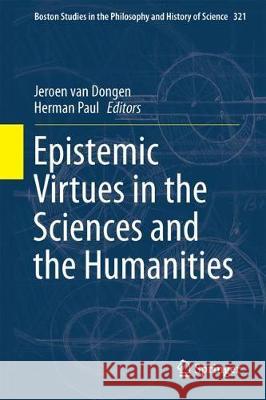
Jeroen Van Dongen; Herman Paul
Epistemic Virtues in the Sciences and the Humanities Jeroen Va Herman Paul 9783319488929 Springer - książkaWidoczna okładka, to zdjęcie poglądowe, a rzeczywista szata graficzna może różnić się od prezentowanej.

Epistemic Virtues in the Sciences and the Humanities

ISBN-13: 9783319488929 / Angielski / Twarda / 2017 / 198 str.

Jeroen Van Dongen; Herman Paul
cena 443,82
(netto: 422,69 VAT:  5%)

Najniższa cena z 30 dni: 424,07
Termin realizacji zamówienia:
ok. 22 dni roboczych.

Darmowa dostawa!

This book explores how physicists, astronomers, chemists, and historians in the late nineteenth and early twentieth centuries employed 'epistemic virtues' such as accuracy, objectivity, and intellectual courage. In doing so, it takes the first step in providing an integrated history of the sciences and humanities. It assists in addressing such questions as: What kind of perspective would enable us to compare organic chemists in their labs with paleographers in the Vatican Archives, or anthropologists on a field trip with mathematicians poring over their formulas?While the concept of epistemic virtues has previously been discussed, primarily in the contexts of the history and philosophy of science, this volume is the first to enlist the concept in bridging the gap between the histories of the sciences and the humanities. Chapters research whether epistemic virtues can serve as a tool to transcend the institutional disciplinary boundaries and thus help to attain a 'post-disciplinary' historiography of modern knowledge. Readers will gain a contextualization of epistemic virtues in time and space as the book shows that scholars themselves often spoke in terms of virtue and vice about their tasks and accomplishments. This collection of essays opens up new perspectives on questions, discourses, and practices shared across the disciplines, even at a time when the neo-Kantian distinction between sciences and humanities enjoyed its greatest authority. Scholars including historians of science and of the humanities, intellectual historians, virtue epistemologists, and philosophers of science will all find this book of particular interest and value.


Kategorie:
Nauka, Biologia i przyroda
Kategorie BISAC:
Science > History
History > Historiography
Science > Fizyka
Wydawca:
Springer
Seria wydawnicza:
Boston Studies in the Philosophy and History of Science
Język:
Angielski
ISBN-13:
9783319488929
Rok wydania:
2017
Wydanie:
2017
Numer serii:
000454060
Ilość stron:
198
Waga:
0.48 kg
Wymiary:
23.5 x 15.5
Oprawa:
Twarda
Wolumenów:
01

Introduction (Jeroen van Dongen).- 1. Confidence, Humility, and Virtue in Nineteenth Century Philosophies (Ian James Kidd).- 2. The Rise of Objectivity: Epistemic Virtues and Social Change in the Nineteenth-Century Netherlands (Ad Maas).- 3. The Scientific Imagination in Britain around 1900 (Léjon Saarloos).- 4. The Documentalist and the Adventurer: Epistemic Virtues in Interwar Nature Protection (Raf de Bont).- 5. Religious and Scientific Virtues: Maxwell, Eddington, and Overcoming Obstacles (Matt Stanley).- 6. ‘Broken Symmetry’: Physics, Aesthetics, and Moral Virtue in Nuclear Age America (Jessica Wang).- 7. Left Radicalism and the Milky Way: Connecting the Socialist and Scientific Virtues of Anton Pannekoek (Chaokang Tai).- 8. The Portraits of Hermann von Holst: Character and Virtue in the Historical Discipline around 1900 (Kasper Risbjerg Eskildsen).- 9. Weber, Wöhler, and Waitz: Virtue Language in Late Nineteenth-Century Physics, Chemistry, and History (Herman Paul).- 10. A Virtuous Theorist’s Theoretical Virtues: Einstein on Physics versus Mathematics and Experience versus Unification (Jeroen van Dongen).- 11. How Interactions between Humanities and Science Shed New Light on Shared Epistemic Virtues (Rens Bod).

Jeroen van Dongen is Professor of the History of Science at the University of Amsterdam. He is the author of Einstein’s Unification (Cambridge University Press, 2010). He has served as Editor and Associate Editor of the Collected Papers of Albert Einstein at Caltech and recently edited the volume Cold War Science and the Transatlantic Circulation of Knowledge (Brill, 2015). Van Dongen has published extensively in journals as Studies in History and Philosophy of Modern Physics, Centaurus and Historical Studies in the Natural Sciences.

Herman Paul is Associate Professor of Historical Theory and Historiography at Leiden University. He is the author of Key Issues in Historical Theory (Routledge, 2015) and Hayden White: The Historical Imagination (Polity Press, 2011) and project leader of ‘The Scholarly Self: Character, Habit, and Virtue in the Humanities, 1860-1930.’ Out of this project emerged several articles that

are of immediate relevance to the proposed volume, including ‘Virtue Language in Nineteenth-Century Orientalism: A Case Study in Historical Epistemology,’  Modern Intellectual History (forthcoming); ‘What Is a Scholarly Persona? Ten Theses on Virtues, Skills, and Desires,’ History and Theory 53 (2014), 348-371; ‘Weak Historicism: On Hierarchies of Intellectual Virtues and Goods,’ Journal of the Philosophy of History 6 (2012), 369-388; and ‘Performing History: How Historical Scholarship is Shaped by Epistemic Virtues,’ History and Theory 50 (2011), 1-19.

This book explores how physicists, astronomers, chemists, and historians in the late nineteenth and early twentieth centuries employed ‘epistemic virtues’ such as accuracy, objectivity, and intellectual courage. In doing so, it takes the first step in providing an integrated history of the sciences and humanities. It assists in addressing such questions as:

What kind of perspective would enable us to compare organic chemists in their labs with paleographers in the Vatican Archives, or anthropologists on a field trip with mathematicians poring over their formulas?

While the concept of epistemic virtues has previously been discussed, primarily in the contexts of the history and philosophy of science, this volume is the first to enlist the concept in bridging the gap between the histories of the sciences and the humanities. Chapters research whether epistemic virtues can serve as a tool to transcend the institutional disciplinary boundaries and thus help to attain a ‘po

st-disciplinary’ historiography of modern knowledge. Readers will gain a contextualization of epistemic virtues in time and space as the book shows that scholars themselves often spoke in terms of virtue and vice about their tasks and accomplishments.

This collection of essays opens up new perspectives on questions, discourses, and practices shared across the disciplines, even at a time when the neo-Kantian distinction between sciences and humanities enjoyed its greatest authority. Scholars including historians of science and of the humanities, intellectual historians, virtue epistemologists, and philosophers of science will all find this book of particular interest and value.

Van Dongen, Jeroen Jeroen van Dongen is Assistant Professor at the In... więcej >
Paul, Herman Madeleine Kasten is a lecturer at the Faculty of H... więcej >


Udostępnij

Facebook - konto krainaksiazek.pl


Opinie o Krainaksiazek.pl na Opineo.pl

Partner Mybenefit

Krainaksiazek.pl w programie rzetelna firma Krainaksiaze.pl - płatności przez paypal

Czytaj nas na:

Facebook - krainaksiazek.pl
  • książki na zamówienie
  • granty
  • książka na prezent
  • kontakt
  • pomoc
  • opinie
  • regulamin
  • polityka prywatności

Zobacz:

  • Księgarnia czeska

  • Wydawnictwo Książkowe Klimaty

1997-2026 DolnySlask.com Agencja Internetowa

© 1997-2022 krainaksiazek.pl
     
KONTAKT | REGULAMIN | POLITYKA PRYWATNOŚCI | USTAWIENIA PRYWATNOŚCI
Zobacz: Księgarnia Czeska | Wydawnictwo Książkowe Klimaty | Mapa strony | Lista autorów
KrainaKsiazek.PL - Księgarnia Internetowa

Polityka prywatnosci - link
Krainaksiazek.pl - płatnośc Przelewy24
Przechowalnia Przechowalnia





