• Wyszukiwanie zaawansowane
  • Kategorie
  • Kategorie BISAC
  • Książki na zamówienie
  • Promocje
  • Granty
  • Książka na prezent
  • Opinie
  • Pomoc
  • Załóż konto
  • Zaloguj się

Epidemics: Models and Data Using R » książka


zaloguj się | załóż konto
Logo Krainaksiazek.pl

koszyk

konto

szukaj
topmenu
Księgarnia internetowa
Szukaj
Książki na zamówienie
Promocje
Granty
Książka na prezent
Moje konto
Pomoc
 
 
Wyszukiwanie zaawansowane
Pusty koszyk
Bezpłatna dostawa dla zamówień powyżej 20 złBezpłatna dostawa dla zamówień powyżej 20 zł

Kategorie główne

• Nauka
 [2946350]
• Literatura piękna
 [1816154]

  więcej...
• Turystyka
 [70666]
• Informatyka
 [151172]
• Komiksy
 [35576]
• Encyklopedie
 [23172]
• Dziecięca
 [611458]
• Hobby
 [135995]
• AudioBooki
 [1726]
• Literatura faktu
 [225763]
• Muzyka CD
 [378]
• Słowniki
 [2917]
• Inne
 [444280]
• Kalendarze
 [1179]
• Podręczniki
 [166508]
• Poradniki
 [469467]
• Religia
 [507199]
• Czasopisma
 [496]
• Sport
 [61352]
• Sztuka
 [242330]
• CD, DVD, Video
 [3348]
• Technologie
 [219391]
• Zdrowie
 [98638]
• Książkowe Klimaty
 [124]
• Zabawki
 [2382]
• Puzzle, gry
 [3525]
• Literatura w języku ukraińskim
 [259]
• Art. papiernicze i szkolne
 [7107]
Kategorie szczegółowe BISAC

Epidemics: Models and Data Using R

ISBN-13: 9783031120558 / Angielski / Miękka / 2022 / 387 str.
Ottar N. Bjørnstad
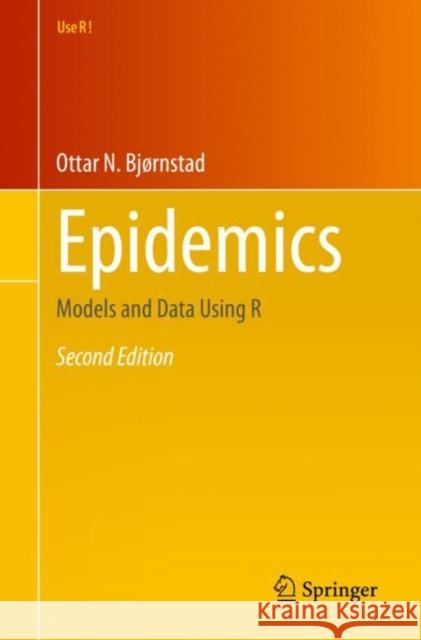
Epidemics: Models and Data Using R Ottar N. Bj?rnstad 9783031120558 Springer International Publishing AG - książkaWidoczna okładka, to zdjęcie poglądowe, a rzeczywista szata graficzna może różnić się od prezentowanej.

Epidemics: Models and Data Using R

ISBN-13: 9783031120558 / Angielski / Miękka / 2022 / 387 str.

Ottar N. Bjørnstad
cena 301,89
(netto: 287,51 VAT:  5%)

Najniższa cena z 30 dni: 269,85
Termin realizacji zamówienia:
ok. 16-18 dni roboczych.

Darmowa dostawa!

This book is designed to be a practical study in infectious disease dynamics. It offers an easy-to-follow implementation and analysis of mathematical epidemiology. It focuses on recent case studies in order to explore various conceptual, mathematical, and statistical issues. The dynamics of infectious diseases shows a wide diversity of pattern. Some have locally persistent chains-of-transmission, others persist spatially in consumer-resource metapopulations. Some infections are prevalent among the young, some among the old and some are age-invariant. Temporally, some diseases have little variation in prevalence, some have predictable seasonal shifts and others exhibit violent epidemics that may be regular or irregular in their timing.Models and ‘models-with-data’ have proved invaluable for understanding and predicting this diversity, and thence help improve intervention and control. Using mathematical models to understand infectious disease, dynamics has a very rich history in epidemiology. The field has seen broad expansions of theories as well as a surge in real-life application of mathematics to dynamics and control of infectious disease. The chapters ofEpidemics: Models and Data Using Rhave been organized as follows: chapters 1-10 is a mix and match of models, data and statistics pertaining to local disease dynamics; chapters 11-13 pertains to spatial and spatiotemporal dynamics; chapter 14 highlights similarities between the dynamics of infectious disease and parasitoid-host dynamics; Finally, chapters 15 and 16 overview additional statistical methodology useful in studies of infectious disease dynamics.This book can be used as a guide for working with data, models and ‘models-and-data’ to understand epidemics and infectious disease dynamics in space and time. All the code and data sets are distributed in the epimdr2 R package to facilitate the hands-on philosophy of the text.

This book is designed to be a practical study in infectious disease dynamics. It offers an easy-to-follow implementation and analysis of mathematical epidemiology. It focuses on recent case studies in order to explore various conceptual, mathematical, and statistical issues. The dynamics of infectious diseases shows a wide diversity of pattern. Some have locally persistent chains-of-transmission, others persist spatially in consumer-resource metapopulations. Some infections are prevalent among the young, some among the old and some are age-invariant. Temporally, some diseases have little variation in prevalence, some have predictable seasonal shifts and others exhibit violent epidemics that may be regular or irregular in their timing.



Models and ‘models-with-data’ have proved invaluable for understanding and predicting this diversity, and thence help improve intervention and control. Using mathematical models to understand infectious disease, dynamics has a very rich history in epidemiology. The field has seen broad expansions of theories as well as a surge in real-life application of mathematics to dynamics and control of infectious disease. The chapters of Epidemics: Models and Data Using R have been organized as follows: chapters 1-10 is a mix and match of models, data and statistics pertaining to local disease dynamics; chapters 11-13 pertains to spatial and spatiotemporal dynamics; chapter 14 highlights similarities between the dynamics of infectious disease and parasitoid-host dynamics; Finally, chapters 15 and 16 overview additional statistical methodology useful in studies of infectious disease dynamics.

This book can be used as a guide for working with data, models and ‘models-and-data’ to understand epidemics and infectious disease dynamics in space and time. All the code and data sets are distributed in the epimdr2 R package to facilitate the hands-on philosophy of the text.

Kategorie:
Nauka, Medycyna
Kategorie BISAC:
Medical > Biostatistics
Medical > Epidemiologia
Medical > Choroby zakaźne
Wydawca:
Springer International Publishing AG
Seria wydawnicza:
Use R!
Język:
Angielski
ISBN-13:
9783031120558
Rok wydania:
2022
Dostępne języki:
Numer serii:
000335139
Ilość stron:
387
Waga:
0.56 kg
Wymiary:
23.39 x 15.6 x 2.11
Oprawa:
Miękka
Dodatkowe informacje:
Wydanie ilustrowane

Chapter 1. Introduction.- Chapter 2. SIR.- Chapter 3. R0.- Chapter 4. FoI and age-dependent incidence.- Chapter 5. Seasonality.- Chapter 6. Time Series Analysis.- Chapter 7. TSIR.- Chapter 8.- Trajectory Matching.- Chapter 9. Stability and Resonant Periodicity.- Chapter 10. Exotica.- Chapter 11. Spatial Dynamics.- Chapter 12. Transmission on Networks.- Chapter 13. Spatial and Spatiotemporal Patterns.- Chapter 14. Parasitoids.- Chapter 15. Non-Independent Data.- Chapter 16. Quantifying In-Host Patterns.- Bibliography.- Index.

Ottar Bjornstad researches population dynamics of epidemiological and ecological outbreaks. Focal systems includes human infections like measles, whooping cough, rubella, SARS-CoV-2 and influenza; animal infections like rabies, hantavirus and distemper; and outbreaks of various insects of biomedical and agricultural concern. He has expertise in statistical and computational approaches to the study of spatiotemporal dynamics, including the development of a suite of statistical methods for the analysis of spatial and temporal data as implemented in various R packages. Dr. Bjornstad is a Distinguished Professor of Entomology and Biology holds the J. Lloyd & Dorothy Foehr Huck Chair of Epidemiology at the Pennsylvania State University and is an elected fellow of the Norwegian Academy of Science and Letters, American Association for the Advancement of Sciences and the Ecological Society of America.

This book is designed to be a practical study in infectious disease dynamics. It offers an easy-to-follow implementation and analysis of mathematical epidemiology. It focuses on recent case studies in order to explore various conceptual, mathematical, and statistical issues. The dynamics of infectious diseases shows a wide diversity of pattern. Some have locally persistent chains-of-transmission, others persist spatially in consumer-resource metapopulations. Some infections are prevalent among the young, some among the old and some are age-invariant. Temporally, some diseases have little variation in prevalence, some have predictable seasonal shifts and others exhibit violent epidemics that may be regular or irregular in their timing.

Models and ‘models-with-data’ have proved invaluable for understanding and predicting this diversity, and thence help improve intervention and control. Using mathematical models to understand infectious disease, dynamics has a very rich history in epidemiology. The field has seen broad expansions of theories as well as a surge in real-life application of mathematics to dynamics and control of infectious disease. The chapters of Epidemics: Models and Data Using R have been organized as follows: chapters 1-10 is a mix and match of models, data and statistics pertaining to local disease dynamics; chapters 11-13 pertains to spatial and spatiotemporal dynamics; chapter 14 highlights similarities between the dynamics of infectious disease and parasitoid-host dynamics; Finally, chapters 15 and 16 overview additional statistical methodology useful in studies of infectious disease dynamics.

This book can be used as a guide for working with data, models and ‘models-and-data’ to understand epidemics and infectious disease dynamics in space and time. All the code and data sets are distributed in the epimdr2 R package to facilitate the hands-on philosophy of the text.


Udostępnij

Facebook - konto krainaksiazek.pl


Opinie o Krainaksiazek.pl na Opineo.pl

Partner Mybenefit

Krainaksiazek.pl w programie rzetelna firma Krainaksiaze.pl - płatności przez paypal

Czytaj nas na:

Facebook - krainaksiazek.pl
  • książki na zamówienie
  • granty
  • książka na prezent
  • kontakt
  • pomoc
  • opinie
  • regulamin
  • polityka prywatności

Zobacz:

  • Księgarnia czeska

  • Wydawnictwo Książkowe Klimaty

1997-2026 DolnySlask.com Agencja Internetowa

© 1997-2022 krainaksiazek.pl
     
KONTAKT | REGULAMIN | POLITYKA PRYWATNOŚCI | USTAWIENIA PRYWATNOŚCI
Zobacz: Księgarnia Czeska | Wydawnictwo Książkowe Klimaty | Mapa strony | Lista autorów
KrainaKsiazek.PL - Księgarnia Internetowa

Polityka prywatnosci - link
Krainaksiazek.pl - płatnośc Przelewy24
Przechowalnia Przechowalnia




