• Wyszukiwanie zaawansowane
  • Kategorie
  • Kategorie BISAC
  • Książki na zamówienie
  • Promocje
  • Granty
  • Książka na prezent
  • Opinie
  • Pomoc
  • Załóż konto
  • Zaloguj się

Environmental and Ecological Sustainability through Indigenous Traditions: Perspectives from the Global South » książka


zaloguj się | załóż konto
Logo Krainaksiazek.pl

koszyk

konto

szukaj
topmenu
Księgarnia internetowa
Szukaj
Książki na zamówienie
Promocje
Granty
Książka na prezent
Moje konto
Pomoc
 
 
Wyszukiwanie zaawansowane
Pusty koszyk
Bezpłatna dostawa dla zamówień powyżej 20 złBezpłatna dostawa dla zamówień powyżej 20 zł

Kategorie główne

• Nauka
 [2948695]
• Literatura piękna
 [1824038]

  więcej...
• Turystyka
 [70868]
• Informatyka
 [151073]
• Komiksy
 [35227]
• Encyklopedie
 [23181]
• Dziecięca
 [621575]
• Hobby
 [138961]
• AudioBooki
 [1642]
• Literatura faktu
 [228651]
• Muzyka CD
 [371]
• Słowniki
 [2933]
• Inne
 [445341]
• Kalendarze
 [1243]
• Podręczniki
 [164416]
• Poradniki
 [479493]
• Religia
 [510449]
• Czasopisma
 [502]
• Sport
 [61384]
• Sztuka
 [243086]
• CD, DVD, Video
 [3417]
• Technologie
 [219673]
• Zdrowie
 [100865]
• Książkowe Klimaty
 [124]
• Zabawki
 [2168]
• Puzzle, gry
 [3372]
• Literatura w języku ukraińskim
 [260]
• Art. papiernicze i szkolne
 [7838]
Kategorie szczegółowe BISAC

Environmental and Ecological Sustainability through Indigenous Traditions: Perspectives from the Global South

ISBN-13: 9789811970788 / Angielski / Twarda / 2024 / 235 str.
Binay Kumar Pattnaik
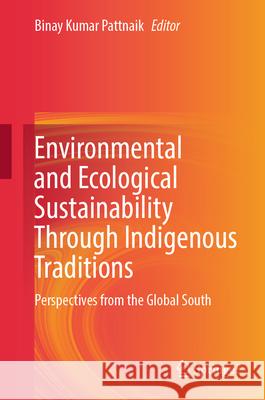
Environmental and Ecological Sustainability through Indigenous Traditions: Perspectives from the Global South Binay Kumar Pattnaik 9789811970788 Springer - książkaWidoczna okładka, to zdjęcie poglądowe, a rzeczywista szata graficzna może różnić się od prezentowanej.

Environmental and Ecological Sustainability through Indigenous Traditions: Perspectives from the Global South

ISBN-13: 9789811970788 / Angielski / Twarda / 2024 / 235 str.

Binay Kumar Pattnaik
cena 484,18
(netto: 461,12 VAT:  5%)

Najniższa cena z 30 dni: 462,63
Termin realizacji zamówienia:
ok. 22 dni roboczych.

Darmowa dostawa!

This book explores the environmental and ecological wisdom inherent in some of the indigenous traditions of traditional communities from developing societies like, Argentina, Brazil, India, Mexico, Sri Lanka, and Thailand. It throws light on how these discrete and unrecognized traditions have enabled communities to live in harmony with nature for ages. Despite the best efforts of the modern states through policy-making, intensive R&D for eco-friendly technologies and products, social and environmental impact assessment studies (SEIAS), and cost benefit analysis (CBA) of projects, environmental and ecological degradation continues, mostly in developing societies, which house large number of traditional communities. This book explores their traditions consisting of world views or cosmologies, eco-savvy-customs, indigenous knowledge systems involving community-based occupations and practices, skills and crafts, and so on. This book shows that when interpreted in consonance with scientific environmentalism, these traditions reveal their inbuilt environmental wisdom, mirroring sacredness of nature that have instilled built-in conservation practices, are key to sustainability.The conception of indigenous traditions that subsume environmental and ecological sustainability as well as cultural identity is studied in the book, from the vantage of multi-disciplinary perspectives. This book reflects two streams of thought : (i) stream of social anthropology, arguing for the inbuilt strength of indigenous traditions, that necessitate empathetic understanding with their own rights for recognition and survival, and (ii) stream of indigenous knowledge systems being technically effective only necessitate  validation and certification by modern scientific knowledge system for wider use.The book is of great use to policy-makers and non-government players, in addition to researchers and academicians working in the area of sustainable development and indigenous / traditional communities.


This book explores the environmental and ecological wisdom inherent in some of the indigenous traditions of traditional communities from developing societies like, Argentina, Brazil, India, Mexico, Sri Lanka, and Thailand. It throws light on how these discrete and unrecognized traditions have enabled communities to live in harmony with nature for ages. Despite the best efforts of the modern states through policy-making, intensive R&D for eco-friendly technologies and products, social and environmental impact assessment studies (SEIAS), and cost benefit analysis (CBA) of projects, environmental and ecological degradation continues, mostly in developing societies, which house large number of traditional communities. This book explores their traditions consisting of world views or cosmologies, eco-savvy-customs, indigenous knowledge systems involving community-based occupations and practices, skills and crafts, and so on. This book shows that when interpreted in consonance with scientific environmentalism, these traditions reveal their inbuilt environmental wisdom, mirroring sacredness of nature that have instilled built-in conservation practices, are key to sustainability.The conception of indigenous traditions that subsume environmental and ecological sustainability as well as cultural identity is studied in the book, from the vantage of multi-disciplinary perspectives. This book reflects two streams of thought : (i) stream of social anthropology, arguing for the inbuilt strength of indigenous traditions, that necessitate empathetic understanding with their own rights for recognition and survival, and (ii) stream of indigenous knowledge systems being technically effective only necessitate  validation and certification by modern scientific knowledge system for wider use. The book is of great use to policy-makers and non-government players, in addition to researchers and academicians working in the area of sustainable development and indigenous / traditional communities.

Kategorie:
Nauka, Socjologia i społeczeństwo
Kategorie BISAC:
Social Science > Developing & Emerging Countries
Business & Economics > Economics - General
Political Science > Public Policy - Environmental Policy
Wydawca:
Springer
Język:
Angielski
ISBN-13:
9789811970788
Rok wydania:
2024
Dostępne języki:
Ilość stron:
235
Oprawa:
Twarda
Dodatkowe informacje:
Wydanie ilustrowane

CONTENTS: 

Chapter 1. Re-modernizing the Modern, A syncretic perspective

By: Binay Kumar Pattnaik 

Chapter 2.  Ecological bases of Indian Traditions: Search for an Indigenous Vision

By: Binay Kumar Pattnaik, Professor, Dept. of Humanities and Social Sciences, Indian Institute of Technology Kanpur, Kanpur 208016 , India 

Chapter 3. Forests, folklores and religion: understanding Embedded ‘ecological wisdom’ in the Sundarbans, West Bengal, India

By: Amrita Sen, Faculty Member, Dept. of Humanities and Social Sciences, Indian Institute of

Technology Kharagpur,  Kharagpur, West Bengal, India 

Chapter 4. Governing the Commons with Traditional knowledge and Practices: Lessons from Bishnoi community of IndiaBy: Pradip Swarnakar, Binay Kumar Pattnaik and Pritha Sarkar, Assoc Professor, Professor and Res. Scholar, Dept. of  Humanities and Social Sciences, IITKanpur. India

Chapter 5. Cultural Practices of the Totonacs of Veracruz Vrs Neoliberal Reforms : A case for the recovery of the sacred

By: Victoria Maria Chenaut, Professor, Centro de Investigaciones y Estudios Superiores en Anthropologia Social (CIESAS), Unidad Regional Golfo, Avenida Encanto s/n esquina Antonio Nava, Colnia E1Mirador, Xalapa, Veracruz, Mexico. 

Chapter 6.  The Philosophy of Sufficiency Economy and Sustainability: Achieving A Sustainable Environment from the Thai Perspective

By: Kanittha Tambunlertchai, Asst. Professor of Economics, Chulalongkorn University, Bangkok, Thailand 

Chapter 7. Indigenous Knowledge and Biodiversity Conservation: An Approach to Epistemic Fairness and New Citizenship in Mexico

By: Aida Luz López Gómez, Professor, Environmental Education Postgraduate Program, Universidad Autonoma de la Ciudad de Mexico, San Lorenzo 290, Colonia Del Valle, Mexico 

Chapter 8. Ecological Knowledge and Sustainable Farming Practices among the Naga Tribes: A Reappraisal of their Worldviews

By:  Nava Kishore Das, Formerly Asst. Director, Anthropological Survey of India, Kolkata, India. 

Chapter 9. Partnering with the Mountains for Reclaiming their Land: Conflict between Indigenous and the Capitalist Perspectives

By:  Annapurna Devi Pandey, Faculty Member, Anthropology Department

University of California, Santa Cruz, CA, USA 

Chapter 10.  Sustainability and Ecological Intervention: Comparing Geoengineering and Amazonian Shamanism

By: Renzo Taddei, Asst Professor of Anthropology, Institute of Oceanic Studies, Federal University of Sao Paulo, Santos,  Brazil 

Chapter 11. From Nature, to Nature: Articulating the discourse of environmental sustainability in a Chhau Dance community of West Bengal

By:  Jenia Mukherjee and Archita Chatterjee, Dept. of Humanities and Social Sciences, Indian Institute of Technology Kharagpur, Kharagpur, West Bengal, India

Chapter 12. Practicing sustainable Irrigation management through Indigenous Knowledge: Experiences from Sri Lanka

By: Mahinda Wijeratne, Senior Professor, Dept of Agricultural Economics, Faculty of Agriculture, University of Ruhuna, Mapalana, Kamburupitiya, Sri Lanka. 

Chapter 13. Indigenous knowledge in Agricultural Production

By: Nilantha De Silva, Senior Lecturer, Department of Agricultural Economics, Faculty of Agriculture, University  of Ruhuna, Mapalana, Kamburupitiya, Sri Lanka. 

Chapter 14. Indigenous Seed Conservation Practices in Western Himalaya: A Case Study of Mandakini Valley, Uttarakhand, India

By: Vandana Mehrwar, V.P. Uniyal, and Vinod K. Bhatt* Wildlife Institute of India, Chandrabani Dehradun, India, * Navdanya Biodiversity Conservation Farm, Ramgarh, Dehradun, India 

Chapter 15. Indigenous Knowledge and Sustainable Management of Natural Resources in Garhwal Himalaya, Uttarakhand, India

By: Bhagwati Uniyal1, V.P. Uniyal2 and Vinod K. Bhatt1, 1.Navdanya, 105 Rajpur Road Dehradun, Uttarakhand, India, 248 00 & 2.  Wildlife Institute of India, Chandrabani, Dehradun, Uttarakhand, India.  

Chapter 16. Ethnobiological perspective to Bioresource conservation among the Indian communities

By: Ambarish Mukherjee, Former Professor of Botany, Burdwan University, Golapbag, Burdwan, West Bengal, India.

Chapter 17. Sustainability as a social encounter – A Dialogue among heterogenous knowledge systems for the management of forest in the Gran Chaco wetlands of Argentina

By: Florencia Fossa Riglos M. and Spinoso Nahuel, in Rural Studies and Globalization Programme, National University of San Martin, Francia, San Martín, Buenos Aires, Argentina,  Serpe Paula in CONICT, Godoy Cruz 2290, Buenos Aires, Argentina, and  Hernández Valeria in Africa and Asia Center for Social Sciences,  University Paris Diderot, INALCO, Rue Albert Einstein, Paris

Binay Kumar Pattnaik is currently working in the Dept. of Humanities and Social Sciences, Indian Institute of Technology Kanpur, India as a senior professor. He has worked as the Director (VC) of Institute of Social and Economic Change, Bangalore. With three and half decades of experience in teaching and research at both IIT Bombay and IIT Kanpur, he has contributed handsomely to the area of social studies in science and technology, globalization and social movement studies. So far he has written and edited ten books including guest edited volumes of a few prestigious academic journals. That apart, his scholarly contributions include more than four dozen research papers in refereed journals of repute and articles in edited books. He has travelled extensively both inside and outside India to deliver lectures, keynote/ valedictory addresses and organize international sessions and symposia. Besides, he is a committed teacher and research guide of reputation


This book explores the environmental and ecological wisdom inherent in some of the indigenous traditions of traditional communities from developing societies like, Argentina, Brazil, India, Mexico, Sri Lanka, and Thailand. It throws light on how these discrete and unrecognized traditions have enabled communities to live in harmony with nature for ages. Despite the best efforts of the modern states through policy-making, intensive R&D for eco-friendly technologies and products, social and environmental impact assessment studies (SEIAS), and cost benefit analysis (CBA) of projects, environmental and ecological degradation continues, mostly in developing societies, which house large number of traditional communities. This book explores their traditions consisting of world views or cosmologies, eco-savvy-customs, indigenous knowledge systems involving community-based occupations and practices, skills and crafts, and so on. This book shows that when interpreted in consonance with scientific environmentalism, these traditions reveal their inbuilt environmental wisdom, mirroring sacredness of nature that have instilled built-in conservation practices, are key to sustainability.

The conception of indigenous traditions that subsume environmental and ecological sustainability as well as cultural identity is studied in the book, from the vantage of multi-disciplinary perspectives. This book reflects two streams of thought : (i) stream of social anthropology, arguing for the inbuilt strength of indigenous traditions, that necessitate empathetic understanding with their own rights for recognition and survival, and (ii) stream of indigenous knowledge systems being technically effective only necessitate  validation and certification by modern scientific knowledge system for wider use.

The book is of great use to policy-makers and non-government players, in addition to researchers and academicians working in the area of sustainable development and indigenous / traditional communities.




Udostępnij

Facebook - konto krainaksiazek.pl


Opinie o Krainaksiazek.pl na Opineo.pl

Partner Mybenefit

Krainaksiazek.pl w programie rzetelna firma Krainaksiaze.pl - płatności przez paypal

Czytaj nas na:

Facebook - krainaksiazek.pl
  • książki na zamówienie
  • granty
  • książka na prezent
  • kontakt
  • pomoc
  • opinie
  • regulamin
  • polityka prywatności

Zobacz:

  • Księgarnia czeska

  • Wydawnictwo Książkowe Klimaty

1997-2026 DolnySlask.com Agencja Internetowa

© 1997-2022 krainaksiazek.pl
     
KONTAKT | REGULAMIN | POLITYKA PRYWATNOŚCI | USTAWIENIA PRYWATNOŚCI
Zobacz: Księgarnia Czeska | Wydawnictwo Książkowe Klimaty | Mapa strony | Lista autorów
KrainaKsiazek.PL - Księgarnia Internetowa

Polityka prywatnosci - link
Krainaksiazek.pl - płatnośc Przelewy24
Przechowalnia Przechowalnia




