• Wyszukiwanie zaawansowane
  • Kategorie
  • Kategorie BISAC
  • Książki na zamówienie
  • Promocje
  • Granty
  • Książka na prezent
  • Opinie
  • Pomoc
  • Załóż konto
  • Zaloguj się

Environmental Technology in the Oil Industry » książka


zaloguj się | załóż konto
Logo Krainaksiazek.pl

koszyk

konto

szukaj
topmenu
Księgarnia internetowa
Szukaj
Książki na zamówienie
Promocje
Granty
Książka na prezent
Moje konto
Pomoc
 
 
Wyszukiwanie zaawansowane
Pusty koszyk
Bezpłatna dostawa dla zamówień powyżej 20 złBezpłatna dostawa dla zamówień powyżej 20 zł

Kategorie główne

• Nauka
 [2939893]
• Literatura piękna
 [1808953]

  więcej...
• Turystyka
 [70366]
• Informatyka
 [150555]
• Komiksy
 [35137]
• Encyklopedie
 [23160]
• Dziecięca
 [608786]
• Hobby
 [136447]
• AudioBooki
 [1631]
• Literatura faktu
 [225099]
• Muzyka CD
 [360]
• Słowniki
 [2914]
• Inne
 [442115]
• Kalendarze
 [1068]
• Podręczniki
 [166599]
• Poradniki
 [468390]
• Religia
 [506548]
• Czasopisma
 [506]
• Sport
 [61109]
• Sztuka
 [241608]
• CD, DVD, Video
 [3308]
• Technologie
 [218981]
• Zdrowie
 [98614]
• Książkowe Klimaty
 [124]
• Zabawki
 [2174]
• Puzzle, gry
 [3275]
• Literatura w języku ukraińskim
 [260]
• Art. papiernicze i szkolne
 [7376]
Kategorie szczegółowe BISAC

Environmental Technology in the Oil Industry

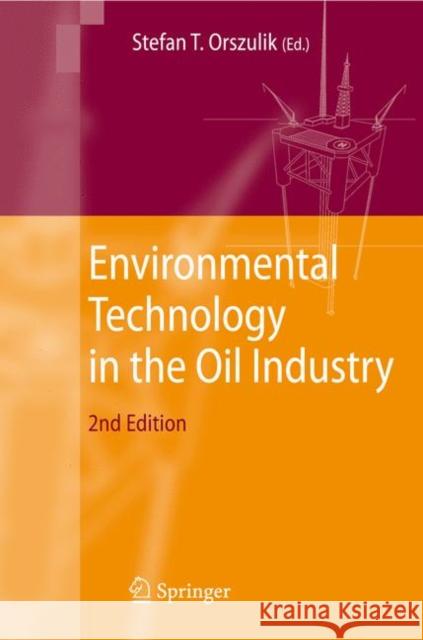
ISBN-13: 9789048173761 / Angielski / Miękka / 2010 / 408 str.
Stefan T. Orszulik
Environmental Technology in the Oil Industry Stefan T. Orszulik 9789048173761 Not Avail - książkaWidoczna okładka, to zdjęcie poglądowe, a rzeczywista szata graficzna może różnić się od prezentowanej.

Environmental Technology in the Oil Industry

ISBN-13: 9789048173761 / Angielski / Miękka / 2010 / 408 str.

Stefan T. Orszulik
cena 677,17
(netto: 644,92 VAT:  5%)

Najniższa cena z 30 dni: 648,55
Termin realizacji zamówienia:
ok. 22 dni roboczych.

Darmowa dostawa!

FIGURE 1.1. BP group annual total air emissions by pollutant 1999 2004 (See Color Plates). FIGURE 1.2. BP group annual total air emissions* by business 1999 2004 (See Color Plates). evaporate. In addition, gas can be released from operations through contr- led process vents for safety protection. Further safety devices, such as flares, are used to burn excess hydrocarbons in the industry, but can allow a small proportion of hydrocarbon into the atmosphere without being burnt. Ind- try contains and controls these emissions wherever possible to minimize any loss of hydrocarbon. Hydrocarbon vapours, often described as volatile organic compounds or VOCs, are potentially harmful air pollutants, which can result in local health impacts as well as local or regional contributions to the formation of low-level ozone; which in turn, may also impact human health. Controlling hydrocarbon loss helps prevent impact on air quality and is also economically beneficial. 4 A. Ahnell and H. O Leary In 2004, BP emitted 245 kilo-tonnes of non-methane hydrocarbons to air, a decrease of 24 kilo-tonnes (9%) compared with 2003. The largest prop- tion of these emissions came from the exploration and production businesses (44%), followed by refining and marketing (R&M) (35%). Combining methane and non-methane hydrocarbon totals provides a better idea of where most of the hydrocarbon emissions come from within the ind- try sectors. In BP s case, the exploration and production activities account for 67% of the total volume of such hydrocarbons emitted to air in 2004."


Kategorie:
Technologie
Kategorie BISAC:
Science > Chemistry - Industrial & Technical
Technology & Engineering > Environmental - General
Technology & Engineering > Petroleum
Wydawca:
Not Avail
Język:
Angielski
ISBN-13:
9789048173761
Rok wydania:
2010
Ilość stron:
408
Waga:
0.54 kg
Wymiary:
22.2 x 14.1 x 2.4
Oprawa:
Miękka
Wolumenów:
01

From the reviews of the second edition:

"The book is simply fantastic. It is easy to read and understand with relevant cases and good layout. This book includes everything we needed. It covers a wide range of realistic situations. ... it contains relevant information that you can't find in a lot of books supposedly covering environmental aspects. Written primarily for those working in the oil and related industries, this book also provides essential reference material for government and research institutions and all those with an interest in environmental technological issues." (Current Engineering Practice, 2008)

Chapter 1: General Introduction, A. Ahnell and H. O’Leary 1. Environmental Technology 2. The Beginning 3. The Environmental Effects of the Oil Industry 3.1. Air Emissions 3.2. Water Management 3.3. Waste Management 4. Technology used in the Oil Industry 4.1. Pollution Control 4.2. Pollution Prevention 5. Oil Industry Future: Design for the Environment 5.1. Design out the production problems 6. Summary References Chapter 2: Environmental control technology for Oilfield Processes, A.K. Wojtanowicz 1. Introduction 2. Environmental-control Technology 3. Evolution of Environmentally Controlled Oilfield Processes 3.1. Scope and Characteristics of Oilfield ECT 3.2. Methodology of ECT design 4. ECT Analysis of Drilling Process 4.1. Mechanisms of Drilling Waste Discharge 4.2. Sources of Drilling Waste Toxicity 4.3. Waste Generation Mechanisms in Petroleum Production 4.4. Sources of Toxicity in Produced water References Chapter 3: Environmental Control of Well Integrity, A.K. Wojtanowicz 1. Introduction 2. Mechanism of Cement Seal Failures 3. Improved Cementing for Annular Integrity 4. Cement Pulsation after Placement 5. Integrity of Injection Wells 6. Measurements of Well Integrity 7. Sustained Casinghead Pressure 7.1. Rig Methods for SCP Isolation 7.2. Rig-less technology for SCP isolation References Chapter 4: Environmental Control of Drilling Fluids and Produced Water, A.K. Wojtanowicz 1. Control of Drilling Fluid Volume 1.1. Control of Mud Dispersibility 1.2. Improved Solids Control – Closed Loop Systems 1.3. Dewatering of Drilling Fluids: ‘dry’ drilling location 2. Control of Drilling Fluid Toxicity 2.1. Drilling FluidToxicity Testing 2.2. Low-Toxicity Substitutes 2.3. Synthetic Base Drilling Fluids 2.4. Source Separation – Drill Cuttings De-oiling 3. Control of Produced Water Volume 3.1. Source Reduction – water shut-off technology 3.2. Source Separation – downhole oil/gas/water separation 3.3. Source Reduction with downhole water sink 4. Control of Produced Water Pollutants 4.1. Oil-free water from DWS drainage-production systems 4.2. Deoiling of produced water 4.3. Removal of dissolved organics from produced water 4.4. Produced water salinity reduction References Chapter 5: Oilfield Waste Disposal Control, A.K. Wojtanowicz 1. Introduction 2. Oilfield Waste Disposal to Land 2.1. Impact of oilfield pit contaminants 2.2. Oilfield pit sampling and evaluation 2.3. Oilfield pit closure: Liquid Phase 2.4. Oilfield pit closure: Solid Phase 3. Subsurface waste disposal to wells 3.1. Description of slurry injection process of muds and cuttings 3.2. Slurry fracture injection of muds and cuttings 3.3. Properties of Injected Slurries 3.4. Environmental Implications of Subsurface Slurry Injection 3.5. Periodic Injection to Multiple Fractures References Chapter 6: Drilling and production discharges in the marine environment, A.B. Doyle, S.S.R. Pappworth and D.D. Caudle 1. Introduction 2. Nature of Offshore Discharges 2.1. Produced Water 2.2. Drilling Waste 2.3. Magnitude of Waste Discharges 2.4. Accidental Discharges 2.5. Wastes that Require Handling During Site Abandonment 3. Potential Impacts on the Environment 3.1. Introduction 3.2. Potential Impacts from Produced Water 3.3. Potential Impacts from Drilling Waste 3.4. Potential Impacts from Treating

This significantly updated edition looks at each stage in the life cycle of petroleum products, from exploration to end use, examining the environmental pressures on the Oil Industry and its response.

The Oil Industry produces a range of products without which modern civilization could not exist. Nevertheless, in today’s environmentally conscious world, society demands that the industry manufactures and markets the products without unduly polluting the environment. Its ability and willingness to comply determines whether society will allow it a licence to operate.

Technical developments are progressing in line with environmental concerns and increasing sophistication of computer modelling techniques. These subjects are inter-related, but have often been dealt with independently. This book will explore these topics together in a way that will be understandable to the non-expert, and those who are expert in one field, but wish to see their expertise discussed in the overall context.

Written primarily for those working in the Oil and related industries, this book also provides essential reference material for government and research institutions and all those with an interest in environmental technological issues.


Udostępnij

Facebook - konto krainaksiazek.pl


Opinie o Krainaksiazek.pl na Opineo.pl

Partner Mybenefit

Krainaksiazek.pl w programie rzetelna firma Krainaksiaze.pl - płatności przez paypal

Czytaj nas na:

Facebook - krainaksiazek.pl
  • książki na zamówienie
  • granty
  • książka na prezent
  • kontakt
  • pomoc
  • opinie
  • regulamin
  • polityka prywatności

Zobacz:

  • Księgarnia czeska

  • Wydawnictwo Książkowe Klimaty

1997-2026 DolnySlask.com Agencja Internetowa

© 1997-2022 krainaksiazek.pl
     
KONTAKT | REGULAMIN | POLITYKA PRYWATNOŚCI | USTAWIENIA PRYWATNOŚCI
Zobacz: Księgarnia Czeska | Wydawnictwo Książkowe Klimaty | Mapa strony | Lista autorów
KrainaKsiazek.PL - Księgarnia Internetowa

Polityka prywatnosci - link
Krainaksiazek.pl - płatnośc Przelewy24
Przechowalnia Przechowalnia





