Environmental Engineering: Review for the Professional Engineering Examination » książka





Environmental Engineering: Review for the Professional Engineering Examination
ISBN-13: 9780387290720 / Angielski / Twarda / 2013 / 272 str.
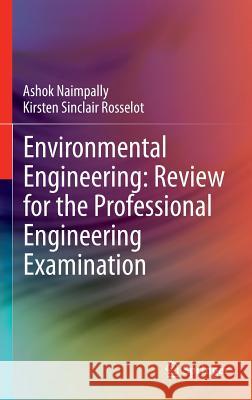
Environmental Engineering: Review for the Professional Engineering Examination
ISBN-13: 9780387290720 / Angielski / Twarda / 2013 / 272 str.
(netto: 191,21 VAT: 5%)
Najniższa cena z 30 dni: 192,74
ok. 22 dni roboczych
Dostawa w 2026 r.
Darmowa dostawa!
This book will help the reader expand further into chemical engineering and become a licensed professional engineer (PE), which can offer a tremendous boost to one's career, as there are certain career opportunities available only to licensed engineers. Licensure demonstrates high standards of professionalism, knowledge, and ability.Because of the work experience requirement, PE examinees have generally been out of school for some time. This book summarizes the theoretical background of topics covered in the exam, which will help potential examinees refresh their memories on subjects they may not have been exposed to since their undergraduate classes. Another advantage of using this book to prepare for the PE exam is that two or three "logical distractors" (answers that result from common mistakes) are included among the answer choices for each problem. The solutions to the problems also explain why the logical distractors are incorrect. Research has shown that this is an efficient teaching tool. Thus, the inclusion of these logical distractors and their explanations will give individuals a better foundation in the subject matter in a shorter period of time.Although this book is intended primarily to help engineers prepare for the PE environmental engineering examination, it will also be useful in undergraduate engineering courses that cover environmental engineering topics.
CHAPTER 1: WATER AND WASTEWATER..................................................................... 2
1.1 WATER RESOURCES PLANNING.............................................................. 2
1.1.1. Population Projection................................................................................................. 2
1.1.2. Legal Aspects of Water Rights.................................................................................. 3
1.1.3. Sources of Water....................................................................................................... 4
1.1.4. Uses of Water............................................................................................................ 4
1.1.5. Large-Scale Planning................................................................................................. 5
1.1.6. Other Factors in Planning.......................................................................................... 5
1.2. WATER DISTRIBUTION AND WASTEWATER COLLECTION............. 5
1.2.1. INTAKE OF WATER FOR DISTRIBUTION........................................................ 5
1.2.1.1. Transportation of Water..................................................................................... 6
1.2.1.2. Sea Water........................................................................................................... 61.2.2. WATER DISTRIBUTION AND TRANSPORTATION........................................ 8
1.2.2.1. Design of Hydraulic System.............................................................................. 9
1.2.2.2. Hydraulic Radius R Used for Non-Circular Conduits.................................... 10
1.2.3. WASTEWATER COLLECTION SYSTEMS....................................................... 10
1.2.4. FLUID MECHANICS AND HYDRAULICS...................................................... 12
1.2.4.1. Flow measurement devices:............................................................................. 12
1.2.5. FLUID FLOW IN PIPING SYSTEMS................................................................. 13
1.2.5.1. Computation of hf, the Head Loss................................................................... 15
1.3. CHARACTERISTICS OF WATER AND WASTEWATER....................... 16
1.3.1. Chemical Types of Pollution.................................................................................... 16
1.3.2. Physical Types of Pollution..................................................................................... 17
1.3.3. Physiological Types of Pollution............................................................................. 18
1.3.4. Biological Types of Pollution.................................................................................. 19
1.4. CHEMICAL, PHYSICAL, AND BIOLOGICAL PARAMETERS OF WATER QUALITY 19
1.4.1. Analysis of water and wastewater........................................................................... 19
1.4.2. SOLIDS CONTENT IN WASTEWATER............................................................ 20
1.4.3. Water Treatment...................................................................................................... 23
1.4.3.1. Sedimentation.................................................................................................. 23
1.4.3.2. Hardness.......................................................................................................... 26
1.4.3.3. Softening of hard water................................................................................... 27
1.4.3.4. Coagulation and Flocculation.......................................................................... 28
1.4.3.5. Mixing Processes............................................................................................. 29
1.4.3.6. Adsorption....................................................................................................... 32
1.4.3.7. Anaerobic Digester.......................................................................................... 43
Chapter 2. GROUNDWATER, SOILS, AND REMEDIATION..................................... 1
2.1. SOILS ........................................................................................................................... 3
2.2. FLOW FIELDS................................................................................................................. 3
2.3. WELLS IN AQUIFERS................................................................................................... 4
2.4. REMEDIATION TECHNOLOGIES.............................................................................. 5
2.4.1. Non-Aqueous Phase Liquids..................................................................................... 5
2.4.2. Pump and Treat Technology...................................................................................... 5
Chapter 3 Air...................................................................................................................... 2
3.1. Categories of air pollution................................................................................. 2
3.2. Harmful effects of air pollution......................................................................... 2
3.3. Codes, standards, regulations, and guidelines................................................... 3
3.4. Meteorology....................................................................................................... 4
3.5. Atmospheric chemistry...................................................................................... 6
3.6. Measuring air pollution...................................................................................... 8
3.7. Pollutant dispersion......................................................................................... 10
3.8. Risk management programs............................................................................. 12
3.9. Air transport systems....................................................................................... 13
3.10. Treatment technologies.................................................................................... 15
3.11. Odor generation and control............................................................................ 20
3.12. Preventing air pollution.................................................................................... 21
Chapter 4. Solid Waste....................................................................................................... 1
4.1. Sources of Solid Waste..................................................................................................... 1
4.2. Methods for the Disposal of Solid Wastes:....................................................................... 2
4.2.1. Sanitary Landfill........................................................................................................ 2
4.3. Site Selection..................................................................................................................... 3
4.3.1. Site Selection – Landfills.......................................................................................... 3
4.3.1.1. Objective Technical Factors............................................................................... 3
4.3.1.2. Social and Economic Factors............................................................................. 3
4.3.2. Operation of the Landfill.......................................................................................... 4
4.3.3. Water Balance in Landfills........................................................................................ 5
4.3.4. Leachate.................................................................................................................... 6
4.3.5. Landfill Gas............................................................................................................... 8
4.3.5.1. Upward movement of landfill gas the landfill cover:........................................ 8
4.3.5.2. Downward movement of CO2........................................................................... 9
4.3.5.3. Use of Landfill Gas........................................................................................... 9
4.4. Recycling........................................................................................................................... 9
4.4.1. Paper........................................................................................................................ 10
4.4.2. Aluminum and Copper............................................................................................ 10
4.4.3. Ferrous Metals......................................................................................................... 10
4.4.4. Glass........................................................................................................................ 10
4.4.5. Plastics..................................................................................................................... 11
4.4.6. Used Tires................................................................................................................ 11
4.4.7. Construction and Demolition Wastes...................................................................... 11
4.4.8. Yard Waste.............................................................................................................. 11
4.4.9. Batteries................................................................................................................... 11
4.4.10. Waste Oil................................................................................................................. 11
4.5. Composting..................................................................................................................... 12
4.6. Incineration and Energy Recovery.................................................................................. 12
4.7. Solid Waste Collection and Storage................................................................................ 13
4.8. Regulations...................................................................................................................... 14
4.8.1. Solid Waste Legal Aspects...................................................................................... 14
4.8.2. National Environmental Policy Act (NEPA).......................................................... 14
4.8.3. Comprehensive Environmental Response, Compensation and Liability Act (CERCLA) 15
4.8.4. Resource Conservation Recovery Act (RCRA)...................................................... 15
Chapter 5 Hazardous Waste............................................................................................... 2
5.1. Definition and characterization of different types of hazardous waste............ 2
5.2. Sampling and measurement methods for hazardous waste............................... 4
5.3. Storage, collection, and transportation systems for hazardous waste............... 5
5.4. Minimization, reduction, and recycling of hazardous waste............................. 6
5.5. Treatment and disposal technologies for hazardous waste................................ 7
5.6. Management of radioactive and mixed wastes............................................... 10
Chapter 6 Environmental Assessments and Emergency Response.................................... 2
6.1. Site assessment.................................................................................................. 2
6.2. Hydrogeology.................................................................................................... 2
6.3. Historical considerations and land use practices............................................... 5
6.4. Fate, partitioning, and transport of pollutants................................................... 5
6.5. Industrial hygiene, health, and safety................................................................ 7
6.6. Security, emergency plans, and incident response procedures.......................... 8
6.7. Fundamentals of epidemiology and toxicology................................................ 9
6.8. Exposure assessment and risk characterization................................................ 10
6.9. Radiation protection (health physics).............................................................. 11
6.10. Vector control and sanitation, including biohazards....................................... 12
6.11. Noise pollution................................................................................................. 13
6.12. Indoor air quality............................................................................................. 14
Chapter 7 Error and Uncertainty in Environmental Measurements................................... 2
Exam 1 ........................................................................................................................... 1
Exam 1 Solutions..................................................................................................................... 20
Exam 2 ........................................................................................................................... 1
Exam 2 Solutions..................................................................................................................... 23
ASHOK "ASH" V. NAIMPALLY
ACADEMIC PREPARATION
Ph.D. (Chemical Engineering) [1976]
Syracuse University, Syracuse, New York 13210
Minor: Applied Math and Computer Science
B. Tech (Chemical Engineering) [1969]
Indian Institute of Technology, Bombay, India
Top Ranked UNESCO-aided Technical University in Asia
CONTINUING EDUCATION
Harvard University
Institute for Educational Management
Management Development Program [Summer 1993]
Cambridge, Massachusetts
EXPERIENCE
September 1999 - Present
Coordinator, Environmental Technology, and Professor of Chemical Engineering and Environmental Technology, California State University, Long Beach, CA 90840
Teaching in the areas of: Air Pollution, Water Pollution, Solid Wastes, Fluid Mechanics and Thermodynamics. Also taught "Tests and Measurements" (Assessment) in the Educational Psychology Program.
Program Evaluator for the Accreditation Board for Engineering and Technology.
Conducting a seminar for Engineers from Industry at UCLA Extension (the continuing education arm of UCLA) since 1994.
August 1998 - August 1999
Second Year American Council on Education Fellow (Special Assistant to the Provost) , Office of the Provost, California State University, Long Beach, CA 90840
Program Evaluator for the Accreditation Board for Engineering and Technology. Attended training workshop in 1997 related to new criteria based on outcomes assessment. Evaluator of Distance Learning Programs, American Council on Education (ACE) College Credit Recommendation Service. Attended the training workshop at ACE in July 1999.
Member, Exam Committee (Ch.E), National Council of Examiners for Engineering and Surveying.
1993 - August 1998Director of Outreach and Enrichment at CSULB Southern California Coalition for Education in Manufacturing Engineering (SCCEME), and Professor of Chemical Engineering, California State University Long Beach (1993-96). Professorial duties in Chemical Engineering: Program Evaluator.
1989 - 1992
Professor, Department of Chemical Engineering, and Chair, Department of Chemical Engineering, California State University, Long Beach 90840
- Summarizes the theoretical background of topics covered in the Principles and Practice of Engineering Examination in the area of Environmental Engineering.
- Includes two practice exams with 100 problems each, and solutions to each problem are provided.
- Each problem includes answers that result from common mistakes, which helps readers to quickly build a solid foundation in the subject.
This review will help candidates prepare for the Principles and Practice of Engineering Examination in the area of Environmental Engineering by refreshing their memory of key concepts and theory. In addition to a review of theory, two practice exams following the multiple choice format used by the PE exam are supplied with solutions to every problem. The material covered in the book and tested in the practice exam includes:
- Water resources, distribution, and treatment
- Waste water collection and treatment
- Groundwater resources, soils, and remediation
- Air pollution transport and treatment
- Solid waste disposal, treatment, and recycling
- Hazardous waste minimization, treatment, and disposal
- Environmental assessments and emergency response
- Errors and uncertainty in environmental measurements




Czytaj nas na:
1997-2025 DolnySlask.com Agencja Internetowa
KrainaKsiazek.PL - Księgarnia Internetowa


