• Wyszukiwanie zaawansowane
  • Kategorie
  • Kategorie BISAC
  • Książki na zamówienie
  • Promocje
  • Granty
  • Książka na prezent
  • Opinie
  • Pomoc
  • Załóż konto
  • Zaloguj się

Engineering Justice: Transforming Engineering Education and Practice » książka


zaloguj się | załóż konto
Logo Krainaksiazek.pl

koszyk

konto

szukaj
topmenu
Księgarnia internetowa
Szukaj
Książki na zamówienie
Promocje
Granty
Książka na prezent
Moje konto
Pomoc
 
 
Wyszukiwanie zaawansowane
Pusty koszyk
Bezpłatna dostawa dla zamówień powyżej 20 złBezpłatna dostawa dla zamówień powyżej 20 zł

Kategorie główne

• Nauka
 [2949965]
• Literatura piękna
 [1857847]

  więcej...
• Turystyka
 [70818]
• Informatyka
 [151303]
• Komiksy
 [35733]
• Encyklopedie
 [23180]
• Dziecięca
 [617748]
• Hobby
 [139972]
• AudioBooki
 [1650]
• Literatura faktu
 [228361]
• Muzyka CD
 [398]
• Słowniki
 [2862]
• Inne
 [444732]
• Kalendarze
 [1620]
• Podręczniki
 [167233]
• Poradniki
 [482388]
• Religia
 [509867]
• Czasopisma
 [533]
• Sport
 [61361]
• Sztuka
 [243125]
• CD, DVD, Video
 [3451]
• Technologie
 [219309]
• Zdrowie
 [101347]
• Książkowe Klimaty
 [123]
• Zabawki
 [2362]
• Puzzle, gry
 [3791]
• Literatura w języku ukraińskim
 [253]
• Art. papiernicze i szkolne
 [7933]
Kategorie szczegółowe BISAC

Engineering Justice: Transforming Engineering Education and Practice

ISBN-13: 9781118757307 / Angielski / Twarda / 2017 / 304 str.
Jon A. Leydens; Juan C. Lucena
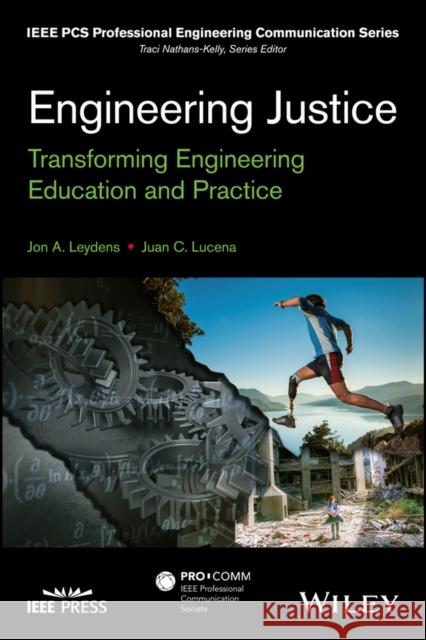
Engineering Justice: Transforming Engineering Education and Practice Jon A. Leydens Juan C. Lucena 9781118757307 Wiley-IEEE Press - książkaWidoczna okładka, to zdjęcie poglądowe, a rzeczywista szata graficzna może różnić się od prezentowanej.

Engineering Justice: Transforming Engineering Education and Practice

ISBN-13: 9781118757307 / Angielski / Twarda / 2017 / 304 str.

Jon A. Leydens; Juan C. Lucena
cena 220,53 zł
(netto: 210,03 VAT:  5%)

Najniższa cena z 30 dni: 218,27 zł
Termin realizacji zamówienia:
ok. 30 dni roboczych
Bez gwarancji dostawy przed świętami

Darmowa dostawa!

This book presents an effective solution to three issues. The first has to do with a missing framework to put engineering in the service of social justice, to date that framework has remained under-researched and unelaborated. Second, no book-length work has described the implications of such a social justice framework for multiple components of the engineering curriculum: specifically, the engineering sciences, engineering design, and the humanities and social sciences, particularly professional communication. Finally, of all the research focused on how to recruit and retain students from underrepresented groups in engineering education, the majority focuses on extracurricular activities. This book is unique in presenting ways to create viable cultural spaces so social justice can complement learning primarily within the curriculum. In so doing, engineering educators can recruit and retain excellent, underrepresented students who yearn to see a curriculum animated by a strong sense of social purpose and meaning. Using social justice as a catalyst for curricular transformation, the book aims to increase enrollment among underrepresented groups, lessening lingering gender, class and ethnicity gaps by showing how the power of engineering knowledge can be harnessed to serve the underserved and address social inequalities. This book aims to transform how educators think about--and enact--the engineering curriculum. In so doing, those educators will reshape how tomorrow's engineering professionals perform engineering for social justice.


Kategorie:
Technologie
Kategorie BISAC:
Technology & Engineering > Electronics - General
Wydawca:
Wiley-IEEE Press
Seria wydawnicza:
IEEE PCs Professional Engineering Communication
Język:
Angielski
ISBN-13:
9781118757307
Rok wydania:
2017
Numer serii:
000441106
Ilość stron:
304
Waga:
0.54 kg
Wymiary:
23.11 x 15.24 x 2.03
Oprawa:
Twarda
Wolumenów:
01

A Note from the Series Editor xiii

About the Authors xv

Foreword xvii

Preface xxiii

Acknowledgments xxvii

INTRODUCTION 1

1 Pressing Issues for Engineering Education and the Engineering Profession 3

1.1 A Mismatched Curriculum 3

1.2 Responsibility that Emerges from the Transformative Power of Engineering 7

1.3 Inquiring into the Framing of Benefits and Constraints 9

1.4 Transitioning from Weak to Robust Sustainability 9

1.5 Fostering Inclusive Excellence 10

1.6 Engaging Emerging Interest Groups 11

2 Research Methods 12

3 Theoretical Frameworks 13

4 Engineering for Social Justice 14

4.1 Emerging Organizations Provide New Opportunities 15

4.2 Calls from Engineering Education Leaders 16

4.3 Emerging Scholarship on Engineering and Social Justice 18

5 Engineering for Social Justice Criteria 19

5.1 Listening Contextually to Develop Trust and Empathy 21

5.2 Identifying Structural Conditions 23

5.3 Acknowledging Political Agency and Mobilizing Power 24

5.4 Increasing Opportunities and Resources 26

5.5 Reducing Imposed Risks and Harms 27

5.6 Enhancing Human Capabilities 28

5.7 Engineering and Social Justice Criteria Combined 30

6 Guidelines for Engineering for Social Justice Implementation 31

6.1 Cradle–to–Grave Analysis 31

6.2 Transcending Temporal Delimitations 33

6.3 Culling Multiple Perspectives 33

7 Further Chapters 34

7.1 Ideologies and Mindsets that Render Social Justice Invisible or Irrelevant 34

7.2 Engineering Design 35

7.3 Engineering Sciences 36

7.4 Humanities/Social Science Courses for Engineering Students 36

7.5 E4SJ as Catalyst for Inclusive Excellence in Engineering 37

7.6 Conclusion 37

8 Benefits of E4SJ Approach 37

References 38

1 SOCIAL JUSTICE IS OFTEN INVISIBLE IN ENGINEERING EDUCATION AND PRACTICE 45

1.1 Generic Barriers to Rendering Social Justice Visible 46

1.1.1 Normalcy 46

1.1.2 Superiority 47

1.1.3 Unconscious Biases 47

1.1.4 Personal and Broader Societal Framing 48

1.2 Engineering–Specific Barriers to Rendering Social Justice Visible: Ideologies 49

1.2.1 Technical Social Dualism 50

1.2.2 Depoliticization 52

1.2.3 Meritocracy 55

1.3 Engineering–Specific Barriers to Rendering Social Justice Visible: Mindsets 56

1.3.1 Centrality of Military and Corporate Organizations 57

1.3.2 Uncritical Acceptance of Authority 58

1.3.3 Technical Narrowness 59

1.3.4 Positivism and the Myth of Objectivity 59

1.3.5 Willingness to Help and Persistence 60

References 63

2 ENGINEERING DESIGN FOR SOCIAL JUSTICE 67

2.1 Why Engineering Design Matters 69

2.1.1 Why Design Resembles Actual Engineering Practice Yet Has Limitations 70

2.1.2 Why Design is an Important Yet Undervalued Component of Engineering Education 71

2.2 Engineering for Social Justice: Criteria for Engineering Design Initiatives 71

2.2.1 Listening Contextually 74

2.2.2 Identifying Structural Conditions 78

2.2.3 Acknowledging Political Agency and Mobilizing Power 79

2.2.4 Increasing Opportunities and Resources 82

2.2.5 Reducing Imposed Risks and Harms 85

2.2.6 Enhancing Human Capabilities 86

2.3 Social Justice Criteria Combined 88

2.4 Benefits of Integrating SJ in Design 89

2.5 Limitations of Social Justice Criteria 95

Appendix 2.A Engineering for Social Justice Self–Assessment

Checklist 98

Appendix 2.B Design for Social Justice Charrette 100

Acknowledgments 102

References 102

3 SOCIAL JUSTICE IN THE ENGINEERING SCIENCES 107

3.1 Why are the Engineering Sciences the Sacred Cow of the Engineering Curriculum? 108

3.1.1 Engineering Sciences as Shapers of Engineering Identity 108

3.1.2 Pedagogical Tradition in the Engineering Sciences 112

3.2 Why Social Justice is Inherent in Engineering Sciences Course Content 114

3.3 Making Social Justice Visible without Compromising Technical Excellence 116

3.3.1 Social Justice Definition 116

3.3.2 E4SJ Criteria 119

3.4 Examples of Making SJ Visible in the Engineering Sciences 120

3.4.1 E4SJ Criteria Engaged in Introduction to Feedback Control Systems 120

3.4.2 E4SJ Criteria Engaged in Continuous–Time Signals and Systems 127

3.4.3 E4SJ Criteria Engaged in Mass and Energy Balances 128

3.5 Challenges of Integrating Social Justice into the Engineering Sciences 132

3.5.1 Accreditation 132

3.5.2 Student Attitude 133

3.5.3 Faculty Attitude 133

3.6 Opportunities Associated with Integrating Social Justice 135

3.6.1 Student Perspectives on Opportunities 136

3.6.2 Teaching and Scholarship Opportunities for Faculty 139

3.7 Author Narratives on Challenges and Opportunities 141

3.7.1 IFCS Reflection by Dr. Johnson 141

3.7.2 CTSS Reflection by Dr. Huff 142

3.7.2.1 CTSS Follow–Up Reflection by Dr. Huff 143

3.7.3 Mass and Energy Balances Reflection by Dr. Riley 144

3.8 Conclusion 145

Appendix 3.A IFCS Case Study Matrix. The Case Study Options are Mapped to Technical and Social Justice Learning Objectives 146

Appendix 3.B SJ Integration Issues. For Future IFCS Course Iterations, the Key SJ Integration Issues and Their Potential Solutions are

Explored 147

Acknowledgments 149

References 149

4 HUMANITIES AND SOCIAL SCIENCES IN ENGINEERING EDUCATION: FROM IRRELEVANCE TO SOCIAL JUSTICE 155

4.1 Humanities and Social Sciences, the Engineering Curriculum, and the Distancing of Engineering Education from Pressing Social Problems 157

4.2 The Cold War, the Anti–Technology Movement, and a Marginalized HSS 160

4.2.1 Humanities and Social Sciences in 1960s and 1970s Engineering Education 161

4.2.2 The Emergence and Evolution of STS 162

4.3 It Is Time: Integration of Engineering and Social Justice Through the HSS The Historical Convergence of ABET 2000 and More 163

4.3.1 Changes in the Institutional Landscape 165

4.3.2 Changes in the Scholarly Landscape 166

4.4 Emerging Curricular Innovations 168

4.5 Engineering and Social Justice at Colorado School of Mines 170

4.5.1 Background 170

4.5.2 Description of the Course Engineering and Social Justice 171

4.5.3 Course Learning Outcomes 172

4.6 Intercultural Communication at Colorado School of Mines 173

4.6.1 Course Background 174

4.6.2 Course Description 174

4.6.3 Learning Outcomes 177

4.7 Document Design and Graphics at Utah State 177

4.7.1 Course Background 178

4.7.2 Course Description 178

4.7.3 Learning Outcomes 179

4.8 Benefits and Limitations 182

4.8.1 Benefits 182

4.8.2 Limitations 183

Appendix 4.A Privilege Walk Questions 184

Appendix 4.B Privilege by Numbers Activity 187

Appendix 4.C Intercultural Communication Foundational Questions 188

Acknowledgments 189

References 190

5 TRANSFORMING ENGINEERING EDUCATION AND PRACTICE 197

5.1 Practical Guidelines: From Problem Space to Program Space 199

5.1.1 E4SJ in the Problem Space 199

5.1.2 E4SJ in the Course Space 202

5.1.3 E4SJ in Boundary Spaces 206

5.1.4 E4SJ in the Program Space 207

5.2 Broader Implications of E4SJ–Infused Transformations 208

5.2.1 Changing Who Becomes an Engineer 208

5.2.2 Changing the Culture of Engineering 211

5.2.3 From a Culture of Disengagement to One of Greater Public Engagement 215

5.3 Identity Challenges and Inspirations 217

5.3.1 Engineering Student Identity Issues 217

5.3.2 Engineering Faculty Identity Issues 223

Appendix 5.A Assignment and Examples of Problem Rewrites 228

References 237

6 CONCLUSION: MAKING SOCIAL JUSTICE VISIBLE AND VALUED 243

6.1 Engineering Justice into Your Career 244

6.1.1 Recognizing Barriers and Opportunities to Making E4SJ Visible 245

6.1.2 Developing Creative Framing on the Road to Tenure and Promotion 246

6.1.3 Engaging Other Stakeholders and Building a Community of Practice 250

6.1.4 Supporting Students interested in E4SJ Beyond the Classroom 250

6.1.5 Enacting E4SJ Outside the Home Institution 252

6.2 Future E4SJ Research Directions 253

6.2.1 Longitudinal Studies 253

6.2.2 Vehicles for Giving Voice to Marginalized Groups 255

References 255

Index 259

Jon A. Leydens, PhD, is an Associate Professor in the Division of Humanities, Arts, and Social Sciences at Colorado School of Mines.

Juan C. Lucena, PhD, is a Professor and Director of Humanitarian Engineering in the Division of Engineering, Design & Society at Colorado School of Mines.

Shows how the engineering curriculum can be a site for rendering social justice visible in engineering, for exploring complex socio–technical interplays inherent in engineering practice, and for enhancing teaching and learning.

Using social justice as a catalyst for curricular transformation, Engineering Justice presents an examination of how politics, culture, and other social issues are inherent in the practice of engineering. It aims to align engineering curricula with socially just outcomes, increase enrollment among underrepresented groups, and lessen lingering gender, class, and ethnicity gaps by showing how the power of engineering knowledge can be explicitly harnessed to serve the underserved and address social inequalities. This book is meant to transform the way educators think about engineering curricula through creating or transforming existing courses to attract, retain, and motivate engineering students to become professionals who enact engineering for social justice.

Engineering Justice offers thought–provoking chapters on: why social justice is inherent yet often invisible in engineering education and practice; engineering design for social justice; social justice in the engineering sciences; social justice in humanities and social science courses for engineers; and transforming engineering education and practice. In addition, this book:

  • Provides a transformative Engineering for Social Justice framework for engineering educators in service learning, professional communication, humanitarian engineering, community service, social entrepreneurship, and social responsibility
  • Includes strategies that engineers on the job can use to advocate for social justice issues and explain their importance to employers, clients, and supervisors
  • Discusses diversity in engineering educational contexts and how it affects the way students learn and develop

Engineering Justice is an important book for today′s professors, administrators, and curriculum specialists who seek to produce the best engineers of today and tomorrow.

Leydens, Jon A. Colorado School of Mines... więcej >


Udostępnij

Facebook - konto krainaksiazek.pl


Opinie o Krainaksiazek.pl na Opineo.pl

Partner Mybenefit

Krainaksiazek.pl w programie rzetelna firma Krainaksiaze.pl - płatności przez paypal

Czytaj nas na:

Facebook - krainaksiazek.pl
  • książki na zamówienie
  • granty
  • książka na prezent
  • kontakt
  • pomoc
  • opinie
  • regulamin
  • polityka prywatności

Zobacz:

  • Księgarnia czeska

  • Wydawnictwo Książkowe Klimaty

1997-2025 DolnySlask.com Agencja Internetowa

© 1997-2022 krainaksiazek.pl
     
KONTAKT | REGULAMIN | POLITYKA PRYWATNOŚCI | USTAWIENIA PRYWATNOŚCI
Zobacz: Księgarnia Czeska | Wydawnictwo Książkowe Klimaty | Mapa strony | Lista autorów
KrainaKsiazek.PL - Księgarnia Internetowa

Polityka prywatnosci - link
Krainaksiazek.pl - płatnośc Przelewy24
Przechowalnia Przechowalnia





