• Wyszukiwanie zaawansowane
  • Kategorie
  • Kategorie BISAC
  • Książki na zamówienie
  • Promocje
  • Granty
  • Książka na prezent
  • Opinie
  • Pomoc
  • Załóż konto
  • Zaloguj się

Engineering Education: Research and Development in Curriculum and Instruction » książka


zaloguj się | załóż konto
Logo Krainaksiazek.pl

koszyk

konto

szukaj
topmenu
Księgarnia internetowa
Szukaj
Książki na zamówienie
Promocje
Granty
Książka na prezent
Moje konto
Pomoc
 
 
Wyszukiwanie zaawansowane
Pusty koszyk
Bezpłatna dostawa dla zamówień powyżej 20 złBezpłatna dostawa dla zamówień powyżej 20 zł

Kategorie główne

• Nauka
 [2949965]
• Literatura piękna
 [1857847]

  więcej...
• Turystyka
 [70818]
• Informatyka
 [151303]
• Komiksy
 [35733]
• Encyklopedie
 [23180]
• Dziecięca
 [617748]
• Hobby
 [139972]
• AudioBooki
 [1650]
• Literatura faktu
 [228361]
• Muzyka CD
 [398]
• Słowniki
 [2862]
• Inne
 [444732]
• Kalendarze
 [1620]
• Podręczniki
 [167233]
• Poradniki
 [482388]
• Religia
 [509867]
• Czasopisma
 [533]
• Sport
 [61361]
• Sztuka
 [243125]
• CD, DVD, Video
 [3451]
• Technologie
 [219309]
• Zdrowie
 [101347]
• Książkowe Klimaty
 [123]
• Zabawki
 [2362]
• Puzzle, gry
 [3791]
• Literatura w języku ukraińskim
 [253]
• Art. papiernicze i szkolne
 [7933]
Kategorie szczegółowe BISAC

Engineering Education: Research and Development in Curriculum and Instruction

ISBN-13: 9780471741114 / Angielski / Twarda / 2005 / 528 str.
John Heywood
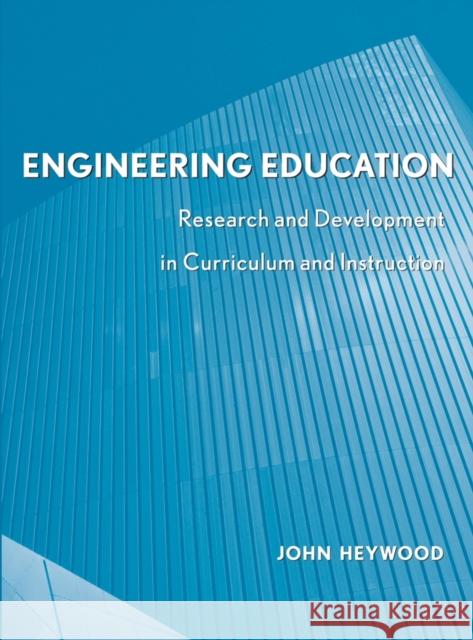
Engineering Education: Research and Development in Curriculum and Instruction Heywood, John 9780471741114 IEEE Computer Society Press - książkaWidoczna okładka, to zdjęcie poglądowe, a rzeczywista szata graficzna może różnić się od prezentowanej.

Engineering Education: Research and Development in Curriculum and Instruction

ISBN-13: 9780471741114 / Angielski / Twarda / 2005 / 528 str.

John Heywood
cena 908,55
(netto: 865,29 VAT:  5%)

Najniższa cena z 30 dni: 899,26
Termin realizacji zamówienia:
ok. 30 dni roboczych
Bez gwarancji dostawy przed świętami

Darmowa dostawa!

A synthesis of nearly 2,000 articles to help make engineers better educators While a significant body of knowledge has evolved in the field of engineering education over the years, much of the published information has been restricted to scholarly journals and has not found a broad audience. This publication rectifies that situation by reviewing the findings of nearly 2,000 scholarly articles to help engineers become better educators, devise more effective curricula, and be more effective leaders and advocates in curriculum and research development. The author's first objective is to provide an illustrative review of research and development in engineering education since 1960. His second objective is, with the examples given, to encourage the practice of classroom assessment and research, and his third objective is to promote the idea of curriculum leadership. The publication is divided into four main parts:

  • Part I demonstrates how the underpinnings of education--history, philosophy, psychology, sociology--determine the aims and objectives of the curriculum and the curriculum's internal structure, which integrates assessment, content, teaching, and learning
  • Part II focuses on the curriculum itself, considering such key issues as content organization, trends, and change. A chapter on interdisciplinary and integrated study and a chapter on project and problem-based models of curriculum are included
  • Part III examines problem solving, creativity, and design
  • Part IV delves into teaching, assessment, and evaluation, beginning with a chapter on the lecture, cooperative learning, and teamwork
The book ends with a brief, insightful forecast of the future of engineering education. Because this is a practical tool and reference for engineers, each chapter is self-contained and may be read independently of the others. Unlike other works in engineering education, which are generally intended for educational researchers, this publication is written not only for researchers in the field of engineering education, but also for all engineers who teach. All readers acquire a host of practical skills and knowledge in the fields of learning, philosophy, sociology, and history as they specifically apply to the process of engineering curriculum improvement and evaluation.

Kategorie:
Nauka, Pedagogika i oświata
Kategorie BISAC:
Education > Schools - Levels - Higher
Technology & Engineering > Engineering (General)
Wydawca:
IEEE Computer Society Press
Język:
Angielski
ISBN-13:
9780471741114
Rok wydania:
2005
Ilość stron:
528
Waga:
1.34 kg
Wymiary:
28.24 x 22.0 x 2.95
Oprawa:
Twarda
Wolumenów:
01
Dodatkowe informacje:
Wydanie ilustrowane

"…a convenient, well–organized compendium of what…literature has revealed, drawing on both American and English–language international journals…highly recommended." ( CHOICE, April 2006)

Part I. Aims and Objectives (Outcomes) and Their Screening.

Chapter 1. Curriculum Design, Implementation and Evaluation.

Chapter 2. Aims and Objectives (Outcomes).

Chapter 3. Philosophy and Sociology and the Aims of the Engineering Curriculum.

Part 1. Philosophical Aspects.

Chapters 4. Concepts and Principles (Rules).

Chapter 5. Learning Strategies and Learning Styles.

Chapter 6. Human Development.

Part II. The Curriculum and Its Paradigms in Practice.

Chapter 7. Curriculum Change and Changing the Curriculum.

Chapter 8. Interdisciplinary and Integrated Studies.

Chapter 9. From Projects to Problem–Based Learning.

Part III. Problem Solving, Creativity, and Design.

Chapter 10. Problem Solving.

Chapter 11. Creativity.

Chapter 12. Design.

Part IV. Introduction to Chapters 13 and 14. The Lecture.

Chapter 13. Cooperative Learning and Teamwork.

Chapter 14. Other Instructional Practices and the New Technologies.

Chapter 15. Assessment and Evaluation.

Chapter 16. The Formal Assessment of Student Learning: Alternative Assessment.

Chapter 17. Attrition and Retention.

References.

Epilogue.

Author Index.

Subject Index.

JOHN HEYWOOD, is a Professorial Fellow Emeritus of Trinity College Dublin. He has an MSc in Engineering Education, and a doctorate from the University of Dublin. He was founding editor of the International Journal of Technology and Design Education. He has published widely and won several awards for his writings in the areas of engineering, science, and technology. Since 1973 he has been a regular contributor to the ASEE/IEEE Frontiers in Education Conference.

A synthesis of nearly 2,000 articles to help make engineers better educators

While a significant body of knowledge has evolved in the field of engineering education over the years, much of the published information has been restricted to scholarly journals and has not found a broad audience. This publication rectifies that situation by reviewing the findings of nearly 2,000 scholarly articles to help engineers become better educators, devise more effective curricula, and be more effective leaders and advocates in curriculum and research development.

The author′s first objective is to provide an illustrative review of research and development in engineering education since 1960. His second objective is, with the examples given, to encourage the practice of classroom assessment and research, and his third objective is to promote the idea of curriculum leadership.

The publication is divided into four main parts:

  • Part I demonstrates how the underpinnings of education——history, philosophy, psychology, sociology——determine the aims and objectives of the curriculum and the curriculum′s internal structure, which integrates assessment, content, teaching, and learning
  • Part II focuses on the curriculum itself, considering such key issues as content organization, trends, and change. A chapter on interdisciplinary and integrated study and a chapter on project and problem–based models of curriculum are included
  • Part III examines problem solving, creativity, and design
  • Part IV delves into teaching, assessment, and evaluation, beginning with a chapter on the lecture, cooperative learning, and teamwork


The book ends with a brief, insightful forecast of the future of engineering education. Because this is a practical tool and reference for engineers, each chapter is self–contained and may be read independently of the others.

Unlike other works in engineering education, which are generally intended for educational researchers, this publication is written not only for researchers in the field of engineering education, but also for all engineers who teach. All readers acquire a host of practical skills and knowledge in the fields of learning, philosophy, sociology, and history as they specifically apply to the process of engineering curriculum improvement and evaluation.


Udostępnij

Facebook - konto krainaksiazek.pl


Opinie o Krainaksiazek.pl na Opineo.pl

Partner Mybenefit

Krainaksiazek.pl w programie rzetelna firma Krainaksiaze.pl - płatności przez paypal

Czytaj nas na:

Facebook - krainaksiazek.pl
  • książki na zamówienie
  • granty
  • książka na prezent
  • kontakt
  • pomoc
  • opinie
  • regulamin
  • polityka prywatności

Zobacz:

  • Księgarnia czeska

  • Wydawnictwo Książkowe Klimaty

1997-2025 DolnySlask.com Agencja Internetowa

© 1997-2022 krainaksiazek.pl
     
KONTAKT | REGULAMIN | POLITYKA PRYWATNOŚCI | USTAWIENIA PRYWATNOŚCI
Zobacz: Księgarnia Czeska | Wydawnictwo Książkowe Klimaty | Mapa strony | Lista autorów
KrainaKsiazek.PL - Księgarnia Internetowa

Polityka prywatnosci - link
Krainaksiazek.pl - płatnośc Przelewy24
Przechowalnia Przechowalnia





