• Wyszukiwanie zaawansowane
  • Kategorie
  • Kategorie BISAC
  • Książki na zamówienie
  • Promocje
  • Granty
  • Książka na prezent
  • Opinie
  • Pomoc
  • Załóż konto
  • Zaloguj się

Engineering Databases: Connecting Islands of Automation Through Databases » książka


zaloguj się | załóż konto
Logo Krainaksiazek.pl

koszyk

konto

szukaj
topmenu
Księgarnia internetowa
Szukaj
Książki na zamówienie
Promocje
Granty
Książka na prezent
Moje konto
Pomoc
 
 
Wyszukiwanie zaawansowane
Pusty koszyk
Bezpłatna dostawa dla zamówień powyżej 20 złBezpłatna dostawa dla zamówień powyżej 20 zł

Kategorie główne

• Nauka
 [2946912]
• Literatura piękna
 [1852311]

  więcej...
• Turystyka
 [71421]
• Informatyka
 [150889]
• Komiksy
 [35717]
• Encyklopedie
 [23177]
• Dziecięca
 [617324]
• Hobby
 [138808]
• AudioBooki
 [1671]
• Literatura faktu
 [228371]
• Muzyka CD
 [400]
• Słowniki
 [2841]
• Inne
 [445428]
• Kalendarze
 [1545]
• Podręczniki
 [166819]
• Poradniki
 [480180]
• Religia
 [510412]
• Czasopisma
 [525]
• Sport
 [61271]
• Sztuka
 [242929]
• CD, DVD, Video
 [3371]
• Technologie
 [219258]
• Zdrowie
 [100961]
• Książkowe Klimaty
 [124]
• Zabawki
 [2341]
• Puzzle, gry
 [3766]
• Literatura w języku ukraińskim
 [255]
• Art. papiernicze i szkolne
 [7810]
Kategorie szczegółowe BISAC

Engineering Databases: Connecting Islands of Automation Through Databases

ISBN-13: 9783642648595 / Angielski / Miękka / 2011 / 229 str.
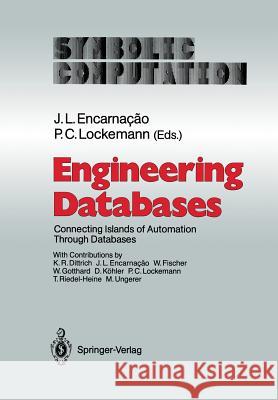
Jose L. Encarnacao; Peter C. Lockemann
Engineering Databases: Connecting Islands of Automation Through Databases Dittrich, K. R. 9783642648595 Springer - książkaWidoczna okładka, to zdjęcie poglądowe, a rzeczywista szata graficzna może różnić się od prezentowanej.

Engineering Databases: Connecting Islands of Automation Through Databases

ISBN-13: 9783642648595 / Angielski / Miękka / 2011 / 229 str.

Jose L. Encarnacao; Peter C. Lockemann
cena 402,53
(netto: 383,36 VAT:  5%)

Najniższa cena z 30 dni: 385,52
Termin realizacji zamówienia:
ok. 22 dni roboczych
Bez gwarancji dostawy przed świętami

Darmowa dostawa!

Automation is nothing new to industry. It has a long tradition on the factory floor, where its constant objective has been to increase the productivity of manufacturing processes. Only with the advent of computers could the focus of automation widen to include administrative and information-handling tasks. More recently, automation has been extended to the more intellectual tasks of production planning and control, material and resource planning, engineering design, and quality control. New challenges arise in the form of flexible manu facturing, assembly automation, and automated floor vehicles, to name just a few. The sheer complexity of the problems as well as the state of the art has led scientists and engineers to concentrate on issues that could easily be isolated. For example, it was much simpler to build CAD systems whose sole objective was to ease the task of drawing, rather than to worry at the same time about how the design results could be interfaced with the manufacturing or assembly processes. It was less problematic to gather statistics from quality control and to print reports than to react immediately to first hints of irregularities by inter facing with the designers or manufacturing control, or, even better, by auto matically diagnosing the causes from the design and planning data. A heav- though perhaps unavoidable - price must today be paid whenever one tries to assemble these isolated solutions into a larger, integrated system."


Kategorie:
Informatyka, Bazy danych
Kategorie BISAC:
Computers > Database Administration & Management
Computers > Information Technology
Computers > Software Development & Engineering - General
Wydawca:
Springer
Seria wydawnicza:
Symbolic Computation / Computer Graphics - Systems and Appli
Język:
Angielski
ISBN-13:
9783642648595
Rok wydania:
2011
Wydanie:
Softcover Repri
Numer serii:
000343638
Ilość stron:
229
Waga:
0.42 kg
Wymiary:
24.2 x 17.0
Oprawa:
Miękka
Wolumenów:
01

1 Significance of Engineering Databases.- 1.1 The Situation.- 1.1.1 Evolution of Engineering/Scientific Data Processing (CAx).- 1.1.2 Oceans of Information.- 1.1.3 Bridging the Islands.- 1.2 The Solution.- 1.2.1 Integration Through Databases.- 1.2.2 CIE: Computer Integrated Enterprise.- 1.3 The Architecture of an Engineering Database System.- 1.3.1 Conceptual Aspects.- 1.3.2 Hybrid Solutions.- 1.4 Organizational Procedures.- 1.4.1 Information Engineering.- 1.4.2 Management Aspects.- 1.5 Further Reading.- 2 Database Technology.- 2.1 Concepts and Terminology.- 2.1.1 Characteristics of Database Systems.- 2.1.2 Operation of Database Systems.- 2.1.3 Outline of the Chapter.- 2.1.4 A Running Example.- 2.2 Data Organization and Manipulation: Current Status.- 2.2.1 The Classical Data Models.- 2.2.1.1 The Hierarchical Data Model.- 2.2.1.2 The Network Data Model.- 2.2.1.3 The Relational Data Model.- 2.2.2 Database System Interfaces.- 2.2.2.1 Database Languages and Standards.- 2.2.2.2 The Hierarchical Data Model.- 2.2.2.3 The Network Data Model.- 2.2.2.4 The Relational Data Model.- 2.2.3 Database Consistency.- 2.2.3.1 Consistency Control.- 2.2.3.2 Expressing Consistency Constraints.- 2.2.4 Concurrency.- 2.2.5 Database Recovery.- 2.2.6 Transaction Management.- 2.2.7 Miscellaneous Services.- 2.2.7.1 Protection.- 2.2.7.2 Mass Data Input and Output.- 2.2.7.3 Data Dictionary.- 2.2.8 System Organization and Environment.- 2.2.8.1 Distribution Aspects.- 2.2.8.2 Hardware and Operating System Aspects.- 2.2.9 Performance Control.- 2.2.10 Further Reading.- 2.3 Database Systems for Engineering Applications: A New Focus.- 2.3.1 Perspectives.- 2.3.2 Data Model.- 2.3.3 Database System Interface.- 2.3.4 Database Consistency.- 2.3.5 Concurrency.- 2.3.6 Database Recovery.- 2.3.7 Transaction Management.- 2.3.8 Miscellaneous Services.- 2.3.9 System Organization.- 2.3.10 Performance Control.- 2.4 Data Organization and Manipulation: Taking Care of the New Focus.- 2.4.1 Trends and Objectives.- 2.4.2 Data Models.- 2.4.2.1 Semantic Concepts.- 2.4.2.2 Object Identification.- 2.4.2.3 Objects and Relationships.- 2.4.2.4 Attributes.- 2.4.2.5 Object-Oriented Database Systems.- 2.4.3 Other Issues.- 2.4.4 Further Reading.- 3 Utilization of Engineering Databases.- 3.1 Motivation.- 3.2 Database Schema Design.- 3.2.1 Principles of Schema Definition.- 3.2.2 Typical Situations.- 3.2.3 Objects and Interdependencies.- 3.2.3.1 Object Representations.- 3.2.3.2 Object Interdependencies.- 3.2.3.3 Library and Object Overlapping Information.- 3.3 Version Management.- 3.3.1 Version Generation in the Course of a Design Process.- 3.3.2 Modeling of Version Interrelations.- 3.3.3 Configuration Modeling Based on Version Management.- 3.3.4 Support of Design Control.- 3.3.5 Version and Configuration Management Based on DAMOKLES.- 3.4 Generating and Entering Data.- 3.4.1 Criteria for Characterizing the Generation Process.- 3.4.2 Commercial Applications.- 3.4.3 Engineering Applications.- 3.4.4 Example.- 3.5 Archiving Database Objects.- 3.5.1 General Requirements for an Archiving Mechanism in a Database System.- 3.5.2 Archiving Objects.- 3.5.3 Archiving Versions.- 3.5.4 Archiving Configurations.- 3.6 Data Interchange.- 3.6.1 Importance of Data Interchange in Engineering Applications.- 3.6.2 Data Interchange in Different Levels of System Integration.- 3.6.3 Kind and Structure of Interchange Data.- 3.6.4 Requirements for Data Interchange in New Comprehensive Applications.- 3.6.5 Example of a New Format for VLSI-Design: EDIF.- 3.7 Application Programming.- 3.7.1 Application Programming in Different Levels of System Integration.- 3.7.2 Use of Database Functions for Application Programming.- 3.8 Further Reading.- 4 Case Studies.- 4.1 VLSI Design.- 4.1.1 The E.I.S. Project — Conception of an Integrated Open VLSI Design System.- 4.1.2 Representation of Design Information in Relational Databases.- 4.1.2.1 Modeling of Design Objects for Extensions of Relational Databases.- 4.1.2.2 Implementing an Operational Interface on Top of the Relational Database System ORACLE.- 4.1.3 EDIF-Oriented Design Systems.- 4.1.3.1 EDIF-Oriented Database Schemes.- 4.1.3.2 The EDIF System — Support Tools for Checking and Previewing EDIF.- 4.2 Software Engineering.- 4.2.1 Software Engineering Environments.- 4.2.1.1 Requirements of Software Engineering.- 4.2.1.2 A System Engineering Environment.- 4.2.2 The PRODAT Object Model.- 4.2.2.1 Simple Objects.- 4.2.2.2 Structured Objects and Relationships.- 4.2.2.3 Completeness of Objects.- 4.2.2.4 Standard Relationships in Software Engineering.- 4.2.2.5 Versions.- 4.2.2.6 Configurations.- 4.2.3 Tool Using PRODAT — The Object Editor.- 4.2.4 PRODAT as Interface to DAMOKLES in Software Engineering.- 4.3 Further Reading.


Udostępnij

Facebook - konto krainaksiazek.pl


Opinie o Krainaksiazek.pl na Opineo.pl

Partner Mybenefit

Krainaksiazek.pl w programie rzetelna firma Krainaksiaze.pl - płatności przez paypal

Czytaj nas na:

Facebook - krainaksiazek.pl
  • książki na zamówienie
  • granty
  • książka na prezent
  • kontakt
  • pomoc
  • opinie
  • regulamin
  • polityka prywatności

Zobacz:

  • Księgarnia czeska

  • Wydawnictwo Książkowe Klimaty

1997-2025 DolnySlask.com Agencja Internetowa

© 1997-2022 krainaksiazek.pl
     
KONTAKT | REGULAMIN | POLITYKA PRYWATNOŚCI | USTAWIENIA PRYWATNOŚCI
Zobacz: Księgarnia Czeska | Wydawnictwo Książkowe Klimaty | Mapa strony | Lista autorów
KrainaKsiazek.PL - Księgarnia Internetowa

Polityka prywatnosci - link
Krainaksiazek.pl - płatnośc Przelewy24
Przechowalnia Przechowalnia





