• Wyszukiwanie zaawansowane
  • Kategorie
  • Kategorie BISAC
  • Książki na zamówienie
  • Promocje
  • Granty
  • Książka na prezent
  • Opinie
  • Pomoc
  • Załóż konto
  • Zaloguj się

Energy and Climate Change: Creating a Sustainable Future » książka


zaloguj się | załóż konto
Logo Krainaksiazek.pl

koszyk

konto

szukaj
topmenu
Księgarnia internetowa
Szukaj
Książki na zamówienie
Promocje
Granty
Książka na prezent
Moje konto
Pomoc
 
 
Wyszukiwanie zaawansowane
Pusty koszyk
Bezpłatna dostawa dla zamówień powyżej 20 złBezpłatna dostawa dla zamówień powyżej 20 zł

Kategorie główne

• Nauka
 [2949965]
• Literatura piękna
 [1857847]

  więcej...
• Turystyka
 [70818]
• Informatyka
 [151303]
• Komiksy
 [35733]
• Encyklopedie
 [23180]
• Dziecięca
 [617748]
• Hobby
 [139972]
• AudioBooki
 [1650]
• Literatura faktu
 [228361]
• Muzyka CD
 [398]
• Słowniki
 [2862]
• Inne
 [444732]
• Kalendarze
 [1620]
• Podręczniki
 [167233]
• Poradniki
 [482388]
• Religia
 [509867]
• Czasopisma
 [533]
• Sport
 [61361]
• Sztuka
 [243125]
• CD, DVD, Video
 [3451]
• Technologie
 [219309]
• Zdrowie
 [101347]
• Książkowe Klimaty
 [123]
• Zabawki
 [2362]
• Puzzle, gry
 [3791]
• Literatura w języku ukraińskim
 [253]
• Art. papiernicze i szkolne
 [7933]
Kategorie szczegółowe BISAC

Energy and Climate Change: Creating a Sustainable Future

ISBN-13: 9780470853122 / Angielski / Twarda / 2008 / 672 str.
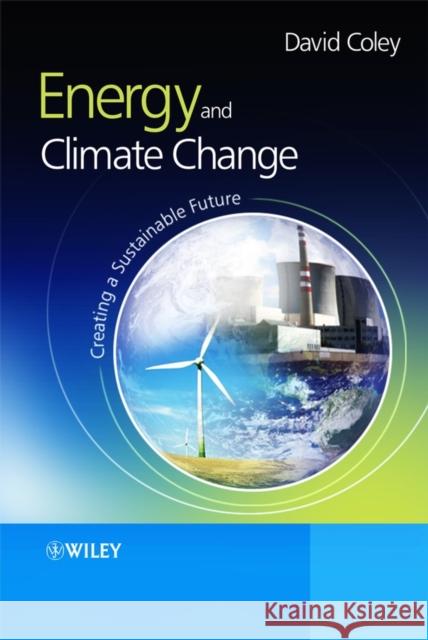
David Coley
Energy and Climate Change: Creating a Sustainable Future Coley, David 9780470853122 JOHN WILEY AND SONS LTD - książkaWidoczna okładka, to zdjęcie poglądowe, a rzeczywista szata graficzna może różnić się od prezentowanej.

Energy and Climate Change: Creating a Sustainable Future

ISBN-13: 9780470853122 / Angielski / Twarda / 2008 / 672 str.

David Coley
cena 711,98
(netto: 678,08 VAT:  5%)

Najniższa cena z 30 dni: 706,15
Termin realizacji zamówienia:
ok. 30 dni roboczych
Bez gwarancji dostawy przed świętami

Darmowa dostawa!
inne wydania

For more information on this title, including student exercises, please visit, http: //www.people.ex.ac.uk/DAColey/ Energy and Climate Change: Creating a Sustainable Future provides an up-to-date introduction to the subject examining the relationship between energy and our global environment. The book covers the fundamentals of the subject, discussing what energy is, why it is important, as well as the detrimental effect on the environment following our use of energy. Energy is placed at the front of a discussion of geo-systems, living systems, technological development and the global environment, enabling the reader to develop a deeper understanding of magnitudes. Learning is re-enforced, and the relevance of the topic broadened, through the use of several conceptual veins running through the book. One of these is an attempt to demonstrate how systems are related to each other through energy and energy flows. Examples being wind-power, and bio-mass which are really solar power via another route; how the energy used to evaporate sea water must be related to the potential for hydropower; and where a volcano's energy really comes from. With fermi-like problems and student exercises incorporated throughout every chapter, this text provides the perfect companion to the growing number of students taking an interest in the subject.


Kategorie:
Nauka
Kategorie BISAC:
Technology & Engineering > Mechanical
Science > Environmental Science (see also Chemistry - Environmental)
Science > Global Warming & Climate Change
Wydawca:
JOHN WILEY AND SONS LTD
Język:
Angielski
ISBN-13:
9780470853122
Rok wydania:
2008
Ilość stron:
672
Waga:
1.24 kg
Wymiary:
24.89 x 17.27 x 4.06
Oprawa:
Twarda
Wolumenów:
01
Dodatkowe informacje:
Bibliografia
Wydanie ilustrowane

As a text book for GCSE level students, this title is worthy of 4 stars. ( Enagri eMagazine , May 2010)

Preface.

1 Introduction.

PART I ENERGY: CONCEPTS, HISTORY AND PROBLEMS.

2 Energy.

2.1 What is energy?

2.2 Units.

2.3 Power.

2.4 Energy in various disguises.

2.5 Energy quality and exergy.

2.6 Student exercises.

3 The planet s energy balance.

3.1 The sun.

3.2 The earth.

3.3 Comparisons.

3.4 Student exercises.

4 A history of humankind s use of energy.

4.1 Energy and society.

4.2 Wealth, urbanization and conflict.

4.3 Our current level of energy use.

4.4 Student exercises.

5 Sustainability, climate change and the global environment.

5.1 Sustainability.

5.2 Climate change.

5.3 Other concerns.

5.4 Debating climate change and answering the sceptics.

5.5 The atmosphere.

5.6 Student exercises.

6 Economics and the environment.

6.1 Key concepts.

6.2 Environmental economics.

6.3 Student exercises.

7 Combustion, inescapable inefficiencies and the generation of electricity.

7.1 Combustion.

7.2 Calorific values.

7.3 Inescapable inefficiencies.

7.4 Heat pumps.

7.5 Double Carnot efficiencies.

7.6 The generation of electricity from heat.

7.7 Student exercises.

PART II UNSUSTAINABLE ENERGY TECHNOLOGIES.

8 Coal.

8.1 History.

8.2 Extraction.

8.3 The combustion of coal.

8.4 Technologies for use.

8.5 Example applications.

8.6 Global resource.

8.7 Student exercises.

9 Oil.

9.1 Extraction.

9.2 The combustion of oil.

9.3 Technologies for use.

9.4 Example application: the motor car.

9.5 Global resource.

9.6 Student exercises.

10 Gas.

10.1 Extraction.

10.2 The combustion of gas.

10.3 Technologies for use.

10.4 Example application: the domestic boiler.

10.5 Global resource.

10.6 Student exercises.

11 Non–conventional hydrocarbons.

11.1 Oil shale.

11.2 Tar sands.

11.3 Methane hydrate.

11.4 Student exercises.

12 Nuclear power.

12.1 Physical basis.

12.2 Technologies for use.

12.3 Environmental concerns.

12.4 Waste.

12.5 World resource.

12.6 Example applications.

12.7 Is nuclear power the solution to global warming?

12.8 Student exercises.

13 Hydropower.

13.1 History.

13.2 Technologies for use.

13.3 Example application: Itaipu hydroelectric station.

13.4 Environmental impacts.

13.5 Pumped storage.

13.6 Global resource.

13.7 Student exercises.

14 Transport and air quality.

14.1 Present day problems.

14.2 Air quality and health.

14.3 Example application: air quality in Exeter, UK.

14.4 Student exercises.

15 Figures and philosophy: an analysis of a nation s energy supply.

15.1 The economy.

15.2 Production.

15.3 Consumption.

15.4 Oil and gas production.

15.5 Prices.

15.6 Fuel poverty.

15.7 Carbon emissions.

15.8 Sustainable energy in the UK: the current state of play.

15.9 Student exercises.

PART III CLIMATE CHANGE: PREDICTIONS AND POLICIES.

16 Future world energy use and carbon emissions.

16.1 The world s future use of energy.

16.2 Student exercises.

17 The impact of a warmer world.

17.1 Climate models.

17.2 Natural variability and model reliability.

17.3 Future climate change.

17.4 Impacts.

17.5 Costing the impact.

17.6 Student exercises.

18 Politics in the greenhouse: contracting and converging.

18.1 Climate negotiations.

18.2 Another approach.

18.3 Bringing it all together.

18.4 Conclusion.

18.5 Student exercises.

PART IV SUSTAINABLE ENERGY TECHNOLOGIES.

IV.1 Current world sustainable energy provision.

19 Energy efficiency.

19.1 Cogeneration.

19.2 Reducing energy losses.

19.3 Energy recovery.

19.4 Energy efficiency in buildings.

19.5 Student exercises.

20 Solar power.

20.1 Passive solar heating.

20.2 Heat pumps.

20.3 Solar water heating.

20.4 Low temperature solar water heating.

20.5 Example application: solar water heating, Phoenix Federal Correction Institution, USA.

20.6 High temperature solar power.

20.7 Low temperature water–based thermal energy conversion.

20.8 OECD resource.

20.9 Student exercises.

21 Photovoltaics.

21.1 History.

21.2 Basic principles.

21.3 Technologies for use.

21.4 Electrical characteristics.

21.5 Roof–top PV.

21.6 Example application: Doxford Solar Office, UK.

21.7 OECD resource.

21.8 Student exercises.

22 Wind power.

22.1 History.

22.2 Technologies for use.

22.3 The modern horizontal axis wind turbine.

22.4 Environmental impacts.

22.5 OECD resource.

22.6 Example application: Harøy Island Wind Farm, Sandøy, Norway.

22.7 Student exercises.

23 Wave power.

23.1 Wave characteristics.

23.2 Technologies for use.

23.3 Example application: the Pelamis P–750 wave energy converter.

23.4 Student exercises.

24 Tidal and small–scale hydropower.

24.1 Tides.

24.2 Small–scale hydropower.

24.3 OECD resource.

24.4 Student exercises.

25 Biomass.

25.1 History.

25.2 Basic principles.

25.3 Technologies for use.

25.4 Example application: anaerobic digester, Walford College Farm, UK.

25.5 Global resource.

25.6 OECD resource.

25.7 Student exercises.

26 Geothermal.

26.1 Background.

26.2 History.

26.3 Resource and technology.

26.4 Technologies for use.

26.5 Environmental problems.

26.6 World resource.

26.7 OECD resource.

26.8 Example application: Hacchobaru geothermal power station, Kokonoe–machi, Japan.

26.9 Student exercises.

27 Fast breeders and fusion.

27.1 Fast breeder reactors.

27.2 Fusion.

27.3 Example application: JET Torus, Culham, UK.

27.4 Student exercises.

28 Alternative transport futures and the hydrogen economy.

28.1 Improving energy efficiency.

28.2 Alternative transport fuels and engines.

28.3 Hydrogen powered vehicles and the hydrogen economy.

28.4 Fuel cells.

28.5 Example application: the greening of natural gas.

28.6 Student exercises.

29 Carbon sequestration and climate engineering.

29.1 Capture technologies.

29.2 Storage technologies.

29.3 The reflection of solar radiation.

29.4 Example application: Statoil, Sleipner West gas field, North Sea.

29.5 Student exercises.

30 A sustainable, low carbon future?

30.1 Methodology and assumptions.

30.2 Results.

30.3 Worldwide reductions.

30.4 Conclusion.

30.5 What can I do?

30.6 Student exercises.

References.

Appendix 1 National energy data.

Appendix 2 Answers to in–text problems.

Appendix 3 Bibliography and suggested reading.

Appendix 4 Useful data.

Index.

Over the past twenty years or so, interest in energy, both in the abstract and in humankind s use of it, has been brought to the fore, especially since concerns over climate change have become more widely reported.

Energy and climate change discusses what energy is, why it is important, our current energy systems and more sustainable alternatives, and why energy use is having a detrimental effect on the environment. Energy is placed at the front of a discussion of the global environment, technology and civilisation.

Problem solving is a central tool and is approached through the use of Fermi–like problems, where the reader is encouraged to explore relevant issues through simple numeric problem solving.

  • Covers climate change, current energy technologies (e.g oil, gas, etc), renewable/alternative technologies, energy economics and the history of energy use
  • Contains numerous student exercises and case–studies from around the world
  • An invaluable text for those students taking courses in the physical sciences, engineering, earth and environmental sciences, geography and related subjects.
  • Reflects on the international community and its attempts to solve the problem of climate change
  • Additional teaching resources and weblinks available on the book′s website www.wileyeurope.com/college/coley


Udostępnij

Facebook - konto krainaksiazek.pl


Opinie o Krainaksiazek.pl na Opineo.pl

Partner Mybenefit

Krainaksiazek.pl w programie rzetelna firma Krainaksiaze.pl - płatności przez paypal

Czytaj nas na:

Facebook - krainaksiazek.pl
  • książki na zamówienie
  • granty
  • książka na prezent
  • kontakt
  • pomoc
  • opinie
  • regulamin
  • polityka prywatności

Zobacz:

  • Księgarnia czeska

  • Wydawnictwo Książkowe Klimaty

1997-2025 DolnySlask.com Agencja Internetowa

© 1997-2022 krainaksiazek.pl
     
KONTAKT | REGULAMIN | POLITYKA PRYWATNOŚCI | USTAWIENIA PRYWATNOŚCI
Zobacz: Księgarnia Czeska | Wydawnictwo Książkowe Klimaty | Mapa strony | Lista autorów
KrainaKsiazek.PL - Księgarnia Internetowa

Polityka prywatnosci - link
Krainaksiazek.pl - płatnośc Przelewy24
Przechowalnia Przechowalnia





